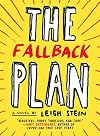
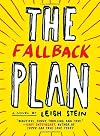
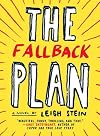
The Fallback Plan
by Leigh Stein
On This Page
Description
What to do when you've just graduated from college and your plans conflict with those of your parents? That is, when your plans to hang out on the couch, re-read your favorite children's books, and take old prescription tranquilizers, conflict with your parents plans that you, well, get a job? Without a fallback plan, Eshter Kohler decides she has no choice but to take the job her mother has lined up for her: babysitting for their neighbors, the Browns. It's a tricky job, though. Six months show more earlier, the Browns' youngest child died. Still, as Esther finds herself falling in love with their surviving daughter May, and distracted by a confusing romance with one of her friends, she doesn't notice quite how tricky the job is ... until she finds herself assuming the role of confidante to May's mother Amy, and partner in crime to Amy's husband Nate. Trapped in conflicting roles doomed to collide, Esther is forced to come up with a better idea of who she really is. show lessTags
Recommendations









Member Reviews
I read to page 90 and would have stopped earlier but it was the only book I had with me. Today came with two long subway rides (I am glad they are updating the tracks during Covid, but I am getting a little tired of express trains being made local) and also a long wait since my friend was late to meet me at the museum and the coffee places are still all closed. So read it I did.
The premise: the main character graduates from Northwestern where she had been given a full ride free of charge. Instead of getting a job and maybe living with a bunch of people in a dive while she works at Starbucks and figures out her life, she decides to move back in with her parents. They seem like lovely people, and all she does is bitch about them and the show more fact they have redecorated "her" room. I have a college senior, and he would never be so nasty nor would he hang out with such stunted and unpleasant people. He also has an artsy major and he is graduating amid Covid and so he has been job hunting for months already though he does not graduate until May. Whatever he does he will do it is a city, and its likely to be something with an arts component (so unlikely to yield the big bucks) and so he fully expects to have lots of roommates for a while. We get along great, and he is always welcome under my roof, but he also feels like it is time to be an adult. I don't even understand this person or her choices.
In addition to my problems with the central narrative, this book is terrible. The writer seems unable to craft a decent sentence to save her life, let alone a good paragraph. The story is snarky in the manner of an overprivileged 8th grader. Every scene is bloated, though to be fair the bloat understandable since the foundation of this is so rickety and undernourished. The main character is of no particular interest unless you are attracted to lazy whiny ungrateful people who care only about their own comfort and pleasure and have the intellectual curiosity of a ferret. I was hoping Esther would overdose on her recreational Vicodin, but no such luck. How did this get published? Its the worst thing I have read this year by a longshot, and I read a lot. show less
The premise: the main character graduates from Northwestern where she had been given a full ride free of charge. Instead of getting a job and maybe living with a bunch of people in a dive while she works at Starbucks and figures out her life, she decides to move back in with her parents. They seem like lovely people, and all she does is bitch about them and the show more fact they have redecorated "her" room. I have a college senior, and he would never be so nasty nor would he hang out with such stunted and unpleasant people. He also has an artsy major and he is graduating amid Covid and so he has been job hunting for months already though he does not graduate until May. Whatever he does he will do it is a city, and its likely to be something with an arts component (so unlikely to yield the big bucks) and so he fully expects to have lots of roommates for a while. We get along great, and he is always welcome under my roof, but he also feels like it is time to be an adult. I don't even understand this person or her choices.
In addition to my problems with the central narrative, this book is terrible. The writer seems unable to craft a decent sentence to save her life, let alone a good paragraph. The story is snarky in the manner of an overprivileged 8th grader. Every scene is bloated, though to be fair the bloat understandable since the foundation of this is so rickety and undernourished. The main character is of no particular interest unless you are attracted to lazy whiny ungrateful people who care only about their own comfort and pleasure and have the intellectual curiosity of a ferret. I was hoping Esther would overdose on her recreational Vicodin, but no such luck. How did this get published? Its the worst thing I have read this year by a longshot, and I read a lot. show less
Confession: I have yet to take my graduation day dress to the dry cleaners. I began with the best intentions. I put the dress in a bag and then I put that bag by the front door. I added a jacket to that bag. And then I left it alone. For two years. I could perhaps claim that there are psychological, symbolic reasons why it is still there — I am holding on to university via the medium of dust, I am externalizing, or displacing, or otherwise-ing in order to keep my inner student chained to the radiator of time! Then there is the other, more likely reason. Laziness. A case of the post-grad, “I was a moderately shiny apple and now I’m back in an orchard full of very shiny apples who know if they want to be eaten in a crumble or sliced show more for a salad, so maybe I should just fall off the branch and let the dog discover the messy way that apples ain’t for dogs, dawg”. Yeah, just like that.
I figure that a little solipsism is fitting when reviewing Leigh Stein’s The Fallback Plan. Esther Kohler, Stein’s protagonist, is a theatre graduate, who has returned less-than-triumphantly to the old homestead. She spends her days rereading childhood classics, napping, disappointing her parents, and vaguely planning, or thinking about planning, a screenplay about pandas. She also fantasises about contracting a Hollywood movie don’t-I-make-terminal-illness-look-pretty condition:
I’ve always been ambitious. I had my fingers crossed for a disease without a cure, but a mild one, nothing disfiguring or painful. Of all the plans I could have made for how to spend the rest of my life, this seemed the most desirable because it required the least of me. It was a form of surrender (Stein, The Fallback Plan, p.5).
Esther’s slacker routine is interrupted when she is hired to take care of May, the four year old daughter of family friends, Amy and Nate Brown. Mourning the cot-death of their baby, the Browns each form a complicated relationship with Esther. Artist Amy is alternatively a cool aunt type figure, an overprotective mother and another charge for Esther to babysit. Nate, meanwhile, takes one from the Mystic Pizza playbook, and halfheartedly fills the role of the affable, academic dad who Esther, quarter-heartedly at best (it’s a thing), falls for.
(Look! It’s a visual aid! Hello, snazzy knitwear man, your daughter is the one with the stuffed bear, btw.)
I would say more about the plot, but honestly that’s about it. There is Jack, the feckless nimrod who is obviously WRONG in every way, and the Littlest Panda interludes which I was not a huge fan of. But Stein’s real skill is in capturing — perfectly, a little pathetically— the feeling of being lost. That self-centered, head-up-your-own-arse, head-arse under the covers feeling that people can drown, or at least ineptly doggy-paddle in before they put away the Dawson’s Creek DVDs*, remove spoon from the Coco Pops box, and decide that enough is enough. Will it be yes or will it be...sorry?
Save the Spiel: The Fallback Plan is a short, funny, interesting novel. Read it.
Want more drama? Try: A Gate at the Stairs by Lorrie Moore
Want more entitled, postgrad woe? Try: The Wonder Spot by Melissa Bank or The Man of My Dreams by Curtis Sittenfeld
Want more Esther? Try: The Bell Jar by Sylvia Plath show less
I figure that a little solipsism is fitting when reviewing Leigh Stein’s The Fallback Plan. Esther Kohler, Stein’s protagonist, is a theatre graduate, who has returned less-than-triumphantly to the old homestead. She spends her days rereading childhood classics, napping, disappointing her parents, and vaguely planning, or thinking about planning, a screenplay about pandas. She also fantasises about contracting a Hollywood movie don’t-I-make-terminal-illness-look-pretty condition:
I’ve always been ambitious. I had my fingers crossed for a disease without a cure, but a mild one, nothing disfiguring or painful. Of all the plans I could have made for how to spend the rest of my life, this seemed the most desirable because it required the least of me. It was a form of surrender (Stein, The Fallback Plan, p.5).
Esther’s slacker routine is interrupted when she is hired to take care of May, the four year old daughter of family friends, Amy and Nate Brown. Mourning the cot-death of their baby, the Browns each form a complicated relationship with Esther. Artist Amy is alternatively a cool aunt type figure, an overprotective mother and another charge for Esther to babysit. Nate, meanwhile, takes one from the Mystic Pizza playbook, and halfheartedly fills the role of the affable, academic dad who Esther, quarter-heartedly at best (it’s a thing), falls for.
(Look! It’s a visual aid! Hello, snazzy knitwear man, your daughter is the one with the stuffed bear, btw.)
I would say more about the plot, but honestly that’s about it. There is Jack, the feckless nimrod who is obviously WRONG in every way, and the Littlest Panda interludes which I was not a huge fan of. But Stein’s real skill is in capturing — perfectly, a little pathetically— the feeling of being lost. That self-centered, head-up-your-own-arse, head-arse under the covers feeling that people can drown, or at least ineptly doggy-paddle in before they put away the Dawson’s Creek DVDs*, remove spoon from the Coco Pops box, and decide that enough is enough. Will it be yes or will it be...sorry?
Save the Spiel: The Fallback Plan is a short, funny, interesting novel. Read it.
Want more drama? Try: A Gate at the Stairs by Lorrie Moore
Want more entitled, postgrad woe? Try: The Wonder Spot by Melissa Bank or The Man of My Dreams by Curtis Sittenfeld
Want more Esther? Try: The Bell Jar by Sylvia Plath show less
After the endless commencement ceremony, the cap toss, and the droning luncheons with family and friends, comes the panic-induced question asked by the college graduate: What next? Debut author Leigh Stein accurately captures this bewilderment and sense of loss experienced by so many Generation Yer’s post-college in her first novel The Fallback Plan (Melville 2012) due out in January.
Esther Kohler- Stein’s Juno-esque protagonist- graduated from Northwestern with a theater degree, a lot of expectations and dwindling self-esteem. Between the suffocating realization that she is back in her childhood bedroom and the disappointing relationships she encounters in her home town, she feels worthless and believes the best thing that could show more happen would be to catch a fatal illness, or a least one that would leave her severely debilitated. As per the typical graduate, Esther’s entitlement begins to get the better of her until she lands a babysitting job through a friend of her father’s. Babysitting for the 4-year-old May Brown gives Esther purpose, even though she finds herself in the middle of a family still reeling from the death of their infant daughter.
It is through learning how to cope with the unstable, grieving personalities of May’s parents, Amy and Nate, that Esther becomes aware of her own losses, and by novel’s end we see her make a healthy transition through the five stages of grief to acceptance and the next step.
What I love so much about Stein’s short -the work spans only 110 pages- but timely novel, is the way it acknowledges (like bad breath) the painful predicament of an increasing number of college graduates today. Her narrative: sardonic, with a pace that ebbs and flows based on topic- is peppered with the cultural 90's references (Mario Kart, Lisa Loeb) and alternative tastes (Gustav Klimt wallpaper, Kundera’s The Unbearable Lightness of Being) familiar to the liberal arts graduate.
Stein uses her narrative to do more than tell the story. By splicing it with detailed flashbacks of Esther’s childhood and scenes from an imaginary screenplay the protagonist claims she is working on, Stein illustrates the painful loss of identity experienced post-commencement; an identity that Esther tries to fill by reaching back to a past she cannot reclaim or grasping for accomplishments expected of her as a theater major.
The Fallback Plan also explores the poignant themes of grief and loss that surround not only death, but the transition into adulthood and its realities. Stein aptly names post-college disillusionment for what it is: a loss of dreams, childhood, and- if moving in with parents- of independence. It is only by owning the loss she feels-rather than filling it with something of temporary value- that Esther is able to recover and begin to answer the What’s Next question.
In reading Stein's work, I laughed, cried, and learned a lot about myself and the post-grad plight. Looking forward to more humorous and insightful works by this blooming writer! show less
Esther Kohler- Stein’s Juno-esque protagonist- graduated from Northwestern with a theater degree, a lot of expectations and dwindling self-esteem. Between the suffocating realization that she is back in her childhood bedroom and the disappointing relationships she encounters in her home town, she feels worthless and believes the best thing that could show more happen would be to catch a fatal illness, or a least one that would leave her severely debilitated. As per the typical graduate, Esther’s entitlement begins to get the better of her until she lands a babysitting job through a friend of her father’s. Babysitting for the 4-year-old May Brown gives Esther purpose, even though she finds herself in the middle of a family still reeling from the death of their infant daughter.
It is through learning how to cope with the unstable, grieving personalities of May’s parents, Amy and Nate, that Esther becomes aware of her own losses, and by novel’s end we see her make a healthy transition through the five stages of grief to acceptance and the next step.
What I love so much about Stein’s short -the work spans only 110 pages- but timely novel, is the way it acknowledges (like bad breath) the painful predicament of an increasing number of college graduates today. Her narrative: sardonic, with a pace that ebbs and flows based on topic- is peppered with the cultural 90's references (Mario Kart, Lisa Loeb) and alternative tastes (Gustav Klimt wallpaper, Kundera’s The Unbearable Lightness of Being) familiar to the liberal arts graduate.
Stein uses her narrative to do more than tell the story. By splicing it with detailed flashbacks of Esther’s childhood and scenes from an imaginary screenplay the protagonist claims she is working on, Stein illustrates the painful loss of identity experienced post-commencement; an identity that Esther tries to fill by reaching back to a past she cannot reclaim or grasping for accomplishments expected of her as a theater major.
The Fallback Plan also explores the poignant themes of grief and loss that surround not only death, but the transition into adulthood and its realities. Stein aptly names post-college disillusionment for what it is: a loss of dreams, childhood, and- if moving in with parents- of independence. It is only by owning the loss she feels-rather than filling it with something of temporary value- that Esther is able to recover and begin to answer the What’s Next question.
In reading Stein's work, I laughed, cried, and learned a lot about myself and the post-grad plight. Looking forward to more humorous and insightful works by this blooming writer! show less
A slight but pleasant coming-of-age story—the fact that it occurs when Esther moves back home after college just points out how much America's middle-class suburban youth are sheltered from any actual experience of life. In any other context (Austen, Kipling, Salinger, you name it) the kid would've had these epiphanies at 14 or 16, not 22. Although it seems to be marketed to adults, I put it on my YA shelf.
(The digest size and almost-newsprint paper Melville House picked are perfect—they tell the reader (buyer) to expect something slight. But the wide outer margins and somewhat classy type (Bembo) belie that and suggest that the book has pretensions to literature. I guess maybe they had to do something to justify the $14.95 cover show more price.) show less
(The digest size and almost-newsprint paper Melville House picked are perfect—they tell the reader (buyer) to expect something slight. But the wide outer margins and somewhat classy type (Bembo) belie that and suggest that the book has pretensions to literature. I guess maybe they had to do something to justify the $14.95 cover show more price.) show less
***Obtained from NetGalley.com ***
Attacking mid-twenty-something angst with sarcasm and brutal honesty, The Fallback Plan is a manic-depressive’s dream read. With its ebb and flow of anxiety one page and humorous introspective the next, the novel keeps you on your toes and unknowingly developing comparisons to your own life.
Esther is a recent college grad who like most others with a diploma has no job and no money. Forced with no other option, she moves back into her parent’s house and anesthetizes her self-loathing with prescription pain-killers. A self-proclaimed hypochondriac, Esther spends her days contemplating how to convince her family doctor she has a condition that qualifies her for disability benefits. She also plans to show more write a screenplay that sounds an awful lot like a C.S. Lewis book, starring panda’s.
Her parent’s however have a better idea and land her a job as a nanny for the family down the street watching their four year old daughter, May. May’s baby sister died suddenly six months prior while with another babysitter, so Esther knows she’s walking into a delicate situation. But when she finds out that little May is the most stable-seeming of the family, Esther becomes maternally close to her and finds that the child is quickly becoming her confidant. Balance all that with Esther’s lust for her friend Jack, and the summer turns out to be not as boring as she once dreaded.
Author Leigh Stein pens a novel that contains something every twenty-something can relate to. The anxious period between graduation and the rest of your life is tackled head-on with honest feelings that drip with sarcasm. A quick read that brings humor laced with sad reality and keeps your own goals in check.
MORE REVIEWS AT: http://theduchessmommyreads.blogspot.com show less
Attacking mid-twenty-something angst with sarcasm and brutal honesty, The Fallback Plan is a manic-depressive’s dream read. With its ebb and flow of anxiety one page and humorous introspective the next, the novel keeps you on your toes and unknowingly developing comparisons to your own life.
Esther is a recent college grad who like most others with a diploma has no job and no money. Forced with no other option, she moves back into her parent’s house and anesthetizes her self-loathing with prescription pain-killers. A self-proclaimed hypochondriac, Esther spends her days contemplating how to convince her family doctor she has a condition that qualifies her for disability benefits. She also plans to show more write a screenplay that sounds an awful lot like a C.S. Lewis book, starring panda’s.
Her parent’s however have a better idea and land her a job as a nanny for the family down the street watching their four year old daughter, May. May’s baby sister died suddenly six months prior while with another babysitter, so Esther knows she’s walking into a delicate situation. But when she finds out that little May is the most stable-seeming of the family, Esther becomes maternally close to her and finds that the child is quickly becoming her confidant. Balance all that with Esther’s lust for her friend Jack, and the summer turns out to be not as boring as she once dreaded.
Author Leigh Stein pens a novel that contains something every twenty-something can relate to. The anxious period between graduation and the rest of your life is tackled head-on with honest feelings that drip with sarcasm. A quick read that brings humor laced with sad reality and keeps your own goals in check.
MORE REVIEWS AT: http://theduchessmommyreads.blogspot.com show less
I had a whole review of this written out that featured, among other things, a dig at Gary Shteyngart and the admission that I've never read the Chronicles of Narnia. Then it got deleted. So basically, very funny and fairly relatable book that also features a bunch of astoundingly self-centered characters, some with better reasons than others. The protag claims to have realized that adulthood is not something that magically happens, that it's more like something that you stumble through, but she's having difficulties remembering that that applies to other people, too, and not just her.
The Fallback Plan: A Novel by Leigh Stein (New York: Melville House, 2012. 219 pp) Originally posted at wherepenmeetspaper.blogspot.com
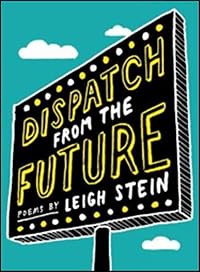
Leigh Stein is a first-time author. She lives in New York where she works in children’s book publishing and teaches musical theatre. Her upcoming release, Dispatch from the Future is a collection of poems to be released in June 2012.
Prolonged Adolescence
As a musically-minded individual teaching choir, I’ve always wondered: what is my fallback plan? What would I do if I couldn’t get a job? I’ve luckily never been thrust into that scenario, but many holding an arts degree are. The sad truth is that the arts degree doesn’t do much in the marketplace. Sure, it helps hone one’s craft; it helps show more someone to become a better musician, painter, or actor. However, no art gallery, bar scene, or theatre will say “you have a degree, you’re hired!”
A lucky few find a job with the aid of their degree, while others succumb to corporate life or barista-hood. Some, however, choose not to deal with the problem and move in with their parents in order to usher in an era of prolonged adolescence. Leigh Stein paints such a person, Esther (a pseudonym for herself), in her novella The Fallback Plan.
Esther Kohler is a recent college graduate, and like so many others, completely unemployed with no prospect on the horizon. She ends up living with her parents, much to her disdain. She slides through life in the doldrums whilst drinking with her friends, Jack and Pickle. In contrast to the rest of the world, absolutely nothing happens in her life.
“In June, the monsoons hit Bangladesh. Chinese police discovered slaves in a brickwork factory who couldn’t be sent home because they were too traumatized to remember anything but their own names, and Dr. Kevorkian was released from prison. In other news, I moved in with my parents” (3).
Like so many graduates of the arts, she is forced to rely on a fallback plan, or at the very least, figure out what it would be.
The Joys of Getting a Job
As a graduate with the not-so-sought-after emphasis in theatre, Esther has no hope in the world for a job. So, she decides to get a job in babysitting. Well, she doesn’t so much decide to do so—it’s thrust on her by her parents.
“I couldn’t believe I now had a job. My job was going to be playing with a four-year-old? Part of my brain immediately attempted to calculate the amount of money I’d get to spend on screenwriting books after I paid my parent’s rent, part of my brain said, You’re stoned, about to go on a drug run, and someone is going to trust you with their small child, and part of my brain cast me as Marry Poppins in an adaptation directed by Stanley Kubrick” (23).
But, in the process of babysitting, she befriends the mom (her employer) and the daughter. The mom lost her first child, and by looking into her life, finds that depression can be deeply seated. Esther herself has been struggling with depression, both during and after college, and is having trouble coming to terms with her feelings.
“I knew I was depressed, but my hope was that maybe there was a brain tumor at the root of all this, something that would show up on a map of my cerebrum, something excisable. And then I came across the word weltschmerz” (69).
Weltchmerz is defined as a mental depression or apathy caused by comparison of the actual state of the world with an ideal state. It’s a mood of sentimental sadness. Esther, no doubt a mirror image of Leigh Stein, has to work through this sentimental sadness and figure out how to make life work. Forced to come to grips with her situation, this coming-of-age story is inextricably intimate and funny at the same time.
The Fallback Plan paints a depressing and accurate picture regarding the status of the liberal arts degree in the United States. But by no means am I advocating for the lack of arts in schools, nor am I painting them as worthless. I teach the arts, have two degrees in music, and find them completely worthwhile. In fact, arts and music make your brain work harder on analytical pursuits. Some businesses are even hiring music majors in lieu of those with business degrees because of their creative brains. The point I’m trying to make is that if you’re pursing arts, don’t expect your degree to work for you. Rather, work for your degree.
Anyone who likes author David Sedaris, or even something like Pulphead by John Jeremiah Sullivan would enjoy this work of fiction. It’s honest, witty, and works through some pretty deep issues. I think that the book could have been longer and explored some of the stories a little more deeply, but all in all The Fallback Plan is a good read.
Originally posted at wherepenmeetspaper.blogspot.com show less
Leigh Stein is a first-time author. She lives in New York where she works in children’s book publishing and teaches musical theatre. Her upcoming release, Dispatch from the Future is a collection of poems to be released in June 2012.
Prolonged Adolescence
As a musically-minded individual teaching choir, I’ve always wondered: what is my fallback plan? What would I do if I couldn’t get a job? I’ve luckily never been thrust into that scenario, but many holding an arts degree are. The sad truth is that the arts degree doesn’t do much in the marketplace. Sure, it helps hone one’s craft; it helps show more someone to become a better musician, painter, or actor. However, no art gallery, bar scene, or theatre will say “you have a degree, you’re hired!”
A lucky few find a job with the aid of their degree, while others succumb to corporate life or barista-hood. Some, however, choose not to deal with the problem and move in with their parents in order to usher in an era of prolonged adolescence. Leigh Stein paints such a person, Esther (a pseudonym for herself), in her novella The Fallback Plan.
Esther Kohler is a recent college graduate, and like so many others, completely unemployed with no prospect on the horizon. She ends up living with her parents, much to her disdain. She slides through life in the doldrums whilst drinking with her friends, Jack and Pickle. In contrast to the rest of the world, absolutely nothing happens in her life.
“In June, the monsoons hit Bangladesh. Chinese police discovered slaves in a brickwork factory who couldn’t be sent home because they were too traumatized to remember anything but their own names, and Dr. Kevorkian was released from prison. In other news, I moved in with my parents” (3).
Like so many graduates of the arts, she is forced to rely on a fallback plan, or at the very least, figure out what it would be.
The Joys of Getting a Job
As a graduate with the not-so-sought-after emphasis in theatre, Esther has no hope in the world for a job. So, she decides to get a job in babysitting. Well, she doesn’t so much decide to do so—it’s thrust on her by her parents.
“I couldn’t believe I now had a job. My job was going to be playing with a four-year-old? Part of my brain immediately attempted to calculate the amount of money I’d get to spend on screenwriting books after I paid my parent’s rent, part of my brain said, You’re stoned, about to go on a drug run, and someone is going to trust you with their small child, and part of my brain cast me as Marry Poppins in an adaptation directed by Stanley Kubrick” (23).
But, in the process of babysitting, she befriends the mom (her employer) and the daughter. The mom lost her first child, and by looking into her life, finds that depression can be deeply seated. Esther herself has been struggling with depression, both during and after college, and is having trouble coming to terms with her feelings.
“I knew I was depressed, but my hope was that maybe there was a brain tumor at the root of all this, something that would show up on a map of my cerebrum, something excisable. And then I came across the word weltschmerz” (69).
Weltchmerz is defined as a mental depression or apathy caused by comparison of the actual state of the world with an ideal state. It’s a mood of sentimental sadness. Esther, no doubt a mirror image of Leigh Stein, has to work through this sentimental sadness and figure out how to make life work. Forced to come to grips with her situation, this coming-of-age story is inextricably intimate and funny at the same time.
The Fallback Plan paints a depressing and accurate picture regarding the status of the liberal arts degree in the United States. But by no means am I advocating for the lack of arts in schools, nor am I painting them as worthless. I teach the arts, have two degrees in music, and find them completely worthwhile. In fact, arts and music make your brain work harder on analytical pursuits. Some businesses are even hiring music majors in lieu of those with business degrees because of their creative brains. The point I’m trying to make is that if you’re pursing arts, don’t expect your degree to work for you. Rather, work for your degree.
Anyone who likes author David Sedaris, or even something like Pulphead by John Jeremiah Sullivan would enjoy this work of fiction. It’s honest, witty, and works through some pretty deep issues. I think that the book could have been longer and explored some of the stories a little more deeply, but all in all The Fallback Plan is a good read.
Originally posted at wherepenmeetspaper.blogspot.com show less
Members
- Recently Added By
Published Reviews
ThingScore 50
Esther's initial lethargy is so complete readers may wonder why they should bother to keep turning the pages. If they do, they will be rewarded with a graceful twist of redemption. The mix of self-absorption, depression, and grief does not always sit well together, but Stein makes the final chapters work.
added by Christa_Josh
Author Information

8 Works 460 Members
Classifications
Statistics
- Members
- 95
- Popularity
- 339,991
- Reviews
- 9
- Rating
- (3.04)
- Languages
- English
- Media
- Paper, Ebook
- ISBNs
- 2
- ASINs
- 2