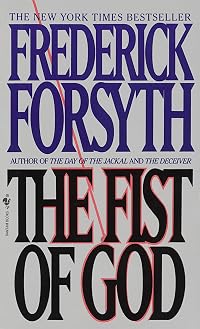
The Fist of God
by Frederick Forsyth
On This Page
Description
A Gulf War spy story featuring Mike Martin, an Arabic-speaking British agent. He is sent to Baghdad after the invasion of Kuwait to contact a mole in Saddam Hussein's entourage, but the information he obtains is so unbelievable, his superiors decide he's been duped. When they realize their mistake, Martin's mission becomes even more dangerous.Tags
Recommendations




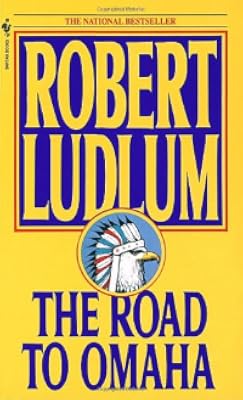
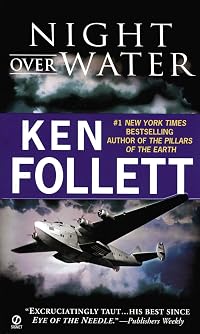
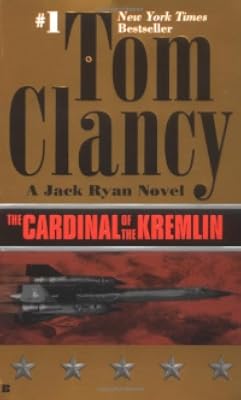
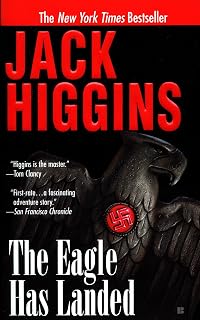
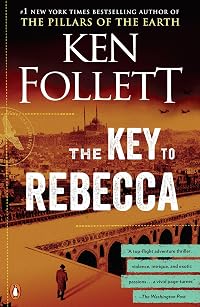

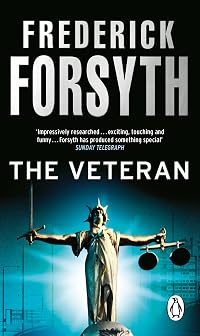
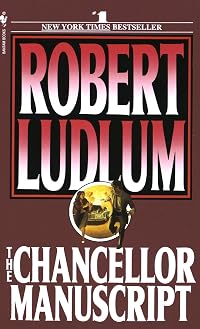
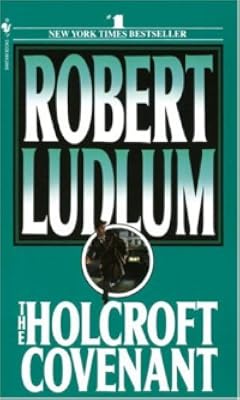




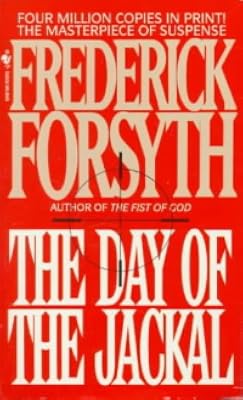

Member Recommendations

karatelpek Set about a decade before in Iran before the Revolution.
Member Reviews
The Fist of God is a convoluted plot masterfully weaved together by Forsyth to make it a rather brilliant thriller. It centers around Washington, London, Baghdad, Vienna, and Saudi Arabia. The CIA and MI6 play key roles, as do the British SAS, the Mossad, and Iraqi intelligence forces. The book is about the first Gulf War and what it would have been like, and was like -- theoretically -- for Iraq to possess a large number of WMD. Including an atomic bomb. You see, the brilliance of Forsyth is his ability to weave fact and fiction so effortlessly that you don't know where one ends and the other begins. You know Saddam had poison gas. But how much? As much as the book indicates? I doubt it, but I don't know.
In this book, SAS major Mike show more Martin is infiltrated into occupied Kuwait to wage a terrorism campaign before being pulled out and sent into Baghdad itself, to deal with a super high level spy the Allies have in place. It's incredibly dangerous and the author writes a great deal of tension into the book. My only complaint was with the seduction of Austrian spinster, Edith, and her eventual death, which I thought a touch cruel and unusual for the author. I thought about giving the book four stars instead of five because it's obviously outdated and a lot of the information in the book was quite likely wrong (it was published in 1994). But Forsyth did the best with what he had to work with at the time and I've given other dated books high marks, so I shouldn't penalize an otherwise excellent book just for that. This is a good thriller, really gripping. Recommended. show less
In this book, SAS major Mike show more Martin is infiltrated into occupied Kuwait to wage a terrorism campaign before being pulled out and sent into Baghdad itself, to deal with a super high level spy the Allies have in place. It's incredibly dangerous and the author writes a great deal of tension into the book. My only complaint was with the seduction of Austrian spinster, Edith, and her eventual death, which I thought a touch cruel and unusual for the author. I thought about giving the book four stars instead of five because it's obviously outdated and a lot of the information in the book was quite likely wrong (it was published in 1994). But Forsyth did the best with what he had to work with at the time and I've given other dated books high marks, so I shouldn't penalize an otherwise excellent book just for that. This is a good thriller, really gripping. Recommended. show less
This is an agreeable bit of fairly ancient 'history'. As usual with Forsyth there is a good mixture of fact, reasonable speculation and plausible fiction. The book is set in the time of the invasion of Kuwait by Saddam Hussein. It begins with the story of Gerald Bull, a brilliant ballistics engineer, who believed that large-bore guns - 'superguns' - could be used to send payloads into earth orbit. After working for the Canadian government and the US Army for some years his ideas fell out of favour and funding was withdrawn. Bull continued his work with funding from several interested governments including South Africa, China and Yugoslavia and finally Iraq. The story of the so-called Babylon Gun is well-known: Bull arranged for show more different parts of the gun to be constructed in various countries in an attempt to conceal their true purpose. Many of these were intercepted by the authorities as they were in transit to Iraq. The size of the barrel was such that the gun could not have been fired unless it was fixed on a solid surface thus making varying the aim of the gun impossible. Western experts consequently discounted the Babylon Gun as an effective weapon, nonetheless confiscating the parts that came to light. A few months before Saddam's army moved into Kuwait, Bull was assassinated in Brussels, with Mossad operatives favourites as perpetrators. That much is factual, although Forsyth lays the blame for the murder elsewhere.
With the invasion of Kuwait accomplished, the diplomatic negotiations begin, as does the preparation of Desert Shield, the build up of Coalition forces to protect the Saudi/Kuwait border. Forsyth gives us a lot of detail on this, looking at the actions of many real people and real organisations. He is good at sounding convincing: the reader believes that the auxiliary tanks of the USAF F-15E Eagle fighter hold 4,000 pounds of fuel or that the Saudi Defence Ministry in Riyadh is 400 metres long and 100 feet high and so finds it easy to accept that Benyamin Netanyahu is pushed into disclosing Mossad's asset in Baghdad by a very rich Jewish-American banker or that Mikhail Gorbachov provided cover for a British agent at the behest of two Western spooks. His speculations and fiction start here with the US/UK need to have on-the-ground intelligence, first from Kuwait and later from Baghdad. We get to know a typical Forsyth hero, Mike Martin, a SAS major with perfect Arabic and an uncanny ability to melt into the background. We are treated to exciting times on the streets of Kuwait City and Baghdad, a lot of black-ops and flying detail and a neat Mossad sting operation in Vienna. It's not a spoiler to confirm that the book conforms to history and Desert Storm rolls on to a sort of victory.
Forsyth clearly has no problem including his personal feelings in the book, from half a page describing a rugby match between Haileybury and Tonbridge (his old school) to a clear judgement of Margaret Thatcher's political demise at the hands of colleagues of "ineffable incompetence". He closes the book with a postscript decrying the madness of advanced industrial nations selling sophisticated weaponry to "the crazed, the aggressive and the dangerous" and opining that, despite all the high-tech electronic information gathering, there is still a need for the human spy. He writes of the range of 'Weapons of Mass Destruction' (WMD) possessed by Saddam and the Iraqi's skill in concealing them. I guess he would have preferred Saddam to have been ousted by Desert Storm but he left a book which might have been a manual for George Dubbuyah and Blair in their attempts to justify the Second Gulf War 13 years later. show less
With the invasion of Kuwait accomplished, the diplomatic negotiations begin, as does the preparation of Desert Shield, the build up of Coalition forces to protect the Saudi/Kuwait border. Forsyth gives us a lot of detail on this, looking at the actions of many real people and real organisations. He is good at sounding convincing: the reader believes that the auxiliary tanks of the USAF F-15E Eagle fighter hold 4,000 pounds of fuel or that the Saudi Defence Ministry in Riyadh is 400 metres long and 100 feet high and so finds it easy to accept that Benyamin Netanyahu is pushed into disclosing Mossad's asset in Baghdad by a very rich Jewish-American banker or that Mikhail Gorbachov provided cover for a British agent at the behest of two Western spooks. His speculations and fiction start here with the US/UK need to have on-the-ground intelligence, first from Kuwait and later from Baghdad. We get to know a typical Forsyth hero, Mike Martin, a SAS major with perfect Arabic and an uncanny ability to melt into the background. We are treated to exciting times on the streets of Kuwait City and Baghdad, a lot of black-ops and flying detail and a neat Mossad sting operation in Vienna. It's not a spoiler to confirm that the book conforms to history and Desert Storm rolls on to a sort of victory.
Forsyth clearly has no problem including his personal feelings in the book, from half a page describing a rugby match between Haileybury and Tonbridge (his old school) to a clear judgement of Margaret Thatcher's political demise at the hands of colleagues of "ineffable incompetence". He closes the book with a postscript decrying the madness of advanced industrial nations selling sophisticated weaponry to "the crazed, the aggressive and the dangerous" and opining that, despite all the high-tech electronic information gathering, there is still a need for the human spy. He writes of the range of 'Weapons of Mass Destruction' (WMD) possessed by Saddam and the Iraqi's skill in concealing them. I guess he would have preferred Saddam to have been ousted by Desert Storm but he left a book which might have been a manual for George Dubbuyah and Blair in their attempts to justify the Second Gulf War 13 years later. show less
Actually a re-read for me, because I liked this story a lot, though not some others of Forsyth's adventures, and I hadn't read any of them in many years.
Mike Martin's fictional persona is a really appealing character and the different Middle Eastern settings are nostalgic for me (from the times in the 1960's when I lived for awhile in Kuwait, travelled through Iraq and Jordan). So the "dated" feeling doesn't bother me, and the politics are too real and 'in the present' for comfort.
The author skilfully wove historical events and people into the novel, such that the story feels very compelling because so many circumstances genuinely occurred. Readers could as well enjoy the journey and let the narrative sweep them along. There is show more suspense and thrill to keep one eager to find what machinations are involved and the reveals along the way come as surprises.
In my view, several descriptive elements in the story were gratuitous and unjustifiably violent. Other scenarios were extreme in Forsyth's deadly treatment of relatively innocent supporting characters (2 Iraqis attempting to escape to safety in Iran; an operative's soulless treatment of a female banking secretary).
The extremity of such events was a distraction to the main thrust of the book. Since fictitious events can be altered at whim, why not more adroit handling in the way the action proceeded to achieve the desired outcomes, instead of unwarranted detail? Much of the novel's theme is a 4 or 5 star story, more deserving of only 3½ stars for lack of finesse. show less
Mike Martin's fictional persona is a really appealing character and the different Middle Eastern settings are nostalgic for me (from the times in the 1960's when I lived for awhile in Kuwait, travelled through Iraq and Jordan). So the "dated" feeling doesn't bother me, and the politics are too real and 'in the present' for comfort.
The author skilfully wove historical events and people into the novel, such that the story feels very compelling because so many circumstances genuinely occurred. Readers could as well enjoy the journey and let the narrative sweep them along. There is show more suspense and thrill to keep one eager to find what machinations are involved and the reveals along the way come as surprises.
In my view, several descriptive elements in the story were gratuitous and unjustifiably violent. Other scenarios were extreme in Forsyth's deadly treatment of relatively innocent supporting characters (2 Iraqis attempting to escape to safety in Iran; an operative's soulless treatment of a female banking secretary).
The extremity of such events was a distraction to the main thrust of the book. Since fictitious events can be altered at whim, why not more adroit handling in the way the action proceeded to achieve the desired outcomes, instead of unwarranted detail? Much of the novel's theme is a 4 or 5 star story, more deserving of only 3½ stars for lack of finesse. show less
On the eve of Saddam Hussein's invasion of Kuwait, the dictator has been finalising his plans for a supergun, capable of lobbing a nuclear shell into Saudi Arabia, wiping out the oil production of the Middle East. With his secret weapon constructed and concealed, the invasion goes ahead, with Saddam confident that the Western powers can do nothing to stop him (sound familiar?). As the coalition to expel the Iraqis from Kuwait comes together, an officer of the SAS is sent to the region to pave the way.
At first I was disappointed with this having previously read some other Forsyth novels which were exciting and engaged me from the start. The story is told from several different perspectives and adopts the style of reportage of events, show more mixing fact and fiction. The style started off rather woodenly and the were too many cliches (especially in the depiction of the US military), but the story moved at a good pace and became quite gripping and informative. Forsyth is a master of mixing reality with pure fiction and does so seamlessly, so as a reader you're never quite sure what's true and what's not. Worth sticking with after a troubled start. show less
At first I was disappointed with this having previously read some other Forsyth novels which were exciting and engaged me from the start. The story is told from several different perspectives and adopts the style of reportage of events, show more mixing fact and fiction. The style started off rather woodenly and the were too many cliches (especially in the depiction of the US military), but the story moved at a good pace and became quite gripping and informative. Forsyth is a master of mixing reality with pure fiction and does so seamlessly, so as a reader you're never quite sure what's true and what's not. Worth sticking with after a troubled start. show less
The received opinion about the late Frederick Forsyth is that his first novel, The Day of the Jackal, was a groundbreaking thriller but that he went downhill from there. This notion is belied by The Fist of God, a cunning, twisted and utterly gripping novel set during the first Gulf War. Its solid, fact-driven plot provides a realistic portrayal of war on the brink of the information revolution, while its large cast of characters are a testament to Forsyth the novelist. William F. Buckley described The Fist of God as 'one of the best suspense/espionage novels [he] had ever read'; it's hard to disagree.
Frederick Forsyth's The Fist of God is a suspense novel set in the time of the Persian Gulf War of 1991. The plot focuses on the attempts of Allied operatives to locate a suspected Iraqi nuclear weapon. Iraq’s plan (according to the novel) had been to launch the nuclear weapon into Saudi Arabia by means of an enormous supergun designed by Gerald Bull, a Canadian engineer. The chief protagonist, Mike Martin (of the Special Air Service), works in Iraq to locate the bomb and the supergun designed to deliver it. Working undercover as a gardener with the Soviet Embassy, he communicates secretly with a highly- placed Israeli asset (“Jericho”) in the Iraqi government in his efforts to uncover their location. It’s no spoiler to reveal show more that his efforts succeed and the Allied invasion takes place. In a subplot, Mossad (the Israeii intelligence agency) seeks to recover the money it had paid Jericho, and one of its operatives seduces a female secretary in the bank in order to do so. There's no honor among spies, it appears.
Interestingly, much of the novel is well based in fact. Iraq was seeking to construct a series of superguns, and nearly succeeded in doing so, in a program known as “Project Babylon”. Parts of the superguns were seized in transit from Europe to Iraq in 1990, and that same year engineer Gerald Bull was assassinated for his efforts by Mossad. Where the novel departs from fact, the supergun is on Iraqi soil, and must be destroyed by Martin and his fellow operatives. The fact that many of the peripheral characters (such as Bull, and Gen. Norman Schwarzkopf) are real gives the novel a convincing appearance of verisimilitude.
I read this book in the Reader's Digest abridged version. Perhaps for that I reason, I found it of ordinary fare. It follows the common practice of having the action shift repeatedly from one location and episode to another and back again, a cinematic approach that has become a standard way to try to build suspense. If anything, I found the real backstory more interesting than the fictional version. There was a Project Babylon, though what its real purpose was (if not to deliver a nuclear weapon) remains unknown. show less
Interestingly, much of the novel is well based in fact. Iraq was seeking to construct a series of superguns, and nearly succeeded in doing so, in a program known as “Project Babylon”. Parts of the superguns were seized in transit from Europe to Iraq in 1990, and that same year engineer Gerald Bull was assassinated for his efforts by Mossad. Where the novel departs from fact, the supergun is on Iraqi soil, and must be destroyed by Martin and his fellow operatives. The fact that many of the peripheral characters (such as Bull, and Gen. Norman Schwarzkopf) are real gives the novel a convincing appearance of verisimilitude.
I read this book in the Reader's Digest abridged version. Perhaps for that I reason, I found it of ordinary fare. It follows the common practice of having the action shift repeatedly from one location and episode to another and back again, a cinematic approach that has become a standard way to try to build suspense. If anything, I found the real backstory more interesting than the fictional version. There was a Project Babylon, though what its real purpose was (if not to deliver a nuclear weapon) remains unknown. show less
This was another Forsyth novel that I had trouble putting down at night. The science of the mega-rifle characterised as "The Fist of God" seems a little far-fetched, or at least impractical, to me but this is a rattling good yarn. And memorable, especially in today's world (early 2000s) when we citizens of the western world are being soaked in the propaganda of anti-islam energy. Based mostly in Iran.
Members
- Recently Added By
Author Information

114+ Works 34,885 Members
Frederick Forsyth was born in Ashford, England on August 25, 1938. At age seventeen, he decided he was ready to start experiencing life for himself, so he left school and traveled to Spain. While there he briefly attended the University of Granada before returning to England and joining the Royal Air Force. He served with the RAF from 1956 to show more 1958, earning his wings when he was just nineteen years old. He left the RAF to become a reporter for the Eastern Daily Press, Reuters News Agency, and the British Broadcasting Corporation (BBC). While with the BBC, he was sent to Nigeria to cover an uprising in the Biafra region. As he learned more about the conflict, he became sympathetic to the rebel cause. He was pulled from Nigeria and reassigned to London when he reported this viewpoint. Furious, he resigned and returned to Nigeria as a freelance reporter, eventually writing The Biafra Story and later, Emeka, a biography of the rebel leader Chukwuemeka Odumegwu-Ojukwu. Upon his return to England in 1970, Forsyth began writing fiction. His first novel, The Day of the Jackal, won an Edgar Allan Poe award from the Mystery Writers of America. His other works include The Odessa File, The Dogs of War, The Fourth Protocol, Devil's Alternative, The Negotiator, The Deceiver, The Fist of God, Icon, The Veteran, Avenger, The Afghan, The Cobra and The Fox. (Bowker Author Biography) show less
Some Editions
Awards and Honors
Distinctions
Series
Belongs to Publisher Series
Work Relationships
Is abridged in
Reader's Digest Condensed Books 1994 v05: Daybreak / Disclosure / St. Agnes Stand / The Fist of God by Reader's Digest
Vite in pericolo (Cook Robin) - il miracolo di suor Agnes (Eidson Tom) - il pugno di Dio (Forsyth Frederick) - un amore d'autunno (Brugman Thomas) by Reader's Digest
Reader's Digest Condensed Books: The Fist of God • St. Agnes' Stand • Exposure • The Violins Stopped Playing by Reader's Digest
Reader's Digest Auswahlbücher 205 - Die faust Gottes. Der Treck Der Kinder. Blutige Ernte. Alice by Reader's Digest
Common Knowledge
- Canonical title
- The Fist of God
- Original title
- The Fist of God
- Original publication date
- 1994
- People/Characters
- Dr. Gerald Bull; Mike Martin; Terry Martin; Lawrence Livermore; Edith Hardenburg; General Norman Schwarzkopf
- Important places*
- Irak
- Important events
- Gulf War, 1990-1991
- Related movies
- [None]
- Dedication
- For the widows and orphans of the Special Air Service Regiment.
And for Sandy, without whose support this would have been so much harder. - First words
- The man with ten minutes to live was laughing.
(DE) Der Mann, der noch zehn Minuten zu leben hatte, lachte. - Last words
- (Click to show. Warning: May contain spoilers.)Because he was a secretive man, he was glad at least of one thing; that no-one would ever know.
- Disambiguation notice
- Possible mismatched ISBN/title. Shares ISBN with The Early Summer Garden.
*Some information comes from Common Knowledge in other languages. Click "Edit" for more information.
Classifications
Statistics
- Members
- 1,895
- Popularity
- 11,375
- Reviews
- 34
- Rating
- (3.76)
- Languages
- 18 — Catalan, Czech, Danish, Dutch, English, Estonian, Finnish, French, German, Hungarian, Italian, Japanese, Norwegian (Bokmål), Polish, Portuguese, Russian, Spanish, Swedish
- Media
- Paper, Audiobook, Ebook
- ISBNs
- 76
- ASINs
- 21