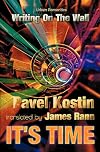
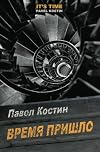
It's Time
by Pavel Kostin
On This Page
Description
Our narrator sees life in a different way. His long philosophical passages about life, death, love, art, friendship, fate, the city reveal a carefully crafted portrait of a sensitive young man searching for his true calling. We follow his quest for meaning, purpose, and freedom from both ordinariness and disappointment.Tags
Recommendations


















Member Reviews
"Я сам не знаю, что это. Важное и серьёзное желание или просто каприз. Но я знаю, что не хочу так."
-Max, pg. 205
This whole novel is about bursting out against a role, against the expectations laid out for us and against surroundings we've grown too comfortable in. That theme has been done before, of course, many times, the rebellion of youth against society, the need for immediacy and a return to our simple desires. But the way Kostin portrays this really struck a chord with me. Kostin often returns to his opening scene of the protagonist on the roof, watching the sunset and the horizon and the city. You begin to match it with Max’s character: he is not crazy, show more he’s just that sort of person, that's what he does. Only later on in the novel are we forcibly brought back to that beginning and realize that there is in fact an underlying thread of urgency, an unanswered question, that Max takes it upon himself to discover, and that premeditated all of this.
Much of the book is a succession of impressions, of ruminations on life, on art, on reality, on our surroundings. The protagonist, Max, is reminiscent of a Fitzgerald-type narrator, pulled in every which way and wandering through the conflict of the story. Toward the end of the novel though we get struck with a realization, one which I didn't see coming probably more because I was absorbed in the protagonist's impressions and less because it wasn't predictable.
This was a surprisingly beautiful story, very surreal. As only my second or third foray into Russian literature I am sure I missed some of the subtler points of the language but at the same time I was deeply impressed by the mood that surrounds it, the simple language combined with deep meaning, the motifs of friendship, love, everyday magic, and probably one of the biggest things - that of the consequences of adulthood, of finding oneself. To read about themes that so wholly resonate with me in a language not my own made me feel uplifted as much as the tale itself. The quote on the back is certainly right: “Хочется жить после прочтения.” show less
-Max, pg. 205
This whole novel is about bursting out against a role, against the expectations laid out for us and against surroundings we've grown too comfortable in. That theme has been done before, of course, many times, the rebellion of youth against society, the need for immediacy and a return to our simple desires. But the way Kostin portrays this really struck a chord with me. Kostin often returns to his opening scene of the protagonist on the roof, watching the sunset and the horizon and the city. You begin to match it with Max’s character: he is not crazy, show more he’s just that sort of person, that's what he does. Only later on in the novel are we forcibly brought back to that beginning and realize that there is in fact an underlying thread of urgency, an unanswered question, that Max takes it upon himself to discover, and that premeditated all of this.
Much of the book is a succession of impressions, of ruminations on life, on art, on reality, on our surroundings. The protagonist, Max, is reminiscent of a Fitzgerald-type narrator, pulled in every which way and wandering through the conflict of the story. Toward the end of the novel though we get struck with a realization, one which I didn't see coming probably more because I was absorbed in the protagonist's impressions and less because it wasn't predictable.
This was a surprisingly beautiful story, very surreal. As only my second or third foray into Russian literature I am sure I missed some of the subtler points of the language but at the same time I was deeply impressed by the mood that surrounds it, the simple language combined with deep meaning, the motifs of friendship, love, everyday magic, and probably one of the biggest things - that of the consequences of adulthood, of finding oneself. To read about themes that so wholly resonate with me in a language not my own made me feel uplifted as much as the tale itself. The quote on the back is certainly right: “Хочется жить после прочтения.” show less
 This review was written for LibraryThing Early Reviewers.
This is the story of Max. We first meet Max sitting on the edge of a roof, contemplating suicide. Lady F appears to talk to him. It isn't clear who or what Lady F is: a hallucination, a guardian angel, a ghost. She seems to magically appear when Max needs her. She gives him some cryptic advice that always help him, if he can decipher it.
His friend Viktor is a photographer. His friends Mutt, Linda, Torte, and Tanya are all street artists. They have some very philosophical and thought-provoking conversations.
It seems that the story is about nothing inparticular until about the last 200 pages. That is when things come together. And if you look back you realize that everything was leading you to this conclusion. I thoroughly enjoyed this show more novel and recommend it to everyone. show less
His friend Viktor is a photographer. His friends Mutt, Linda, Torte, and Tanya are all street artists. They have some very philosophical and thought-provoking conversations.
It seems that the story is about nothing inparticular until about the last 200 pages. That is when things come together. And if you look back you realize that everything was leading you to this conclusion. I thoroughly enjoyed this show more novel and recommend it to everyone. show less
This review was written for LibraryThing Early Reviewers.A beautifully, lyrically crafted novel. If one could combine the contradictory ideas of a soul's torments and the joy of life in one book - this would be the book. Coming from a young author, it was so refreshing to discover no cynicism or crude language so common to the young generation nowadays. It was a joy to read. You felt extraordinary compassion for the protagonist in his tormented quest, you rejoiced in his optimism, you were bound to feel what he felt. Just look at his description of waves coming to shore (my humble translation - the book is in Russian): "The ubiquitous arrival of waves, one after another. It's so calming, if you look at it. But the point is not this subtle murmur of waves. It's the fact that after this wave show more there will be another, and then another. And so - forever. It never fails to calm me. Forever. Do my problems even have a meaning compared to this word..." Now, every time I go to the ocean (and I do live near one) I can't help but think about the waves in this way, so thank you, Pavel Kostin! ... But don't get me wrong - it's not just a descriptive novel of rumination: there is a plot here - skillfully designed and not resolved until the very end. show less
This review was written for LibraryThing Early Reviewers.I have always felt a certain kinship with eccentric characters in books, those outside society’s mainstream, and this novel is teeming with them. Protagonist and narrator Max leads a life uncluttered by modern concerns (family... career...making as much money as possible). His life is low-tech, he has time to admire the details of his surroundings, observe impressive sunsets, hang around on the beach, sit on roofs. He ruminates on a variety of philosophical topics as the book progresses. I also rather liked Victor, a man given to photographing random bits of road which, to others, are devoid of interest. A man for whom the Turner Prize might have been invented. But perhaps my favourite character was Пёс (‘Dog’, according to my show more translation, and he wouldn’t be the only one with a bizarre name) who doesn’t feel as though he needs other people and has given up seeing them, to the point of colliding with strangers in the street. An introvert’s introvert. I would have liked to see much more of him (though I am dubious as to his suitability to own a driving license).
Characters were the best element of this novel for me, yet the plot holds a strand of magic that keeps the reader interested, wanting to know how it will resolve itself. Max trundles through life, under the influence of a mysterious redhead who appears in a waft of ozone, giving him bizarre pieces of advice, and introducing a touch of the paranormal. I was reminded constantly of Jostein Gaarder’s ‘Sophie’s World’, in the sense that both books create seemingly inexplicable mysteries, and the reader is curious to know how the author will explain them away, and how far from our reality he will have to stray to do so.
To give away the ending would be criminal, but suffice it to say I guessed part of it, by no means all of it, and it’s one of those novels that, as soon as you finish reading it you want to go back to the beginning and read it again, view it through the filter of those final sections. Its time-line feels kind of circular, and such a re-reading natural under the circumstances.
In all, it’s a highly spiritual read, surprisingly touchy-feely for a male author, and a book that I suspect can be read on many different levels. Almost certainly, there were subtleties I missed. But its frequent section breaks allow it to make many different points, so the reader cannot help emerging with food for thought. show less
Characters were the best element of this novel for me, yet the plot holds a strand of magic that keeps the reader interested, wanting to know how it will resolve itself. Max trundles through life, under the influence of a mysterious redhead who appears in a waft of ozone, giving him bizarre pieces of advice, and introducing a touch of the paranormal. I was reminded constantly of Jostein Gaarder’s ‘Sophie’s World’, in the sense that both books create seemingly inexplicable mysteries, and the reader is curious to know how the author will explain them away, and how far from our reality he will have to stray to do so.
To give away the ending would be criminal, but suffice it to say I guessed part of it, by no means all of it, and it’s one of those novels that, as soon as you finish reading it you want to go back to the beginning and read it again, view it through the filter of those final sections. Its time-line feels kind of circular, and such a re-reading natural under the circumstances.
In all, it’s a highly spiritual read, surprisingly touchy-feely for a male author, and a book that I suspect can be read on many different levels. Almost certainly, there were subtleties I missed. But its frequent section breaks allow it to make many different points, so the reader cannot help emerging with food for thought. show less
Я получилa копию романа "Время Пришло" написанного Павлом Костиным для проведения предварительной рецензии. С первых страниц, я погрузилась в странный мир главного героя Макса и его друзей, уличных художников, и была приятно развлечена талантливым писателем. Я жила жизнью Макса, мечтала его мечтами, наблюдала с крыши ночной город и любила так, как он умел любить. Лирический романтизм искусно вплетен в show more гобелен психологической структуры сюжета, у которого оказался поразительный конец.
Проза романа мастерски испещрена простыми лаконичными предложениями таким же образом, как друзья Макса изрисовывали стены зданий и заборы быстрыми ясными штрихами, нередко производя шедевры. На ум приходит параграф, "Сад, цветущий сад. Вишни и груши в цвету. Белые цветы на фоне чистого синего неба. Запах весны."
Я рекомендую роман "Время Пришло" для тех, кто любит читать книги, написанные в стиле магического реализма, и кто хотел бы открыть для себя необычайную городскую жизнь группы молодых людей, которые выражают свою индивидуальность в искусстве граффити. show less
Проза романа мастерски испещрена простыми лаконичными предложениями таким же образом, как друзья Макса изрисовывали стены зданий и заборы быстрыми ясными штрихами, нередко производя шедевры. На ум приходит параграф, "Сад, цветущий сад. Вишни и груши в цвету. Белые цветы на фоне чистого синего неба. Запах весны."
Я рекомендую роман "Время Пришло" для тех, кто любит читать книги, написанные в стиле магического реализма, и кто хотел бы открыть для себя необычайную городскую жизнь группы молодых людей, которые выражают свою индивидуальность в искусстве граффити. show less
This review was written for LibraryThing Early Reviewers.An enjoyable read, set in an un-named city, that has the pace and energy of city life and youth. It is a thoughtful book, that takes opportunities to consider art, life and the place of humans in the world and the novel creates vivid pictures of the life of a group of friends.
There is no cynicism in the novel, which is refreshing and makes it a joy to read.
The novel has a narrative, as well as a lyricism; Max is working as a night security guard and hanging out with his artistic friends during the day. He has an old car and together they have various jaunts. He spends some of his time talking to Lady F, who appears by his side at crucial times and guides him. We are not sure if she is a ghost, an angel or an imaginary friend.
We also show more meet Max's family.
There are so many parts of this book to enjoy, I've just picked out this one. Mutt, one of Max's friends, is an artist, who shuts out everyone who isn't his friend and has disguised his house:
'... I turn round and take a long look at Mutt's tower. The invisible tower. He's painted it all. Only when you look hard can you see the fine contour of the line between reality and painting. Soft, altered colours. Now it's completely disappeared. It no longer exists. All that's left is a weak contour, the fine outline of a castle that's disappeared into the sky. And somewhere in there, in the middle of it all, Mutt is painting his trees. In an invisible tower. In a city with no one in it.' show less
There is no cynicism in the novel, which is refreshing and makes it a joy to read.
The novel has a narrative, as well as a lyricism; Max is working as a night security guard and hanging out with his artistic friends during the day. He has an old car and together they have various jaunts. He spends some of his time talking to Lady F, who appears by his side at crucial times and guides him. We are not sure if she is a ghost, an angel or an imaginary friend.
We also show more meet Max's family.
There are so many parts of this book to enjoy, I've just picked out this one. Mutt, one of Max's friends, is an artist, who shuts out everyone who isn't his friend and has disguised his house:
'... I turn round and take a long look at Mutt's tower. The invisible tower. He's painted it all. Only when you look hard can you see the fine contour of the line between reality and painting. Soft, altered colours. Now it's completely disappeared. It no longer exists. All that's left is a weak contour, the fine outline of a castle that's disappeared into the sky. And somewhere in there, in the middle of it all, Mutt is painting his trees. In an invisible tower. In a city with no one in it.' show less
This review was written for LibraryThing Early Reviewers.I received this book from LTER and it was a pleasure to read. The story of Max and his friends in an unnamed Russian town is sometimes philosophical and episodic but I found it beguiling. There is some lovely writing and the whole is very atmospheric. This was originally published in Russian and I found the translation by James Rann a very smooth read.
This review was written for LibraryThing Early Reviewers.Members
- Recently Added By
Published Reviews
ThingScore 100
Pavel Kostin represents new life in Russia’s celebrated literary tradition. His style is imaginative, gripping, original and lyrical. Unburdened by the Soviet baggage, there is an intriguing freshness in the raw innocence of Pavel’s prose.
added by JBD1
Я читала книгу и чувствовала ее, для меня это было также естественно кка пить воду. Легко, без принуждения. Автор дает нам влагу, которой нам так не хватает в круговороте нашей жизни. Нас заедает быт или мы сами ему show more позволяет, это не важно. Важно, что это просиходит. Книга - возможность вспомнить дество, ведь только дети так непринужденны к окружающему миру. Они впитывают его, а не дерут на куски как привыкли делать мы.
Серьезная книга со свежим взглядом, радует и волнует.
Художник не может создать свое творение и оставить зрителей без эмоций. главное, что человек увидел часть себя или наоборот отрекься и начался спор. Спор, в котором рождается истина.
Рекомендую. Для себя, для понимания, о дружбе, любви, поиске себя. show less
Серьезная книга со свежим взглядом, радует и волнует.
Художник не может создать свое творение и оставить зрителей без эмоций. главное, что человек увидел часть себя или наоборот отрекься и начался спор. Спор, в котором рождается истина.
Рекомендую. Для себя, для понимания, о дружбе, любви, поиске себя. show less
added by private library
Talk Discussions
Past Discussions
It's Time Party in Fans of Russian authors (December 2011)
IT'S TIME (Время Пришло) by Pavel Kostin (Russian Edition) in Fans of Russian authors (August 2011)
Author Information
2 Works 67 Members
Common Knowledge
- Canonical title
- It's Time
- Alternate titles
- Время Пришло
- Original publication date
- 2011-10-30
- People/Characters
- Max; Viktor; Tanya; Pyos; Oksana; Gray (show all 10); Lady F; Tort; Ben; Dimitri Alexandovich
- Important places
- Baltic Sea; Russia; Kaliningrad
- Dedication*
- Dedicated to A.V.
Blessed be your memory. - First words*
- "M-a-a-a-ax!" She shouted, rushing forward, "AAAaa M-a-a-a-ax!"
- Last words*
- (Click to show. Warning: May contain spoilers.)"Yes," I say, "I know."
*Some information comes from Common Knowledge in other languages. Click "Edit" for more information.
Classifications
- Genres
- General Fiction, Fiction and Literature, Fantasy
- DDC/MDS
- 891.735 — Literature & rhetoric Asian Literature East Indo-European and Celtic literatures Russian and East Slavic languages Russian fiction 1991–
- LCC
- PG3482.7 .S75 .V7413 — Language and Literature Slavic languages and literatures. Baltic languages. Albanian language Slavic. Baltic. Albanian Russian literature Individual authors and works 1961-2000
- BISAC
Statistics
- Members
- 57
- Popularity
- 536,886
- Reviews
- 33
- Rating
- (3.85)
- Languages
- English, Russian
- Media
- Paper, Ebook
- ISBNs
- 5