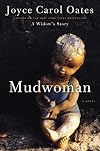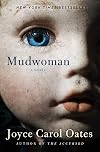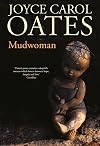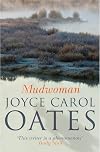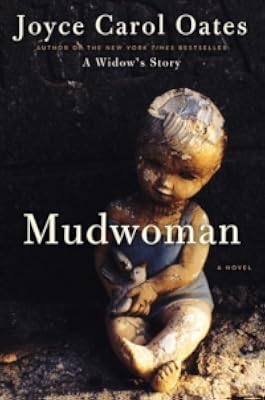
Mudwoman
by Joyce Carol Oates
On This Page
Description
M.R. Neukirchen--the first female president of a lauded Ivy League institution--struggles to hold onto her self-identity in the face of personal and professional demons.Tags
Recommendations






















Member Reviews
Mudwoman is dark even by Joyce Carol Oates standards. Oates is well known for novels featuring female leads that do not sense the physical jeopardy they are in before it is almost too late to escape it. Suddenly, these women - as intelligent and accomplished as they may be – recognize that they have wandered into a situation that could cost them their lives. The threat usually comes from an evil or deranged man but, in the case of Mudwoman, all the damage is done by a little girl’s own mother.
When she is three, Jedina Kraek's mother decides to murder her and her five-year-old sister. Jedina is shaved bald as part of her mother’s religious delusions and tossed into a mud flat near the Black Snake River where her mother assumes show more that she will drown in the muck. Against all odds, the little girl is found by a mentally handicapped local trapper and taken into a foster family for several years. When the Neukirchens, a childless Quaker couple, adopt her, Jedina (who had mistakenly claimed her older sister’s name, Jewel) becomes Meredith Ruth Neukirchen.
“Merry” does her best to live up to the Quaker standards of her parents, and becomes the model student, an overachiever who compensates for her insecurities by excelling at academics. Secretly, Meredith applies for, and wins, the scholarship to Cornell that she believes will be her ticket to a new life far from stifling Carthage, New York.
Mudwoman is told in chapters that alternate between Meredith’s girlhood and her present life as the first female president of a prestigious Ivy League university. Now 41, and calling herself M.R. Neukirchen, Meredith lives alone in a spooky, “historic” house on campus allocated to the president and spends all of her waking hours on university business – much of it involving fundraisers at which she must impress potential donors with her administrative competence. Oates, herself a Princeton teacher since 1978, is very familiar with this world and she exposes its inner workings here in detail.
Because so much of what takes place in the present happens entirely inside M.R.’s head, the book becomes a contrast between a realistic presentation of her childhood and the more surrealistic presentation of her present day circumstances. What happens when M.R.’s childhood demons intrude upon her present life is often painful to watch. When cracks begin to appear in her public persona, expect to be horrified by M.R.’s mental collapse as the university board of directors tries to contain the damage and deal with the problems she creates for the school.
Mudwoman is frustrating at times because Oates, who is a master of this writing style, wants her readers to be (at least temporarily) as confused as M.R. herself about what is real and what happens only in her dreams. The good news is that patient readers will find that most, but not quite all, of the answers are revealed by the end of the book. Even better news is that they will have spent so much time inside M.R.’s head that they will likely know and understand her as well as they do any fictional character they have ever encountered.
Although it can be a difficult read at times, I highly recommend Mudwoman.
Rated at: 4.0 show less
When she is three, Jedina Kraek's mother decides to murder her and her five-year-old sister. Jedina is shaved bald as part of her mother’s religious delusions and tossed into a mud flat near the Black Snake River where her mother assumes show more that she will drown in the muck. Against all odds, the little girl is found by a mentally handicapped local trapper and taken into a foster family for several years. When the Neukirchens, a childless Quaker couple, adopt her, Jedina (who had mistakenly claimed her older sister’s name, Jewel) becomes Meredith Ruth Neukirchen.
“Merry” does her best to live up to the Quaker standards of her parents, and becomes the model student, an overachiever who compensates for her insecurities by excelling at academics. Secretly, Meredith applies for, and wins, the scholarship to Cornell that she believes will be her ticket to a new life far from stifling Carthage, New York.
Mudwoman is told in chapters that alternate between Meredith’s girlhood and her present life as the first female president of a prestigious Ivy League university. Now 41, and calling herself M.R. Neukirchen, Meredith lives alone in a spooky, “historic” house on campus allocated to the president and spends all of her waking hours on university business – much of it involving fundraisers at which she must impress potential donors with her administrative competence. Oates, herself a Princeton teacher since 1978, is very familiar with this world and she exposes its inner workings here in detail.
Because so much of what takes place in the present happens entirely inside M.R.’s head, the book becomes a contrast between a realistic presentation of her childhood and the more surrealistic presentation of her present day circumstances. What happens when M.R.’s childhood demons intrude upon her present life is often painful to watch. When cracks begin to appear in her public persona, expect to be horrified by M.R.’s mental collapse as the university board of directors tries to contain the damage and deal with the problems she creates for the school.
Mudwoman is frustrating at times because Oates, who is a master of this writing style, wants her readers to be (at least temporarily) as confused as M.R. herself about what is real and what happens only in her dreams. The good news is that patient readers will find that most, but not quite all, of the answers are revealed by the end of the book. Even better news is that they will have spent so much time inside M.R.’s head that they will likely know and understand her as well as they do any fictional character they have ever encountered.
Although it can be a difficult read at times, I highly recommend Mudwoman.
Rated at: 4.0 show less
Like every other Joyce Carol Oates novel I've read, this story veers between 'gripping' and 'terrifying' and leaves me feeling wrung out and shaken. I can't imagine what it must be like to write like this--to spend your waking hours writing this kind of writing. It's magnificent, harsh, brittle, relentless writing, and it leaves me not wanting to read another Oates book for a long time, however unforgettable her books always are.
Wow. This book is like what I imagine a bad acid trip to be like. The author plays freely with the reader's sense of time and reality. She takes you deep inside a woman's midlife mental breakdown. This is clearly not going to be everyone's cup of tea. For me it was an experience.
As always, JCO tells her story masterfully. A young girl is abandoned to die by her clinically insane mother. Saved by chance, Mudgirl is fostered and then adopted. She grows up to go farther than anyone would have thought possible. As the first elected female president of a prestigious university, Mudwoman is at the peak of her career. But slowly and inexplicably, her world and mind begin falling apart.
Chilling, detailed, and frighteningly possible. This is show more what going crazy feels like. show less
As always, JCO tells her story masterfully. A young girl is abandoned to die by her clinically insane mother. Saved by chance, Mudgirl is fostered and then adopted. She grows up to go farther than anyone would have thought possible. As the first elected female president of a prestigious university, Mudwoman is at the peak of her career. But slowly and inexplicably, her world and mind begin falling apart.
Chilling, detailed, and frighteningly possible. This is show more what going crazy feels like. show less
Oates captured an unlikable and unreliable narrator and nailed the fragmented lives that orphans and adoptees often lead. Pretending that their lives have no attachment to whatever comes before their adoption can be very damaging. I have no idea how much of her life was fantasy and how much was factual. You can't pretend that someone's origin is different than reality and expect them to have a completely realistic view of the world.
[Mudwoman] is the story of M. R. Neukirchen, newly appointed university president of a university, not unlike Oates's own Princeton, her unraveling and rebirth.
[Mudwoman] has a mythical beginning, with a deranged, religiously-obsessed woman brutally abandoning her daughter in the Black Snake river mudflats, returning her to God, as he has allegedly has commanded her. The child, barely alive, is found later by a "simple" trapper/hunter, who follows the shrieking of the "King of Crows" to the mudflats. The local people will tell this story as that of the "mudgirl."
Of course, the mudgirl is our university president and with such a mythological beginning one cannot help but read this story as a kind of "hero's story" turned inward. M. R. show more is a highly accomplished and talented academic, but at the pinnacle of her success the weight of the past, which she remembers only small pieces of, becomes too much and she begins to crumble. In alternating chapters we have M.R.'s story and that of mudgirl until the two stories merge. M. R. has a nervous breakdown but will successfully wrestle her demons, come to terms with her past, and 'rise from the ashes.'
The reader, through the narrator, spends a lot of time in M. R.'s head, which can be alternately fascinating, tedious and unnerving, particularly as she begins to crumble and attempts to keep herself together. Her head is filled with university concerns, political concerns, private concerns related to her relationships, and she slips into fantasy a few times (at least one of those times I was caught thinking that the fantasy was real for awhile). It's an arduous journey we are taking with her, and one can almost imagine a biblical wilderness, a mythological fight with dragons... In the end, Oates' shows us, as in many of her books, a survivor, but in this book not only that, but M.R. is the hero of her own life ("Whether I shall turn out to be the hero of my own life, or whether that station will be held by anybody else, these pages must show. " -- [David Copperfield])
There are a lot of things I could add as I find Oates's work endlessly fascinating. The use of names, the mythological and astronomical threads (her secret lover is an astronomer), the use of personal fantasies in M. R.'s story, a philosophy thread (M.R. is a philosophy scholar)...etc. But, for brevity's sake, I will restrain myself. I should mention here that I did read somewhere that JCO was initially inspired to write [Mudwoman] by a dream in which she envisioned a woman whose makeup was so thickly applied that it resembled mud (and that image will show up in the book). It was such a potent vision that when she awoke she immediately started making notes, though it took years to develop. She has never done this before, she says.
This will not be one of my favorites, and I would not recommend it as a "first" Oates to try, but it is very good, interesting, and certainly could appeal to those who might have more of a connection to academia. But, as usual, I find myself still thinking about one of her books long after I have closed the back cover... show less
[Mudwoman] has a mythical beginning, with a deranged, religiously-obsessed woman brutally abandoning her daughter in the Black Snake river mudflats, returning her to God, as he has allegedly has commanded her. The child, barely alive, is found later by a "simple" trapper/hunter, who follows the shrieking of the "King of Crows" to the mudflats. The local people will tell this story as that of the "mudgirl."
Of course, the mudgirl is our university president and with such a mythological beginning one cannot help but read this story as a kind of "hero's story" turned inward. M. R. show more is a highly accomplished and talented academic, but at the pinnacle of her success the weight of the past, which she remembers only small pieces of, becomes too much and she begins to crumble. In alternating chapters we have M.R.'s story and that of mudgirl until the two stories merge. M. R. has a nervous breakdown but will successfully wrestle her demons, come to terms with her past, and 'rise from the ashes.'
The reader, through the narrator, spends a lot of time in M. R.'s head, which can be alternately fascinating, tedious and unnerving, particularly as she begins to crumble and attempts to keep herself together. Her head is filled with university concerns, political concerns, private concerns related to her relationships, and she slips into fantasy a few times (at least one of those times I was caught thinking that the fantasy was real for awhile). It's an arduous journey we are taking with her, and one can almost imagine a biblical wilderness, a mythological fight with dragons... In the end, Oates' shows us, as in many of her books, a survivor, but in this book not only that, but M.R. is the hero of her own life ("Whether I shall turn out to be the hero of my own life, or whether that station will be held by anybody else, these pages must show. " -- [David Copperfield])
There are a lot of things I could add as I find Oates's work endlessly fascinating. The use of names, the mythological and astronomical threads (her secret lover is an astronomer), the use of personal fantasies in M. R.'s story, a philosophy thread (M.R. is a philosophy scholar)...etc. But, for brevity's sake, I will restrain myself. I should mention here that I did read somewhere that JCO was initially inspired to write [Mudwoman] by a dream in which she envisioned a woman whose makeup was so thickly applied that it resembled mud (and that image will show up in the book). It was such a potent vision that when she awoke she immediately started making notes, though it took years to develop. She has never done this before, she says.
This will not be one of my favorites, and I would not recommend it as a "first" Oates to try, but it is very good, interesting, and certainly could appeal to those who might have more of a connection to academia. But, as usual, I find myself still thinking about one of her books long after I have closed the back cover... show less
Mudwoman is not a book for anyone who is feeling depressed. M. R. [Meredith Ruth] Neukirchen may be highly accomplished now, the first female president of a university that didn't even admit women when she was born, but she had a very rocky start in life.
The book wanders back and forth between Meredith's past and present. The present is set in the first year of her presidency and the summer after. The past gives us the day her mother, whom we could have called a religious maniac back in the 1960s, threw one of her little daughters onto a mudflat, from which she was rescued by a local trapper.
'Mudgirl' was the nickname the little girl (Jewel or Jedinah?) was given by her foster father. The chapter headings are for either 'Mudgirl' or show more 'Mudwoman.' M. R. escapes death a second time by being adopted by the Neukirchins, a nice Quaker couple from Carthage, New York. Too bad they tried shield their 'Merry' from her past and the harsher realities of life.
It is Conrad who gives M.R. her love of philosophy. Agatha, a librarian, teaches M. R. to love books. M. R. doesn't bother to visit or keep in touch with her adoptive parents much after she goes off to college. She seems to be a dreadful ingrate for much of the book, but we're given a motive later.
For all of the love the Neukirchens lavished on their daughter, M. R. has grown up believing herself unworthy of love. She desperately craves it. A 'people pleaser' who falls apart when someone dislikes her, M. R. is working much too hard. She's been doing a good job of forgetting things she doesn't want to remember, but that's changing now.
George W. Bush is President and the US is at war with Iraq. M. R. was against going to war in the first place and certainly doesn't support it now. The conservative element of her mostly-liberal university is difficult for M. R. to bear. One student brings her distress to a head.
There are several scenes which turn out to be nightmares, or possibly hallucinations. Because they're portrayed in the same manner as the scenes meant to be M. R.'s reality, the reader gets to wonder until given notice or some clue that It Didn't Happen. After all, when a book starts out with a scene as horrific as this one did, it's hard to assure oneself that a new scene can't be real.
Thank goodness some members of M. R.'s staff are bolder than the housekeeper who refuses to violate the privacy of the university president's chambers. I would have liked to have heard the housekeeper's remorse over what could have happened because of her attitude, but we aren't given her reaction.
The summer months are better for our heroine. The final scene suggests she's learning at last. I hope so. So many times M. R.'s reactions or the behavior of others toward her made me wince in sympathy and remembered pain.
Mudwoman held my interest through all 16 CDs. Ms. Ericksen's narration was just right for a character as tormented as Meredith, in my opinion. Again, though, I don't recommend reading or listening to this novel if feeling blue or depressed.
You will not hear the infamous N-word in this book. The author is using 'niggardly', a synonym for 'stingy'.
For readers who are so young that not even their parents listened to a radio station that played it, 'Both Sides Now' is a real song by Joni Mitchell. It's fitting for Mudwoman, so I do recommend looking it up and listening to it.
I also recommend letting Monty Python's 'Bruces' Philosophers Song' run through your head every time a philosopher is mentioned -- it helps lighten the mood. show less
The book wanders back and forth between Meredith's past and present. The present is set in the first year of her presidency and the summer after. The past gives us the day her mother, whom we could have called a religious maniac back in the 1960s, threw one of her little daughters onto a mudflat, from which she was rescued by a local trapper.
'Mudgirl' was the nickname the little girl (Jewel or Jedinah?) was given by her foster father. The chapter headings are for either 'Mudgirl' or show more 'Mudwoman.' M. R. escapes death a second time by being adopted by the Neukirchins, a nice Quaker couple from Carthage, New York. Too bad they tried shield their 'Merry' from her past and the harsher realities of life.
It is Conrad who gives M.R. her love of philosophy. Agatha, a librarian, teaches M. R. to love books. M. R. doesn't bother to visit or keep in touch with her adoptive parents much after she goes off to college. She seems to be a dreadful ingrate for much of the book, but we're given a motive later.
For all of the love the Neukirchens lavished on their daughter, M. R. has grown up believing herself unworthy of love. She desperately craves it. A 'people pleaser' who falls apart when someone dislikes her, M. R. is working much too hard. She's been doing a good job of forgetting things she doesn't want to remember, but that's changing now.
George W. Bush is President and the US is at war with Iraq. M. R. was against going to war in the first place and certainly doesn't support it now. The conservative element of her mostly-liberal university is difficult for M. R. to bear. One student brings her distress to a head.
There are several scenes which turn out to be nightmares, or possibly hallucinations. Because they're portrayed in the same manner as the scenes meant to be M. R.'s reality, the reader gets to wonder until given notice or some clue that It Didn't Happen. After all, when a book starts out with a scene as horrific as this one did, it's hard to assure oneself that a new scene can't be real.
Thank goodness some members of M. R.'s staff are bolder than the housekeeper who refuses to violate the privacy of the university president's chambers. I would have liked to have heard the housekeeper's remorse over what could have happened because of her attitude, but we aren't given her reaction.
The summer months are better for our heroine. The final scene suggests she's learning at last. I hope so. So many times M. R.'s reactions or the behavior of others toward her made me wince in sympathy and remembered pain.
Mudwoman held my interest through all 16 CDs. Ms. Ericksen's narration was just right for a character as tormented as Meredith, in my opinion. Again, though, I don't recommend reading or listening to this novel if feeling blue or depressed.
You will not hear the infamous N-word in this book. The author is using 'niggardly', a synonym for 'stingy'.
For readers who are so young that not even their parents listened to a radio station that played it, 'Both Sides Now' is a real song by Joni Mitchell. It's fitting for Mudwoman, so I do recommend looking it up and listening to it.
I also recommend letting Monty Python's 'Bruces' Philosophers Song' run through your head every time a philosopher is mentioned -- it helps lighten the mood. show less
This psychological thriller is written in typical Oates style--a bit overwrought, but you get used to it and it works. Mudwoman is MR (Meredith), who has recently taken up position as the president of a prestigious Ivy League university. She is called "Mudwoman" because when she was a toddler, her mother abandoned her in the middle of mud flats to die. Covered in mud, she was rescued in time, and was lovingly raised by adoptive parents. However, she has always had a fragile sense of self, and constantly strives to be "the best" at whatever she does.
The book alternates the story of her childhood and youth with her year as president of the university, as it gradually becomes apparent that her health is deteriorating. Strange things show more happen, and the reader is never sure what is real and what is not--whether MR is hallucinating or the events are really happening. Although long, this is a page-turner, and Oates paints an incisive psychological portrait of a troubled, but high-achieving woman. I am a fan of Joyce Carol Oates, and I recommend this to other fans.
3 1/2 stars show less
The book alternates the story of her childhood and youth with her year as president of the university, as it gradually becomes apparent that her health is deteriorating. Strange things show more happen, and the reader is never sure what is real and what is not--whether MR is hallucinating or the events are really happening. Although long, this is a page-turner, and Oates paints an incisive psychological portrait of a troubled, but high-achieving woman. I am a fan of Joyce Carol Oates, and I recommend this to other fans.
3 1/2 stars show less
Members
- Recently Added By
Published Reviews
ThingScore 75
added by Nickelini
Lists

IMPAC Dublin Literary Award 2014 longlist
150 works; 3 members

Llibres que he llegit el 2024
77 works; 1 member
Author Information

481+ Works 62,308 Members
Joyce Carol Oates was born on June 16, 1938 in Lockport, New York. She received a bachelor's degree in English from Syracuse University and a master's degree in English from the University of Wisconsin. She is the author of numerous novels and collections of short stories. Her works include We Were the Mulvaneys, Blonde, Bellefleur, You Must show more Remember This, Because It Is Bitter, Because It Is My Heart, Solstice, Marya : A Life, and Give Me Your Heart. She has received numerous awards including the National Book Award for Them, the PEN/Malamud Award for Excellence in Short Fiction, and the F. Scott Fitzgerald Award for Lifetime Achievement in American Literature. She was a finalist for the 2015 Pulitzer Prize for Fiction with her title Lovely, Dark, Deep. She also wrote a series of suspense novels under the pseudonym Rosamond Smith. In 2015, her novel The Accursed became listed as a bestseller on the iBooks chart. She worked as a professor of English at the University of Windsor, before becoming the Roger S. Berlind Distinguished Professor of Humanities at Princeton University. She and her late husband Raymond J. Smith operated a small press and published a literary magazine, The Ontario Review. (Bowker Author Biography) Joyce Carol Oates is one of the most eminent and prolific literary figures and social critics of our times. She has won the National Book Award and several O. Henry and Pushcart prizes. Among her other awards are an NEA grant, a Guggenheim fellowship, the PEN/Malamud Lifetime Achievement Award, and the F. Scott Fitzgerald Award for Lifetime Achievement in American Literature. (Publisher Provided) show less
Some Editions
Awards and Honors
Common Knowledge
- Canonical title
- Mudwoman
- Original publication date
- 2012-03-20
Classifications
Statistics
- Members
- 540
- Popularity
- 55,146
- Reviews
- 18
- Rating
- (3.43)
- Languages
- 6 — English, French, Italian, Portuguese, Spanish, Swedish
- Media
- Paper, Audiobook, Ebook
- ISBNs
- 35
- ASINs
- 10