
The Epistle to the Romans
by Karl Barth
On This Page
Description
This volume provides a much-needed English translation of the sixth edition of what is considered the fundamental text on Barthianism.Tags
Recommendations










Member Reviews
While Karl Barth would later offer a more systematic theology in his "Church Dogmatics," he first gave voice to his theological vision in his commentary on "The Epistle to the Romans," first published in 1918 and then expanded and reissued five more times during the following ten years. Translated from German into English in 1933, the work provided an intellectual foundation for the theological movement that eventually was described as Barthianism or Neo-Orthodoxy.
Barth's analysis of Romans is straightforward: Paul offered God's wisdom to his age and the same lessons are applicable to contemporary times. However, the heart of Barth's interpretation is rather counter-intuitive: the apostle is writing to a depraved and fallen humanity show more that cannot fathom the transcendent God, so much of what can be understood, and must be understood, is negative (humans must come to understand what things they can never understand). Barth insists on human inability to understand divine wisdom; worse, human institutions -- including the church -- try to promote flawed wisdom in place of God's teaching.
Amazingly, Barth, responding to 18th and 19th century theologians and Biblical scholars who advocated for a progressive Christianity that imagined a constructive role for human beings in elucidating and carrying out God's teaching, insisted on a theological position about divine power more stringent than even John Calvin's notable writing about the transcendent God. God's power and wisdom are completely different and grander than anything that people can understand or appreciate; in fact, only through direct revelation (that is, the Bible) can human beings even begin to understand anything about God.
The consequence of this thinking -- and the central delicate interpretation that Barth must provide -- is that there is barely any difference between sin and non-sin, between faith and non-faith. Given that sinful human beings are so fallen, so limited, and so ignorant, it is difficult to describe how mortals can act with any conception of good and evil that even approximates God's ultimate good and evil. In some ways, it appears that awareness of this human limitation is what separates faithful Christians from others, in Barth's analysis.
As a rather unabashed Calvinist on most matters of divine transcendence, I can appreciate Barth's approach in some ways, but it consistently undervalues humanity in a way that seems to diverge from the description of human beings created in God's image (Genesis 1) and the way that Jesus consistently approaches and teaches people in the Gospels. Still, the great gift for Christians of Barth's rigorous and persistent approach is the necessary reminder that our thinking is not God's thinking and we probably do not know even what we think we know, especially when we dare to speak of God.
With this in mind, it should be noted that reading Barth is not for the faint of heart or mind. He often approaches subjects with a density of prose, including paragraphs that can run for pages. Frankly, I also find that Barth is best read in small doses, lest one's eyes glaze over. Still, this influential theological approach demands understanding, assessment, and likely adaptation by modern Christians.
This review is also published at http://alongthispilgrimsjourney.blogspot.com/2013/05/book-review-epistle-to-roma... show less
Barth's analysis of Romans is straightforward: Paul offered God's wisdom to his age and the same lessons are applicable to contemporary times. However, the heart of Barth's interpretation is rather counter-intuitive: the apostle is writing to a depraved and fallen humanity show more that cannot fathom the transcendent God, so much of what can be understood, and must be understood, is negative (humans must come to understand what things they can never understand). Barth insists on human inability to understand divine wisdom; worse, human institutions -- including the church -- try to promote flawed wisdom in place of God's teaching.
Amazingly, Barth, responding to 18th and 19th century theologians and Biblical scholars who advocated for a progressive Christianity that imagined a constructive role for human beings in elucidating and carrying out God's teaching, insisted on a theological position about divine power more stringent than even John Calvin's notable writing about the transcendent God. God's power and wisdom are completely different and grander than anything that people can understand or appreciate; in fact, only through direct revelation (that is, the Bible) can human beings even begin to understand anything about God.
The consequence of this thinking -- and the central delicate interpretation that Barth must provide -- is that there is barely any difference between sin and non-sin, between faith and non-faith. Given that sinful human beings are so fallen, so limited, and so ignorant, it is difficult to describe how mortals can act with any conception of good and evil that even approximates God's ultimate good and evil. In some ways, it appears that awareness of this human limitation is what separates faithful Christians from others, in Barth's analysis.
As a rather unabashed Calvinist on most matters of divine transcendence, I can appreciate Barth's approach in some ways, but it consistently undervalues humanity in a way that seems to diverge from the description of human beings created in God's image (Genesis 1) and the way that Jesus consistently approaches and teaches people in the Gospels. Still, the great gift for Christians of Barth's rigorous and persistent approach is the necessary reminder that our thinking is not God's thinking and we probably do not know even what we think we know, especially when we dare to speak of God.
With this in mind, it should be noted that reading Barth is not for the faint of heart or mind. He often approaches subjects with a density of prose, including paragraphs that can run for pages. Frankly, I also find that Barth is best read in small doses, lest one's eyes glaze over. Still, this influential theological approach demands understanding, assessment, and likely adaptation by modern Christians.
This review is also published at http://alongthispilgrimsjourney.blogspot.com/2013/05/book-review-epistle-to-roma... show less
Book Review: The Epistle to the Romans, by Karl Barth
Karl Barth is considered by many people to be one of the most influential theologians of the 20th century. He was a pastor, professor and a prolific writer, his commentary on Romans being the work that introduced him to the world. My introduction to Barth came through some excerpts of his Church Dogmatics while I was in seminary and then from reading a collection of his later sermons. I recently read Eugene Peterson’s memoir and he noted that Barth’s Romans commentary exerted a powerful influence on his own early ministry. I have always enjoyed Peterson I took his recommendation and dove into Barth’s Romans for myself. Having finished, I can perhaps best describe Romans as a show more sort of cross-country trip, one which exposed me to a vast landscape and nearly overwhelmed me with visual images, pictures that will have to be studied again and again to fully appreciate all that they contain.
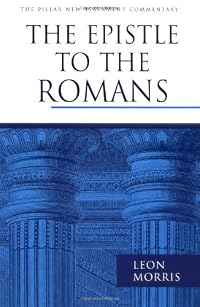
Barth’s work here is significantly different from a traditional commentary of either an exegetical or expositional nature. The former often address significant issues of culture, the historical setting and language as they bear on our understanding of the text, while the latter provide the manuscript of sermons preached from the text. An example of a work of exegesis of Romans is the recent volume by Leon Morris, while an excellent exposition is James Montgomery Boice’s Romans, which runs four volumes. Barth’s method is more akin to opening his Bible, reading a chapter and then going back, paragraph-by-paragraph, phrase-by-phrase, writing as the Spirit leads him in understanding the words of Paul.
Barth’s comments on Romans are extensive, expounding on Pauls’ 16 chapters of Biblical text over the course of 500 pages. Part of this length is due to Barth’s style. When I write I may introduce a new thought with a question, while Barth frequently uses 3 or 4, or more questions, a technique that does aid in understanding the relevance of Paul’s words for Barth’s time, and ours as well. These questions are then answered in depth. Barth ultimately published six editions of his commentary, the second being a significant reworking of the original, while the remaining editions being what Barth considered to be minor updates. He was well aware that his writing had a lot to offer to the pastors and theologians of his day and he had the freedom to follow each new thought for as long as he felt was necessary.
While I have a graduate degree in divinity I often felt a bit underpowered, intellectually, to follow and apprehend Barth’s line of reasoning. One thread that did emerge early in the commentary is Barth’s deep love for Jesus as the second person of the Trinity and the understanding of God’s work in Jesus in the act of his death-and-resurrection as the defining moment in all of human history. Writing on Romans 5:6, “For while we were yet weak, in due season Christ died for the ungodly,” Barth says, “Everything shines in the light of His death, and is illuminated by it. No single passage in the Synoptic Gospels is intelligible part from the death.” (159)
Writing a bit further, of the new creation in Christ that believers become when they grasp Christ by faith, (Romans 5:9-11) Barth says, “To the question, Whence are we? – which is the question of all questions – we receive the answer which is beyond all answers: We are they who have been justified by God,” adding later on the same page, “As the beloved of God we have no alternative but to love Him in return. In the dawning splendor of His glory, we have no alternative but hope.” (163)
I have read that Barth was considered by some to be soft on the theme of universal salvation, i.e. that while his theological grounding was in the Reformed tradition, he personally held to the belief that ultimately God’s salvation would be known by all people, rather than a particular group chosen by God, as affirmed by the Belgic Confession and the Canons of Dort. When he writes of the church, from Romans 9-11, Barth seemed to lean towards universal salvation, although without explicitly saying so.
Barth discusses Christian ethics from Romans 12 and in that discussion something jumped out at me that has profound pastoral implications. In a section on the theme of grace he writes, “Grace means also the possibility, not of a ‘good’(!) conscience, but of a consoled conscience.” (428) We who know God through our faith in the finished work of Christ know that we will continue to sin against God, a God who continues to hold us and forgives us nonetheless. God forgives our sins. He removes them from our presence. But the sure grasp of this knowledge in our minds, the removal of our sin from God, does not remove the memories that we have of our sin. In Christ we are not changed existentially from ‘bad’ to ‘good.’ In the knowledge of who we are before God we are not so much ‘bad’ as ‘broken.’ And Barth reminds us that in our brokenness, through the work of Christ, we are consoled and comforted as we receive God’s mercy. This is a bit of the Good News that we need to be reminded of each day, sometimes many times each day.
Barth has written a commentary of profound depth and in my first reading of it I just managed to get my feet wet in it. Should I at some time teach or preach from Romans this would be a good reference to consult in addition to other commentaries, rather than using it as a primary resource. Paul’s letter to the Romans is a very rich text and I think Barth has given me a good resource from which to approach the letter in smaller parts, as I continue to study it for my own spiritual growth. show less
Karl Barth is considered by many people to be one of the most influential theologians of the 20th century. He was a pastor, professor and a prolific writer, his commentary on Romans being the work that introduced him to the world. My introduction to Barth came through some excerpts of his Church Dogmatics while I was in seminary and then from reading a collection of his later sermons. I recently read Eugene Peterson’s memoir and he noted that Barth’s Romans commentary exerted a powerful influence on his own early ministry. I have always enjoyed Peterson I took his recommendation and dove into Barth’s Romans for myself. Having finished, I can perhaps best describe Romans as a show more sort of cross-country trip, one which exposed me to a vast landscape and nearly overwhelmed me with visual images, pictures that will have to be studied again and again to fully appreciate all that they contain.
Barth’s work here is significantly different from a traditional commentary of either an exegetical or expositional nature. The former often address significant issues of culture, the historical setting and language as they bear on our understanding of the text, while the latter provide the manuscript of sermons preached from the text. An example of a work of exegesis of Romans is the recent volume by Leon Morris, while an excellent exposition is James Montgomery Boice’s Romans, which runs four volumes. Barth’s method is more akin to opening his Bible, reading a chapter and then going back, paragraph-by-paragraph, phrase-by-phrase, writing as the Spirit leads him in understanding the words of Paul.
Barth’s comments on Romans are extensive, expounding on Pauls’ 16 chapters of Biblical text over the course of 500 pages. Part of this length is due to Barth’s style. When I write I may introduce a new thought with a question, while Barth frequently uses 3 or 4, or more questions, a technique that does aid in understanding the relevance of Paul’s words for Barth’s time, and ours as well. These questions are then answered in depth. Barth ultimately published six editions of his commentary, the second being a significant reworking of the original, while the remaining editions being what Barth considered to be minor updates. He was well aware that his writing had a lot to offer to the pastors and theologians of his day and he had the freedom to follow each new thought for as long as he felt was necessary.
While I have a graduate degree in divinity I often felt a bit underpowered, intellectually, to follow and apprehend Barth’s line of reasoning. One thread that did emerge early in the commentary is Barth’s deep love for Jesus as the second person of the Trinity and the understanding of God’s work in Jesus in the act of his death-and-resurrection as the defining moment in all of human history. Writing on Romans 5:6, “For while we were yet weak, in due season Christ died for the ungodly,” Barth says, “Everything shines in the light of His death, and is illuminated by it. No single passage in the Synoptic Gospels is intelligible part from the death.” (159)
Writing a bit further, of the new creation in Christ that believers become when they grasp Christ by faith, (Romans 5:9-11) Barth says, “To the question, Whence are we? – which is the question of all questions – we receive the answer which is beyond all answers: We are they who have been justified by God,” adding later on the same page, “As the beloved of God we have no alternative but to love Him in return. In the dawning splendor of His glory, we have no alternative but hope.” (163)
I have read that Barth was considered by some to be soft on the theme of universal salvation, i.e. that while his theological grounding was in the Reformed tradition, he personally held to the belief that ultimately God’s salvation would be known by all people, rather than a particular group chosen by God, as affirmed by the Belgic Confession and the Canons of Dort. When he writes of the church, from Romans 9-11, Barth seemed to lean towards universal salvation, although without explicitly saying so.
Barth discusses Christian ethics from Romans 12 and in that discussion something jumped out at me that has profound pastoral implications. In a section on the theme of grace he writes, “Grace means also the possibility, not of a ‘good’(!) conscience, but of a consoled conscience.” (428) We who know God through our faith in the finished work of Christ know that we will continue to sin against God, a God who continues to hold us and forgives us nonetheless. God forgives our sins. He removes them from our presence. But the sure grasp of this knowledge in our minds, the removal of our sin from God, does not remove the memories that we have of our sin. In Christ we are not changed existentially from ‘bad’ to ‘good.’ In the knowledge of who we are before God we are not so much ‘bad’ as ‘broken.’ And Barth reminds us that in our brokenness, through the work of Christ, we are consoled and comforted as we receive God’s mercy. This is a bit of the Good News that we need to be reminded of each day, sometimes many times each day.
Barth has written a commentary of profound depth and in my first reading of it I just managed to get my feet wet in it. Should I at some time teach or preach from Romans this would be a good reference to consult in addition to other commentaries, rather than using it as a primary resource. Paul’s letter to the Romans is a very rich text and I think Barth has given me a good resource from which to approach the letter in smaller parts, as I continue to study it for my own spiritual growth. show less
Impenetrable and occasionally brilliant. Useless as a commentary, fascinating as a polemic.
Punchy. Often difficult to put it down, or to know where to stop. Not a typical commentary by any means. Many interesting fresh insights. Theology of the highest calibre.
Outstanding. This is full of life. As good as Luther's Galatians commentary but not as accessible.
Unscriptural, unsound doctrine, and self contradictory. People have been wowed by the name of Barth, but his "commentary" is no commentary at all, but personal philosophy/ world view. The emperor has no clothes.
Interesting to read and study. Dense and informative. Copyright history of the editions 1918, 1921, 1922, 1924, 1926, and 1928. Translation first published in 1933
Members
- Recently Added By
Lists

Church Times 100 Best Christian Books
106 works; 26 members

Christianity Books You've Read
179 works; 19 members
Author Information

520+ Works 16,474 Members
Karl Barth was born in Basel, Switzerland, in 1886. A theologian, Barth is considered to be one of the most prolific writers Christendom has ever produced. His Church Dogmatics runs well over 12,000 pages in English translation. There also is a great body of occasional writing. Barth would be worthy of note if only for his first published work, a show more commentary on The Epistle to the Romans. In 1918, when he published this study, Barth was a young pastor in his native Switzerland. The guns of World War I could still be heard, their angry shells destroying, perhaps forever, the liberal optimism of Continental theology. Where was the progress young Barth had learned about from Harnack in Berlin? Where was human rationality, dispelling the noisome holes of ignorance and superstition, when the great leaders of Christendom descended to the barbarity of trench warfare? For answers Barth turned St. Paul's greatest epistle, as St. Augustine of Hippo and Martin Luther had before him. Barth obtained a post at the University of Bonn, but Hitler objected to his work with the Confessing Church (see Dietrich Bonhoeffer), and he was forced to return to his own country, there to produce all his great tomes. Turning theologians from their rational optimism, Barth has driven them to consider again the power of the Word of God-the acted, spoken, inscripturated, incarnated Word was always his chief theme. Against it, all human pride and pretension, all schemes for utopian societies, all theologies based on anything other than the Bible and Christ have proved transient. Barth's objectors reply that Barth's God is too far away like Soren Kierkegaard; that Barth spoke of the "infinite qualitative distinction" between God and man; that Barth ignores scientific advances; and that he cares little for dialogue with other religions. Yet Barth's oppposers never complain of a lack of erudition or ecumenical concern. To some Barth is the greatest theologian the church has produced. Barth died in 1968 as he had hoped-with his Dogmatics still unfinished. (Bowker Author Biography) show less
Some Editions
Awards and Honors
Series
Belongs to Publisher Series
Common Knowledge
- Canonical title
- The Epistle to the Romans
- Original title
- Römerbrief
- Original publication date
- 1918; 1921 (revised) (revised); 1933 (6th edition) (6th edition)
- Original language
- German
Classifications
Statistics
- Members
- 1,356
- Popularity
- 17,505
- Reviews
- 10
- Rating
- (3.86)
- Languages
- 9 — Dutch, English, French, German, Greek, Italian, Portuguese, Russian, Spanish
- Media
- Paper, Ebook
- ISBNs
- 20
- ASINs
- 17