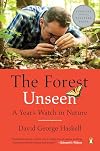
The Forest Unseen: A Year's Watch in Nature
by David George Haskell
On This Page
Description
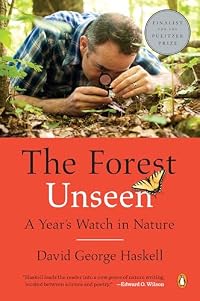
In this wholly original book, biologist David Haskell uses a one-square-meter patch of old-growth Tennessee forest as a window into the entire natural world. Visiting it almost daily for one year to trace nature's path through the seasons, he brings the forest and its inhabitants to vivid life. Each of this book's short chapters begins with a simple observation: a salamander scuttling across the leaf litter; the first blossom of spring wildflowers. From these, Haskell spins a brilliant web show more of biology and ecology, explaining the science that binds together the tiniest microbes and the largest mammals and describing the ecosystems that have cycled for thousands-sometimes millions-of years. Each visit to the forest presents a nature story in miniature as Haskell elegantly teases out the intricate relationships that order the creatures and plants that call it home. Written with remarkable grace and empathy, The Forest Unseen is a grand tour of nature in all its profundity. Haskell is a perfect guide into the world that exists beneath our feet and beyond our backyards. show lessTags
Recommendations
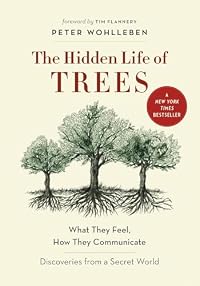
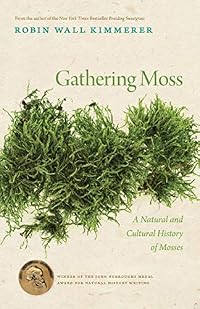
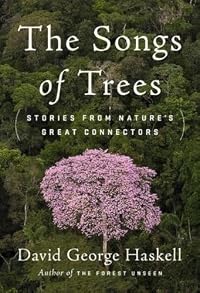
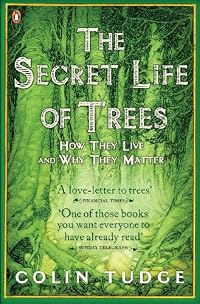
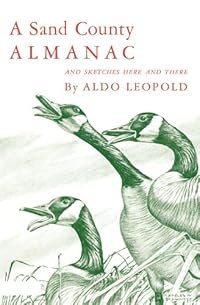
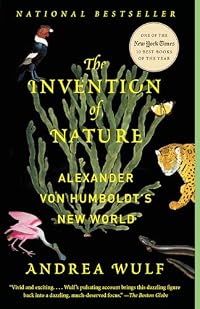
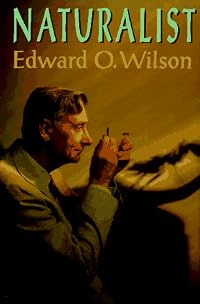
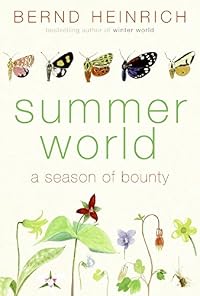


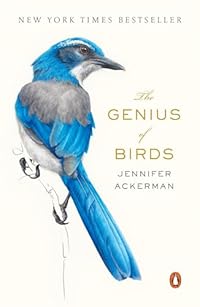
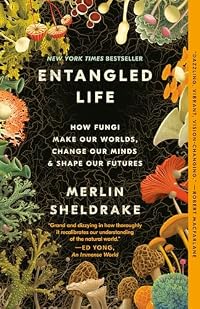
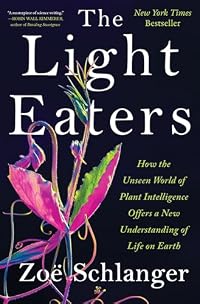
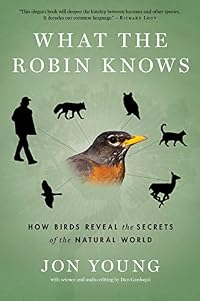
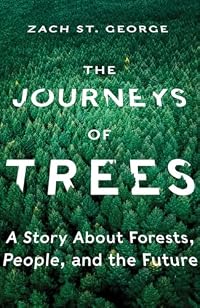
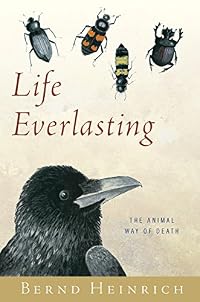
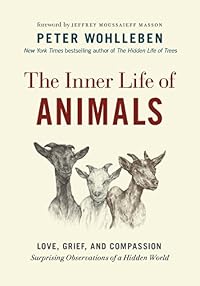
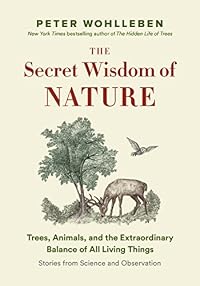


Member Recommendations
danhammang Love of the land, celebration of the natural world written by one of the finest authors of this generation.

A Place on the Glacial Till: Time, Land, and Nature Within an American Town by Thomas Fairchild Sherman
danhammang He covers it all, the deep geological history of Ohio, Michigan and the Great Lakes, the flora, the fauna and the impact of humans along the shores, streams and fields of the southern shore of Lake Erie. His love of the land and knowledge of his subject matter is matched, perhaps excelled, by the poetry of his language. It's a great read.
Member Reviews
This is the best book about a guy staring at the same spot on the ground for a year that you could possibly imagine.
That's honestly not an inaccurate description. The author picked out a small patch of ground in an old-growth forest in Tennessee -- he refers to it as "the mandala" by analogy with Buddhist sandpaintings meant to represent the cosmos in miniature -- and returned to it regularly over the course of a year, examining it closely and musing on what he found there. And those musings are fantastic, a thoughtful, poetic blending of science, philosophy, and human emotion that illuminates the natural world and reflects on our place in it in a way that feels to me utterly and profoundly right. It's also full of lots and lots and show more lots of insights and facts about various plants, animals, and fungi that leave me repeatedly exclaiming "How did I never know this before?!"
Rating: 5/5. I think that's actually the first book this year that I've given the full 5 out of 5 to, so that should tell you something about just how highly I think of it. show less
That's honestly not an inaccurate description. The author picked out a small patch of ground in an old-growth forest in Tennessee -- he refers to it as "the mandala" by analogy with Buddhist sandpaintings meant to represent the cosmos in miniature -- and returned to it regularly over the course of a year, examining it closely and musing on what he found there. And those musings are fantastic, a thoughtful, poetic blending of science, philosophy, and human emotion that illuminates the natural world and reflects on our place in it in a way that feels to me utterly and profoundly right. It's also full of lots and lots and show more lots of insights and facts about various plants, animals, and fungi that leave me repeatedly exclaiming "How did I never know this before?!"
Rating: 5/5. I think that's actually the first book this year that I've given the full 5 out of 5 to, so that should tell you something about just how highly I think of it. show less
This is the story of a biologist from the University of the South in Tennessee who spends some time each week in a mandala, a 12'x12' piece of old-growth forest, near to his university, mostly just observing. Each short chapter deals with a different aspect of the living community in the mandala, whether it be plant or animal life. This story would not work if the author didn't have such a rich background in the sciences or such a gift with words. Somehow he was able to transport me to this small world and make it utterly fascinating, week after week. I learned how plants and trees prepare themselves for the winter, why vultures are the purifiers of the forest, what forms of life live underground, why forests are saving us from the show more full-out effects of climate change, and the evolutionary kinship we humans have with the forest. A peaceful read, and an enlightening book. show less
Letter I wrote to the author:
I’ve just finished reading The Forest Unseen. I have slowly savored your book over many weeks, reading one day’s entry, at most two, at one sitting. I have never read anyone who combined a meditative consciousness with a scientist’s mind so beautifully. You presented the theme of the interconnectedness of all things so delightfully in so many amazing forms: bird’s eggs, vultures, lichen, and the roothair-fungus relationship all come easily to mind as examples.
Long ago I learned to walk in the woods without a goal. I live in western North Carolina and for many years lived on a gravel road surrounded by national forests. I carved my own hiking trails to special places—a rock outcropping, a particular show more tree, a springhead flowing over a small rock cliff—and would walk to those places and then sit and observe.
Now I live in Asheville, in a mountain cove with a lawn that is mostly Prunella vulgaris. Four or five afternoons a week (I work at home) I spend time in a little patch of this lawn with my cat, sitting and observing the ants, spiders, and other creatures crawling over the vegetation. You’ve inspired me to see this suburban patch as my own mandala and look even close than before.
You’ve created a book that I know I will enjoy reading many times in my life. I already plan on having my husband read this aloud to me, so we can savor it together. show less
I’ve just finished reading The Forest Unseen. I have slowly savored your book over many weeks, reading one day’s entry, at most two, at one sitting. I have never read anyone who combined a meditative consciousness with a scientist’s mind so beautifully. You presented the theme of the interconnectedness of all things so delightfully in so many amazing forms: bird’s eggs, vultures, lichen, and the roothair-fungus relationship all come easily to mind as examples.
Long ago I learned to walk in the woods without a goal. I live in western North Carolina and for many years lived on a gravel road surrounded by national forests. I carved my own hiking trails to special places—a rock outcropping, a particular show more tree, a springhead flowing over a small rock cliff—and would walk to those places and then sit and observe.
Now I live in Asheville, in a mountain cove with a lawn that is mostly Prunella vulgaris. Four or five afternoons a week (I work at home) I spend time in a little patch of this lawn with my cat, sitting and observing the ants, spiders, and other creatures crawling over the vegetation. You’ve inspired me to see this suburban patch as my own mandala and look even close than before.
You’ve created a book that I know I will enjoy reading many times in my life. I already plan on having my husband read this aloud to me, so we can savor it together. show less
Haskell presents a beautiful, complex and inspiring book about the human condition, masked in an exploration of nature. For one year, he revisits the same one square metre of forest countless times, documenting what he finds from nematodes to deer to golf balls to ephemeral flowers to fungi. The story is broad reaching, personal, and beautiful. Each chapter is another adventure into the history, ecology and specificity of another of the visitors to this small patch of land, helping to visualise the global in the tiniest of locals.
As Rachel Carson would hope for all nature writing, Haskell inspires a sense of wonder about the forest and the natural world, and simultaneously about the breadth of human ingenuity and discovery.
As Rachel Carson would hope for all nature writing, Haskell inspires a sense of wonder about the forest and the natural world, and simultaneously about the breadth of human ingenuity and discovery.
A lot of my woodland photography takes place in the small sphere, often showing slices of nature that go unnoticed by most people. That’s why the title of this book appealed to me. On reading, it isn’t so much the unseen, but the unknown. I learned a lot from this book which is written with a delicacy and awe of how much we don’t know. Here’s what it taught me -
>In winter evergreen plants protect against the damage too much cellular energy can cause by making vitamin C (p 24)
>Shrews can’t breathe long above ground (p 57)
>Male moths give salt to females as a mating gift (p 79)
>Bears sweat like horses do (p 80)
>Why is the sky blue? Photons! (p 85)
>Why the ash trees in my yard leaf later than the maples - ring porous xylem - like show more hickories have and that’s what makes the wood so hard and dense
>Only breeding female birds have a medullary bone, but not all the time (p 114)
>Like many a lady spider, lady fireflies often nosh on hubby (p 138)
>Fuzzy caterpillars have those guard hairs to ward off ants. Ants are a caterpillar’s biggest threat. Who knew? (p 170)
>Vulture intestinal tracts routinely kill cholera and anthrax (p 177)
>Those helicoptery maple seeds are actually called samaras (p 191)
>Hepatica’s purple leaves are a shield against wintertime sun damage. I always wondered why some leaves turned reddish and some didn’t - the ones in leaf litter don’t need to. (p 207)
>Birds maintain a low body weight for flight in part by causing their reproductive organs to atrophy out of breeding season. (p 209)
And that’s just the beginning. If you love nature, woodlands or are curious to see a little deeper into how an ecosystem works, this is a great book. show less
>In winter evergreen plants protect against the damage too much cellular energy can cause by making vitamin C (p 24)
>Shrews can’t breathe long above ground (p 57)
>Male moths give salt to females as a mating gift (p 79)
>Bears sweat like horses do (p 80)
>Why is the sky blue? Photons! (p 85)
>Why the ash trees in my yard leaf later than the maples - ring porous xylem - like show more hickories have and that’s what makes the wood so hard and dense
>Only breeding female birds have a medullary bone, but not all the time (p 114)
>Like many a lady spider, lady fireflies often nosh on hubby (p 138)
>Fuzzy caterpillars have those guard hairs to ward off ants. Ants are a caterpillar’s biggest threat. Who knew? (p 170)
>Vulture intestinal tracts routinely kill cholera and anthrax (p 177)
>Those helicoptery maple seeds are actually called samaras (p 191)
>Hepatica’s purple leaves are a shield against wintertime sun damage. I always wondered why some leaves turned reddish and some didn’t - the ones in leaf litter don’t need to. (p 207)
>Birds maintain a low body weight for flight in part by causing their reproductive organs to atrophy out of breeding season. (p 209)
And that’s just the beginning. If you love nature, woodlands or are curious to see a little deeper into how an ecosystem works, this is a great book. show less
One of my favourite books of the year. Our narrator, an incredibly knowledgeable biologist with a real talent for explaining, spent a year visiting a single square meter of forest and observing the animal and plant life that he saw there. Beautifully written and often very poetic, highly recommended.
I followed up The Overstory with The Forest Unseen by David George Haskell. Haskell, a biologist, adopts a meter-wide area of western Tennessee forest to examine over the course of a year. His observations of this world, from the tops of the trees to the leaf mulch and below, lead to detailed and engaging explorations of the natural world. Haskell covered some of the topics the Powers did and lamented man's impact on nature although his book is a bit more joyful. I have added his others books--Sounds Wild and Broken and The Songs of Trees to my TBR list.
Members
- Recently Added By
Lists

Recommended Nature Writing
346 works; 180 members

Books Read in 2018
4,360 works; 110 members

Terrapin's Deserted Island Ecology Reading List
13 works; 1 member
Author Information

7 Works 1,359 Members
Awards and Honors
Awards
Distinctions
Common Knowledge
- Original publication date
- 2012
- Important places
- Tennessee, USA; Sewanee, Tennessee, USA; University of the South, Sewanee, Tennessee, USA
- Quotations
- The tree’s answer to the wind’s force echoes the Taoism of the lichens: don’t fight back, don’t resist; bend and roll, let your adversary exhaust herself against your yielding. The analogy is reversed, for the Taoists... (show all) drew their inspiration from nature, so “the Tao is Tree-ist” is more accurate.
Military planners in the Second World War noticed that color-blind soldiers were better at seeing through camouflage than were soldiers with normal vision. More recent experiments have confirmed that dichromats (people with t... (show all)wo types of color receptors in their eyes, so-called red-green color-blind) are better camouflage breakers than are trichromats (people with three receptor types, the more common condition in humans).
Dichromats detect boundaries in texture that are missed by trichromats, who are fixated on and misled by variations in color.
Classifications
- Genres
- Science & Nature, Nonfiction, General Nonfiction, Biography & Memoir
- DDC/MDS
- 577.309768 — Natural sciences & mathematics Biology Ecology Forest ecology modified standard subdivisions History, geographic treatment, biography
- LCC
- QH105 .T2 .H37 — Science Natural history – Biology Natural history (General) General
- BISAC
Statistics
- Members
- 750
- Popularity
- 37,227
- Reviews
- 18
- Rating
- (4.22)
- Languages
- 8 — Chinese, Czech, English, French, German, Italian, Polish, Spanish
- Media
- Paper, Audiobook, Ebook
- ISBNs
- 22
- ASINs
- 8