
Tom Wessels
Author of Reading the Forested Landscape: A Natural History of New England
Works by Tom Wessels
The Granite Landscape: A Natural History of America's Mountain Domes, from Acadia to Yosemite (1996) 49 copies, 3 reviews
The Bridge on Parker Road 1 copy
Tagged
Common Knowledge
Members
Reviews

I’m so mad that I won’t get a chance to put the observational exercises and information into practice because I will probably never live in New England again and Wisconsin is quite different (no stone walls for example!). The forest has always been a special place for me and learning how to read the signs of natural changes and human passage makes it even better. I never feel alienated in the woods, but nothing I've read helped me connect the way this book did. It was amazing to find show more another person who feels so passionate about the woods. If you're a New England naturalist or photographer or someone who just loves the outdoors; go get this book before it goes out of print! show less

This book integrates the natural and cultural history of Acadia National Park in an intriguing way. Wessels describes the geological processes that created Mount Desert Island's unique formations and how the location of the island brings together fauna and flora not found together anywhere else. For a short book, it can be quite detailed, as almost an entire chapter is dedicated to the different types of lichen that grow on the island's rocks (don't step on them!) and nearly as much as space show more to how fogs provide hydration and nutrients to the island's plants. The Fire of 1947 is also described as a cataclysmic event that unexpectedly shaped the national park that we know today. This is a fascinating introduction to the wonders of Acadia, and a good field guide for visitors there. show less
The Granite Landscape: A Natural History of America's Mountain Domes, from Acadia to Yosemite by Tom Wessels
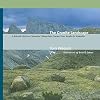
Mostly positive. Author Tom Wessels is a professor of Ecology at the Antioch New England Graduate School, which puts my back up, lays my ears back, and bares my fangs. However, there’s no denunciation of capitalism or suggestion that the planet would be better off with a lot fewer humans. In a couple places, Wessels illustrates the maxim that a Concerned Environmentalist is somebody who built a trophy house in the mountains last year, while a Rapacious Developer is somebody who wants to show more build a trophy house in the mountains this year, but I’m not sure that I wouldn’t take that attitude myself.
The book is classical natural history, with Wessels wandering around various granite peaks in the US, doing a little geology and a lot of botany in the process. His descriptions are limited to glaciated peaks – thus the sites discussed are Acadia National Park, the White Mountains and Adirondacks in New Hampshire, the Wind River Range, the Beartooths, the Enchantment Mountains in the North Cascades, and Yosemite National Park. Wessels comments that there are granite mountains in the Southwest, but the ecology is completed different; erosion is by heating/cooling cycles rather than glacial polishing; he’s only interested in glacial peaks.
Wessels’ main focus is on the plant communities inhabiting the glacial balds – lichens, cryptogametes, krummholz conifers and higher plants capable of living in crevices and soil pockets – with a lot on ecological succession. We had a thread on “walking trees” somewhere; Wessels discusses a phenomenon previously unknown to me. A lot of altitude-adapted conifers can sprout roots from branches that touch the ground. A wind- and ice-blasted tree can grow new roots from branches on the downwind side; if the original trunk eventually dies a new one can form downwind. The process can repeat, leading to trees migrating hundreds of feet from their original site, sometimes leaving a trail of clones behind.
An anecdote illustrates the use of Federal rules to block Federal bureaucracy. A conservation group attempted to limit damage to plant communities by using fist-sized rocks to mark off trails on heavily frequented balds. Somebody – latter determined to be a hiking grandmother and her grandson – removed the marked trail borders and instead used the rocks to surround mark out areas of vegetation. This proved to be much more successful than marking trails; while a marked trail apparently provokes a desire to walk off it and demonstrate contempt for authority, the circumscribed vegetation areas remained undamaged – an illustration shows them looking sort of like a Zen garden. The Forest Service then acted on the No Good Deed Goes Unpunished principle and prepared to remove all the rocks; somebody – Wessels doesn’t say who, but my guess would be a university professor – countered by demanding that the USFS follow NEPA and prepare a formal Environmental Impact Statement. I know of one other case where NEPA was invoked for a human-modified situation, involving a spa outside Death Valley that was feeding water to a pothole supporting a population of desert pupfish. In this case, the Forest Service didn’t even bother to attempt an EIS and the rock-bordered “gardens” remained. I’m sympathetic to gaming the system like this.
This isn’t a guidebook; although Wessels mentions many plants, he doesn’t provide identification keys (although the scientific names are listed in the Appendix). I assume he doesn’t want enthusiastic amateur botanists busy collecting specimens – lichens, in particular, are pretty difficult to identify without microscopic examination. There are no photographs except the cover; all the illustrations are pencil drawings. The bibliography is a little sparse. Pleasant enough to read but more of a personal memoir than something useful in the field. show less
The book is classical natural history, with Wessels wandering around various granite peaks in the US, doing a little geology and a lot of botany in the process. His descriptions are limited to glaciated peaks – thus the sites discussed are Acadia National Park, the White Mountains and Adirondacks in New Hampshire, the Wind River Range, the Beartooths, the Enchantment Mountains in the North Cascades, and Yosemite National Park. Wessels comments that there are granite mountains in the Southwest, but the ecology is completed different; erosion is by heating/cooling cycles rather than glacial polishing; he’s only interested in glacial peaks.
Wessels’ main focus is on the plant communities inhabiting the glacial balds – lichens, cryptogametes, krummholz conifers and higher plants capable of living in crevices and soil pockets – with a lot on ecological succession. We had a thread on “walking trees” somewhere; Wessels discusses a phenomenon previously unknown to me. A lot of altitude-adapted conifers can sprout roots from branches that touch the ground. A wind- and ice-blasted tree can grow new roots from branches on the downwind side; if the original trunk eventually dies a new one can form downwind. The process can repeat, leading to trees migrating hundreds of feet from their original site, sometimes leaving a trail of clones behind.
An anecdote illustrates the use of Federal rules to block Federal bureaucracy. A conservation group attempted to limit damage to plant communities by using fist-sized rocks to mark off trails on heavily frequented balds. Somebody – latter determined to be a hiking grandmother and her grandson – removed the marked trail borders and instead used the rocks to surround mark out areas of vegetation. This proved to be much more successful than marking trails; while a marked trail apparently provokes a desire to walk off it and demonstrate contempt for authority, the circumscribed vegetation areas remained undamaged – an illustration shows them looking sort of like a Zen garden. The Forest Service then acted on the No Good Deed Goes Unpunished principle and prepared to remove all the rocks; somebody – Wessels doesn’t say who, but my guess would be a university professor – countered by demanding that the USFS follow NEPA and prepare a formal Environmental Impact Statement. I know of one other case where NEPA was invoked for a human-modified situation, involving a spa outside Death Valley that was feeding water to a pothole supporting a population of desert pupfish. In this case, the Forest Service didn’t even bother to attempt an EIS and the rock-bordered “gardens” remained. I’m sympathetic to gaming the system like this.
This isn’t a guidebook; although Wessels mentions many plants, he doesn’t provide identification keys (although the scientific names are listed in the Appendix). I assume he doesn’t want enthusiastic amateur botanists busy collecting specimens – lichens, in particular, are pretty difficult to identify without microscopic examination. There are no photographs except the cover; all the illustrations are pencil drawings. The bibliography is a little sparse. Pleasant enough to read but more of a personal memoir than something useful in the field. show less
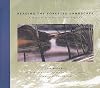
A full and wholly original portrait of New England's forests, tracing their evolution from precolonial days to the present through a study of the patterns we see today. Read this book, its many fans have said, and no walk in the woods will ever be the same.
Lists
You May Also Like


Statistics
- Works
- 7
- Members
- 697
- Popularity
- #36,316
- Rating
- 4.1
- Reviews
- 14
- ISBNs
- 18
- Languages
- 1