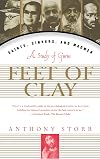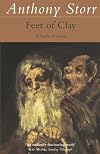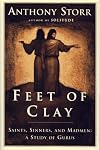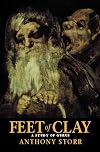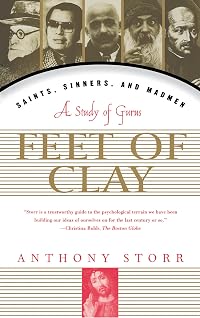
Feet of clay : saints, sinners, and madmen : a study of gurus
by Anthony Storr
On This Page
Description
In his classic work, Solitude, internationally acclaimed author and psychiatrist Anthony Storr probed our basic and often unmet need for solitude, especially emphasizing its relation to creativity. In Music and the Mind, Storr explored the fundamental human need for music, demonstrating its ability to reunite the mind and body. Now, in Feet of Clay, Storr again provides a fresh perspective into one of the most potentially dangerous human needs, the need for certitude. In vivid portraits of show more some of history's most intriguing gurus, from David Koresh to Freud and Jung to Jesus, Storr examines why we are so enthralled with certain dogmatic figures who play on our need for certainty. Gurus are extraordinary individuals who cast doubt upon current psychiatric distinctions between sanity and madness. Because gurus are charismatic figures who are gifted teachers, they recruit disciples who adopt the guru's vision as their own. The guru convinces others that he knows, a persuasive capacity which can bring illumination but which may end in disaster. Storr demonstrates that most of us harbor irrational beliefs, and he discusses how the human wish for certainty in an insecure world leads to our confusing delusion with truth. Storr reveals how the adoration for the guru can so easily corrupt him and explains why certain gurus become moral parasites while others become spiritual beacons. show lessTags
Recommendations












Member Reviews
I think in some ways this book is mislabeled. While the author does seem to be addressing the problem of identifying and avoiding bad gurus, in the course of his research into gurus, he delved into questions of "abnormal" and "normal" psychology, the psychological similarity among religious conversion, creativity and scientific discovery, as well as the nature of human psychological needs and why "gurus" are appealing. As a formerly religious person who has now embraced creativity as a life-affirming activity, I found a world of useful information in this book.
Storr's broad ranging definition of guru (he includes Freud and Jung, for instance), his ability to look past the surface of behavior to root out comparisons and differences, and show more his acceptance of people's positive experiences even with destructive gurus really helped me appreciate the role of flawed, charismatic people's contributions to various fields.
If you are a skeptic interested in religious phenomenon or someone who wants a deeper insight into the continuum of psychological processes, I think you will find much of value here.
Two small caveats: This book was written (1996) before many of the discoveries that have shaped current neurophysiology. So if you're interested in the psychology, you might also want to read some more current studies of creativity and "abnormal" psychology that include some of the neuroscience. Also, towards the end Storr gets just a bit repetitive. I don't know if it's because he anticipated people not reading the book straight through or because he got a little lost himself in some of his side tracks. It's just a tad annoying, but worth plowing through, since the final conclusions of the book are very insightful. show less
Storr's broad ranging definition of guru (he includes Freud and Jung, for instance), his ability to look past the surface of behavior to root out comparisons and differences, and show more his acceptance of people's positive experiences even with destructive gurus really helped me appreciate the role of flawed, charismatic people's contributions to various fields.
If you are a skeptic interested in religious phenomenon or someone who wants a deeper insight into the continuum of psychological processes, I think you will find much of value here.
Two small caveats: This book was written (1996) before many of the discoveries that have shaped current neurophysiology. So if you're interested in the psychology, you might also want to read some more current studies of creativity and "abnormal" psychology that include some of the neuroscience. Also, towards the end Storr gets just a bit repetitive. I don't know if it's because he anticipated people not reading the book straight through or because he got a little lost himself in some of his side tracks. It's just a tad annoying, but worth plowing through, since the final conclusions of the book are very insightful. show less
I'm not sure exactly what to say about this book. It wasn't what I expected going into it. The subtitle, "A Study of Gurus," led me to expect biographies of various gurus, along with insights into their spirituality and psychology. And while there was certainly some of that, the book seemed to be just as much an argument against religious belief of any sort, which the author considers to be delusions. I understand that Storr described himself as a "biological agnostic," but he discredits the beliefs of everyone, from followers of Jim Jones to St. Ignatius of Loyola and Jesus. All religious, and most creative experiences, are cast as mental illness. This black and white world view allows for no true religious experiences and looks down show more on anyone who is not a scientist. Still, Storr has some interesting theories and insights, and the book is well-researched. I don't agree with everything he said, but it was certainly a book that made me think. Recommended if you're interested in the psychology of charismatic religious leaders or psychoanalysis. show less
Every generation has its charismatic spiritual leaders, its gurus. Some are true saints while others conceal unspeakable depravity. Anthony Storr, Oxford professor of psychiatry, analyzes an interesting array of gurus and finds many commonalities among them--an isolated childhood, a need for certainty, a demand for obedience. He also elucidates aspects of this psychological profile in various intellectual, artistic, and political figures of history. This eye-opening book invokes a larger issue: in our search for guidance and truth, when and why do we cross the line from reasoned inquirer to unquestioning follower?
From Publishers Weekly
"The wisest men follow their own direction and listen to no prophet guiding them," wrote Euripedes. show more Storr (Music and the Mind), a psychiatrist, uses this ancient caution as the epigraph to a fascinating yet frustrating investigation into the appeal of guru figures. He analyzes the lives and works of the destructive, unbalanced cult leaders Jim Jones and David Koresh, and he uses their symptoms, isolation, narcissism, paranoid delusions, to take the measure of other, generally more respected figures.
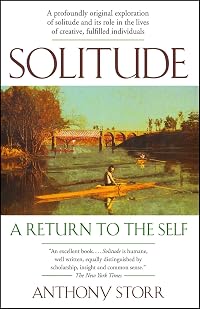
An eye-opening investigation of charismatic "gurus" from Jesus to Freud to David Koresh, by the author of "Solitude: A Return to the Self". In "Feet of Clay", eminent psychologist Anthony Storr uncovers the personality traits that link these men and explores the incredible power they have wielded over their fanatical followers. show less
From Publishers Weekly
"The wisest men follow their own direction and listen to no prophet guiding them," wrote Euripedes. show more Storr (Music and the Mind), a psychiatrist, uses this ancient caution as the epigraph to a fascinating yet frustrating investigation into the appeal of guru figures. He analyzes the lives and works of the destructive, unbalanced cult leaders Jim Jones and David Koresh, and he uses their symptoms, isolation, narcissism, paranoid delusions, to take the measure of other, generally more respected figures.
An eye-opening investigation of charismatic "gurus" from Jesus to Freud to David Koresh, by the author of "Solitude: A Return to the Self". In "Feet of Clay", eminent psychologist Anthony Storr uncovers the personality traits that link these men and explores the incredible power they have wielded over their fanatical followers. show less
Too many gurus were included (Gurdjieff, Jesus, Freud, Jung, Koresh, just to name a few) to do any of them justice, which resulted in highly superficial analyses and in some cases unjustified dismissals of their work; and also no space for the in-depth psychological analysis I was expecting from a psychiatrist.
Ratings
Members
- Recently Added By
Lists

Ideas for "Science, Religion, and History" group reads
29 works; 9 members

Non-Fiction Worth Reading
1,015 works; 261 members

Attaining Belief
14 works; 2 members

Books That Changed Me
3 works; 2 members

Best books read in the first half of 2012
38 works; 6 members
Top Five Books of 2012
55 works; 11 members

5 Best 5 Years
71 works; 4 members

Five star books
1,755 works; 107 members

What are your favourite books?
121 works; 11 members

Creativity and the Creative Process
20 works; 4 members
Author Information

22+ Works 4,219 Members
Charles Anthony Storr, May 18, 1920 - March 17, 2001 Charles Anthony Storr was born on May 18, 1920 in London to a Reverend of Westminster Abbey and his wife. The two were first cousins, which may have lead to his poor health and depression. At the age of eight, he attended public school at Winchester and was very unhappy. He graduated from show more Winchester College and proceeded to Christ's Church in Cambridge where he met C. P. Snow who encouraged him to be moral and compassionate. Storr continued his medical studies at Westminster Hospital from 1941 to 1944, and then became a house physician at various hospitals. He is best known for his books on Freud and Jung. After completing his education, Storr practiced psychotherapy privately, but combined his private practice with hospitals as a consultant. In 1974, he retired from private practice to teach post graduate doctors at Oxford where he received dining rights at Wadham College and became a fellow at Green College. After his first attempt at writing proved fruitful, Storr continued his career as a writer, producing 11 books in the next 26 years. Storr's books were very popular in the U. S. and following his literary fame, he became a frequent book reviewer and commentator on British television. He wrote on different themes, but his favorites were gurus, as evidenced in his book, "Feet of Clay, solitude as a helpful tool in recovery, "Solitude: A Return to Self", and the theories of Freud and Jung. Storr died on March 17 in Oxford after having a heart attack during a speech at Wadham College. He was 80 years old. show less
Common Knowledge
- Canonical title
- Feet of clay : saints, sinners, and madmen : a study of gurus
- Original publication date
- 1996
- Epigraph
- The wisest men follow their own direction
And listen to no prophet guiding them.
Noone but the fools believe in oracles,
Forsking their own judgement. Those who know,
Know that such men can only come to grief. - Dedication
- For my friend and colleague Kay Redfield Jamison, and in memory of our mutual friend and publisher, Erwin Glikes.
- First words
- (Introduction): This is a book about gurus.
The infamous dictators of the twentieth century, Hitler, Mussolini, Stalin, Ceaucescu, and Mao Tse-tung were all unscrupluous in the pursuit of power and ruthless in eliminating enemies. - Blurbers
- Oates, Joyce Carol; Romano, Carlin; Teachout, Terry
Classifications
- Genres
- Nonfiction, Religion & Spirituality, General Nonfiction, History, Biography & Memoir
- DDC/MDS
- 291.61 — Religion Other religions [Formerly: General Religious Topics] Religious personages Clergy & Religious Leaders
- LCC
- BL72 .S76 — Philosophy, Psychology and Religion Religions. Mythology. Rationalism Religions. Mythology. Rationalism Biography
- BISAC
Statistics
- Members
- 245
- Popularity
- 132,272
- Reviews
- 4
- Rating
- (3.54)
- Languages
- Dutch, English, Turkish
- Media
- Paper, Ebook
- ISBNs
- 7
- ASINs
- 2