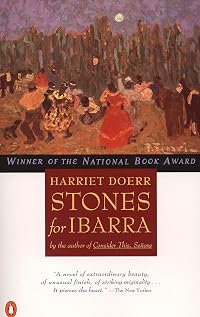
Stones for Ibarra
by Harriet Doerr
On This Page
Description
This is the story of Sara and Richard Everton, a couple embarked on a journey of renewal. They leave a house and job in San Francisco and travel to the small Mexican village of Ibarra to reopen a copper mine, abandoned in 1910 by Richard's grandfather. They also plan to restore the family home, a crumbling reminder of the past. However, they learn that Richard is dying of leukemia.Tags
Recommendations





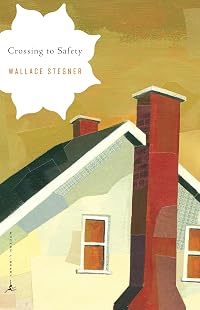
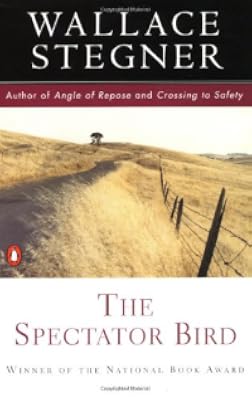
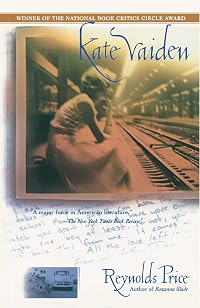




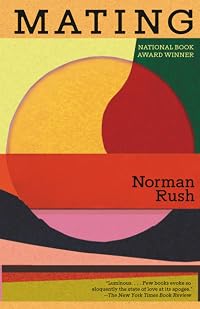







Member Reviews
Wait
I read this semi-autobiographical novel a few years after it was published in 1984 and was stunned by its breath-taking prose and sensitive fatality of the story. It was Doerr's first published work and received a National Book Award. She was 74 when it was published.
Since then, after only reading it the once, I've said countless times it was my all-time favorite book.
In the novel, two North Americans move to a small village in Mexico to re-open an abandoned copper mine. Six years later, Sara Everton's husband, Richard, dies of leukemia. The book is about those six years of living, of knowing, of waiting, and of Sara never reconciling that it would happen.
Now I finally read it again. I'm no longer in my early 30s. I'm in my mid 60s show more now. In those intervening decades, I've lost the people who were my roots, knew me best, and are my faithful shadows now. I never really believed they would die. Even today I still wish each would have waited longer, until I was ready. There are things I want to ask them. Things I want to tell them.
This time reading, the novel was just as lyrical, just as sensitive, just as breath-taking. This time, it was also newly crushing.
Doerr, herself, is dead now. She wrote only 3 books. I have one left to read, another novel, Consider This, Señora. What am I saving it for? No, what am I waiting for?
"What if he dies before I get back, before I can tell him? Tell him what? she asked herself. Tell him about the dog, the moon, the flowers, the lost streets of Viudas. Tell him that Dr. de le Luna is a specialist in his disease. Tell him to wait." show less
I read this semi-autobiographical novel a few years after it was published in 1984 and was stunned by its breath-taking prose and sensitive fatality of the story. It was Doerr's first published work and received a National Book Award. She was 74 when it was published.
Since then, after only reading it the once, I've said countless times it was my all-time favorite book.
In the novel, two North Americans move to a small village in Mexico to re-open an abandoned copper mine. Six years later, Sara Everton's husband, Richard, dies of leukemia. The book is about those six years of living, of knowing, of waiting, and of Sara never reconciling that it would happen.
Now I finally read it again. I'm no longer in my early 30s. I'm in my mid 60s show more now. In those intervening decades, I've lost the people who were my roots, knew me best, and are my faithful shadows now. I never really believed they would die. Even today I still wish each would have waited longer, until I was ready. There are things I want to ask them. Things I want to tell them.
This time reading, the novel was just as lyrical, just as sensitive, just as breath-taking. This time, it was also newly crushing.
Doerr, herself, is dead now. She wrote only 3 books. I have one left to read, another novel, Consider This, Señora. What am I saving it for? No, what am I waiting for?
"What if he dies before I get back, before I can tell him? Tell him what? she asked herself. Tell him about the dog, the moon, the flowers, the lost streets of Viudas. Tell him that Dr. de le Luna is a specialist in his disease. Tell him to wait." show less
Harriet Door captured the perfect balance of complexity and simplicity with her first novel, [Stones for Ibarra]. Her effortless and lyrical story cuts deep, matching the precarious landscape where her characters reside.
Richard and Sara Riverton abandon their comfortable life in San Franciso for an abandoned copper mine in the mountains of Mexico. Their American habits and beliefs don’t fit into the traditional, Catholic culture of Ibarra. But, largely because they have given the town an economic boost, they are cautiously adopted. Doerr recounts the Riverton’s six year stay in Ibarra, focusing largely on the town’s other eccentric inhabitants and the nature of life in the perilous desert mountain town.
Doerr’s connection to show more the people and land in such a forgotten and hard place is the real wonder of [Stones for Ibarra]. The description of the harsh, gritty land of Ibarra resonated for me, a desert dweller myself.
“…witness a recurring Mexican phenomenon: the abrupt appearance of human life in an empty landscape.”
“This air is affecting us all … everything is too intense, too quick, and too perilous.”
“(houses) dissolving with the rain and scattering with the rain.”
But what really captured me was Doerr’s simple writing. There is nothing expansive about Doerr’s prose, allowing its plainness to take root and flower. She infuses each of her characters and stories with such complexity with such spare language that you don’t notice you’re reading. It’s like a fireside chat with a lover about the day’s events.
Bottom Line: Plain and melodic story; a simple tale with its roots in a harsh landscape.
5 bones!!!!!
An All-Time Favorite show less
Richard and Sara Riverton abandon their comfortable life in San Franciso for an abandoned copper mine in the mountains of Mexico. Their American habits and beliefs don’t fit into the traditional, Catholic culture of Ibarra. But, largely because they have given the town an economic boost, they are cautiously adopted. Doerr recounts the Riverton’s six year stay in Ibarra, focusing largely on the town’s other eccentric inhabitants and the nature of life in the perilous desert mountain town.
Doerr’s connection to show more the people and land in such a forgotten and hard place is the real wonder of [Stones for Ibarra]. The description of the harsh, gritty land of Ibarra resonated for me, a desert dweller myself.
“…witness a recurring Mexican phenomenon: the abrupt appearance of human life in an empty landscape.”
“This air is affecting us all … everything is too intense, too quick, and too perilous.”
“(houses) dissolving with the rain and scattering with the rain.”
But what really captured me was Doerr’s simple writing. There is nothing expansive about Doerr’s prose, allowing its plainness to take root and flower. She infuses each of her characters and stories with such complexity with such spare language that you don’t notice you’re reading. It’s like a fireside chat with a lover about the day’s events.
Bottom Line: Plain and melodic story; a simple tale with its roots in a harsh landscape.
5 bones!!!!!
An All-Time Favorite show less
11. Stones for Ibarra by Harriet Doerr
published: 1984
format: 214 page paperback
acquired: inherited from my neighbor upon his move
read: Feb 20-24
rating: 4
Doerr's claim to fame seems to be that she published her first book, this one here, at the ripe young age of 74. She outlived her husband, who died of leukemia, and then went back to school to complete her unfinished BA and that led to here.
Gentle and atmospheric are two things I struck me initially on starting this. Richard Everton abandons his career in the US to re-open a family owned mine in the middle of nowhere desert of Mexico. He brings his wife, Sara, and they move into an old run-down mansion in a tiny town, find plenty of locals willing to work the mine. Shortly afterward he show more is diagnosed with leukemia. Most of this is autobiographical.
The novel isn't like a novel. It has the feel of linked short stories, with each chapter focusing on one character or oddity of the region. Several were published prior to the book. First Sara is generally amused. She struggles to learn Spanish well enough to have clear communication, but wonders and is charmed by the passionate and brutal Catholic community she now lives within. But these stories seems to get darker, and Richard gets sicker, and husband and wife remain non-religious outsiders (called North Americans), wealthy benevolent respected and necessary heathens. Eventually the stories settle more on Sara and her mental and emotional struggles with her husband's sickness, and somewhat with her grief after his passing. There is a cumulative gravitas. And there is a lot of Mexico. Still thinking about it.
2017
https://www.librarything.com/topic/244568#5950618 show less
published: 1984
format: 214 page paperback
acquired: inherited from my neighbor upon his move
read: Feb 20-24
rating: 4
Doerr's claim to fame seems to be that she published her first book, this one here, at the ripe young age of 74. She outlived her husband, who died of leukemia, and then went back to school to complete her unfinished BA and that led to here.
Gentle and atmospheric are two things I struck me initially on starting this. Richard Everton abandons his career in the US to re-open a family owned mine in the middle of nowhere desert of Mexico. He brings his wife, Sara, and they move into an old run-down mansion in a tiny town, find plenty of locals willing to work the mine. Shortly afterward he show more is diagnosed with leukemia. Most of this is autobiographical.
The novel isn't like a novel. It has the feel of linked short stories, with each chapter focusing on one character or oddity of the region. Several were published prior to the book. First Sara is generally amused. She struggles to learn Spanish well enough to have clear communication, but wonders and is charmed by the passionate and brutal Catholic community she now lives within. But these stories seems to get darker, and Richard gets sicker, and husband and wife remain non-religious outsiders (called North Americans), wealthy benevolent respected and necessary heathens. Eventually the stories settle more on Sara and her mental and emotional struggles with her husband's sickness, and somewhat with her grief after his passing. There is a cumulative gravitas. And there is a lot of Mexico. Still thinking about it.
2017
https://www.librarything.com/topic/244568#5950618 show less
Harriet Doerr published her first novel, Stones for Ibarra, at the age of 73. An inspiring accomplishment. It also may help explain the charming, quiet quality of her storytelling. A young American couple, Richard and Sara Everton, decides in 1960 or so to move from California to a Mexican village and re-open the mining operation abandoned by the husband's family during the 1910 revolution. They mortgage their house, and cash in, leverage and borrow to the fullest extent, despite the fears of family and friends.
"Every day for a month Richard has reminded Sara, 'We mustn't expect too much.' And each time his wife has answered, 'No'. But the Evertons expect too much. They have experienced the terrible persuasion of a great-aunt's show more recollections and adopted them as their own. They have not considered that memories are like corks left out of bottles. They swell. They no longer fit." The grandfather's house is more rundown than they expect, the journey to find it tougher than anticipated. But they settle in quickly, and the villagers take to them. The Evertons bring jobs and respect, along with their peculiar American ways.
There's a beautiful passage in which the villagers finally find the word to describe the couple, mediodesorientado, or half-disoriented, like the joyful child who has been spun around many times and blindly strikes at the pinata, making everyone laugh.
As we learn early on, Richard has been diagnosed with a seemingly incurable disease, and may only have six years to live. The book affectionately describes their time together in Ibarra, much of it through the eyes of Sara, as she learns Spanish, becomes enmeshed in the community, and deals with her husband's condition. At the same time, he and the locals work to make the mine prosper and the community thrive. The villagers' stories supply many of the book's attractions: the priest who keeps being sent comically ill-suited assistants, the entrepreneur dedicated to setting up a taxi service between villages, the woman who helps at the house who is determined to repel sickness and bad luck through her folk knowledge, and many others.
The villagers try to help the Evertons with witchcraft and herbs, and stoically resist concepts of modern medicine. Staunchly Catholic, they, including the local priest, nonetheless accept the Evertons' agnosticism. The couple's kindness and friendliness, and positive effect on the community, outweigh their shortcomings. Sara learns lovely and increasingly creative stories from the nun teaching her Spanish, which she brings home to a disbelieving Richard. They light candles, sit by the fire, and share their day together. This is a graceful, charming book, about transplanted Americans and their effect on closely observed lives in a small Mexican village. show less
"Every day for a month Richard has reminded Sara, 'We mustn't expect too much.' And each time his wife has answered, 'No'. But the Evertons expect too much. They have experienced the terrible persuasion of a great-aunt's show more recollections and adopted them as their own. They have not considered that memories are like corks left out of bottles. They swell. They no longer fit." The grandfather's house is more rundown than they expect, the journey to find it tougher than anticipated. But they settle in quickly, and the villagers take to them. The Evertons bring jobs and respect, along with their peculiar American ways.
There's a beautiful passage in which the villagers finally find the word to describe the couple, mediodesorientado, or half-disoriented, like the joyful child who has been spun around many times and blindly strikes at the pinata, making everyone laugh.
As we learn early on, Richard has been diagnosed with a seemingly incurable disease, and may only have six years to live. The book affectionately describes their time together in Ibarra, much of it through the eyes of Sara, as she learns Spanish, becomes enmeshed in the community, and deals with her husband's condition. At the same time, he and the locals work to make the mine prosper and the community thrive. The villagers' stories supply many of the book's attractions: the priest who keeps being sent comically ill-suited assistants, the entrepreneur dedicated to setting up a taxi service between villages, the woman who helps at the house who is determined to repel sickness and bad luck through her folk knowledge, and many others.
The villagers try to help the Evertons with witchcraft and herbs, and stoically resist concepts of modern medicine. Staunchly Catholic, they, including the local priest, nonetheless accept the Evertons' agnosticism. The couple's kindness and friendliness, and positive effect on the community, outweigh their shortcomings. Sara learns lovely and increasingly creative stories from the nun teaching her Spanish, which she brings home to a disbelieving Richard. They light candles, sit by the fire, and share their day together. This is a graceful, charming book, about transplanted Americans and their effect on closely observed lives in a small Mexican village. show less
Just a beautiful little gem of a book. Unique. Each chapter is like a little novella, each with a different set of characters, different scenes, events in Ibarra. Doerr weaves these pieces together to create a picture of this isolated, struggling Mexican village and to tell the story of the Evertons, an American couple who move to Ibarra to resurrect a grandfather’s abandoned mine.
The prose is spare, the mood is both tender and melancholy. Intimations of mortality flash throughout. I found the opening paragraph of each chapter was often striking, as Doerr introduced a new scene, setting or characters. For example:
In Ibarra half a year is no more than a shard chipped from the rock face of eternity.
Believing as they did in a show more relentless providence, the people of Ibarra, daily and without surprise, met their individual dooms. They accepted as inevitable the hail on ripe corn, the vultures at the heart of the starved cow, the stillborn child.
This beautiful book was published when Harriet Doerr was 75 and it won the National Book Award for best first novel in 1985. A true late bloomer!! show less
The prose is spare, the mood is both tender and melancholy. Intimations of mortality flash throughout. I found the opening paragraph of each chapter was often striking, as Doerr introduced a new scene, setting or characters. For example:
In Ibarra half a year is no more than a shard chipped from the rock face of eternity.
Believing as they did in a show more relentless providence, the people of Ibarra, daily and without surprise, met their individual dooms. They accepted as inevitable the hail on ripe corn, the vultures at the heart of the starved cow, the stillborn child.
This beautiful book was published when Harriet Doerr was 75 and it won the National Book Award for best first novel in 1985. A true late bloomer!! show less
Harriet Doerr finished her degree from Stanford at the age of 67 and received The National Book Award for her novel Stones for Ibarra in 1984 at the age of 73; talk about your late bloomer. From what I can gather, she did everything very deliberately and with painstaking effort. It’s said that when writing, she wrote little more than a sentence a day, meticulously crafting each sentence with the utmost care. And when reading her novel one can’t help seeing the result of her precision. If you enjoy wallowing in the trough of graceful, poetic prose, have I got a book for you. Listed among other worthy novels on the “100 Great American Novels You’ve (Probably) Never Read,” I first read and fell in love with this book twenty years show more ago and wanted to see how it held up. Not to worry; still spectacular.
The book consists of several interconnected stories revolving around the lives of Sara and Richard Everton who have returned to Mexico in 1960 to restore his grandfather’s copper mine, abandoned since the 1910 revolution. They plan to finish out their lives in the small Mexican village of Ibarra. Both are around forty but the author makes it clear that Richard has only a few more years to live as he is suffering from leukemia.
“The Evertons left San Francisco and their house with a narrow view of the bay in order to extend the family’s Mexican history and patch the present onto the past. To find out if there was still copper underground and how much of the rest of it was true, the width of the sky, the depth of stars, the air like new wine, the harsh noons and long, slow dusks. To weave chance and hope into a fabric that would clothe them as long as they lived.” (Page 3)
The charm of this book is the interaction with the simple, both profoundly poor and yet prescient Mexican people, as they go about their daily lives. They are fatalists, for the most part and bravely accept the cards they’ve been dealt while expressing deep faith in God and the belief in magic and the spiritual world. Their stories made me ache for them, so lacking were their lives. But they all maintained a fatalistic attitude that allowed them to quietly, bravely endure.
“The Evertons, as they walked past the church, saw the three beggars on the steps. They were counting their money and appeared content. They had not been so rich since this time last year. The coins that made their pockets sag would satisfy every requirement of the foreseeable future, if the cold let up, if they could patch their roof and their shoes. If the laurel leaf on the brow cured the headache and the string around the throat cured the cough. If they survived the night.” (Page 144)
Front and center over all the stories is the indication that Richard will not live for much longer and the overwhelming sadness when he finally succumbs. The housekeeper, Lourdes, was in the habit of leaving things in hidden locations throughout the house; things that might bring on good luck in one way or another and in going through some boxes in preparation for leaving Ibarra, Sara finds the remnants of these good luck charms:
“Behind a recipe for oyster stew she found a twice-doubled piece of pink paper. ‘What is this?’ she said aloud. The residual dust of dry leaves lay in its folds. Sara lifted one of the veined, scented skeletons. ‘Chamomile,’ she said, and knew it was from Lourdes, knew it was meant to ensure impossible things, long life, a forgiving nature, faith.” (Page 205)
In her short writing career, Doerr only produced two other books. I have read one of them Consider This, Senora, and found the writing to be just as spare and evocative as in her first book. How unfortunate for we readers that her talent wasn’t unearthed earlier in her life, allowing her to become a prolific writer. As for me, I will continue rereading what she did produce since it is simply sublime. show less
The book consists of several interconnected stories revolving around the lives of Sara and Richard Everton who have returned to Mexico in 1960 to restore his grandfather’s copper mine, abandoned since the 1910 revolution. They plan to finish out their lives in the small Mexican village of Ibarra. Both are around forty but the author makes it clear that Richard has only a few more years to live as he is suffering from leukemia.
“The Evertons left San Francisco and their house with a narrow view of the bay in order to extend the family’s Mexican history and patch the present onto the past. To find out if there was still copper underground and how much of the rest of it was true, the width of the sky, the depth of stars, the air like new wine, the harsh noons and long, slow dusks. To weave chance and hope into a fabric that would clothe them as long as they lived.” (Page 3)
The charm of this book is the interaction with the simple, both profoundly poor and yet prescient Mexican people, as they go about their daily lives. They are fatalists, for the most part and bravely accept the cards they’ve been dealt while expressing deep faith in God and the belief in magic and the spiritual world. Their stories made me ache for them, so lacking were their lives. But they all maintained a fatalistic attitude that allowed them to quietly, bravely endure.
“The Evertons, as they walked past the church, saw the three beggars on the steps. They were counting their money and appeared content. They had not been so rich since this time last year. The coins that made their pockets sag would satisfy every requirement of the foreseeable future, if the cold let up, if they could patch their roof and their shoes. If the laurel leaf on the brow cured the headache and the string around the throat cured the cough. If they survived the night.” (Page 144)
Front and center over all the stories is the indication that Richard will not live for much longer and the overwhelming sadness when he finally succumbs. The housekeeper, Lourdes, was in the habit of leaving things in hidden locations throughout the house; things that might bring on good luck in one way or another and in going through some boxes in preparation for leaving Ibarra, Sara finds the remnants of these good luck charms:
“Behind a recipe for oyster stew she found a twice-doubled piece of pink paper. ‘What is this?’ she said aloud. The residual dust of dry leaves lay in its folds. Sara lifted one of the veined, scented skeletons. ‘Chamomile,’ she said, and knew it was from Lourdes, knew it was meant to ensure impossible things, long life, a forgiving nature, faith.” (Page 205)
In her short writing career, Doerr only produced two other books. I have read one of them Consider This, Senora, and found the writing to be just as spare and evocative as in her first book. How unfortunate for we readers that her talent wasn’t unearthed earlier in her life, allowing her to become a prolific writer. As for me, I will continue rereading what she did produce since it is simply sublime. show less
3.5***
At the outset of the novel Richard and Sara Everton arrive in the remote mountain of Ibarra, Mexico. The state is never specified but I believe this fictitious town is in the state of Michoacan. They have sold their home in California and most of their belongings to move to Ibarra so that they can reopen the Malaguena mine that Richard’s grandfather abandoned some fifty years previously.
What were they thinking? This is not a quaint, lovely town, it’s a dusty, dying village with impoverished and little-educated residents, and little to no infrastructure. Yes, they have plumbing and electricity, such as it is. But they must travel several hours to a larger city to place a phone call. At least they speak Spanish … sort of. show more
But the Evertons are committed to this plan. They work hard to re-establish the mine, hire a housekeeper, cook, gardener, and security for the front gate. Begin to hire and train workers for the mine, buy local furnishings for the house, and make a life here. They don’t really understand the local culture, but they are at least open to learning.
I found this very atmospheric. I loved the descriptions of the various festivals and local traditions, the unique blend of native religious beliefs with Catholicism, and of herbal medicine administered by a curandera vs “modern” treatments by a university-educated physician.
There are several subplots involving the residents of the town, including a love-triangle between two brothers and a fetching young girl, a procession of young priests brought in to assist the resident pastor, and a series of doctors, mostly fresh out of school, whose life’s ambitions were clearly NOT to live in remote Ibarra.
The book was made into a TV movie in 1988, starring Glenn Close and Keith Carradine as Sarah and Richard Everton. I’ve never seen it. show less
At the outset of the novel Richard and Sara Everton arrive in the remote mountain of Ibarra, Mexico. The state is never specified but I believe this fictitious town is in the state of Michoacan. They have sold their home in California and most of their belongings to move to Ibarra so that they can reopen the Malaguena mine that Richard’s grandfather abandoned some fifty years previously.
What were they thinking? This is not a quaint, lovely town, it’s a dusty, dying village with impoverished and little-educated residents, and little to no infrastructure. Yes, they have plumbing and electricity, such as it is. But they must travel several hours to a larger city to place a phone call. At least they speak Spanish … sort of. show more
But the Evertons are committed to this plan. They work hard to re-establish the mine, hire a housekeeper, cook, gardener, and security for the front gate. Begin to hire and train workers for the mine, buy local furnishings for the house, and make a life here. They don’t really understand the local culture, but they are at least open to learning.
I found this very atmospheric. I loved the descriptions of the various festivals and local traditions, the unique blend of native religious beliefs with Catholicism, and of herbal medicine administered by a curandera vs “modern” treatments by a university-educated physician.
There are several subplots involving the residents of the town, including a love-triangle between two brothers and a fetching young girl, a procession of young priests brought in to assist the resident pastor, and a series of doctors, mostly fresh out of school, whose life’s ambitions were clearly NOT to live in remote Ibarra.
The book was made into a TV movie in 1988, starring Glenn Close and Keith Carradine as Sarah and Richard Everton. I’ve never seen it. show less
Members
- Recently Added By
Published Reviews
ThingScore 100
Being in Mexico and recognizing in Ms. Doerr’s stories the same fantastical combination of brightest sunlight, mangy village dogs, blazing bougainvillea, and sugar skulls atop frosted cakes made reading a kind of real-time experience. However, the book would have been equally enjoyable had I read it in back Rhode Island, perhaps on the cooling seashore, so captivated was I with this author show more who could write such spare, evocative prose and add a twist, as if to keep things from becoming too writerly. show less
added by Shortride
Lists

500 Great Books by Women
507 works; 60 members

Pen/Faulkner Winners and Finalists
178 works; 9 members
Author Information

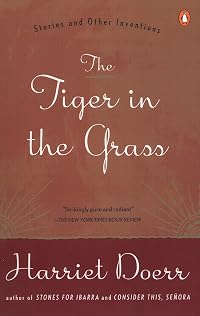
Harriet Doerr was born Harriet Green Huntington on April 8, 1910 in Pasadena, California. She attended Smith College from 1927-1928 and Stanford University from 1928-1930, but left college when she got married. She received a B.A. from Stanford University in 1977. She wrote her first novel, Stones for Ibarra, at the age of 73. It won the American show more Book Award for first fiction and was made into a television movie starring Glenn Close in 1988. Her other works include Consider This, Señora, and The Tiger in the Grass: Stories and Other Inventions. Her work also appeared in several anthologies and periodicals. She died on November 24, 2002 at the age of 92. (Bowker Author Biography) show less
Some Editions
Awards and Honors
Awards
Notable Lists
Series
Belongs to Publisher Series
Common Knowledge
- Canonical title
- Stones for Ibarra
- Original title
- Stones for Ibarra
- Original publication date
- 1984
- People/Characters
- Sara Everton; Richard Everton; Paco; Lourdes
- Important places
- Mexico; Ibarra, Mexico; Concepcion, Mexico
- Related movies
- Stones for Ibarra (1988 | IMDb)
Classifications
Statistics
- Members
- 1,013
- Popularity
- 25,770
- Reviews
- 18
- Rating
- (4.04)
- Languages
- Dutch, English, German, Spanish
- Media
- Paper, Ebook
- ISBNs
- 16
- ASINs
- 11