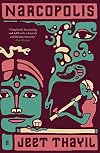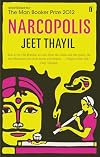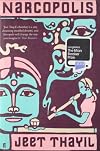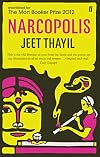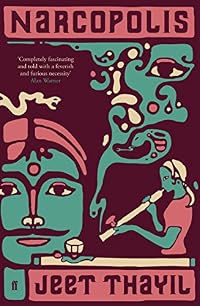
Narcopolis
by Jeet Thayil
On This Page
Description
A tale of vice and passion set against a backdrop of late 1970s Bombay finds a New Yorker becoming entranced with the underworld culture of an opium den and brothel where he encounters a pipe-making eunuch, a violent businessman, and a Chinese refugee.Tags
Recommendations


















Member Recommendations

cometahalley L'India di oggi divisa tra eccessi e tradizione millenaria. Tra conflitti e desiderio di emancipazione, il potere della droga.
cometahalley Metropoli affollata, Mumbai come altri centri in rapida espansione in India, si presenta con tutti gli eccessi derivati dal progresso.
Member Reviews
Described as a complete subversion of Indian literary traditions, this work is better described as a written fever dream. Unusually vivid and filled with bizarre characters, it's difficult not to become fully immersed even while being fully aware that the entire work centers on drug life. A Booker Prize shortlist for a reason, and one that can be easily devoured in a day!
“Bombay, which obliterated its own history by changing its name and surgically altering its face, is the hero or heroin of this story, and since I’m the one who’s telling it and you don’t know who I am, let me say that we’ll get to the who of it but not right now, because now there’s time enough not to hurry, to light the lamp and open the window to the moon and take a moment to dream of a great and broken city, because when the day starts its business I’ll have to stop, these are night-time tales that vanish in sunlight, like vampire dust…”
This book is set in the opium dens of Bombay/Mumbai in the 1970s-1990s, where people are living in poverty and attempting to cope through use of drugs. This novel is written in an show more atmospheric, flowing style, with long sentences that somehow seem appropriate for the subject matter. It explores different forms of escape. It portrays life in the slums in a non-linear fashion from various characters’ perspectives. There is not much of a plot. It touches on religion, art, class differences, and exploitation. It is an interrelated patchwork of stories that meld together. It reflects boredom and lack of hope as reasons people have turned to drugs, and the false “comfort” and chaotic life that results. The author depicts the squalid conditions of the drug community, populated by whores, pimps, thieves, dealers, and addicts. The drugs take their toll – opium sickness, health issues, and lives cut short. Rehab and relapse are also part of the narrative. The lyrical writing makes it apparent that the author is a poet. It feels hypnotic and dreamlike. It is a weird combination of unpleasant content and beautiful prose. show less
This book is set in the opium dens of Bombay/Mumbai in the 1970s-1990s, where people are living in poverty and attempting to cope through use of drugs. This novel is written in an show more atmospheric, flowing style, with long sentences that somehow seem appropriate for the subject matter. It explores different forms of escape. It portrays life in the slums in a non-linear fashion from various characters’ perspectives. There is not much of a plot. It touches on religion, art, class differences, and exploitation. It is an interrelated patchwork of stories that meld together. It reflects boredom and lack of hope as reasons people have turned to drugs, and the false “comfort” and chaotic life that results. The author depicts the squalid conditions of the drug community, populated by whores, pimps, thieves, dealers, and addicts. The drugs take their toll – opium sickness, health issues, and lives cut short. Rehab and relapse are also part of the narrative. The lyrical writing makes it apparent that the author is a poet. It feels hypnotic and dreamlike. It is a weird combination of unpleasant content and beautiful prose. show less
In this poetic novel, which I bought after I heard the author interviewed on NPR, Jeet Thayil tries to do two things: immerse the reader in the feeling of Bombay opium den, and in opium intoxication itself, and at the same time depict the changes in Bombay from the 1970s to the present. He has achieved the first goal admirably, conveying the attraction, the culture, the people, the hallucinatory dreams, the seediness, the atmosphere, all in hypnotically beautiful prose (Thayil is a published poet who was, in fact, an opium smoker in Bombay in the 70s and later). He introduces compelling characters, from the lovely and smart prostitute Dimple who prepares the opium pipes, works in a brothel, and is emphatically not what she appears to show more be, to a Chinese refugee from the travails of Maoism in the 50s, to the complex Rashid who runs the opium den, to a customer of Rashid's who also works for a gangster, to artists and writers,and many more. Thayil paints a picture of a world that could have existed in much the same way for centuries.
He is less successful, in my opinion, in developing a plot that takes Bombay into the modern hurried, international, business-focused era (he rejects the transformation into Mumbai), as first young foreign travelers descend on Rashid's and them political unrest and most importantly heroin disrupt and ultimately destroy the opium culture, sending some of the characters into a caricature of rehab. He clearly means the culture of opium use to symbolize the old Bombay, slow and based on personal relationships and cooperation, and heroin to symbolize the transition to harshness and individualism. It doesn't quite work, at least for me.
The strength of the novel is in its portrayal of the opium world, starting with a one-sentence, six-page, prologue; its portraits of people who have, each in their own way, lost a great deal; its meditations on death and reincarnation, responsibilities to parents and children, religion, sex, and loss; and its poetic language. I found the book difficult to put down, even as I became dissatisfied as it moved on to its conclusion.
The novel frequently uses Hindi words/slang. Most can be figured out from the context, but some remain obscure. show less
He is less successful, in my opinion, in developing a plot that takes Bombay into the modern hurried, international, business-focused era (he rejects the transformation into Mumbai), as first young foreign travelers descend on Rashid's and them political unrest and most importantly heroin disrupt and ultimately destroy the opium culture, sending some of the characters into a caricature of rehab. He clearly means the culture of opium use to symbolize the old Bombay, slow and based on personal relationships and cooperation, and heroin to symbolize the transition to harshness and individualism. It doesn't quite work, at least for me.
The strength of the novel is in its portrayal of the opium world, starting with a one-sentence, six-page, prologue; its portraits of people who have, each in their own way, lost a great deal; its meditations on death and reincarnation, responsibilities to parents and children, religion, sex, and loss; and its poetic language. I found the book difficult to put down, even as I became dissatisfied as it moved on to its conclusion.
The novel frequently uses Hindi words/slang. Most can be figured out from the context, but some remain obscure. show less
Half the time I wasn't sure what was happening in this intoxicating novel. Of course, that fits with the theme, setting, and content, as most of the events occur in opium dens, brothels, and the poverty-baked streets of Bombay from the 1970s to the 1990s. It's clear that Thayil was drawing upon his own experiences as an addict; only one who had experienced the sensation of smoking opium or injecting heroin, or gone through the agony of withdrawal from those addictive substances, could have described them the way that he did. This is no glorification of drug use nor an apology for its exotic and erotic appeal. It's simply a story and the characters are memorable. My favorite is Dimple, the gender bending eunuch who was forcibly docked show more and gelded at age 9 and turned into a prostitute who sets up opium pipes for customers in the den. The narration is, by turns, confusing, vulgar, and beautiful. It probably deserves more than 3.5 stars; I suspect it would earn more with a second reading (which I'm not going to give it). show less
We didn't get on straight away, Narcopolis and me. The Molly Bloom-esque prologue left me wondering what on Earth I'd let myself in for, whether Jeet Thayil the poet had just removed the line breaks from his latest collection and called it a novel. I shouldn't have worried. As it turned out the novel that Narcopolis most reminded me of was not [b:Ulysses|12803|Ulysses|James Joyce|http://d.gr-assets.com/books/1320399545s/12803.jpg|2368224] but [b:Moby Dick|9305975|Moby Dick|Herman Melville|http://d.gr-assets.com/books/1284499671s/9305975.jpg|2409320]. Melville's masterpiece is a book about whaling that isn't about whaling. Rather it uses the long, dull sea voyage with all too brief and all too dangerous flurries of activity as a vast show more vehicle for this metaphorical, allegorical, otherwordsical meta-meta-novel about everything from poverty to theology.
In the same vein, Narcopolis is a novel about an opium den that isn't about an opium den. It's about Bombay, about the changing face of India over the past four decades. In that respect it helps if you know a little Indian. Luckily for me I live with one, and she was happy to translate the snatches of Hindi used here and there, and to explain some of the more esoteric historical points. I suspect she was also a little confused.
“What does this mean?”
“It's a man who was totally castrated as a child, and I mean totally: meat, two veg, and the sack they rode in on.”
“Oh okay, thanks. … What does this mean?”
“It's a bit of a song from an old Hindi film.”
“Oh okay, thanks. … What does this mean?”
“It's a fried-potato curry.”
“Oh okay, thanks. … What does this mean?”
“Heroin. And also: what in the hell are you reading?”
There's a lot to like about Narcopolis, and I liked a lot of it. I suspect I'm not possessed of a sufficiently poetic soul to ever love it, but I'd recommend it to those of you who do. show less
In the same vein, Narcopolis is a novel about an opium den that isn't about an opium den. It's about Bombay, about the changing face of India over the past four decades. In that respect it helps if you know a little Indian. Luckily for me I live with one, and she was happy to translate the snatches of Hindi used here and there, and to explain some of the more esoteric historical points. I suspect she was also a little confused.
“What does this mean?”
“It's a man who was totally castrated as a child, and I mean totally: meat, two veg, and the sack they rode in on.”
“Oh okay, thanks. … What does this mean?”
“It's a bit of a song from an old Hindi film.”
“Oh okay, thanks. … What does this mean?”
“It's a fried-potato curry.”
“Oh okay, thanks. … What does this mean?”
“Heroin. And also: what in the hell are you reading?”
There's a lot to like about Narcopolis, and I liked a lot of it. I suspect I'm not possessed of a sufficiently poetic soul to ever love it, but I'd recommend it to those of you who do. show less
We didn't get on straight away, Narcopolis and me. The Molly Bloom-esque prologue left me wondering what on Earth I'd let myself in for, whether Jeet Thayil the poet had just removed the line breaks from his latest collection and called it a novel. I shouldn't have worried. As it turned out the novel that Narcopolis most reminded me of was not [b:Ulysses|12803|Ulysses|James Joyce|http://d.gr-assets.com/books/1320399545s/12803.jpg|2368224] but [b:Moby Dick|9305975|Moby Dick|Herman Melville|http://d.gr-assets.com/books/1284499671s/9305975.jpg|2409320]. Melville's masterpiece is a book about whaling that isn't about whaling. Rather it uses the long, dull sea voyage with all too brief and all too dangerous flurries of activity as a vast show more vehicle for this metaphorical, allegorical, otherwordsical meta-meta-novel about everything from poverty to theology.
In the same vein, Narcopolis is a novel about an opium den that isn't about an opium den. It's about Bombay, about the changing face of India over the past four decades. In that respect it helps if you know a little Indian. Luckily for me I live with one, and she was happy to translate the snatches of Hindi used here and there, and to explain some of the more esoteric historical points. I suspect she was also a little confused.
“What does this mean?”
“It's a man who was totally castrated as a child, and I mean totally: meat, two veg, and the sack they rode in on.”
“Oh okay, thanks. … What does this mean?”
“It's a bit of a song from an old Hindi film.”
“Oh okay, thanks. … What does this mean?”
“It's a fried-potato curry.”
“Oh okay, thanks. … What does this mean?”
“Heroin. And also: what in the hell are you reading?”
There's a lot to like about Narcopolis, and I liked a lot of it. I suspect I'm not possessed of a sufficiently poetic soul to ever love it, but I'd recommend it to those of you who do. show less
In the same vein, Narcopolis is a novel about an opium den that isn't about an opium den. It's about Bombay, about the changing face of India over the past four decades. In that respect it helps if you know a little Indian. Luckily for me I live with one, and she was happy to translate the snatches of Hindi used here and there, and to explain some of the more esoteric historical points. I suspect she was also a little confused.
“What does this mean?”
“It's a man who was totally castrated as a child, and I mean totally: meat, two veg, and the sack they rode in on.”
“Oh okay, thanks. … What does this mean?”
“It's a bit of a song from an old Hindi film.”
“Oh okay, thanks. … What does this mean?”
“It's a fried-potato curry.”
“Oh okay, thanks. … What does this mean?”
“Heroin. And also: what in the hell are you reading?”
There's a lot to like about Narcopolis, and I liked a lot of it. I suspect I'm not possessed of a sufficiently poetic soul to ever love it, but I'd recommend it to those of you who do. show less
Jeet Thayil's novel Narcopolis is the story of Bombay, the old city that changed its name and destroyed part of its history. It is told from the point of view of a man who travels to the city from New York in the 1970s. He is fascinated by the poor areas where criminals provide drugs and prostitution as an alternative way of life for a variety of Indian people. The common denominator of these people is psychological physical pain. Sex and intoxication disconnect the neurons from the individuals' pain receptors. In this depiction of Bombay, many residents have found a life of the senses in rhythm with the life of the old city.
The underworld is accepting of characters who deviate radically from normal expectations. These marginalized show more souls include an opium den operator, a transgender opium pipe preparer, a violent day worker and family man who visits the den, an alcoholic artist who acts out the expectations of deviance by his admirers, a Chinese expatriate businessman mourning the loss of his culture, and other survivors determined to connect without pain to the immediate life of the subcontinent, the mysterious Eastern metropolis of Bombay.
Although the old Bombay and its people seem doomed to the squalor of small lives and little motivation to improve their lot, there is remarkable freedom for the adventurous in the life of the immediate senses and easy gratification of desires. There is plenty of opportunity for consideration of morality, religion, art, personal responsibility, reincarnation, violence, rebellion, and the soaring illusion of freedom induced by intoxication. It is all there in the ancient city for people with the courage to immerse themselves in its uplifting and destructive life. The visitor is seduced by the city and comes to understand that it demands that free people give affection to those who need it, and everyone in Bombay regardless of caste needs it.
Opium is the symbol of the old Bombay in the novel. Using it is a slow, ritual process that involves a camaraderie and acceptance of others that fosters some mutual affection for all involved. When the visitor rehabs and leaves the old Bombay, he loses track of the life of the city. Revisiting the new city, Mumbai, in the first decade of the 21st Century, heroin from Pakistan has become the new symbol. Its use involves an isolated process that is quick and desperate interfering with the affectionate bonds that were part of ritual opium use. The visitor sees that the city forgot its past and became a place of immediate but dissociative life. Without time to give and receive affection, the incidence of violence, cruelty, and artless tearing down and rebuilding parts of the renamed city has stolen its mysterious life force in the eyes of the returning visitor.
Narcopolis reminds me of The Alexandria Quartet Boxed Set by Lawrence Durrell in which characters try to understand the life force of the great city of Alexandria as it changes over the time of their interacting lives. This is a very interesting novel especially in its description of characters who believe that the pulse of the city is like the perpetual high that they seek with chemicals. Ultimately, these truth seekers are overwhelmed by the power of the city and the limits of their understanding of their futile quest to be free of pain. show less
The underworld is accepting of characters who deviate radically from normal expectations. These marginalized show more souls include an opium den operator, a transgender opium pipe preparer, a violent day worker and family man who visits the den, an alcoholic artist who acts out the expectations of deviance by his admirers, a Chinese expatriate businessman mourning the loss of his culture, and other survivors determined to connect without pain to the immediate life of the subcontinent, the mysterious Eastern metropolis of Bombay.
Although the old Bombay and its people seem doomed to the squalor of small lives and little motivation to improve their lot, there is remarkable freedom for the adventurous in the life of the immediate senses and easy gratification of desires. There is plenty of opportunity for consideration of morality, religion, art, personal responsibility, reincarnation, violence, rebellion, and the soaring illusion of freedom induced by intoxication. It is all there in the ancient city for people with the courage to immerse themselves in its uplifting and destructive life. The visitor is seduced by the city and comes to understand that it demands that free people give affection to those who need it, and everyone in Bombay regardless of caste needs it.
Opium is the symbol of the old Bombay in the novel. Using it is a slow, ritual process that involves a camaraderie and acceptance of others that fosters some mutual affection for all involved. When the visitor rehabs and leaves the old Bombay, he loses track of the life of the city. Revisiting the new city, Mumbai, in the first decade of the 21st Century, heroin from Pakistan has become the new symbol. Its use involves an isolated process that is quick and desperate interfering with the affectionate bonds that were part of ritual opium use. The visitor sees that the city forgot its past and became a place of immediate but dissociative life. Without time to give and receive affection, the incidence of violence, cruelty, and artless tearing down and rebuilding parts of the renamed city has stolen its mysterious life force in the eyes of the returning visitor.
Narcopolis reminds me of The Alexandria Quartet Boxed Set by Lawrence Durrell in which characters try to understand the life force of the great city of Alexandria as it changes over the time of their interacting lives. This is a very interesting novel especially in its description of characters who believe that the pulse of the city is like the perpetual high that they seek with chemicals. Ultimately, these truth seekers are overwhelmed by the power of the city and the limits of their understanding of their futile quest to be free of pain. show less
Members
- Recently Added By
Published Reviews
ThingScore 92
If you were to write a story set in Bombay, as the poet Jeet Thayil prefers to call the city now known as Mumbai in his outstanding debut novel, you don't have to work too hard. Much of it can write itself if you connect the dots of history: a city made of islands reclaimed by the British, a polyglot culture where all of India's languages, faiths and castes mingle, where the prevailing show more currency is money and its dreams are told, nay, sung, in those schmaltzy, kitschy Bollywood movies, and which lives on an edge, periodically blown up when terrorists set explosives, but returning to life the next day, resilient and resigned.
The ingenuity of Thayil's novel lies in how he has squeezed this entire universe into an opium pipe. And when the narrative dissipates into smoke, it leaves a deceptively addictive odour, with memorable characters at the margins of society. There is Dimple, the eunuch keen to read and learn; the Bengali who pretends to know more than he does (or maybe he does); and Rashid himself, who runs the opium den with disdain that's at once sardonic and laconic. There are others too, given peculiar names drawn from Bombay slang, but most try to do no harm, and often show heartwarming humanity. The unobtrusive narrator is Dom, whose soul-killing job is as a proof-reader of publicity material in a pharmaceutical company (with easy access to chemical substances). Just alongside the den are other vices - prostitution and crime. show less
The ingenuity of Thayil's novel lies in how he has squeezed this entire universe into an opium pipe. And when the narrative dissipates into smoke, it leaves a deceptively addictive odour, with memorable characters at the margins of society. There is Dimple, the eunuch keen to read and learn; the Bengali who pretends to know more than he does (or maybe he does); and Rashid himself, who runs the opium den with disdain that's at once sardonic and laconic. There are others too, given peculiar names drawn from Bombay slang, but most try to do no harm, and often show heartwarming humanity. The unobtrusive narrator is Dom, whose soul-killing job is as a proof-reader of publicity material in a pharmaceutical company (with easy access to chemical substances). Just alongside the den are other vices - prostitution and crime. show less
added by kidzdoc
Jeet Thayil’s debut novel, the deftly and aptly titled Narcopolis is—like the polis in which it takes place—part cacophony, part symphony: a whirlwind of drugs, sex, violence, loves, lives, deaths, and more than anything, stories. “Bombay,” the book begins, “which obliterated its own history by changing its name and surgically altering its face, is the hero or heroin of this show more story.” As the title suggests, the book is about drugs and about place. But it’s about much more than that as well. show less
added by kidzdoc
Narcotic drugs have inspired much storytelling and literary dreaming, if rather less actual writing. Of those few novels that slide out of the smoke on to paper, we assume addiction is a requisite for authenticity and yet an enormous hindrance to productivity. After all, it is hardly playing by the rules of decadence and dereliction to find the willpower and tenacity to finish a manuscript. show more But a tiny number do convince the public that theirs is a genuine account of an addiction whose clutches the writer escaped for long enough to scribble down a compelling narrative: think William Burroughs's Junky, or Thomas de Quincey's Confessions of an English Opium Eater.
Does Jeet Thayil's Narcopolis, a tale of opium dens and heroin addiction in Mumbai, join that select club? It is not an easy task. And there's another challenge: many books by foreign-educated Indians read as though they were written in a New York penthouse suite, the author having spent a couple of weeks researching a multi-generational, sprawling saga of Mumbai lowlife by chatting to the house servants of their relatives on the phone.
Narcopolis is a blistering debut that can indeed stand proudly on the shelf next to Burroughs and De Quincey. Thayil is quoted as saying that he lost almost 20 years of his life to addiction, but on this showing the experience did not go to waste. We can celebrate that he emerged intact and gave us this book. show less
Does Jeet Thayil's Narcopolis, a tale of opium dens and heroin addiction in Mumbai, join that select club? It is not an easy task. And there's another challenge: many books by foreign-educated Indians read as though they were written in a New York penthouse suite, the author having spent a couple of weeks researching a multi-generational, sprawling saga of Mumbai lowlife by chatting to the house servants of their relatives on the phone.
Narcopolis is a blistering debut that can indeed stand proudly on the shelf next to Burroughs and De Quincey. Thayil is quoted as saying that he lost almost 20 years of his life to addiction, but on this showing the experience did not go to waste. We can celebrate that he emerged intact and gave us this book. show less
added by kidzdoc
Lists

Booker Prize
491 works; 62 members

Man Booker Prize Longlist 2012
12 works; 2 members

Booker Prize Shortlist: Titles Not Yet Read
161 works; 4 members

IMPAC Dublin Literary Award 2014 longlist
150 works; 3 members

Not the NYT list of top 100 21st century books
100 works; 6 members
Talk Discussions
Past Discussions
Narcopolis by Jeet Thayil in Booker Prize (October 2012)
Author Information

14+ Works 900 Members
Some Editions
Awards and Honors
Awards
Distinctions
Common Knowledge
- Canonical title*
- Narcopolis
- Original title
- Narcopolis
- Original publication date
- 2012
- People/Characters
- Dimple; Rashid; Mr Lee; Dom Ullis; Bengali; Rumi
- Important places
- Bombay, India; New York, New York, USA
- First words
- Bombay, which obliterated its own history by changing its name and surgically altering its face, is the hero or heroin of this story.
- Quotations
- He had been a believer for most of his life, had observed the five prayer times and followed the dietary strictures. Then he'd exchanged one habit for another, he'd given up god and accepted O [opium]. With heroin he'd opened... (show all) himself to the ungodly and for this he would pay, he knew. He would be seized by the feet and flung into the fire. Because the powder was a new thing, the devil's own nasha. Rashid knew it the first time he saw street junkies bent over strips of tin foil, the way they sucked at the smoke, the instantaneous effect of it, how it closed their eyes and shut them off from their own bodies and the world. He saw them and thought: this is it, the future, coming too fast to duck. And now he was doing the same. And he was helpless against god's great wrath.
*Some information comes from Common Knowledge in other languages. Click "Edit" for more information.
Classifications
Statistics
- Members
- 709
- Popularity
- 39,888
- Reviews
- 23
- Rating
- (3.49)
- Languages
- 10 — Dutch, English, French, German, Greek, Italian, Polish, Romanian, Spanish, Turkish
- Media
- Paper, Audiobook, Ebook
- ISBNs
- 27
- ASINs
- 6