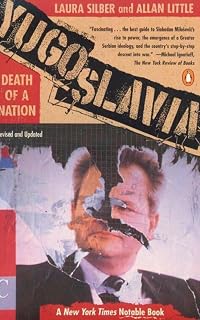
Yugoslavia: Death of a Nation
by Laura Silber, Allan Little
On This Page
Description
Yugoslavia: Death of a Nation is the first book to go behind the public face of war and into the closed worlds of the key players in the conflict. After years of research and hundreds of interviews, Laura Silber, Balkans correspondent for the Financial Times, and Allan Little, award-winning BBC journalist, present a vivid account of the war drawn from its participants and eyewitnesses - citizens, soldiers and politicians. Challenging the conventional wisdom that the war occurred as a show more spontaneous and inevitable eruption of ethnic hatreds, the authors expose, from the shelling of Dubrovnik to the peace talks in Dayton, a plan to divide the country by force of arms. Could anything have been done to prevent this terrible tragedy? What will be its lasting effects? Yugoslavia: Death of a Nation explains how we arrived at the atrocities that no one could imagine in the euphoria surrounding the collapse of the Berlin Wall in late 1989. show lessTags
Recommendations



















Member Reviews
This history by two BBC correspondents does a very good job of presenting the chronology and events of this massive deadly tragedy. The book deftly separates the many different threads of nationalism and nation building that led to the multi-faceted years-long conflict with horrifying atrocities that gave the world the term "ethnic cleansing." The authors are specific and emphatic about the fact that the conflicts were not the inevitable result of ancient ethnic hatreds that were bound to boil over after the death of Tito, who had suppressed all forms of nationalism and ethnic conflict in Yugoslavia during his decades-long rule. Those hatreds certainly existed, but Croats, Serbs and Muslims had for the most part lived alongside each show more other for a long time and might have continued to do so. Silber and Allan lay the blame primarily on two men: Serbian leader Slobodan Milošević, eventually tried for war crimes, and, to a somewhat lesser degree, Croatian leader Franjo Tuđman. Both, say the authors, pushed their own agendas of nation building, paranoia and desire for power over all other concerns, including the lives of their countrymen. The authors also stress the naivety and lack of resolve of NATO and UN would-be mediators that overall was worse than useless until airstrikes were finally called in in defense of the beleaguered Bosnian Muslims in 1994. The book was published in 1995, with events still very much in flux in Bosnia and in Kosovo. I'll need to do some more reading to figure out how things reached their current state.
My interest in the subject was rekindled a couple of years ago when my wife and I visited Croatia on vacation. This book was recommended to us by a bookseller in Dubrovnik. show less
My interest in the subject was rekindled a couple of years ago when my wife and I visited Croatia on vacation. This book was recommended to us by a bookseller in Dubrovnik. show less
Very enjoyable single volume history of the break up of Yugoslavia. The book is well written and the chapters are logically structured and not too long. The coverage is comprehensive and, in my view, written with very little political or ethnic bias.
The authors write of the break up of Yugoslavia in great detail. It is more like an extended newspaper article.
Helpful for outisders to comprehend the complex socio-political situation of the former Yugoslavia.
Yugoslavia: Death of a Nation by Laura Silber (1998)
Ratings
Members
- Recently Added By
Lists

r/AskHistorians' Recommended Books
1,068 works; 18 members

Books Referenced by Montague's 1312: Among the Ultras
29 works; 1 member
Author Information
1 Work 439 Members
3 Works 444 Members
Some Editions
Common Knowledge
- Canonical title
- Yugoslavia: Death of a Nation
- Alternate titles
- The Death of Yugoslavia
- People/Characters
- Slobodan Milosevic; Franjo Tudjman; Alija Izetbegovic; Radovan Karadzic; Ratko Mladic
- Important places
- Kosovo; Belgrade, Serbia; Yugoslavia; Vukovar, Croatia; Srebrenica, Bosnia Herzegovina; Serbia (show all 11); Dubrovnik, Croatia; Ljubljana, Slovenia; Slovenia; Bosnia and Herzegovina; Croatia
- Important events
- wars in former Yugoslavia; Bosnian War
Classifications
- Genres
- History, Nonfiction, General Nonfiction
- DDC/MDS
- 949.7024 — History & geography History of Europe Greece, Albania, Yugoslavia, Serbia, Romania, Bulgaria Former Yugoslavia (Bosnia and Herzegovina ∙ Croatia ∙ Kosovo ∙ Montenegro ∙ Macedonia ∙ Serbia ∙ Slovenia) [formerly also Bulgaria]
- LCC
- DR1313 .S55 — History of Europe, Asia, Africa and Oceania Balkan Peninsula History of Balkan Peninsula Yugoslavia History By period 1918- Yugoslav War, 1991-1995
- BISAC
Statistics
- Members
- 440
- Popularity
- 69,567
- Reviews
- 5
- Rating
- (3.71)
- Languages
- English, German, Serbian, Croatian
- Media
- Paper
- ISBNs
- 7
- ASINs
- 2