On This Page
Description
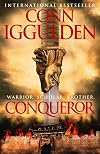
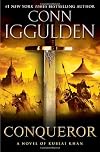
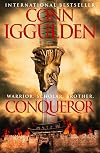
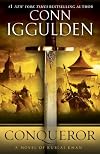
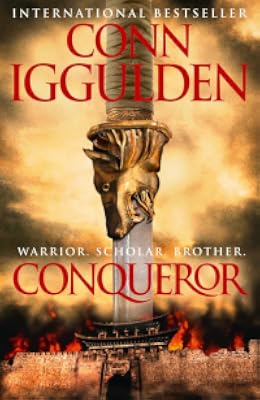
For lovers of thrilling adventure and grand history, the bestselling co-author of the #1 New York Times bestseller The Dangerous Book for Boys has written a magnificent novel with a hero for the ages: the legendary, visionary conqueror Kublai Khan.A succession of ruthless men have seized power in the wake of Genghis Khan’s death—all descendants of the great leader, but none with his indomitable character. One grandson, Guyuk, strains the loyalties of the tribes to the breaking point, show more and another, Mongke, brutally eliminates the opposition and dispatches his younger brothers Kublai and Hulegu to far-flung territories.
Hulegu displays his barbarity with the savage destruction of Baghdad and his clash with the Khan’s age-old enemies, the cult of assassins. But it is Kublai—refined and scholarly, always considered too thoughtful to take power—who will devise new ways of warfare and conquest as he builds the dream city of Xanadu and pursues the ultimate prize: the ancient empire of Sung China. His gifts will serve him well when an epic civil war breaks out among brothers, the outcome of which will literally change the world.
BONUS: This edition includes an excerpt from Conn Iggulden's The Blood of Gods.
“Conqueror is as real as military fiction gets. Conn Iggulden’s story of one of history’s most ferocious and brilliant warriors is full of lessons for our warfighters today.”—Gunnery Sergeant Jack Coughlin, USMC (ret.), New York Times bestselling author of Shooter and Kill Zone: A Sniper Novel
“A rollicking, dangerous and often very gory gallop through the largest land empire the world has ever known.”—Sunday Express (U.K.)
“A thrilling journey, rippingly told . . . Iggulden’s most satisfying to date.”—The Daily Telegraph (U.K.). show less
Tags
Recommendations







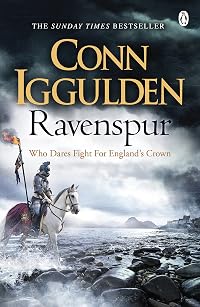
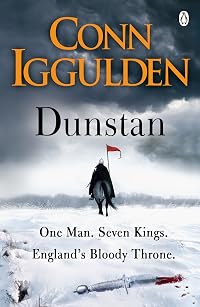





Member Reviews
Blood, battles, and brutality...a good example of adventure/military fiction. Folks who like this kind of book, will very much enjoy Conqueror. I didn't read the first three books in this series, but did get an ER copy of the fourth book and also this one. Conqeror kept me reading, but more like a person who can't take her eyes away from a tragedy as it unfolds. Iggulden is relentless in his description of savagery and death from the large scale sacking of Baghdad to the small scale execution of a defenseless woman.
Iggulden does a great job of creating a believable world, allowing us to see into the culture and people in this very different time and place. We get intimate details of everyday life, understanding of the politics of the show more times and insight into major characters' motivations. Kudos for illuminating this little-written about time. Normally I would give the book four stars for the writing and story. However, I couldn't get past the blood and gore. Women have almost no role, even though two women ruled the Mongols for five years (the time between the fourth and fifth books.) So, for personal pleasure reasons, I knocked it down a star. show less
Iggulden does a great job of creating a believable world, allowing us to see into the culture and people in this very different time and place. We get intimate details of everyday life, understanding of the politics of the show more times and insight into major characters' motivations. Kudos for illuminating this little-written about time. Normally I would give the book four stars for the writing and story. However, I couldn't get past the blood and gore. Women have almost no role, even though two women ruled the Mongols for five years (the time between the fourth and fifth books.) So, for personal pleasure reasons, I knocked it down a star. show less
 This review was written for LibraryThing Early Reviewers.
This is part of a series (5 of 5 so far) that describes what happened to the Mongols of central Asia during and after Genghis Khan's rule. I hadn't read the previous books, and I'm sure that made a big difference in how much I enjoyed this one. However, Conn Iggulden's writing style is wonderful; he's a master storyteller. That being said, this is fiction, not history. The characters may be based upon historical figures, but their actions and personalities are, apparently, entirely the author's own. He's taken a lot of liberty with history, and if that doesn't matter to you, then you will surely enjoy the action and intrigue in this novel. I didn't like the quick changes of POV between chapters, especially, but the story was fascinating.
This review was written for LibraryThing Early Reviewers.Fascinating subject! This fictional reproduction of the history of 13th century Mongol empire is a very good introduction to the world of constant battles, intrigues and brutality. I haven't read the first four books in this series but I will definitely be looking for them now. The author took a framework of historical facts and added fictionalized description of characters. You can argue how historically correct any particular description but it does create a very interesting - and educational - read. I just wish that the flow of the book would not be sometimes slow.
This review was written for LibraryThing Early Reviewers.One of the great joys for an avid reader is discovering an author, an author you may even have never heard of before, an author you know will become one of your favorites. This happened for me when I read Conn Iggulden's CONQUEROR. I'd put him right up with Bernard Cornwell and Jeff Shaara--author of RISE TO REBELLION and other historical novels.
Iggulden tells the story of Kublai Khan, grandson of Genghis Khan, and his rise to power. Iggulden makes the intrigue facinating, the action powerful, and the characters both believable and sympathetic. Making the "Kahn brothers"--Monkge, Hulegu, and Arik-Boke, and of course Kublai--sympathetic must have been a considerable challenge, after all, these were men who believed it was their right to show more take over other peoples, other nations, and kill anyone they wanted to kill for any reason or no reason at all. In effect, this novel, and presumably the other novels in the series, is a cautionary tale in what men who believe they have a right to something are capable of doing. In Kublai's case, there is evidence that, lacking that belief, he'd have been a relatively good man for the time. Iggulden shows the reader several cases where Kublai doesn't kill anyone in cities or towns when the people surrender without a fight, he shows Kublai as a scholar as a youth and a lifelong lover of Chin culture.
Like many people who read this book, I knew little about Genghis Khan, Kublai Khan or the Mongols, so this was both an entertaining read and an informational read. I learned that, "It is interesting to note that the popular idea of a Mongol horde overwhelming smaller armies is almost completely false." (From the book's Historical Note. In my opinion, a historical novel without a Historical Note, several pages telling of history left out or history slightly changed to make a better story, is failing its readers.)
Though I often know little about my favorite authors and though it wouldn't affect my opinion of their novels, it was pleasant to find out that Conn Iggulden seems to be a pretty good guy. There are videos of him on his website, including a funny one of outakes of him starting a promotional video, where he comes off as relatively modest, quite bright, and having a good sense of humor. In my country, USA, we have an expression "The All American Boy," for someone who embodies the best of what American boys or men can be. After checking out his website, I wondered if in England they have a similar expression. "The All England Boy" perhaps? Anyway, it's an interesting website, worth checking out regardless of whether of not Iggulden actually is a nice guy.
To date, I've gotten 17 free books from LibraryThing Early Reviewers. Most have been at least decent, one or two were dogs, and a few very good. CONQUEROR blows them all away. I'll be buying and reading all of Iggulden's novels.
So, if you enjoy historical fiction, you'll likely enjoy this novel. Buy the book! show less
Iggulden tells the story of Kublai Khan, grandson of Genghis Khan, and his rise to power. Iggulden makes the intrigue facinating, the action powerful, and the characters both believable and sympathetic. Making the "Kahn brothers"--Monkge, Hulegu, and Arik-Boke, and of course Kublai--sympathetic must have been a considerable challenge, after all, these were men who believed it was their right to show more take over other peoples, other nations, and kill anyone they wanted to kill for any reason or no reason at all. In effect, this novel, and presumably the other novels in the series, is a cautionary tale in what men who believe they have a right to something are capable of doing. In Kublai's case, there is evidence that, lacking that belief, he'd have been a relatively good man for the time. Iggulden shows the reader several cases where Kublai doesn't kill anyone in cities or towns when the people surrender without a fight, he shows Kublai as a scholar as a youth and a lifelong lover of Chin culture.
Like many people who read this book, I knew little about Genghis Khan, Kublai Khan or the Mongols, so this was both an entertaining read and an informational read. I learned that, "It is interesting to note that the popular idea of a Mongol horde overwhelming smaller armies is almost completely false." (From the book's Historical Note. In my opinion, a historical novel without a Historical Note, several pages telling of history left out or history slightly changed to make a better story, is failing its readers.)
Though I often know little about my favorite authors and though it wouldn't affect my opinion of their novels, it was pleasant to find out that Conn Iggulden seems to be a pretty good guy. There are videos of him on his website, including a funny one of outakes of him starting a promotional video, where he comes off as relatively modest, quite bright, and having a good sense of humor. In my country, USA, we have an expression "The All American Boy," for someone who embodies the best of what American boys or men can be. After checking out his website, I wondered if in England they have a similar expression. "The All England Boy" perhaps? Anyway, it's an interesting website, worth checking out regardless of whether of not Iggulden actually is a nice guy.
To date, I've gotten 17 free books from LibraryThing Early Reviewers. Most have been at least decent, one or two were dogs, and a few very good. CONQUEROR blows them all away. I'll be buying and reading all of Iggulden's novels.
So, if you enjoy historical fiction, you'll likely enjoy this novel. Buy the book! show less
This review was written for LibraryThing Early Reviewers.Atmospheric, bloody, suspenseful. Conqueror wasn't a perfect novel but it was one that kept and held my interest.
Firstly, let me say that I hadn't read any of the previous books of the series, which was at first a serious distraction for me. It took me some time to adjust to Iggulden's writing style, and more importantly to a world I know little about. But as the story progressed both problems dissolved and I was successfully immersed into the world of the Mongols.
Kublai was, from the first, obviously out-of-step with his contemporaries and even more so with the legend of Genghis that all the characters struggled to live up to. That he would eventually become Khan seemed impossible as the story began. A younger son, granted of a noble show more family, granted grandson of Genghis, but still, he was a thinker, a scholar and no where near bloody-minded enough to beat his wild people into a nation.
But as the story unfolded, and as he was forced to become everything he'd tried to avoid (a conqueror), his strengths - analytic, widely read, historian, deep thinker who learned from his mistakes - all came to the fore and made him so much more than any of his contemporaries.
I loved how he ended the book and applaud him for that.
Conqueror is a terrific read. show less
Firstly, let me say that I hadn't read any of the previous books of the series, which was at first a serious distraction for me. It took me some time to adjust to Iggulden's writing style, and more importantly to a world I know little about. But as the story progressed both problems dissolved and I was successfully immersed into the world of the Mongols.
Kublai was, from the first, obviously out-of-step with his contemporaries and even more so with the legend of Genghis that all the characters struggled to live up to. That he would eventually become Khan seemed impossible as the story began. A younger son, granted of a noble show more family, granted grandson of Genghis, but still, he was a thinker, a scholar and no where near bloody-minded enough to beat his wild people into a nation.
But as the story unfolded, and as he was forced to become everything he'd tried to avoid (a conqueror), his strengths - analytic, widely read, historian, deep thinker who learned from his mistakes - all came to the fore and made him so much more than any of his contemporaries.
I loved how he ended the book and applaud him for that.
Conqueror is a terrific read. show less
This review was written for LibraryThing Early Reviewers.Conn Iggulden makes a splendid return to his 13th century world of Mongol dominance. "Conquerer" marks Iggulden's fifth book in his historical fiction series on Genghis Khan, his legacy, and the lasting cultural impact of his Mongol empire on the world.
"Conquerer" focuses on one of Genghis' grandsons, Kublai Khan, who's probably most well known for his monumental interactions with explorer Marco Polo. Absent of the Marco Polo years, "Conquerer" explores the rise of Kublai Khan from a studious and intellectual youth, to a savvy general and Khan of one of the largest empires our world has ever seen.
The first 120 pages set the stage for Kublai's assencion. Iggulden imagines the politics of the ugly internecine battles for leadership show more among Genghis' grandchildren (and their wives). The palace (and ger) intrigues expose Iggulden's deft writings skills outside the context of adventurous battle scenes. This may come as a disappointment to readers used to his magnificently large scale wars which come to the more patient reader further into the book.
It's been a year since I read "Khan: Empire of Silver", the fourth book in the series which focuses on the reign of Genghis' son Ogedai, and Iggulden only provides the most subtle clues as to the back story of characters and family alliances. I had to shake the cobwebs to recapture where things had left off in the previous book and this may make things a little frustrating to the new reader. In the broader context of this sweeping tale, it makes little difference to the understanding of the story of Kublai.
Two generations after Ghengis, the Mongols sought stability at their core while continuing the process of expansion started two generations earlier. It was also a time when the Mongol nation was modernizing, mostly through the influences of their pan-Asian conquests, especially China.
Kublai's brother Monkge assumes control of the Mongol Empire and returns to it the discipline and strength instilled initially by his grandfather Genghis. Mongke asks Kublai to put down his scrolls and pens and pick up a bow to finish his grandfather's work in China.
In the book's second act, Iggulden shifts focus between the Mongol frontiers in the far west and south as we follow the parallel stories of Kublai and his brother Hulegu. As Kublai captures a small walled city in China, Hulegu prepares to take Baghdad, the light of the Muslim world. Iggulden writes each event from two perspectives: Kublai and the city's Prefect; Hulegu and Baghdad's Caliph. Each battlefront throughout the novel follows a similarly satisfying pair of perspectives.
Hulegu is vicious and deceptive. Kublai has a keen intelligence while taking a very different approach to conquest. Hulegu is the very model of the Mongol reputation for unforgiving violence while Kublai takes a more measured approach by allowing those that surrender to live. He's slowly building out his future constituency, while Hulegu's ironfisted approach will ultimately lead to a strongly rebellious people and the ejection of the Mongols from the middle east.
Kublai transforms from an intellectual into a battle-hardened, glory-seeking leader. His foundation of cultural intellectualism continues to drive him. Hulegu, like his predecessors, is very "foreign", cold, distant and harshly regal. Kublai is infinitely more relatable. He's loving father and husband, and his committed adoption to Chinese culture weighs heavily in his favor with the Chinese people.
Kublai's tale is, in many ways, a tale of the evolution of the Mongol empire. He represents the transformation of a society from a massive blending of distinct tribes from across the steppe into a forward-thinking, multicultural world influencing power.
As always, Iggulden's writing is very big and bold. Dialogue is straight forward, but more subtle when Kublai is involved. Like the other books in this series, the reader is introduced to the world and culture of the Mongols and, to a lesser extent, 13th century China. If this is the last book in this series then I'm genuinely sad to see it conclude. This is a good book in a very strong series. show less
"Conquerer" focuses on one of Genghis' grandsons, Kublai Khan, who's probably most well known for his monumental interactions with explorer Marco Polo. Absent of the Marco Polo years, "Conquerer" explores the rise of Kublai Khan from a studious and intellectual youth, to a savvy general and Khan of one of the largest empires our world has ever seen.
The first 120 pages set the stage for Kublai's assencion. Iggulden imagines the politics of the ugly internecine battles for leadership show more among Genghis' grandchildren (and their wives). The palace (and ger) intrigues expose Iggulden's deft writings skills outside the context of adventurous battle scenes. This may come as a disappointment to readers used to his magnificently large scale wars which come to the more patient reader further into the book.
It's been a year since I read "Khan: Empire of Silver", the fourth book in the series which focuses on the reign of Genghis' son Ogedai, and Iggulden only provides the most subtle clues as to the back story of characters and family alliances. I had to shake the cobwebs to recapture where things had left off in the previous book and this may make things a little frustrating to the new reader. In the broader context of this sweeping tale, it makes little difference to the understanding of the story of Kublai.
Two generations after Ghengis, the Mongols sought stability at their core while continuing the process of expansion started two generations earlier. It was also a time when the Mongol nation was modernizing, mostly through the influences of their pan-Asian conquests, especially China.
Kublai's brother Monkge assumes control of the Mongol Empire and returns to it the discipline and strength instilled initially by his grandfather Genghis. Mongke asks Kublai to put down his scrolls and pens and pick up a bow to finish his grandfather's work in China.
In the book's second act, Iggulden shifts focus between the Mongol frontiers in the far west and south as we follow the parallel stories of Kublai and his brother Hulegu. As Kublai captures a small walled city in China, Hulegu prepares to take Baghdad, the light of the Muslim world. Iggulden writes each event from two perspectives: Kublai and the city's Prefect; Hulegu and Baghdad's Caliph. Each battlefront throughout the novel follows a similarly satisfying pair of perspectives.
Hulegu is vicious and deceptive. Kublai has a keen intelligence while taking a very different approach to conquest. Hulegu is the very model of the Mongol reputation for unforgiving violence while Kublai takes a more measured approach by allowing those that surrender to live. He's slowly building out his future constituency, while Hulegu's ironfisted approach will ultimately lead to a strongly rebellious people and the ejection of the Mongols from the middle east.
Kublai transforms from an intellectual into a battle-hardened, glory-seeking leader. His foundation of cultural intellectualism continues to drive him. Hulegu, like his predecessors, is very "foreign", cold, distant and harshly regal. Kublai is infinitely more relatable. He's loving father and husband, and his committed adoption to Chinese culture weighs heavily in his favor with the Chinese people.
Kublai's tale is, in many ways, a tale of the evolution of the Mongol empire. He represents the transformation of a society from a massive blending of distinct tribes from across the steppe into a forward-thinking, multicultural world influencing power.
As always, Iggulden's writing is very big and bold. Dialogue is straight forward, but more subtle when Kublai is involved. Like the other books in this series, the reader is introduced to the world and culture of the Mongols and, to a lesser extent, 13th century China. If this is the last book in this series then I'm genuinely sad to see it conclude. This is a good book in a very strong series. show less
You can almost smell the sweat and feel the heat of battle while you read Conn Iggulden's novel of Kublai Khan. I found the book facinating enough that while I read it, I would dream about it at night. I plan on getting all his novels and rationing them so I always have one waiting to be savored. This book brings the 13th century alive for the reader. The attitudes of the the individuals, the way classes and ethnic cultures differ with in those countries seemed realistic and well thought out. The main characters had the harsh and often cruel outlook of the time they lived in. I grow to understand and respect them despite the horrors they were capable of. This is a great book, if only history were taught like this in school.
This review was written for LibraryThing Early Reviewers.Members
- Recently Added By
Lists

Books Read in 2020
4,379 works; 124 members

Books Read in 2012
816 works; 34 members

Kindle Historical Re-Read
69 works; 1 member
Author Information

99+ Works 23,901 Members
Conn Iggulden is a British fiction writer, born in 1971. He studied at English at the University of London. Iggulden headed the English Department at St. Gregory's Roman Catholic School in London and taught English there for seven years. He left teaching to write his first novel, The Gates of Rome. Iggulden has also co-authored the #1 New York show more Times bestseller, "The Dangerous Book for Boys". His title Trinity is the second of the series of books covering the Wars of the Roses, when the English noble families were at war with each other. Book 4, Ravenspur: Rise of the Tudors, was released in May 2016 show less
Awards and Honors
Distinctions
Series

Work Relationships
Common Knowledge
- Canonical title
- Conqueror
- Original title
- Conqueror
Classifications
Statistics
- Members
- 717
- Popularity
- 39,789
- Reviews
- 47
- Rating
- (4.16)
- Languages
- 8 — Danish, English, Finnish, Hungarian, Norwegian (Bokmål), Portuguese, Spanish, Swedish
- Media
- Paper, Audiobook, Ebook
- ISBNs
- 33
- ASINs
- 11