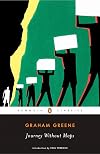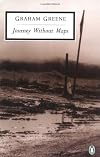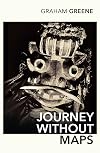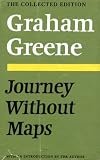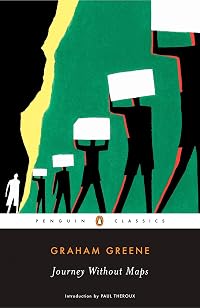
Journey Without Maps
by Graham Greene 
On This Page
Description
The British author embarks on an awe-inspiring trek through 1930s West Africa in " one of the best travel books [of the twentieth] century " ( The Independent ). When Graham Greene left Liverpool in 1935 for what was then an Africa unmarked by colonization, it was to leave the known transgressions of his own civilization behind for those unknown. First by cargo ship, then by train and truck through Sierra Leone, and finally on foot, Greene embarked on a dangerous and unpredictable show more 350-mile, four-week trek through Liberia with his cousin, and a handful of servants and bearers, into a world where few had ever seen a white man. For Greene, this odyssey became as much a trip into the primitive interiors of the writer himself as it was a physical journey into a land foreign to his experience. "No one who reads this book will question the value of Greene's experiment, or emerge unshaken by the penetration, the richness, the integrity of this moving record." — The Guardian show lessTags
Recommendations

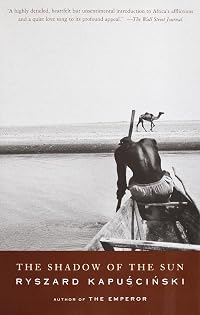
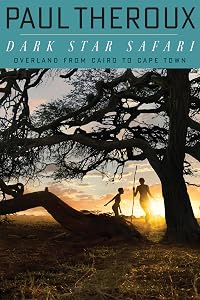
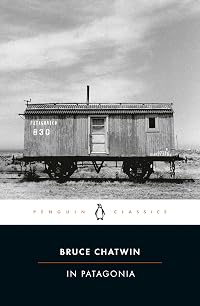


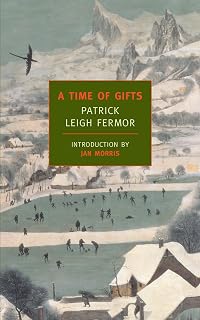














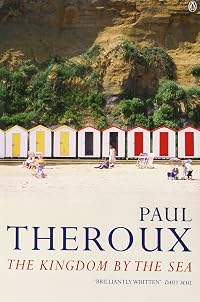

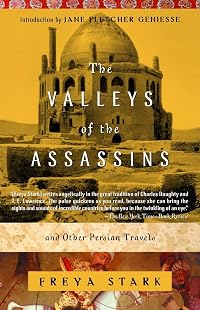


Member Recommendations

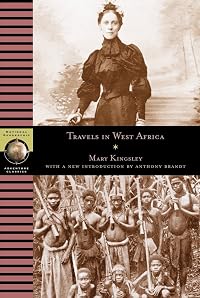
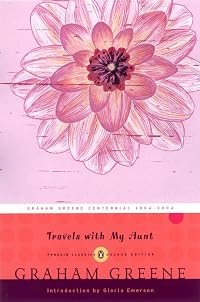
g026r Barbara & Graham Greene's complimentary/conflicting (depending on whom you talk to) accounts of their mid-30s travels in Africa.
John_Vaughan Too late is well written, with the family talent, and is a complimentary reading to Graham's work. The dirrening accounts owe more to artistic effects than to the deliriums suffered by her bother!
20

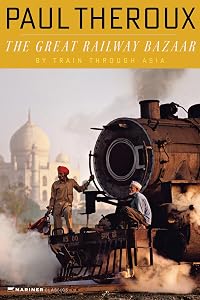
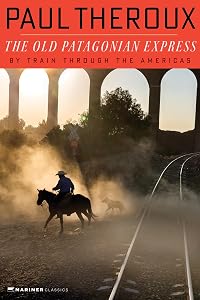
John_Vaughan Both authors felt deeply about Africa and Greene wrote several works on this theme of inner and actual African travel. Paul returns to his Peace Corp teaching post but the books reveals his disillusionment.
Member Reviews
Graham Greene is, of course, more celebrated for his fiction than for anything else, but this, a book of travel writing as he made his way through Sierra Leone and Liberia, is a masterpiece of the genre and as worth reading today as when it was published. I haven't visited either of these countries myself, but I am familiar with the discomforts of exploring Africa - I wove my way from Ghana to South Africa overland more than a decade ago - and so much of what Greene writes rings true: the illness, the dirt, the lack of food, but also the warmth of the people he met, and the beauty of the places he saw.
I am generally an admirer of Graham Greene's writing, but didn't much enjoy this book. This is not informative, intelligent, self-aware or compelling in the way that, say, Paul Theroux travelogues are; instead, what comes across is the author's then (1935) blinkered view of Africa and Africans and a near-absence of reflections on his own mindset or those of the generally accommodating people he encountered. It is a peculiarly myopic view of a brief, purposeless journey on foot from village to village through Liberia in West Africa supported by dozens of native porters. The presence of his female cousin on this trip with him is barely mentioned. Overall - barring the oddly ill-fitting final chapter on Liberian politics and wider show more reflections - the tone is that of Henry Morton Stanley's depressingly Eurocentric but far more purposeful expeditions through Central Africa some sixty years earlier. show less
What triggered Graham Greene and his cousin to march through a forsaken part of Africa? A truly masochistic undertaking of exploring misery and enduring uncomfortable moments just for the kick of writing a book (or two books as his cousin published her account too). Perhaps the lack of interaction may have been usual for the upper middle class then, but Greene and his cousin might nearly have been on separate trips as they rarely perform anything together or speak with one another. Greene actually pioneers a Thomas Friedmanesque approach of only speaking to either chieftains (CEOs) or servants.
The big take-away for me is that we in Europe are blessed with relatively benign crawly creatures whereas Africa is plagued by nasty, aggressive show more and invasive critters and an adverse climate. I prefer not to live in a country where books will rot away in no time. Greene learned this too and later stayed in beautiful decadent Capri where he was at liberty to enjoy his vices. show less
The big take-away for me is that we in Europe are blessed with relatively benign crawly creatures whereas Africa is plagued by nasty, aggressive show more and invasive critters and an adverse climate. I prefer not to live in a country where books will rot away in no time. Greene learned this too and later stayed in beautiful decadent Capri where he was at liberty to enjoy his vices. show less
Greene's description of a journey into the interior of Liberia. While there are a lot of assumptions about African culture and people, Greene is a more acute and honest observer of himself than many travelers. In my opinion, that makes this book worth reading as Greene interrogates the "travel adventure" impulse.
Another of the "100 greatest adventure books" that I found it impossible to get through -- I abandoned Greene's book when I was three-quarters of the way through after realizing it wouldn't get much better.
I found Greene's general attitude toward those he met on his walk across Liberia and his treatment of his porters to be really irritating. Nothing much of interest happens on his walk across the country either. A grating narrator and a tepid account of what should have been a grand adventure helps make this book extremely dull.
I found Greene's general attitude toward those he met on his walk across Liberia and his treatment of his porters to be really irritating. Nothing much of interest happens on his walk across the country either. A grating narrator and a tepid account of what should have been a grand adventure helps make this book extremely dull.
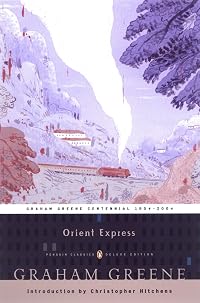
Graham Greene is a famous 20th C novelist ("The Orient Express") who also wrote a few non-fiction travel accounts. This is his first, when he was 31 years old and left Europe for the first time, in order to experience the uncivilized "dark heart of Africa" by traveling through the back country of Liberia in 1935. It was a 4-week, 350-mile walk, mostly through an unchanging tunnel forest path, ending each day in a primitive village. He had about a dozen black porters who would carry him in a sling, although he walked much of the way.
It's written with a very "old school" perspective, with one foot in the 19th (or 18th) century of romantic colonial imperialism, and one foot in the pre-war 1930s perspective of deterioration, rot and things show more falling apart. Heavy whiskey drinking, descriptions of the festering diseases of the natives, and plethora of bothersome insects, the run down European outposts and a motley cast of white rejects fill many descriptive pages.
It reminds me a lot of Samuel Johnson's "Journals of the Western Isles" (1770s) when Johnson, who had never left England in his life, decided to go to Scotland to see what uncivilized people were like. Just as Johnson brought Boswell who would go on to write his own version of the trip, Greene brought his female cousin Barbara Greene (who remains unnamed in the book and largely unmentioned), who went on to write her own version of the trip in the 1970s called "Too Late to Turn Back", which mostly contradicts Grahams version.
I can't say I totally enjoyed this book, I found Greene's attitude irritating - but therein lies its value, as a snapshot of prewar European zeitgeist. It is reminiscent of "Kabloona" (1940), another prewar travel account to an uncivilized place (Arctic Eskimos) by a young European aristocrat, who also is deeply inward looking and finds a new perspective and appreciation for the "cave man" people he meets. It's very much a transition period between prewar and post-war attitudes and the fluctuation's back and forth, the sense of things falling apart, but also new-found perspective, make it a challenging but interesting work. show less
It's written with a very "old school" perspective, with one foot in the 19th (or 18th) century of romantic colonial imperialism, and one foot in the pre-war 1930s perspective of deterioration, rot and things show more falling apart. Heavy whiskey drinking, descriptions of the festering diseases of the natives, and plethora of bothersome insects, the run down European outposts and a motley cast of white rejects fill many descriptive pages.
It reminds me a lot of Samuel Johnson's "Journals of the Western Isles" (1770s) when Johnson, who had never left England in his life, decided to go to Scotland to see what uncivilized people were like. Just as Johnson brought Boswell who would go on to write his own version of the trip, Greene brought his female cousin Barbara Greene (who remains unnamed in the book and largely unmentioned), who went on to write her own version of the trip in the 1970s called "Too Late to Turn Back", which mostly contradicts Grahams version.
I can't say I totally enjoyed this book, I found Greene's attitude irritating - but therein lies its value, as a snapshot of prewar European zeitgeist. It is reminiscent of "Kabloona" (1940), another prewar travel account to an uncivilized place (Arctic Eskimos) by a young European aristocrat, who also is deeply inward looking and finds a new perspective and appreciation for the "cave man" people he meets. It's very much a transition period between prewar and post-war attitudes and the fluctuation's back and forth, the sense of things falling apart, but also new-found perspective, make it a challenging but interesting work. show less
I decided to read this book for two reasons - one, Anthony Bourdain mentioned it as inspiring when he did a cooking tour through Liberia, and two, I wanted to read Graham Greene. Sigh. This was not the Greene book to start with. Much as the writing itself was beautiful, he suffered from terrible boredom on the trip and that translated directly to the reader experience…..
Members
- Recently Added By
Published Reviews
And this is where the book inspires. Back in 2003, reading of Greene's own troubles in Liberia, gave me a degree of comfort as I struggled to make sense of a chaotic region. They made me consider the prejudices that I, as a white outsider, might seek to project not just on to Liberia but wider Africa as well. Each time I read 'Journey Without Maps', I take something new from the experience: show more truly the hallmark of the best writing. show less
added by John_Vaughan
Lists

Best of Travel Narratives
142 works; 28 members

Best Autobiographies and Memoirs
370 works; 67 members

Books Set In Africa
81 works; 4 members

Books I Own But Haven't Read
144 works; 2 members

Africa
109 works; 8 members

In or About the 1930s
198 works; 27 members

1930s
262 works; 5 members

Books Read in 2012
816 works; 34 members
Author Information

356+ Works 87,436 Members
Born in 1904, Graham Greene was the son of a headmaster and the fourth of six children. Preferring to stay home and read rather than endure the teasing at school that was a by-product of his father's occupation, Greene attempted suicide several times and eventually dropped out of school at the age of 15. His parents sent him to an analyst in show more London who recommended he try writing as therapy. He completed his first novel by the time he graduated from college in 1925. Greene wrote both entertainments and serious novels. Catholicism was a recurring theme in his work, notable examples being The Power and the Glory (1940) and The End of the Affair (1951). Popular suspense novels include: The Heart of the Matter, Our Man in Havana and The Quiet American. Greene was also a world traveler and he used his experiences as the basis for many books. One popular example, Journey Without Maps (1936), was based on a trip through the jungles of Liberia. Greene also wrote and adapted screenplays, including that of the 1949 film, The Third Man, which starred Orson Welles. He died in Vevey, Switzerland in 1991. (Bowker Author Biography) show less
Graham Greene has a Legacy Library. Legacy libraries are the personal libraries of famous readers, entered by LibraryThing members from the Legacy Libraries group.
Awards and Honors
Series
Belongs to Publisher Series
Work Relationships
Common Knowledge
- Canonical title
- Journey Without Maps
- Original publication date
- 1936
- People/Characters
- Graham Greene; Barbara Greene
- Important places
- Liberia
- Dedication
- To My Wife:
"I carry you like a passport everywhere."
- William Plomer: "Visiting the Caves." - First words*
- The tall black door in the narrow city street remained closed. I rang and knocked and rang again. I could not hear the bell ringing; to ring it again and again was simply an act of fait or despair, and later sitting before a ... (show all)hut in French Guinea, where I never meant to find myself, I remembered this first going astray, the buses passing at the corner and the pale autumn sun.
- Last words*
- (Click to show. Warning: May contain spoilers.)There, I thought, standing in the cold empty Customs shed with a couple of suit-cases, a few pieces of silver jewellery, a piece of script found in a Bassa hut, an old sword or two, the only loot I had brought with me, was as far back as one needed to go, was Africa: the innocence, the virginity, the graves not opened yet for gold, the mines not broken with sledges.
- Original language
- English
*Some information comes from Common Knowledge in other languages. Click "Edit" for more information.
Classifications
Statistics
- Members
- 829
- Popularity
- 33,152
- Reviews
- 15
- Rating
- (3.48)
- Languages
- 9 — Dutch, English, French, German, Hungarian, Italian, Norwegian (Bokmål), Spanish, Swedish
- Media
- Paper, Ebook
- ISBNs
- 19
- ASINs
- 21