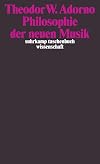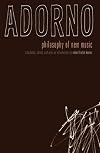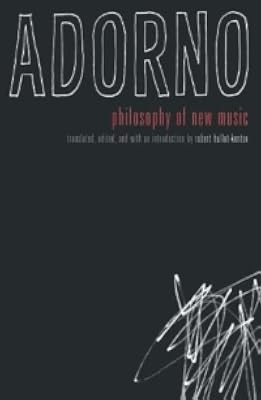
Philosophy Of New Music
by Theodor W. Adorno
On This Page
Description
"In 1947 Theodor Adorno, one of the seminal European philosophers of the postwar years, announced his return after exile in the United States to a devastated Europe by writing Philosophy of New Music. Intensely polemical from its first publication, every aspect of this work was met with extreme reactions, from stark dismissal to outrage. Even Schoenberg reviled it." "Despite the controversy, Philosophy of New Music became highly regarded and widely read among musicians, scholars, and social show more philosophers. Marking a major turning point in his musicological philosophy, Adorno located a critique of musical reproduction as internal to composition itself, rather than as a matter of the reproduction of musical performance. Consisting of two distinct essays, "Schoenberg and Progress" and "Stravinsky and Reaction," this work poses the musical extremes in which Adorno perceived the struggle for the cultural future of Europe, between human emancipation and barbarism, between the compositional techniques and achievements of Schoenberg and Stravinsky." "In this completely new translation - presented along with an extensive introduction by distinguished translator Robert Hullot-Kentor - Philosophy of New Music emerges as a key to the whole of Adorno's illustrious and influential oeuvre."--Jacket show lessTags
Recommendations








Member Reviews
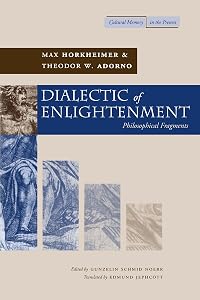
Adorno's Philosophy of New Music is one of his more specialized and obscure analyses. It is tighter and less ambitious than Dialectic of Enlightenment, which was co-written with Max Horkheimer around the same time. It is divided into two sections that contain intricate dissections of Schoenberg and Stravinsky.
O livro, escrito no final da década de 50, está dividido em duas partes, a primeira sobre a obra musical de Schoenberg, a segunda sobre Stravinsky. Em ambas há um tanto de perspicácia e ideias valiosas, uma vez que se tem paciência de reler trechos obscuros e alusivos, e já temos uma ideia sobre o que Adorno quereria dizer sobre o assunto. Com isso, o livro certamente exige muito do leitor, mas também, ao menos quanto à Schoenberg, o dodecafonismo e a escola de Viena, entrega. Não no sentido de estabelecer uma crítica firme para os dias de hoje do que foi Schoenberg ou o dodecafonismo, mas sim de permitir a extração de ideias interessantes, que dão muito o que pensar. A segunda parte, sobre Stravinsky, entretanto, exige show more mais esforço, dado que, exceto nas poucas críticas mais elogiosas (como da Sinfonia em 3 movimentos), o joio da crítica da conformidade social e da necessidade de um organicismo de base, torna difícil colher o trigo da estranheza fria, inquietante, junto ao familiar, da insistência dos blocos e de uma dureza contra a expressão, à abertura aos ritmos que deslocam a ideia de desenvolvimento, que Stravinsky fornece, ora bem, ora mal. show less
Jul 18, 2023 (Edited)Portuguese
Ratings
Members
- Recently Added By
Lists

culture
320 works; 1 member
Author Information

323+ Works 14,299 Members
Theodor W. Adorno is the progenitor of critical theory, a central figure in aesthetics, and the century's foremost philosopher of music. He was born and educated in Frankfurt, Germany. After completing his Ph.D. in philosophy, he went to Vienna, where he studied composition with Alban Berg. He soon was bitterly disappointed with his own lack of show more talent and turned to musicology. In 1928 Adorno returned to Frankfurt to join the Institute for Social Research, commonly known as The Frankfurt School. At first a privately endowed center for Marxist studies, the school was merged with Frankfort's university under Adorno's directorship in the 1950s. As a refugee from Nazi Germany during World War II, Adorno lived for several years in Los Angeles before returning to Frankfurt. Much of his most significant work was produced at that time. Critics find Adorno's aesthetics to be rich in insight, even when they disagree with its broad conclusions. Although Adorno was hostile to jazz and popular music, he advanced the cause of contemporary music by writing seminal studies of many key composers. To the distress of some of his admirers, he remained pessimistic about the prospects for art in mass society. Adorno was a neo-Marxist who believed that the only hope for democracy was to be found in an interpretation of Marxism opposed to both positivism and dogmatic materialism. His opposition to positivisim and advocacy of a method of dialectics grounded in critical rationalism propelled him into intellectual conflict with Georg Hegel, Martin Heidegger, and Heideggerian hermeneutics. (Bowker Author Biography) show less
Awards and Honors
Series
Belongs to Publisher Series
Common Knowledge
- Original title
- Philosophie der neuen Musik
- Original publication date
- 1949
Classifications
Statistics
- Members
- 350
- Popularity
- 90,087
- Reviews
- 2
- Rating
- (3.55)
- Languages
- 9 — Danish, Dutch, English, Estonian, French, German, Italian, Portuguese, Spanish
- Media
- Paper, Ebook
- ISBNs
- 28
- ASINs
- 3