
The Confidential Agent
by Graham Greene 
On This Page
Description
HTML:In Greene's "magnificent tour-de-force among tales of international intrigue," rival agents engage in a deadly game of cat and mouse in prewar England (The New York Times). D., a widowed professor of Romance literature, has arrived in Dover on a peaceful yet important mission. He's to negotiate a contract to buy coal for his country, one torn by civil war. With it, there's a chance to defeat fascist influences. Without it, the loyalists will fail. When D. strikes up a romantic show more acquaintance with the estranged but solicitous daughter of a powerful coal-mining magnate, everything appears to be in his favor—if not for a counteragent who has come to England with the intent of sabotaging every move he makes. Accused of forgery and theft, and roped into a charge of murder, D. becomes a hunted man, hemmed in at every turn by an ever-tightening net of intrigue and double cross, with no one left to trust but himself. Written during the height of the Spanish Civil War, Graham Greene's "exciting . . . kaleidoscopic affair" was the basis for the classic 1945 thriller starring Charles Boyer and Lauren Bacall (The Sunday Times). Classic Literature. Thriller. Fiction. show lessTags
Recommendations




















Member Recommendations
Member Reviews
This is Greene at his best, providing a gnashing noir, a tale of chase and deception. The Confidential Agent distills the fears of the late 1930s, people are being driven to an almost post-human ignobility. Attempting to stay above the feral pragmatism, an agent known as D. makes his way to England. The timeframe and circumstances suggest The Spanish Civil War, but the details blur into a generic European nightmare. D. is a classics professor and the reader feels for his obsolescence in these dark times. The landscape, the weather and even radio advertisements conspire and haunt. Greene provides no relief and actually mocks the possibility of a sentimental response or conclusion. Highly recommended.
Review first published on BookLikes: http://brokentune.booklikes.com/post/873494/the-confidential-agent
"The gulls swept over Dover. They sailed out like flakes of the fog, and tacked back towards the hidden town, while the siren mourned with them: other ships replied, a whole wake lifted up their voices – for whose death?"
So begins the story of D.
D. is an agent - a confidential agent - who is sent to England on a mission. Having arrived in Dover, nothing goes to plan and D. is soon pitched against another agent (L.).
In this race to fulfill his task, D. is thrown into the centre of a time and place pulled into antagonising directions - there is a battle between the young and old, the aristocracy and the ordinary men, the natives show more and foreigners, the mad and the sane, the powerful and the helpless, the stupid and the enlightened, love and indifference - all elements which would come to define the somewhat harrowing place that is Greene-land.
"It was absurd, of course, to feel afraid, but watching the narrow stooping back in the restaurant he felt as exposed as if he were in a yard with a blank wall and a firing squad."
Graham Greene famously wrote The Confidential Agent, fueled by Benzedrine, in parallel to The Power and the Glory. In contrast to The Power and the Glory, he expected to earn money from the sales of this "entertainment". It is of no surprise then that The Confidential Agent does not dwell on morality or religion as much as some of Greene's other books. It does have elements of those deliberations - after all The Confidential Agent is based on and inspired by the Spanish Civil War - but it does not go into great depths.
And, this for me is where it falls down. What I love about Greene is that he commits his protagonists to something - an ideal, a cause, a situation, anything - and gives them depth. This is lacking a bit here. D. is portrayed well and we learn much of his back-story, but knowing D.'s past does not help much to figure out other characters in the book. So, despite a promising start and interesting plot, the story itself loses grip on a number of occasions because there is little chemistry, or tension, between the characters - not between D. and his nemesis, not between D. and his persecutors, and not even between D. and Rose.
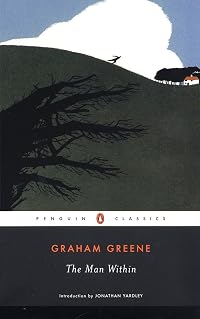
The Confidential Agent was first published in 1939, ten years after his first novel The Man Within, and knowing of Greene's life and career, it is still an "early" work. It shows all the potential that would fully develop in his subsequent work, but it just isn't of the same quality. However, I do wonder...
I haven't read The Power and the Glory, yet, but I almost want to wager that Greene put in it what he held back on in The Confidential Agent - less aimless caper and more study of the human condition. show less
"The gulls swept over Dover. They sailed out like flakes of the fog, and tacked back towards the hidden town, while the siren mourned with them: other ships replied, a whole wake lifted up their voices – for whose death?"
So begins the story of D.
D. is an agent - a confidential agent - who is sent to England on a mission. Having arrived in Dover, nothing goes to plan and D. is soon pitched against another agent (L.).
In this race to fulfill his task, D. is thrown into the centre of a time and place pulled into antagonising directions - there is a battle between the young and old, the aristocracy and the ordinary men, the natives show more and foreigners, the mad and the sane, the powerful and the helpless, the stupid and the enlightened, love and indifference - all elements which would come to define the somewhat harrowing place that is Greene-land.
"It was absurd, of course, to feel afraid, but watching the narrow stooping back in the restaurant he felt as exposed as if he were in a yard with a blank wall and a firing squad."
Graham Greene famously wrote The Confidential Agent, fueled by Benzedrine, in parallel to The Power and the Glory. In contrast to The Power and the Glory, he expected to earn money from the sales of this "entertainment". It is of no surprise then that The Confidential Agent does not dwell on morality or religion as much as some of Greene's other books. It does have elements of those deliberations - after all The Confidential Agent is based on and inspired by the Spanish Civil War - but it does not go into great depths.
And, this for me is where it falls down. What I love about Greene is that he commits his protagonists to something - an ideal, a cause, a situation, anything - and gives them depth. This is lacking a bit here. D. is portrayed well and we learn much of his back-story, but knowing D.'s past does not help much to figure out other characters in the book. So, despite a promising start and interesting plot, the story itself loses grip on a number of occasions because there is little chemistry, or tension, between the characters - not between D. and his nemesis, not between D. and his persecutors, and not even between D. and Rose.
The Confidential Agent was first published in 1939, ten years after his first novel The Man Within, and knowing of Greene's life and career, it is still an "early" work. It shows all the potential that would fully develop in his subsequent work, but it just isn't of the same quality. However, I do wonder...
I haven't read The Power and the Glory, yet, but I almost want to wager that Greene put in it what he held back on in The Confidential Agent - less aimless caper and more study of the human condition. show less
Some great turns of phrase as you'd expect from Greene, but also a little unexpected evil from D there toward the end. He didn't go all the way with deliberate murder, but K did end up dying as a result of D's scare . The shenanigans on both sides are a tad hard to follow, but the plot is fairly simple even if the action is not. A well-executed entertainment.
Very good! The whole thing was kind of a slow burn with frantic interludes. The main character, Mr. D, had a back story that left him mostly dead inside. His mission was to go to London as a confidential agent for a foreign government and procure coal for the winter for his people while keeping it out of the hands of the rebels with which his government was at war. As soon as he gets to London, it is apparent that his job won't be an easy one. A suspenseful story with a character study that mirrors a society at war.
"The Confidential Agent" recounts the struggle of a man dispatched in the very late 1930s from an unnamed European country (Spain) to England to complete a mission for his side in a civil war. Things don’t go well for this guy, identified only as D. His passport photo is a few years old, and he’s aged a lot; the enemy tries to buy him off and his refusal ends in a beating; he is shot at in London, and even his bosses don’t trust him. At the climactic meeting where he will complete his mission, he finds that his credentials, proving he is who he says he is, have been stolen.
Greene tries for realism, certainly, and, with moderate success, achieves it. More important to the author, though, is the sinking spiral in which his hero show more falls for the first half of the book. D. lives in fear, the only possible outcome for someone who has been imprisoned by the Spanish fascist rebels. He cannot get past the accidental death of his wife; he can’t stand physical confrontation because he has no idea how to defend himself. He is constantly on his guard about his person and his documentation. Rare indeed is the character he feels he can trust.
A series of reversals would likely have been fatal, at least for his mission, if it weren’t for Rose, a woman he meets on his first night in England. An attractive blonde who cannot resist what she calls “melodrama”—which is what she calls D.’s predicament after she begins to believe him—Rose has a surprising knack for knowing what to say to whom in any given situation, and rescues D. on several occasions. D.’s and Rose’s developing love didn’t convince me; it could be Greene was too British to do any more than suggest and imply on that aspect.
"The Confidential Agent" charges along at a good pace. It has enough plot twists to satisfy anyone, but don’t expect a lot of physical action. Having accompanied a man to the man’s apartment building, D. shoots at him but misses, although the man does die of heart failure a few minutes later. Only a few times do we encounter any sense of real physical danger for the hero; no, what endangers his life is going back home and joining in the actual war itself.
This book entertains in the skulduggery genre, but its strengths lie is its treatment of the larger questions of life, loyalty, betrayal, wartime morality, and the shifting ideologies of a fraught moment in history. show less
Greene tries for realism, certainly, and, with moderate success, achieves it. More important to the author, though, is the sinking spiral in which his hero show more falls for the first half of the book. D. lives in fear, the only possible outcome for someone who has been imprisoned by the Spanish fascist rebels. He cannot get past the accidental death of his wife; he can’t stand physical confrontation because he has no idea how to defend himself. He is constantly on his guard about his person and his documentation. Rare indeed is the character he feels he can trust.
A series of reversals would likely have been fatal, at least for his mission, if it weren’t for Rose, a woman he meets on his first night in England. An attractive blonde who cannot resist what she calls “melodrama”—which is what she calls D.’s predicament after she begins to believe him—Rose has a surprising knack for knowing what to say to whom in any given situation, and rescues D. on several occasions. D.’s and Rose’s developing love didn’t convince me; it could be Greene was too British to do any more than suggest and imply on that aspect.
"The Confidential Agent" charges along at a good pace. It has enough plot twists to satisfy anyone, but don’t expect a lot of physical action. Having accompanied a man to the man’s apartment building, D. shoots at him but misses, although the man does die of heart failure a few minutes later. Only a few times do we encounter any sense of real physical danger for the hero; no, what endangers his life is going back home and joining in the actual war itself.
This book entertains in the skulduggery genre, but its strengths lie is its treatment of the larger questions of life, loyalty, betrayal, wartime morality, and the shifting ideologies of a fraught moment in history. show less
- The author doses himself with Benzedrine in order to bash out a novel in six weeks.
- He sits down every morning at his typewriter without much of a thought as to where his plot will take him
- He writes an espionage thriller knowing precious little about the world of spies and spying.
Knowing this background would you want to read the finished novel? Well you might if you knew the author was Graham Greene. It is to his credit that he has fashioned a novel that is entertaining and engaging. It has the feel of a good noir B movie: plenty of atmosphere but not always plausible.
Written in 1938, Greene captures the uncertainty, the paranoia and the recklessness of pre-war England. Kafka it is not, but the hero D suffers similar uncertainties show more to Kafka's heroes: not being able to trust anyone around them and a feeling of helplessness as they are tossed around by other peoples devious plans. The main characters are well drawn although others are introduced just to service a plot that creaks and groans in places. There are flashes of a superior writer at work and I enjoyed it enough to forgive some of its missteps. A fun read show less
- He sits down every morning at his typewriter without much of a thought as to where his plot will take him
- He writes an espionage thriller knowing precious little about the world of spies and spying.
Knowing this background would you want to read the finished novel? Well you might if you knew the author was Graham Greene. It is to his credit that he has fashioned a novel that is entertaining and engaging. It has the feel of a good noir B movie: plenty of atmosphere but not always plausible.
Written in 1938, Greene captures the uncertainty, the paranoia and the recklessness of pre-war England. Kafka it is not, but the hero D suffers similar uncertainties show more to Kafka's heroes: not being able to trust anyone around them and a feeling of helplessness as they are tossed around by other peoples devious plans. The main characters are well drawn although others are introduced just to service a plot that creaks and groans in places. There are flashes of a superior writer at work and I enjoyed it enough to forgive some of its missteps. A fun read show less
Set in England and the English Channel during the Spanish Civil War of the 1930s, the novel shows international dealings in coal. The plot features intrigues among Fascists, Communists, Capitalists, workers, and Unionists. A story about trust and suspicion, the book contrasts peaceful England with war-torn Spain. The central romance is sappy, but the child Else is an appealing character. The alleged attractions of the narrator remain mysterious. The sinister hotel landlady and the pathetic Mr. K are wonderful characterizations. The narrative unfolds suspense and comedy and maintains a tense atmosphere. Twists in plotting near the end of the book become tedious as well as dubious, showing the weakness of Graham Greene's seat-of-the-pants show more writing-method for this novel. show less
Members
- Recently Added By
Published Reviews
But the violence and evil and pity are not of war only; human life always carries its seeds of anarchy and brutality and fear and tragic waste, and man must find his own courage and generosity and integrity and hope, even through horror, if and as he can. "The Confidential Agent" is an even better novel than its brilliant predecessor, "Brighton Rock," and -- in all its tragic timeliness -- it show more should be very widely read. show less
added by John_Vaughan
Lists

Books mentioned in The Diary of a Provincial Lady
59 works; 4 members

1930s
262 works; 5 members

Books mentioned in Julian Symons’ Bloody Murder
438 works; 6 members

Books Read in 2025
4,091 works; 97 members
Author Information

356+ Works 87,436 Members
Born in 1904, Graham Greene was the son of a headmaster and the fourth of six children. Preferring to stay home and read rather than endure the teasing at school that was a by-product of his father's occupation, Greene attempted suicide several times and eventually dropped out of school at the age of 15. His parents sent him to an analyst in show more London who recommended he try writing as therapy. He completed his first novel by the time he graduated from college in 1925. Greene wrote both entertainments and serious novels. Catholicism was a recurring theme in his work, notable examples being The Power and the Glory (1940) and The End of the Affair (1951). Popular suspense novels include: The Heart of the Matter, Our Man in Havana and The Quiet American. Greene was also a world traveler and he used his experiences as the basis for many books. One popular example, Journey Without Maps (1936), was based on a trip through the jungles of Liberia. Greene also wrote and adapted screenplays, including that of the 1949 film, The Third Man, which starred Orson Welles. He died in Vevey, Switzerland in 1991. (Bowker Author Biography) show less
Graham Greene has a Legacy Library. Legacy libraries are the personal libraries of famous readers, entered by LibraryThing members from the Legacy Libraries group.
Some Editions
Series
Belongs to Publisher Series
Work Relationships
Is contained in
Has the adaptation
Has as a student's study guide
Common Knowledge
- Canonical title*
- Jagd im Nebel
- Original title
- The Confidential Agent
- Original publication date
- 1939
- People/Characters
- D.; L.; K.; Miss Rose Cullen; Miss Else Crole
- Important events
- Spanish Civil War (1936 | 1939 | implied but not named)
- Related movies
- Confidential Agent (1945 | IMDb)
- Dedication
- To Dorothy Craigie
- First words
- The gulls swept over Dover.
- Quotations
- In a happy life the final disillusionment with human nature coincided with death.
- Last words
- (Click to show. Warning: May contain spoilers.)She said, "You'll be dead very soon: you needn't tell me that, but now..."
*Some information comes from Common Knowledge in other languages. Click "Edit" for more information.
Classifications
Statistics
- Members
- 1,284
- Popularity
- 18,908
- Reviews
- 20
- Rating
- (3.49)
- Languages
- 13 — Czech, Danish, Dutch, English, Finnish, French, German, Hungarian, Italian, Portuguese, Spanish, Swedish, No linguistic content
- Media
- Paper, Audiobook, Ebook
- ISBNs
- 51
- ASINs
- 58