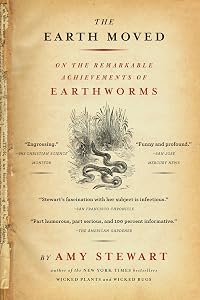
The Earth Moved: On the Remarkable Achievements of Earthworms
by Amy Stewart 
On This Page
Description
In "The Earth Moved", Amy Stewart takes us on a journey through the underground world and introduces us to one of its most amazing denizens. The earthworm may be small, spineless, and blind, but its impact on the ecosystem is profound. It ploughs the soil, fights plant diseases, cleans up pollution, and turns ordinary dirt into fertile land. Who knew? In her witty, offbeat style, Stewart shows that much depends on the actions of the lowly worm. Charles Darwin devoted his last years to the show more meticulous study of these creatures, praising their remarkable abilities. With the august scientist as her inspiration, Stewart investigates the worm's subterranean realm, talks to oligochaetologists, the unsung heroes of earthworm science-who have devoted their lives to unearthing the complex life beneath our feet, and observes the thousands of worms in her own garden. From the legendary giant Australian worm that stretches to ten feet in length to the modest nightcrawler that wormed its way into the heart of Darwin's last book to the energetic red wigglers in Stewart's compost bin, "The Earth Moved" gives worms their due and exposes their hidden and extraordinary universe. This book is for all of us who appreciate Mother Nature's creatures, no matter how humble. show lessTags
Recommendations



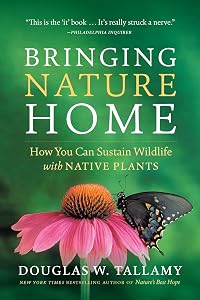
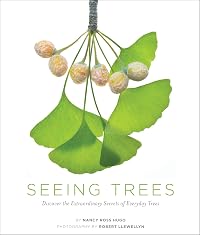
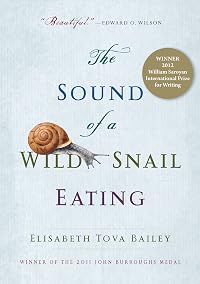
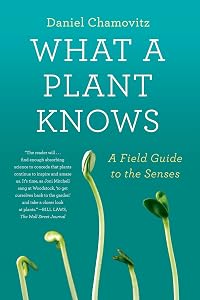



Member Recommendations
carlym if you're interested in organic farming

Member Reviews
Yep. Earthworms. Unsung heroes.
Amy Stewart has become one of the few authors I'd wait in line for a signature for - have I mentioned that before? She makes a great spokesperson for these unfairly maligned little earth movers. In a chatty but informative style she covers the earthworms' role in history, agriculture, backyard gardening, forestry and even sewage treatment and soil reclamation.
Did you know that Australia has an earthworm that grows over 3 feet long, and when it moves around under the earth, farmers can hear a gurgling sound? They're native to a farming area called Gippsland, here in Victoria, so of course I want to go and stand in the middle of a pasture like an idiot in hopes of hearing them gurgle along beneath me, show more while trying not to think of the movie Tremors.
There's no denying this is not a book for everyone. But gardeners, environmentalists, and armchair scientists will all find something interesting and fascinating here. show less
Amy Stewart has become one of the few authors I'd wait in line for a signature for - have I mentioned that before? She makes a great spokesperson for these unfairly maligned little earth movers. In a chatty but informative style she covers the earthworms' role in history, agriculture, backyard gardening, forestry and even sewage treatment and soil reclamation.
Did you know that Australia has an earthworm that grows over 3 feet long, and when it moves around under the earth, farmers can hear a gurgling sound? They're native to a farming area called Gippsland, here in Victoria, so of course I want to go and stand in the middle of a pasture like an idiot in hopes of hearing them gurgle along beneath me, show more while trying not to think of the movie Tremors.
There's no denying this is not a book for everyone. But gardeners, environmentalists, and armchair scientists will all find something interesting and fascinating here. show less
Absolutely fascinating!
It was interesting the reactions I got when I told friends I was reading a book about worms. They tended to include a sideeye look, a judgmental, "WHY?", and a sneer of disgust. Whatever. I read this fascinating book and learned a lot and they didn't. Neener neener neener.
This is the first Amy Stewart book I've read though I own her others. She's kind of a Mary Roach for gardeners and nature enthusiasts, and I'll definitely be breezing through the rest of her backlist. She has an informative yet informal writing style interspersed with personal anecdotes that suited me perfectly.
Before reading this, I had never really given worms much thought. They were there. I didn't really care for them because they were show more wriggly things that I tried not to step on after a rain. I had no idea there were so many types of them, or that there were multi-foot long worms that lived deep underground! (Though I do think I saw one of those once after a rain. I have a very vivid memory of a very very long worm dying on the asphalt after one truly awful rainstorm. It was at least two or three feet long, and little-kid me was both fascinated and repulsed.)
Stewart leads the reader on a merry journey, from the fact that worm scientists tend to be hobbyists because they can't get funding for their work, to the extremely helpful nature of worms to improve the health of plants and gardens, to the threat of worms as invasives in a forest, to finally the possibility of worms as the savior of our pollutant and sewage waste problem.
I adored this to bits. And now I really want a worm bin. Alas, condo living without any outdoor balcony, porch, or yard would make that very difficult. I'll stick a pin into that idea, though, for some hypothetical future living situation. show less
It was interesting the reactions I got when I told friends I was reading a book about worms. They tended to include a sideeye look, a judgmental, "WHY?", and a sneer of disgust. Whatever. I read this fascinating book and learned a lot and they didn't. Neener neener neener.
This is the first Amy Stewart book I've read though I own her others. She's kind of a Mary Roach for gardeners and nature enthusiasts, and I'll definitely be breezing through the rest of her backlist. She has an informative yet informal writing style interspersed with personal anecdotes that suited me perfectly.
Before reading this, I had never really given worms much thought. They were there. I didn't really care for them because they were show more wriggly things that I tried not to step on after a rain. I had no idea there were so many types of them, or that there were multi-foot long worms that lived deep underground! (Though I do think I saw one of those once after a rain. I have a very vivid memory of a very very long worm dying on the asphalt after one truly awful rainstorm. It was at least two or three feet long, and little-kid me was both fascinated and repulsed.)
Stewart leads the reader on a merry journey, from the fact that worm scientists tend to be hobbyists because they can't get funding for their work, to the extremely helpful nature of worms to improve the health of plants and gardens, to the threat of worms as invasives in a forest, to finally the possibility of worms as the savior of our pollutant and sewage waste problem.
I adored this to bits. And now I really want a worm bin. Alas, condo living without any outdoor balcony, porch, or yard would make that very difficult. I'll stick a pin into that idea, though, for some hypothetical future living situation. show less
The author is fascinated by worms, and her enthusiasm is contagious. She describes their bodies, life cycles, and behaviour, as well as their environmental impacts, and how worms can help us on both the large and the small scales. My favourite sentence in the book was: "I am left with the troubling conclusion that the worm's survival may, in the grand scheme of things, be more important than my own." Recommended for anyone with an interest in gardening, natural history, or the environment, and worm fans everywhere. But I'm still creeped out at the thought of touching a worm.
Earthworms. Little in/out machines that mostly do good for gardens, but do serious damage to Minnesota forests where they are invasive, and where they digest and poop out the multi-seasonal 'duff layer' that is key to the forest ecosystem . Who knew. An interesting mix of stories about Darwin, Uncle Dan, filling in around earthworm trivia. Not quite so compelling as John McPhee (Oranges), not very deep, not character driven, but enough interesting anecdotes to make it worth a quick read. And choice of subject couldn't be better.
I was pulling this book off the library shelf because a patron had requested it. Though I had never given worms a second thought, I was immediately captivated by the title and cover copy. Fortunately, the library had two copies, so I was able to fill the patron's request and immediately take one home for myself.
The book came alive when the author discussed her own garden or Charles Darwin and his interactions with earthworms. The book lagged a bit as it devolved into a travelogue of sorts with the author recounting a series of field trips to places affected by or working with earthworms. Though she didn't quite live up to her title, Stewart still provides a pretty good introduction to a creature that is more fascinating than most people show more would believe. show less
The book came alive when the author discussed her own garden or Charles Darwin and his interactions with earthworms. The book lagged a bit as it devolved into a travelogue of sorts with the author recounting a series of field trips to places affected by or working with earthworms. Though she didn't quite live up to her title, Stewart still provides a pretty good introduction to a creature that is more fascinating than most people show more would believe. show less
A well-written account about the earth-changing nature of the common earthworm. This is not simple hyperbole as Darwin informed Victorians...earthworms create soil from compost and bury man-made structures over time with the help of microscopic denizens of the worm's underground world. I sold earthworms as a kid and the little critters have always fascinated me. As a lark, I even raised worms in a container in my kitchen more than 20 years ago to eat my vegetable waste. Now, this book stimulated my interest in seting up a worm bed. An excellent book, not difficult reading, goes in lots of interesting directions.
Readable without being overly substantial, The Earth Moved is a chatty introduction to the world of earthworms. The time I spent reading this short book probably surpassed all the time I've spent in my life before now contemplating earthworms—I'm neither biologist, gardener, nor composter—and I admit that I picked this book up in the library more out of idle curiosity than any real interest in the ecological roles of earthworms. Amy Stewart's enthusiasm for her worms is endearing, and there are some interesting facts here (there are worms in Australia that grow to more than a metre in length! earthworms hate wasabi!), but I didn't finish this book filled with a sudden enthusiasm to go out and buy a worm farm.
Members
- Recently Added By
Lists

Recommended Nature Writing
346 works; 180 members

Books Read in 2016
4,666 works; 197 members

Books Read in 2023
5,638 works; 147 members

Top Five Books of 2023
767 works; 317 members

Books Read in 2024
4,727 works; 128 members
Author Information

20+ Works 10,365 Members
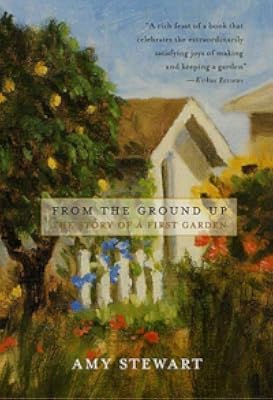
Amy Stewart is the author of From the Ground Up: The Story of a First Garden, and is the garden columnist and book critic for North Coast Journal. Her articles appear in a number of publications, including Organic Gardening, Bird Watcher's Digest, and the San Francisco Chronicle
Amy Stewart is a LibraryThing Author, an author who lists their personal library on LibraryThing.
Awards and Honors
Common Knowledge
- Original publication date
- 2004
- People/Characters
- Amy Stewart; Charles Darwin [Charles Robert: 1809-1882]
- Important places
- soils
- Dedication
- To PSB
- First words
- There is a diagram of an apple tree pinned to the wall above my desk—an entire apple tree, meaning that the drawing shows its roots as well as its trunk and branches.
- Quotations
- Why is it a worm can regrow most of its body, but we can't regrow so much as a finger? I am left with the troubling conclusion that the worm's survival may, in the grand scheme of things, be more important than my own.
- Last words
- (Click to show. Warning: May contain spoilers.)Lift up the top layer of food and newspaper in your bin and you will surely be awestruck at the spectacle of such industry taking place just outside your back door: thousands of worms churning through your apple cores and coffee grounds, your newspaper and dryer lint, taking it all in and turning back into earth.
Classifications
Statistics
- Members
- 532
- Popularity
- 56,407
- Reviews
- 30
- Rating
- (3.81)
- Languages
- English, German
- Media
- Paper, Audiobook, Ebook
- ISBNs
- 9
- UPCs
- 2
- ASINs
- 8