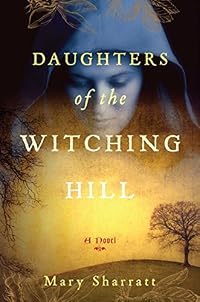
Daughters of the Witching Hill
by Mary Sharratt
On This Page
Description
A tale inspired by the Pendle witch hunt of 1612 finds the granddaughter of a folk healer targeted by an ambitious local magistrate who plays neighbors and family members against one another until paranoia reaches frenzied levels.Tags
Recommendations




Member Reviews
What an amazing book. It is gripping in its style, its language, its subject matter, and just kept drawing me in. And it had to, given that the trials of the "Witches of Pendle Hill" were a tragic, actual event in Lancashire in 1612. Given how much I've read about Thomas Cromwell and the Wives of Henry VIII and Queen Elizabeth I, this volume shows the tragedy that the dissolution of the Abbeys under Cromwell brought about. And is a good balance to the lives of the rich and royal.
It is written in two voices, Bess Southern ("Demdike") and her granddaughter, Alizon. Bess remembers the Old Ways, when life was still hard for the poor but there was Whalley Abbey and its monks to provide food and alms, and the Feast Days and the Saints to show more provide some joy and beauty in life. What we now call "work-life balance." The juxtaposition between Bess' earliest girlhood memories and the life under Puritans is stark. And harsh.
Bess recounts those years and goes on to describe how she met her familiar, Tibb, and how he brought her joy and light in the dark years after her girlhood. This information was recorded at her trial, so the historical record is accurate in its description. Once she meets him and is able to understand how he can help her, she begins to use her new-found powers for healing and comfort.
Her girlhood friend is Anne ("Chattox") whose personality is quite different. Both women are single (Bess abandoned, Anne widowed twice over) and they struggle to raise their daughters on their meager begging. Anne's daughter attracts the eye of a nobleman's son, and Bess teaches her how a clay figure could be used to balance the scales in her favor. Which draws Anne into Bess' work with charms and potent magic, and Anne's personality is more given to redressing grievances.
The second part of the book is the growing up of Alizon, Bess' granddaughter, who is raised in a much different household. The effects of Puritanism are all around her, familiars and healing work are seen as bad things, even though her grandmother heals, and Alizon's "Mam" wants nothing to do with these little magicks. So Alizon tries to be good and does not learn from her Gran, and realizes too late what such learning could have meant for her life.
Written in the cadence of what Bess and Alizon and their neighbors might have spoken, all of which furthers the drawing into the events. And the tragedy is not the final entrapment, imprisonment, and trial; it is also the ending of ways that the changing of the Church brings about, due to one man's lust for power and a new wife. show less
It is written in two voices, Bess Southern ("Demdike") and her granddaughter, Alizon. Bess remembers the Old Ways, when life was still hard for the poor but there was Whalley Abbey and its monks to provide food and alms, and the Feast Days and the Saints to show more provide some joy and beauty in life. What we now call "work-life balance." The juxtaposition between Bess' earliest girlhood memories and the life under Puritans is stark. And harsh.
Bess recounts those years and goes on to describe how she met her familiar, Tibb, and how he brought her joy and light in the dark years after her girlhood. This information was recorded at her trial, so the historical record is accurate in its description. Once she meets him and is able to understand how he can help her, she begins to use her new-found powers for healing and comfort.
Her girlhood friend is Anne ("Chattox") whose personality is quite different. Both women are single (Bess abandoned, Anne widowed twice over) and they struggle to raise their daughters on their meager begging. Anne's daughter attracts the eye of a nobleman's son, and Bess teaches her how a clay figure could be used to balance the scales in her favor. Which draws Anne into Bess' work with charms and potent magic, and Anne's personality is more given to redressing grievances.
The second part of the book is the growing up of Alizon, Bess' granddaughter, who is raised in a much different household. The effects of Puritanism are all around her, familiars and healing work are seen as bad things, even though her grandmother heals, and Alizon's "Mam" wants nothing to do with these little magicks. So Alizon tries to be good and does not learn from her Gran, and realizes too late what such learning could have meant for her life.
Written in the cadence of what Bess and Alizon and their neighbors might have spoken, all of which furthers the drawing into the events. And the tragedy is not the final entrapment, imprisonment, and trial; it is also the ending of ways that the changing of the Church brings about, due to one man's lust for power and a new wife. show less
Witch hysteria never fails to fascinate me and this book certainly captivated me too, to an extent. I didn't know much about the Pendle witch trials previous to reading this book, so I tried to soak up the fictionalized account. Unfortunately the book was slow-moving and the use of 2 points of view (especially considering what happens by the end of the novel) got to be long-winded and monotonous at times. Still a book worth reading, but I can't say as I will go out of my way to recommend it to others.
The book opens with one Bess Southerns - Old Demdike - telling her story of how she became a "cunning woman" and goes on to detail her life in the Pendle Forest. She tells of her first meeting with her "familiar" and how local folk consulted her for cures and blessings. Little by little her family and close friends are drawn into her circle - some share in her gifts - others fear them.
The second part of the story is told by Alizon Device, Bess' granddaughter. Here there is more about Alizon,
"Daughters of the Witching Hill" is set in the latter years of the reign of Queen Elizabeth I and the early years of the reign of King James I (or VI of Scotland). The dominant religion of the time is that of the Reformers or Protestants. The Catholics are considered heretics and any attempt the maintain the "old religion" is dealt with quite harshly. It is into the cross-current of religious dogma that Bess and her family are caught. Many still remember and practice the "old religion" and disguise it in local folk remedies. Times are harsh for the folk of Pendle Forest and any misfortune is seized upon as the work of those of "ill-repute".
But ultimately, like it's Salem counterpart, the small community is torn apart by the political aspirations of one, the greed of others, by revenge of another, and through spite and misunderstanding.
Although Mary herself admits to some slight modification in the names of her characters (to save unnecessary confusion), the story is quite true.
In addition to Mary's wonderful book, I would also recommend an older and slightly different version of events in "The Lancashire Witches" by William Harrision Ainsworth, Esq (Pub: 1849).
In the late 1500s and early 1600s in the English county of Lancashire in Pendle Forest a cunning woman known by the nickname Old Demdike served the local populace. Demdike, whose real name was Elizabeth Southerne, lived in the ruins of Malkin Tower with her daughter Liza and her grandchildren James (Jamie), Alizon, and Jennet. In 1612 a local magistrate who wished to attain favour with the witch-hating King James mounted a witchhunt in Lancashire. Demdike, along with nineteen others including her daughter and two of her grandchildren, were charged and jailed. While four were acquitted and set free, one was found guilty of bewitching a horse and sentenced to stand in the pillory; Demdike died in prison before her trial and the remaining show more fourteen accused, including Demdike's daughter and two of her grandchildren, were hung.
That is a summary of the facts of the story recorded as part of the very real history of England. Mary Sharratt's touching novel "Daughters of the Witching Hill" adds flesh, blood, and bone to the impersonal facts.
The story starts with the narrative told from Old Demdike's point of view. She relates details about her childhood, how life changed as the Kings and Queens of England played their politics transforming the official (legally permitted) religion from Catholicism to Protestantism. We learn how she grew into the role of cunning-woman. We see her as a very real person with real loves, disappointments, and problems which she tries her very best to resolve. And in the background we know that she is doomed thanks to what is really nothing more than politics.
The story switches in the last half to the perspective of Alizon, one of Demdike's granddaughters, who was the one destined to carry on her grandmother's Craft and therefore also doomed to face the witchhunters. Alizon is a sympathetic, intelligent, appealing young woman who did amazingly well considering the circumstances. It broke my heart knowing that the end was shrouded in degradation and finally death for all the very loveable main characters.
As with any historical novel the author had to speculate about a lot of the details as we don't have anything like personal diaries of the main characters from which the story could be told. Despite that the author's preparation and research were evident – she clearly did her homework in figuring out how life would likely have been for people like Demdike and her neighbors in that period in history. She drew on the trial records to build up a picture of how Demdike likely practiced her cunning-craft, and showed how easy it was to twist evidence to support the claim of Satanic cult activity and destructive magick which was used to condemn the accused.
"Daughters of the Witching Hill" transported me to a sad time in history and helped me to understand the tragedy of what happened. I cried when it was over because I felt so close to the characters and felt grief over their fates. Thank you Mary Sharratt for bringing Demdike, her family, friends, and neighbors to life for me. show less
That is a summary of the facts of the story recorded as part of the very real history of England. Mary Sharratt's touching novel "Daughters of the Witching Hill" adds flesh, blood, and bone to the impersonal facts.
The story starts with the narrative told from Old Demdike's point of view. She relates details about her childhood, how life changed as the Kings and Queens of England played their politics transforming the official (legally permitted) religion from Catholicism to Protestantism. We learn how she grew into the role of cunning-woman. We see her as a very real person with real loves, disappointments, and problems which she tries her very best to resolve. And in the background we know that she is doomed thanks to what is really nothing more than politics.
The story switches in the last half to the perspective of Alizon, one of Demdike's granddaughters, who was the one destined to carry on her grandmother's Craft and therefore also doomed to face the witchhunters. Alizon is a sympathetic, intelligent, appealing young woman who did amazingly well considering the circumstances. It broke my heart knowing that the end was shrouded in degradation and finally death for all the very loveable main characters.
As with any historical novel the author had to speculate about a lot of the details as we don't have anything like personal diaries of the main characters from which the story could be told. Despite that the author's preparation and research were evident – she clearly did her homework in figuring out how life would likely have been for people like Demdike and her neighbors in that period in history. She drew on the trial records to build up a picture of how Demdike likely practiced her cunning-craft, and showed how easy it was to twist evidence to support the claim of Satanic cult activity and destructive magick which was used to condemn the accused.
"Daughters of the Witching Hill" transported me to a sad time in history and helped me to understand the tragedy of what happened. I cried when it was over because I felt so close to the characters and felt grief over their fates. Thank you Mary Sharratt for bringing Demdike, her family, friends, and neighbors to life for me. show less
This is one of the most engrossing and touching historical novels I’ve ever read. The characters are so vivid and the setting so well drawn that I felt I knew these people.
Set late in the reign of Elizabeth I and the earlier years of James I, the novel takes place in Lancashire, England in the Pendle Hill area. The protagonists are the family of Bess Southerns, a poor widow who has no land and no trade but her healing ability and some day labor. They live in stark poverty- almost nothing to eat most of the time, freezing in winter, rags for clothing. She, her daughter, and her daughter’s three children live in a two room stone tower that they have the use of.
Bess has a familiar, a spirit named Tibb, as well as a lot of herbal show more healing knowledge and a reliance on the outlawed Catholic folk magic. In time, her daughter, her best friend Anne and Anne’s daughter also come to have familiars and learn to work magic. But they aren’t as set on using their magic to heal as Bess has been, and Anne and her daughter use ‘clay pictures’ to work ill on those who have injured them. Finally Alizon, one of Bess’s granddaughters, discovers that she, too, has magical powers - by accidentally causing a peddler to have a massive stroke- or at least yelling at him right before he has it.
The time and area was ripe for a witch hunt; King James was convinced there were evil witches all around him and had recently written a book about discovering them. Suddenly Bess, who has done her curing for decades unmolested, is arrested as evil. Many lives are shattered when accusations fly and spite indulged in.
Based on a historical record, The Wonderfull Discoverie of Witches in the Countie of Lancaster, these people were real. And that is part of what makes it so heartbreaking to read. But even though you know from the start how this book must end, it’s still a cannot put it down read. The joy these impoverished women can feel in family and nature, the fierce strength of some of them, the horror of their situation at the end leaps up off the pages and engulfs the reader. If you have any interest in witch trials, folk healing or that era, you need to read this book. It’ll stay with you a long time. show less
Set late in the reign of Elizabeth I and the earlier years of James I, the novel takes place in Lancashire, England in the Pendle Hill area. The protagonists are the family of Bess Southerns, a poor widow who has no land and no trade but her healing ability and some day labor. They live in stark poverty- almost nothing to eat most of the time, freezing in winter, rags for clothing. She, her daughter, and her daughter’s three children live in a two room stone tower that they have the use of.
Bess has a familiar, a spirit named Tibb, as well as a lot of herbal show more healing knowledge and a reliance on the outlawed Catholic folk magic. In time, her daughter, her best friend Anne and Anne’s daughter also come to have familiars and learn to work magic. But they aren’t as set on using their magic to heal as Bess has been, and Anne and her daughter use ‘clay pictures’ to work ill on those who have injured them. Finally Alizon, one of Bess’s granddaughters, discovers that she, too, has magical powers - by accidentally causing a peddler to have a massive stroke- or at least yelling at him right before he has it.
The time and area was ripe for a witch hunt; King James was convinced there were evil witches all around him and had recently written a book about discovering them. Suddenly Bess, who has done her curing for decades unmolested, is arrested as evil. Many lives are shattered when accusations fly and spite indulged in.
Based on a historical record, The Wonderfull Discoverie of Witches in the Countie of Lancaster, these people were real. And that is part of what makes it so heartbreaking to read. But even though you know from the start how this book must end, it’s still a cannot put it down read. The joy these impoverished women can feel in family and nature, the fierce strength of some of them, the horror of their situation at the end leaps up off the pages and engulfs the reader. If you have any interest in witch trials, folk healing or that era, you need to read this book. It’ll stay with you a long time. show less
I have read many books about witch hunts in various countries and the similarities, as well as the differences, fascinate me. Daughters of the Witching Hill is based on the true story of the 1612 Pendle witch-hunt. As the story unfolds, it shows how seemingly innocent religious beliefs intertwined with and also were confused with witchcraft.
Mother Demdike was a woman with the power to heal and the people in her community embraced that power…until they didn’t. Sharratt tells a heartbreaking story with surprising redemption. The story is filled with questionable characters and lose-lose situations which bring it to life. A battle between “bad witch” and “good witch” turns loved ones against each other but what resonated with show more me most was Mother Demdike’s insistence that they must not cry witch because once a witch-hunt starts, no one is safe.
I loved the different relationships between all the women. The seemingly strong bonds that brought out so many joyous and heartbreaking moments, as well as some interesting conversations:
She rested her brow upon my shoulder.
‘It’s the virgin’s disease, so my father says. The only cure is marriage. The longer I’m a maid, the worse it will get.’
-pg 180
Although this comment comes in the middle of a discussion about being cursed, it paints an interesting picture about the way that women were viewed and treated. show less
Mother Demdike was a woman with the power to heal and the people in her community embraced that power…until they didn’t. Sharratt tells a heartbreaking story with surprising redemption. The story is filled with questionable characters and lose-lose situations which bring it to life. A battle between “bad witch” and “good witch” turns loved ones against each other but what resonated with show more me most was Mother Demdike’s insistence that they must not cry witch because once a witch-hunt starts, no one is safe.
I loved the different relationships between all the women. The seemingly strong bonds that brought out so many joyous and heartbreaking moments, as well as some interesting conversations:
She rested her brow upon my shoulder.
‘It’s the virgin’s disease, so my father says. The only cure is marriage. The longer I’m a maid, the worse it will get.’
-pg 180
Although this comment comes in the middle of a discussion about being cursed, it paints an interesting picture about the way that women were viewed and treated. show less
I really liked this story about a family of cunning women (and supposed witches), taken from the court records of a witch trial in England in 1613. Interesting characters and well written, this book takes you to that time and place. Witchcraft aside, the story vividly describes the hardship of everyday life and struggle to survive of near-destitute women in Elizabethan/Jacobean England.
Members
- Recently Added By
Author Information

9+ Works 1,770 Members
Awards and Honors
Distinctions
Common Knowledge
- Original publication date
- 2010-03-10
- People/Characters
- Bess Southers; Anne; Alizon; Jamie
- Important places
- England, UK; Pendle Forest, England, UK
Classifications
Statistics
- Members
- 591
- Popularity
- 49,331
- Reviews
- 46
- Rating
- (3.84)
- Languages
- Czech, English, German
- Media
- Paper, Ebook
- ISBNs
- 5
- ASINs
- 4