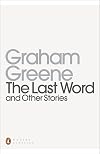
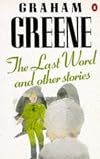
The Last Word and Other Stories
by Graham Greene 
On This Page
Description
This collection of stories speaks to timeless themes such as religious faith, confused loyalties, and the human bonds that bring light into the most sorrowful moments. They are arranged in reverse chronological order and have previously been published in a selection of magazines and newspapers.Tags
Recommendations




















Member Reviews
Poignant, sad, and, in a couple of cases, unexpectedly funny (e.g. "Work not in progress" about the writing of an ecclesiastical musical) but always beautifully written. These are stories to be savoured, not rushed through. This selection, written between 1923 and 1989 is classic Graham Green (which I am very glad I picked up for nothing, on my loyalty points, in an Op Shop).
Mr. Greene's 'Collected Short Stories' appeared in 1972 and none of the ones in this volume were included. In retrospect, it's not hard to see why they were not, as the overall quality does disappoint severely, well-written as most them are. Apart from the usual occasional brilliant phrase, there is not much here to please the discerning reader. Some suffer of clumsy plots, as Murder for the wrong reason and The new house will easily prove. Others start out promisingly. The lieutenant died last night has an interesting tension and some fine contrasts, but peters out helplessly at the end, as does The lottery ticket, which also boasts a caricatural South-American backdrop, that is mildly funny. The very short ones are the worst: Greene show more obviously has no knack for surprise endings or incisive insights that only need a few pages to come across. There is surprisingly little content in almost all of these attempts, their psychology is mostly too simplified for comfort.
Luckily, the writer did not have to rely on efforts like this to establish a reputation also for shorter forms. While completists may enjoy this collection for obvious reasons, the average reader will probably have to store this in the 'scraping the barrel' department. show less
Luckily, the writer did not have to rely on efforts like this to establish a reputation also for shorter forms. While completists may enjoy this collection for obvious reasons, the average reader will probably have to store this in the 'scraping the barrel' department. show less
This short-story collection varies between stories which are really good and those which are barely interesting. The title story, ‘The last Word’ is really good, as is ‘The Moment of Truth’. ‘The New House was the one that appealed to me most, maybe because I thought its main character resembled, in miniature as it were, the main character in ‘A Burnt-Out Case’ which I had just finished reading before starting this collection. My edition is the Penguin 1999, but the stories date from 1923 to 1989.
A very mixed collection. "The Lottery Ticket" was by far the best story. It would pair well with The Power and the Glory.
gg is always interesting. even these tossed off stories
http://nhw.livejournal.com/720835.html
A collection of short stories ranging from 1923 to 1990, compiled by Greene in the latter year, shortly before his death. Actually it is fairly clear why these stories have not been numbered among his more memorable works; they are mostly very short and while good illustrations of his style have little to engage the reader in terms of content.
A collection of short stories ranging from 1923 to 1990, compiled by Greene in the latter year, shortly before his death. Actually it is fairly clear why these stories have not been numbered among his more memorable works; they are mostly very short and while good illustrations of his style have little to engage the reader in terms of content.
Incomparable Graham Greene presents 12 short stories that have never appeared as a collection before and some of which have not appeared in print for 60 years.
Members
- Recently Added By
Published Reviews
If the stories in "The Last Word" are not examples of Mr. Greene working at the top of his form, they do give us a few new pleasures while sending us back to the often overlooked body of short stories waiting for us. There is now no doubt about one thing: over the long haul, in the short story as well as the novel, Graham Greene is the Master.
added by John_Vaughan
Lists

The Complete Rory Gilmore Reading List
506 works; 5 members
Author Information

356+ Works 87,436 Members
Born in 1904, Graham Greene was the son of a headmaster and the fourth of six children. Preferring to stay home and read rather than endure the teasing at school that was a by-product of his father's occupation, Greene attempted suicide several times and eventually dropped out of school at the age of 15. His parents sent him to an analyst in show more London who recommended he try writing as therapy. He completed his first novel by the time he graduated from college in 1925. Greene wrote both entertainments and serious novels. Catholicism was a recurring theme in his work, notable examples being The Power and the Glory (1940) and The End of the Affair (1951). Popular suspense novels include: The Heart of the Matter, Our Man in Havana and The Quiet American. Greene was also a world traveler and he used his experiences as the basis for many books. One popular example, Journey Without Maps (1936), was based on a trip through the jungles of Liberia. Greene also wrote and adapted screenplays, including that of the 1949 film, The Third Man, which starred Orson Welles. He died in Vevey, Switzerland in 1991. (Bowker Author Biography) show less
Graham Greene has a Legacy Library. Legacy libraries are the personal libraries of famous readers, entered by LibraryThing members from the Legacy Libraries group.
Series
Belongs to Publisher Series
Európa Zsebkönyvek (123)
Work Relationships
Is contained in
Common Knowledge
- Canonical title
- The Last Word and Other Stories
- Original title
- The Last Word and Other Stories
- Original publication date
- 1990
- First words
- ["The Last Word"]
The old man was only a little surprised, because he was by now well accustomed to inexplicable events, when he received at the hands of a stranger a passport in a name which was not his own, a visa and an... (show all) exit permit for a country which he had never expected or even desired to visit. - Last words
- (Click to show. Warning: May contain spoilers.)["An Appointment with the General"]
"He dreams of death," the sergeant translated unnecessarily, and I could build an article on that, she thought with self-hatred.
Classifications
Statistics
- Members
- 271
- Popularity
- 119,132
- Reviews
- 9
- Rating
- (3.19)
- Languages
- 8 — Dutch, English, Finnish, French, German, Hungarian, Spanish, Swedish
- Media
- Paper
- ISBNs
- 16
- ASINs
- 3