On This Page
Description
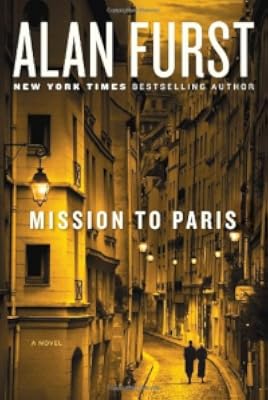
Autumn 1939. In Paris American motion picture producer Frederic Stahl is drawn into a clandestine world of foreign correspondents, exiled Spanish republicans, and spies of every sort. As a celebrity from neutral America -- who can travel across the continent freely -- Stahl could be very useful indeed.Tags
Recommendations




















Member Reviews
Set in 1938 in Paris, this spy thriller reveals an interesting chapter in history. America had no CIA or equivalent intelligence agency. Roosevelt had the foresight to realize he had to prepare for the inevitable war, so he used his extensive personal relationships to collect intelligence on the Nazis and funded this work with private donors. Frederic Stahl, the main character of Mission to Paris, is a movie star with no training in being a spy, but while in Paris making a movie he becomes one. He’s from Vienna originally so the Nazi propagandists in Paris assume that he will contribute willingly in their political warfare to undermine the French people. They assumed wrongly, but Stahl is encouraged by a state department diplomat to show more play along with their plans as a cover. And we are off in an intriguing mire of trouble that, as you might guess, escalates beyond Stahl’s control very quickly.
Stahl is not by nature a spy sort of person. He’s good with the ladies, but no James Bond. When things go wrong, he doesn’t instantly see the creative escape nor does violence occur to him at first. In the face of cold-blooded killing, he responds with shock. In other words, Furst has avoided all the spy clichés and created a believable character. Just don’t expect action-packed pages or not in the nail-biting, page-ripping mode. Lots happens, danger threatens, and sometimes bursts out, but you’ll have time as a reader to weigh the characters’ choices along with them, trace the strands, and anticipate the disasters that may or may not come about.
Furst plays with stereotypes of Paris. His setting moves in and out of the expected. Sometimes the food, the romances, the elegance are all deployed with charming and entertaining effect—the delightful Paris we all think we know. Other times, we witness a darker Paris, both in terms of seamier neighborhoods and in terms of Parisian character. The people seem ill equipped to combat the insidious Nazi machine that is eating away at their hearts and minds and will soon drive over them with tanks. What of the grace Furst has also depicted will survive? For the characters that’s very much an open question and for us, immersed in this moment, we are able to feel the precipice, inch our toes forward and wonder once again if the world will plunge off irrevocably into the Nazi’s grim vision. show less
Stahl is not by nature a spy sort of person. He’s good with the ladies, but no James Bond. When things go wrong, he doesn’t instantly see the creative escape nor does violence occur to him at first. In the face of cold-blooded killing, he responds with shock. In other words, Furst has avoided all the spy clichés and created a believable character. Just don’t expect action-packed pages or not in the nail-biting, page-ripping mode. Lots happens, danger threatens, and sometimes bursts out, but you’ll have time as a reader to weigh the characters’ choices along with them, trace the strands, and anticipate the disasters that may or may not come about.
Furst plays with stereotypes of Paris. His setting moves in and out of the expected. Sometimes the food, the romances, the elegance are all deployed with charming and entertaining effect—the delightful Paris we all think we know. Other times, we witness a darker Paris, both in terms of seamier neighborhoods and in terms of Parisian character. The people seem ill equipped to combat the insidious Nazi machine that is eating away at their hearts and minds and will soon drive over them with tanks. What of the grace Furst has also depicted will survive? For the characters that’s very much an open question and for us, immersed in this moment, we are able to feel the precipice, inch our toes forward and wonder once again if the world will plunge off irrevocably into the Nazi’s grim vision. show less
I'm addicted to Alan Furst's Europe-in-World War II novels.They're all connected, even if the protagonists and other main characters are different, and this book has many references to characters and incidents in other of his novels. The setting, as it often is in his books, is Paris in 1938-39, on the brink of war. An American movie star, but European by birth, is in Paris to film a movie, where he becomes a subject of interest to influential members of a group advocating for peace and cooperation with Germany, aka appeasement. If they can get the American actor, Fredric Stahl, to appear to be a friend of Germany and an advocate for peace, it will be quite a coup for the Nazi propaganda machine. And those attempts bring Stahl to the show more American embassy in Paris, where he becomes an informal spy, one of many, being run out of the embassy to spy on Germans. Stahl's role is mostly as a courier, but it is a dangerous one.
At so many points in this novel, it felt like more than the usual work of historical fiction. It felt like a primer for today, especially when a journalist explains to him how the Nazis are trying to use him and how they manipulate the media, behind the scenes, to shape the public's perceptions and influence their opinions. How smear campaigns were used to destroy anyone trying to warn France of the Nazi danger and the need to re-arm France for war. So much of what Hitler's minions and wealthy and influential French people did echoes what is going on today. Control the media, control the message, and you can control enough of the population. And as we now know, it mostly worked for Germany, because when they did invade France, they met with weak military resistance. Those who don't learn from history are doomed to repeat it, but the invasion these days doesn't necessarily come from without, but from within to slowly erode democracy.
I read a lot of historical fiction and a lot of science fiction and I realized they have one thing in common: They both point out human behavior, with lessons for us to learn, lessons too many people never learn, and so, we keep making the same mistakes. This book is one of Furst's best, a good blend of intrigue, suspense, characters to root for, and a history lesson that shouldn't be ignored. show less
At so many points in this novel, it felt like more than the usual work of historical fiction. It felt like a primer for today, especially when a journalist explains to him how the Nazis are trying to use him and how they manipulate the media, behind the scenes, to shape the public's perceptions and influence their opinions. How smear campaigns were used to destroy anyone trying to warn France of the Nazi danger and the need to re-arm France for war. So much of what Hitler's minions and wealthy and influential French people did echoes what is going on today. Control the media, control the message, and you can control enough of the population. And as we now know, it mostly worked for Germany, because when they did invade France, they met with weak military resistance. Those who don't learn from history are doomed to repeat it, but the invasion these days doesn't necessarily come from without, but from within to slowly erode democracy.
I read a lot of historical fiction and a lot of science fiction and I realized they have one thing in common: They both point out human behavior, with lessons for us to learn, lessons too many people never learn, and so, we keep making the same mistakes. This book is one of Furst's best, a good blend of intrigue, suspense, characters to root for, and a history lesson that shouldn't be ignored. show less
I won this book via a GoodReads giveaway.
This is the first book I've read by Alan Furst and it certainly won't be the last. His writing is smooth as silk and readily conveys the lurking menace of pre-WW2 France and Germany as the Nazis enlist a subversive PR campaign dedicated to undermining French resistance to German expansion.
Mission to Paris follows Fredric Stahl, a mid-level Hollywood actor of Austrian origins, as he makes a movie in Paris, France and brief shoots in Morocco and Hungary. This allows Furst to explore popular culture in 1938 France and illustrate the political complexities that developed before World War 2. Using a in-demand handsome actor as the focus allows Furst to explore different levels of society as well as show more giving romantic overtones to the novel. Furst's deft hand resounds throughout the book and brings a very personal touch to WW2 era Europe. The feeling of danger and intrigue is overwhelming at times. show less
This is the first book I've read by Alan Furst and it certainly won't be the last. His writing is smooth as silk and readily conveys the lurking menace of pre-WW2 France and Germany as the Nazis enlist a subversive PR campaign dedicated to undermining French resistance to German expansion.
Mission to Paris follows Fredric Stahl, a mid-level Hollywood actor of Austrian origins, as he makes a movie in Paris, France and brief shoots in Morocco and Hungary. This allows Furst to explore popular culture in 1938 France and illustrate the political complexities that developed before World War 2. Using a in-demand handsome actor as the focus allows Furst to explore different levels of society as well as show more giving romantic overtones to the novel. Furst's deft hand resounds throughout the book and brings a very personal touch to WW2 era Europe. The feeling of danger and intrigue is overwhelming at times. show less
Another solid thriller from Alan Furst, a cut above the average. The characterisation is one stage improved on 'Spies of the Balkans' and the sexual relationships vastly so.
Furst is good at creating believable heroes - not so much likeable as manly and with existential integrity. His Austrian-turned-Hollywood star Frederic Stahl is in that mould. His woman are also well drawn.
The book is not subtle politically. Furst's history is accurately researched even if the Nazis are all straight out of New York cultural demonology but this is a thriller and to be judged as such.
A hidden pleasure is being taken through the making of a film of that era without really noticing it. And there is the usual - perhaps less necessary this time - map. show more Recommended. show less
Furst is good at creating believable heroes - not so much likeable as manly and with existential integrity. His Austrian-turned-Hollywood star Frederic Stahl is in that mould. His woman are also well drawn.
The book is not subtle politically. Furst's history is accurately researched even if the Nazis are all straight out of New York cultural demonology but this is a thriller and to be judged as such.
A hidden pleasure is being taken through the making of a film of that era without really noticing it. And there is the usual - perhaps less necessary this time - map. show more Recommended. show less
As an off-and-on fan of spy novels and movies, I am both chagrined and pleased to have learned about Alan Furst a few days ago. Mission to Paris is not his latest novel, but I was attracted by the title and its reference to Paris.
The novel takes place in 1938 and 1939, when pre-World War II tension was at its peak. Hollywood movie star Fredric Stahl — through a series of intra-studio machinations involving trading the services of one star for another — ends up being assigned to do a movie in Paris for the European market. Fredric is an émigré to the United States from Vienna and, because he does not have the protection U.S. citizenship would have afforded him, he is targeted by the Nazi propaganda machine to entice him into show more contributing to pro-Nazi cultural causes. Fredric resists, and the Nazis do not take no for an answer, so a game of cat and mouse ensues as he finds himself more and more threatened by the course of events.
In addition to the intrigue that carries the story along, one receives several subtle lessons in WWII history that one is unlikely to have read about in the history books. Mission to Paris brought to the forefront the vulnerability in those years of émigrés to France from lands under Nazi influence or control. In the immediate lead-up to the war, Nazi agents operating in France sub rosa treated the émigrés almost as escaped criminals, and many of them, having no papers, were living in a constant state of fear of deportation or worse. The film Casablanca touches on this to some extent, but Furst manages to demonstrate how subtly the Nazis operated in this sphere even before the war had begun.
The Nazis were also behind a so-called peace movement that fostered improved relations between France and Germany but really had as its motive to bring France under German hegemony without the necessity of an invasion. They had recruited émigré aristocrats and businessmen to their cause, trying to take advantage of the level of fear of a war with Germany that gripped all of Europe at the time.
Mission to Paris weaves these issues into the action so you come away feeling doubly compensated for time invested in the book. Not only is it the fast-paced action that carries the reader along, but the book delivers an interesting historical perspective as well, and you come away with a better understanding of what it felt like to be in Paris at that crucial period.
Alan Furst's writing is unexpectedly graceful and even lyrical at times. Here is how the novel opens:
In Paris, the evenings of September are sometimes warm, excessively gentle, and, in the magic particular to that city, irresistibly seductive. The autumn of the year 1938 began in just such weather and on the terraces of the best cafés, in the famous restaurants, at the dinner parties one wished to attend, the conversation was, of necessity, lively and smart: fashion, cinema, love affaires, politics, and, yes, the possibility of war — that too had its moment.
I find it hard to resist such evocative writing and will definitely look forward to reading more of Furst's books in the near future. show less
The novel takes place in 1938 and 1939, when pre-World War II tension was at its peak. Hollywood movie star Fredric Stahl — through a series of intra-studio machinations involving trading the services of one star for another — ends up being assigned to do a movie in Paris for the European market. Fredric is an émigré to the United States from Vienna and, because he does not have the protection U.S. citizenship would have afforded him, he is targeted by the Nazi propaganda machine to entice him into show more contributing to pro-Nazi cultural causes. Fredric resists, and the Nazis do not take no for an answer, so a game of cat and mouse ensues as he finds himself more and more threatened by the course of events.
In addition to the intrigue that carries the story along, one receives several subtle lessons in WWII history that one is unlikely to have read about in the history books. Mission to Paris brought to the forefront the vulnerability in those years of émigrés to France from lands under Nazi influence or control. In the immediate lead-up to the war, Nazi agents operating in France sub rosa treated the émigrés almost as escaped criminals, and many of them, having no papers, were living in a constant state of fear of deportation or worse. The film Casablanca touches on this to some extent, but Furst manages to demonstrate how subtly the Nazis operated in this sphere even before the war had begun.
The Nazis were also behind a so-called peace movement that fostered improved relations between France and Germany but really had as its motive to bring France under German hegemony without the necessity of an invasion. They had recruited émigré aristocrats and businessmen to their cause, trying to take advantage of the level of fear of a war with Germany that gripped all of Europe at the time.
Mission to Paris weaves these issues into the action so you come away feeling doubly compensated for time invested in the book. Not only is it the fast-paced action that carries the reader along, but the book delivers an interesting historical perspective as well, and you come away with a better understanding of what it felt like to be in Paris at that crucial period.
Alan Furst's writing is unexpectedly graceful and even lyrical at times. Here is how the novel opens:
In Paris, the evenings of September are sometimes warm, excessively gentle, and, in the magic particular to that city, irresistibly seductive. The autumn of the year 1938 began in just such weather and on the terraces of the best cafés, in the famous restaurants, at the dinner parties one wished to attend, the conversation was, of necessity, lively and smart: fashion, cinema, love affaires, politics, and, yes, the possibility of war — that too had its moment.
I find it hard to resist such evocative writing and will definitely look forward to reading more of Furst's books in the near future. show less
Through the LibraryThing Early Reviewers program, I was fortunate enough to receive a pre-release copy of Mission to Paris, a new novel from highly regarded historical spy novelist Alan Furst. Furst specializes in World War II era fiction. Having reviewed other books in the program from less-established authors, starting Mission to Paris was like slipping into a warm bath - the prose fluid and accessible, without a jarring phrasing or word out of place.
Mission to Paris is the story of a somewhat famous actor's trip to Paris, shortly before the outbreak of World War II. Fredric Stahl is Viennese-born, but lives in Hollywood now. As part of a cross-Studio movie deal, he finds himself sent to Paris to film a movie. A famous actor turned show more spy (this is a spy novel) could easily turn to cliché, but Furst easily humanizes Stahl, while staying true to the perks that would come with being a well-known actor. As Stahl crosses the Atlantic on an ocean liner, he finds himself on a deck chair with his arms around a married woman (Stahl is unsurprisingly successful with the ladies). And yet:
In two sentences, Stahl is rendered as maybe a cad for potentially sleeping with a married woman, a typical actor who doesn't even remember the names of women he's with, and yet he sends her back to her husband without taking advantage.
Furst effortlessly re-creates the era. Starting the story on an ocean liner immediately creates context. The attention to period detail is deep without being boring. Furst includes verbatim a daily ship's newsletter (I assume it is fictional), with world news (Neville Chamberlain meeting with Hitler, preparing to sell out Czechoslovakia) and sport news (Whizzer White the football player injured) right next to tomorrow's shuffleboard schedule.
Pre-war Paris is also quickly and effortlessly evoked. Within pages, you are ensconced in a cafe tasting the croissants, out and about on the warm September Paris evenings….
And yet, bad things are afoot.
Mission to Paris is about the fall of Paris. Germany militancy is rising, and there are two camps in Paris, those who want to resist Germany and those who do not. Those who do not speak the language of peace: Rapprochement, Mutual Respect, Reconciliation, Peace, “avoid war at any cost”. But the implication - Capitulation - is painfully clear. Any many of those on the side of "Rapproachement" are wittingly or unwittingly in the service of the Germans.
What mission to Paris is really about is how easily one can be seduced to the wrong side by fair words, noble concepts and good intentions, together with bribes disguised as "speaking fees" or advertising budgets, and ultimately it's about the lies one tells oneself to sleep at night.
Many well-known names are named by Furst as working to bring down the French Government - Taittinger of the famous Champagne, Hennessy of the famous Cognac, the Michelin brothers who led the tire empire. It's almost painful to listen to the cocktail party chatter about the benefits of peace and avoiding war at any cost with the Germans, knowing what horror the Nazis will bring to the world. Stahl chooses sides - the right one - but as a famous personality is constantly beset by forces from both sides that want to use him. Along the way, he finds love, adventure, and the courage to do what's necessary.
If you like historical fiction or spy novels, you will not be disappointed. Mission to Paris reads smoothly and rapidly with great characters and period detail, and, as with all great historical fiction, contains lessons and perspective for today’s world as well. show less
Mission to Paris is the story of a somewhat famous actor's trip to Paris, shortly before the outbreak of World War II. Fredric Stahl is Viennese-born, but lives in Hollywood now. As part of a cross-Studio movie deal, he finds himself sent to Paris to film a movie. A famous actor turned show more spy (this is a spy novel) could easily turn to cliché, but Furst easily humanizes Stahl, while staying true to the perks that would come with being a well-known actor. As Stahl crosses the Atlantic on an ocean liner, he finds himself on a deck chair with his arms around a married woman (Stahl is unsurprisingly successful with the ladies). And yet:
"They lay together on the deck chair, she in formal gown, he in tuxedo, the warmth of her body welcome on the chilly night, the soft weight of her breast, resting gently against him, a promise that wouldn't be kept but a sweet promise just the same. Edith, he thought. Or was it Edna?”
In two sentences, Stahl is rendered as maybe a cad for potentially sleeping with a married woman, a typical actor who doesn't even remember the names of women he's with, and yet he sends her back to her husband without taking advantage.
Furst effortlessly re-creates the era. Starting the story on an ocean liner immediately creates context. The attention to period detail is deep without being boring. Furst includes verbatim a daily ship's newsletter (I assume it is fictional), with world news (Neville Chamberlain meeting with Hitler, preparing to sell out Czechoslovakia) and sport news (Whizzer White the football player injured) right next to tomorrow's shuffleboard schedule.
Pre-war Paris is also quickly and effortlessly evoked. Within pages, you are ensconced in a cafe tasting the croissants, out and about on the warm September Paris evenings….
"Walking slowly, looking at everything, he couldn't get enough of the Parisian air: it smelled of a thousand years of rain dropping on stone, smelled of rough black tobacco and garlic and drains, of perfume, of potatoes frying in fat. A warm evening, people were out, the bistros crowded and noisy.”
And yet, bad things are afoot.
“On the wall of a newspaper kiosk, closed down for the night, the day’s front page headlines were still posted: CZECHOSLOVAKIA DECLARES STATE OF EMERGENCY.”
Mission to Paris is about the fall of Paris. Germany militancy is rising, and there are two camps in Paris, those who want to resist Germany and those who do not. Those who do not speak the language of peace: Rapprochement, Mutual Respect, Reconciliation, Peace, “avoid war at any cost”. But the implication - Capitulation - is painfully clear. Any many of those on the side of "Rapproachement" are wittingly or unwittingly in the service of the Germans.
What mission to Paris is really about is how easily one can be seduced to the wrong side by fair words, noble concepts and good intentions, together with bribes disguised as "speaking fees" or advertising budgets, and ultimately it's about the lies one tells oneself to sleep at night.
Many well-known names are named by Furst as working to bring down the French Government - Taittinger of the famous Champagne, Hennessy of the famous Cognac, the Michelin brothers who led the tire empire. It's almost painful to listen to the cocktail party chatter about the benefits of peace and avoiding war at any cost with the Germans, knowing what horror the Nazis will bring to the world. Stahl chooses sides - the right one - but as a famous personality is constantly beset by forces from both sides that want to use him. Along the way, he finds love, adventure, and the courage to do what's necessary.
If you like historical fiction or spy novels, you will not be disappointed. Mission to Paris reads smoothly and rapidly with great characters and period detail, and, as with all great historical fiction, contains lessons and perspective for today’s world as well. show less
 This review was written for LibraryThing Early Reviewers.
Typical Alan Furst, which means exquisite historical detail, slow building tension with violence and menace lurking in the background.
Here the background is Paris in late 1938 as the city panics over the Munich crisis and then slowly resigns itslef to more tension. The Germans are busy pulling strings in the French media to get what they want, even if that means the occasional murder is necessary.
Furst's hero is an American screen actor who is seemingly sent to Paris to make a movie but who becomes part of an informal spy network run out of the American embassy. The actor himself is not aware of all the forces combining to influence him until the Nazis overplay their hand. Then he agrees to run an errand for the embassy that involves show more passing money to a beautiful but ruthless Russian spy. show less
Here the background is Paris in late 1938 as the city panics over the Munich crisis and then slowly resigns itslef to more tension. The Germans are busy pulling strings in the French media to get what they want, even if that means the occasional murder is necessary.
Furst's hero is an American screen actor who is seemingly sent to Paris to make a movie but who becomes part of an informal spy network run out of the American embassy. The actor himself is not aware of all the forces combining to influence him until the Nazis overplay their hand. Then he agrees to run an errand for the embassy that involves show more passing money to a beautiful but ruthless Russian spy. show less
Members
- Recently Added By
Lists

Books Read in 2023
5,638 works; 147 members
Author Information

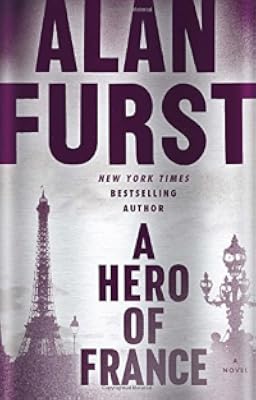
Furst received a B.A. from Oberlin College in 1962 and an M.A. from Penn State in 1967. Before becoming a full-time novelist, Furst worked in advertising and wrote magazine articles, most notably for Esquire, and as a columnist for the International Herald Tribune His early novels (1976-1983) achieved limited success. However, the 1988 publication show more of Night Soldiers inspired by a 1984 trip to Eastern Europe on assignment for Esquire revitalized his career. It was the first of his highly original novels about espionage in Europe before and during the Second World War. Born in New York on February 20, 1941, he lived for long periods in France, especially Paris where he was awarded a Fulbright teaching fellowship. In 2011, the Tulsa Library Trust in Tulsa, Oklahoma selected Furst to receive its Helmerich Award, a literary prize given annually to honor a distinguished author's body of work He also made The New York Times Best Seller List in 2012 with his title The Mission to Paris and Midnight in Europe in 2014. Furst again made the New York Times Bestseller in 2016 with his novel a Hero of France. (Publisher Provided) Alan Furst is an American author of spy novels. He was born in New York City on February 20, 1941, and was raised on the Upper West Side of Manhattan. Furst received a B.A. from Oberlin College in 1962 and an M.A. from Penn State in 1967. His novels are set just prior to and during the Second World War. Titles include: Night Soldiers, Kingdom of Shadows (which won the 2001 Hammett Prize), Blood of Victory, Spies of the Balkans and Mission to Paris. In 2011, the Tulsa Library Trust in Tulsa, Oklahoma, selected Furst to receive its Helmerich Award, a literary prize given annually to honor a distinguished author's body of work. Furst made The New York Times Best Seller List in 2012 with his title The Mission to Paris and Midnight in Europe in 2014. Furst again made the New York Times Bestseller in 2016 with his novel A Hero of France. (Bowker Author Biography) show less

Alan Furst is a LibraryThing Author, an author who lists their personal library on LibraryThing.
Some Editions
Awards and Honors
Distinctions
Series

Common Knowledge
- Canonical title
- Mission to Paris
- Original title
- Mission to Paris
- Alternate titles
- The Spies of Paris
- Original publication date
- 2012
- People/Characters
- Fredrick Stahl; Count Janos Polanyi; Olga Orlova; Kiki de Saint-Ange; Renate Steiner; Zolly Louis (show all 8); Elsa Boulanger; Jules Deschelles
- Important places
- Paris, France; Brasserie Heininger, Paris, France
- Epigraph
- In the 1930s, the Nazi government of Germany, bitterly
resentful at having lost the 1914 war, determined to
destroy its traditional enemy, France. Force of arms lay
in the future, but a small bureau in the Reich F... (show all)oreign
Ministry undertook operations to weaken French morale
and degrade France's will to defend herself. This strategy,
using ancient and well-proven methods, was know as
political warfare. - First words
- In Paris, the evenings of September are sometimes warm, excessively gentle, and, in the magic particular to that city, irresistibly seductive.
- Last words
- (Click to show. Warning: May contain spoilers.)France was attacked by Germany on 10 May, 1940, and surrendered on 21 June.
- Blurbers
- Patterson, James; Flynn, Vince
Classifications
Statistics
- Members
- 1,174
- Popularity
- 21,375
- Reviews
- 71
- Rating
- (3.62)
- Languages
- English
- Media
- Paper, Audiobook, Ebook
- ISBNs
- 19
- ASINs
- 7
