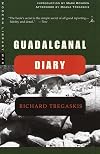
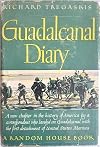
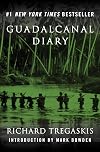
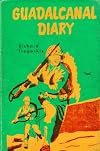
Guadalcanal Diary
by Richard Tregaskis
On This Page
Description
#1 New York Times Bestseller: The definitive eyewitness account of one of the bloodiest and most pivotal battles of World War II. On August 7, 1942, eleven thousand US Marines landed on Tulagi and Guadalcanal Islands in the South Pacific. It was the first major Allied offensive against Japanese forces; the first time in history that a combined air, land, and sea assault had ever been attempted; and, after six months of vicious fighting, a crushing defeat for the Empire of Japan and a major show more turning point in the Pacific War. Volunteer combat correspondent Richard Tregaskis was one of only two journalists on hand to witness the invasion of Guadalcanal. He risked life and limb to give American readers a soldier's experience of the war in the Pacific, from the suffocating heat and humidity to the unique terror of fighting in tall, razor-sharp grass and in crocodile-infested jungle streams against a concealed enemy. In understated yet graceful prose, Tregaskis details the first two months of the campaign and describes the courage and camaraderie of young marines who prepared for battle knowing that one in four of them wouldn't make it home. An instant bestseller when it was first published in 1943 and the basis for a popular film of the same name, Guadalcanal Diary set the standard for World War II reportage. Hailed by the New York Times as "one of the literary events of its time," it is a masterpiece of war journalism whose influence can be found in classic works such as John Hersey's Hiroshima, Michael Herr's Dispatches, and Dexter Filkins's The Forever War. show lessTags
Recommendations





















Member Reviews
The diary of a then well known newspaper correspondent. Somehow this isn't as engaging as the books by Ernie Pyle. Perhaps because it is focusing more on the events than on the men involved. I suppose it truly reflects the attitude of the times, but I find it hard to read because of the author's representation of the Japanese. They are portrayed as dirty, wimpy, primitive and good-for-nothing. Did it take a war for us to understand these people better? I can't help but compare the typical American's idea of the Muslims today. I may keep this book for now, but when I need shelf space, it will go.
Guadalcanal Diary opens on July 26, 1942 as war correspondent Richard Tregaskis is travelling on an American destroyer toward an island in the Pacific where the Marines are going to be landed and meet the enemy in the first land battle of World War II. The island turns out to be Guadacanal and Tregaskis is there every step of the way as the Americans battle the Japanese throughout the Solomon Islands.
The book was published in 1943 and gave Americans at home a bird’s-eye view of the battle in the Pacific as he lived alongside the soldiers and experienced all that they did. Morale was high even though they were dealing with night raids, snipers and bombing attacks. Even dealing with disease, lack of food and sleep, he was able to let show more America know that their “boys’ were performing well.
Guadalcanal Diary is frontline reporting at it’s best. Written in diary form, there is very little about “me” or “I”. It’s all about the soldiers. The story is engrossing and historically accurate, written in simple prose that highlights the slang of the day and grounds the book in reality. This is an honest and compelling account of what the Marines were facing as they fought and liberated this small corner of the Pacific. show less
The book was published in 1943 and gave Americans at home a bird’s-eye view of the battle in the Pacific as he lived alongside the soldiers and experienced all that they did. Morale was high even though they were dealing with night raids, snipers and bombing attacks. Even dealing with disease, lack of food and sleep, he was able to let show more America know that their “boys’ were performing well.
Guadalcanal Diary is frontline reporting at it’s best. Written in diary form, there is very little about “me” or “I”. It’s all about the soldiers. The story is engrossing and historically accurate, written in simple prose that highlights the slang of the day and grounds the book in reality. This is an honest and compelling account of what the Marines were facing as they fought and liberated this small corner of the Pacific. show less
Dick Tregaskis was a legendary American war correspondent who covered the Second World War, Korea and Vietnam. When he was just 26 years old, he accompanied Marines who landed on the island of Guadalcanal with the goal of taking it back from the Japanese. This book — his best-known work — tells the story of the first three months of that battle, which lasted many more months, and which ended in an American victory.
The historical significance of Guadalcanal consisted of the fact that it was the first land battle between American and Axis troops during the Second World War (the U.S. landing in North Africa came a few months later).
But Tregaskis was not interested in the broad strategy. This is history told at ground level, stories of show more men (always identified by their home town – e.g., Lieut. Col. William S. Fellers of Atlanta, Ga.) engaged in personal combat. Encounters with Japanese snipers, enemy craft bombarding the shore, Zero fighters coming in to bomb and strafe, are still frightening to read now, eight decades later.
Tregaskis does find some men who panic, some who flee, some who hide — but the vast majority display incredible heroism under fire. However, his description of the enemy is unflattering in the extreme and will make for uncomfortable reading today. show less
The historical significance of Guadalcanal consisted of the fact that it was the first land battle between American and Axis troops during the Second World War (the U.S. landing in North Africa came a few months later).
But Tregaskis was not interested in the broad strategy. This is history told at ground level, stories of show more men (always identified by their home town – e.g., Lieut. Col. William S. Fellers of Atlanta, Ga.) engaged in personal combat. Encounters with Japanese snipers, enemy craft bombarding the shore, Zero fighters coming in to bomb and strafe, are still frightening to read now, eight decades later.
Tregaskis does find some men who panic, some who flee, some who hide — but the vast majority display incredible heroism under fire. However, his description of the enemy is unflattering in the extreme and will make for uncomfortable reading today. show less
It was good to finally read this classic memoir of a war correspondent's experiences during the opening weeks of the battle for Guadalcanal. It was very interesting and informative. Tregaskis was often right up on the firing line and describes taking the scantiest of cover as bullets whistled around him. I didn't know, or didn't remember, the rather amazing fact that the Japanese forces on the islands were taken by surprise by the arrival of the Allies' huge invasion armada and so the invading forces essentially walked onto the island and established a beach head unhindered. Obviously, the fighting soon grew fierce, and remained that way for months. Tregaskis describes the conditions for the troops quite well. And yet there is something show more somehow unsatisfying about the book. Tregaskis' method is definitely more one of "telling" than of "showing," and I often felt a lack of detail that would enable me to see the scenes more fully. Maybe it's because I've grown so used to the more graphic medium of movies and the more "pull no punches" style of modern journalism (such as Michael Herr's excellent Viet Nam War memoir, Dispatches). This book was written, of course, and published while World War II was still raging. The agreement among correspondents (and/or their editors and publishers) seemed to be not to show the horrors of war too graphically, so as not to upset the home front too much. Even the brilliant Ernie Pyle did not focus his lens that harshly on the blood and guts of it all. Also, at times I wondered whether or not there might be a certain amount of propaganda inserted. There are frequent descriptions of Japanese bombing attacks on the American forces on the island. And we are often told of the high percentage of these Japanese planes shot down by American fighters, with no mention of American losses. Were the Japanese pilots really that bad? Maybe that is exactly how it was, but it did make me wonder. I suppose more research is in order.
At any rate, despite the reservations provided above, Guadalcanal Diary is indeed a fascinating account of the first weeks of one of the most horrific and protracted battles of World War Two. show less
At any rate, despite the reservations provided above, Guadalcanal Diary is indeed a fascinating account of the first weeks of one of the most horrific and protracted battles of World War Two. show less
Very interesting and helpful primary source for my GCMH project at the NWC for logistics during Guadalcanal. Full of first-hand accounts of the author's experience as a war correspondent during the battle for Guadalcanal. Recommended for anyone specifically interested in Guadalcanal or the writings of war correspondents.
This is a very straight forward account of life on Guadalcanal. Not flashy, definitely gritty and looks from the bottom up. If you have an interest in WW2, this is well worth the time.
Vivid account of the landing of the 1st Marine Division on Guadalcanal and the first two months of the fighting. The author is an acclaimed, literate journalist who presents one of the most dramatic battles of WWII in a highly readable day-by-day account.
Members
- Recently Added By
Lists

r/History Recommended Reading List
603 works; 12 members

Book Titles Mentioned In Newberry Medal And Honor Books
884 works; 3 members

Publisher's Weekly NON-Fiction list - 1912 - 1975
486 works; 4 members

Dan Carlin's Supernova in the East Book List
61 works; 1 member
Author Information

16+ Works 1,647 Members
Awards and Honors
Distinctions
Series
Belongs to Publisher Series
Landmark Books (55)
Work Relationships
Common Knowledge
- Original publication date
- 1943
- Important places
- Guadalcanal, Solomon Islands
- Important events
- World War II (1939 | 1945); World War II, Pacific Theater (1941-12-07 | 1945-09-02); Guadalcanal Campaign (1942-08-07 | 1943-02-09)
- Related movies
- Guadalcanal Diary (1943 | IMDb)
- First words
- Sunday, July 26, 1942
This morning, it being Sunday, there were services on the port promenade. - Last words
- (Click to show. Warning: May contain spoilers.)To have left Guadalcanal on a B-17, by way of Bougainville, seemed highly appropriate, when as the marines would say, you considered how rugged our life had been on that f------ island.
(Click to show. Warning: May contain spoilers.)(Landmark Edition) The rows of graves on Guadalcanal, the wreckage of a hundred ships in the black depths of Iron Bottom Bay, and our determined fighting forces moving relentlessly northward toward Tokyo - these were the monuments, living and dead, to the turning point, the Victory at Guadalcanal.
Classifications
Statistics
- Members
- 977
- Popularity
- 27,020
- Reviews
- 13
- Rating
- (3.73)
- Languages
- English, French
- Media
- Paper, Audiobook, Ebook
- ISBNs
- 13
- ASINs
- 47