
The Honorary Consul
by Graham Greene 
On This Page
Description
Relates the story of the politically motivated kidnapping of Charlie Fortnum, a minor British functionary in Argentina.Tags
Recommendations



















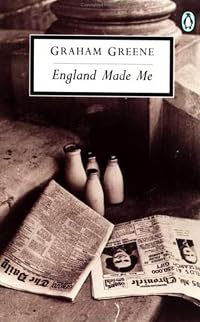
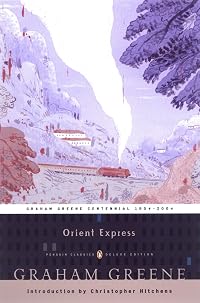
Member Recommendations

Member Reviews
This thing just simmers straight through. There is not a cheap shot in it. Plarr visiting Saavedra's apartment... it's harder to be poor while keeping up appearances. Hunger makes people desperate, malnutrition makes them too weak to raise a fist... I will remember that one! This book is very real.
“A voice announced the station and the news bulletin, and news of Charley Fortnum took first place. A British Consul – the speaker left out the qualifying and diminishing adjective [honorary] – had been kidnapped. There was no mention of the American Ambassador…. The omission lent Charley a certain importance. It made him sound worth kidnapping.”
Set in northern Argentina in the early 1970s, a group of rebels mistakenly kidnaps Honorary British Consul Charley Fortnum, mistaking him for the American Ambassador. They demand the release of political prisoners in return for his safety, not realizing that he is not important enough to give them much leverage. Protagonist Eduardo Plarr is a local doctor whose father is English, and show more mother is Argentinian. He grew up in Paraguay and attended school with one of the kidnappers, ex-priest León Rivas. Plarr is having an affair with Fortnum’s wife, a former prostitute. He has not heard from his father, believed to be a political prisoner, in many years.
The kidnappers end up together in a hut with Charley and the doctor. The reader is drawn along to find out what happens to Charley. It does not look good for him. The British government officials do not appear to be very concerned and do not want to succumb to extortion. Though Plarr claims to not love or care for anyone, he takes extreme actions out of compassion.
“Doctor Plarr thought: the desperadoes! That is what the papers would call them. A failed poet, an excommunicated priest, a pious woman, a man who weeps. For heaven’s sake let this comedy end in comedy. None of us are suited to tragedy.”
Primary themes include love, justice, and faith. As in many of Greene’s books, there is much discussion of religion. The story is full of irony. Despite being full of rather unlikeable people, this novel inspires deep thinking and, possibly, even hope. show less
Set in northern Argentina in the early 1970s, a group of rebels mistakenly kidnaps Honorary British Consul Charley Fortnum, mistaking him for the American Ambassador. They demand the release of political prisoners in return for his safety, not realizing that he is not important enough to give them much leverage. Protagonist Eduardo Plarr is a local doctor whose father is English, and show more mother is Argentinian. He grew up in Paraguay and attended school with one of the kidnappers, ex-priest León Rivas. Plarr is having an affair with Fortnum’s wife, a former prostitute. He has not heard from his father, believed to be a political prisoner, in many years.
The kidnappers end up together in a hut with Charley and the doctor. The reader is drawn along to find out what happens to Charley. It does not look good for him. The British government officials do not appear to be very concerned and do not want to succumb to extortion. Though Plarr claims to not love or care for anyone, he takes extreme actions out of compassion.
“Doctor Plarr thought: the desperadoes! That is what the papers would call them. A failed poet, an excommunicated priest, a pious woman, a man who weeps. For heaven’s sake let this comedy end in comedy. None of us are suited to tragedy.”
Primary themes include love, justice, and faith. As in many of Greene’s books, there is much discussion of religion. The story is full of irony. Despite being full of rather unlikeable people, this novel inspires deep thinking and, possibly, even hope. show less
“A voice announced the station and the news bulletin, and news of Charley Fortnum took first place. A British Consul – the speaker left out the qualifying and diminishing adjective [honorary] – had been kidnapped. There was no mention of the American Ambassador…. The omission lent Charley a certain importance. It made him sound worth kidnapping.”
Set in northern Argentina in the early 1970s, a group of rebels mistakenly kidnaps Honorary British Consul Charley Fortnum, mistaking him for the American Ambassador. They demand the release of political prisoners in return for his safety, not realizing that he is not important enough to give them much leverage. Protagonist Eduardo Plarr is a local doctor whose father is English, and show more mother is Argentinian. He grew up in Paraguay and attended school with one of the kidnappers, ex-priest León Rivas. Plarr is having an affair with Fortnum’s wife, a former prostitute. He has not heard from his father, believed to be a political prisoner, in many years.
The kidnappers end up together in a hut with Charley and the doctor. The reader is drawn along to find out what happens to Charley. It does not look good for him. The British government officials do not appear to be very concerned and do not want to succumb to extortion. Though Plarr claims to not love or care for anyone, he takes extreme actions out of compassion.
“Doctor Plarr thought: the desperadoes! That is what the papers would call them. A failed poet, an excommunicated priest, a pious woman, a man who weeps. For heaven’s sake let this comedy end in comedy. None of us are suited to tragedy.”
Primary themes include love, justice, and faith. As in many of Greene’s books, there is much discussion of religion. The story is full of irony. Despite being full of rather unlikeable people, this novel inspires deep thinking and, possibly, even hope. show less
Set in northern Argentina in the early 1970s, a group of rebels mistakenly kidnaps Honorary British Consul Charley Fortnum, mistaking him for the American Ambassador. They demand the release of political prisoners in return for his safety, not realizing that he is not important enough to give them much leverage. Protagonist Eduardo Plarr is a local doctor whose father is English, and show more mother is Argentinian. He grew up in Paraguay and attended school with one of the kidnappers, ex-priest León Rivas. Plarr is having an affair with Fortnum’s wife, a former prostitute. He has not heard from his father, believed to be a political prisoner, in many years.
The kidnappers end up together in a hut with Charley and the doctor. The reader is drawn along to find out what happens to Charley. It does not look good for him. The British government officials do not appear to be very concerned and do not want to succumb to extortion. Though Plarr claims to not love or care for anyone, he takes extreme actions out of compassion.
“Doctor Plarr thought: the desperadoes! That is what the papers would call them. A failed poet, an excommunicated priest, a pious woman, a man who weeps. For heaven’s sake let this comedy end in comedy. None of us are suited to tragedy.”
Primary themes include love, justice, and faith. As in many of Greene’s books, there is much discussion of religion. The story is full of irony. Despite being full of rather unlikeable people, this novel inspires deep thinking and, possibly, even hope. show less
"When I was a young priest, I used to try to unravel what motives a man or woman had, what temptations and self-delusions. But I soon learned to give all that up, because there was never a straight answer. No one was simple enough for me to understand. In the end I would just say, 'Three Our Fathers, Three Hail Marys. Go in peace.'" (pg. 182)
Graham Greene has never become the beloved personal favourite I expected him to become after my first few interactions (The End of the Affair, Our Man in Havana, The Third Man), but his novels are always bristling with intelligent writing, lucid ideas and complex characters. Even though my two previous Greene choices had left me cold (Brighton Rock and The Comedians), I knew that they – and all show more his books I have read so far – maintained this intelligence and quality in writing and story construction. Greene sets a solid baseline of quality in his work, and the reader's ability to love, hate or become indifferent towards the particular title established on top of it can then vacillate between a number of points.
The Honorary Consul, one of Greene's later works, illustrates this well. It has that solid baseline of intelligent writing, complex characterisation and lucid ideas (often delivered in the form of aphorisms, such as "Free Will was the excuse for everything. It was God's alibi" (pg. 227)). It seems to be reaching for a similar topic to The Power and the Glory, one of Greene's more successful experiments, but Consul's more linear plot allows it to be delivered more concisely (leaving less readers behind) while at the same time robbing the book of some of the literary potency that The Power and the Glory possessed. The setting of Argentina in the Seventies, corrupt and politically volatile, is an interesting one and suits Consul's story, while at the same time lacking the intensity of setting of, say, Duvalier's Haiti in The Comedians – even though Comedians was a less appealing book.
You begin to see, I hope, how much play there is in the steering of a Greene book once that reassuring baseline is established. Much corresponds to personal taste: many readers will dislike the dramatic Dostoevsky-like musings of Consul's final act, though I enjoyed them, and many will enjoy the jaded sexual politics of the earlier movements, which I found unremarkable. The characters operate, as Greene's always do, in a morally grey area which can be alternately stimulating and dispiriting; indeed, I often find I approach Greene's books with a sort of trepidation, as though I yearn for the intellectual exercise they guarantee but fear they will tip me over into the pit of depression they share. Then again, there is always that baseline: Greene's dark pit has a bottom, and The Honorary Consul has more hope than is usually found in this author's writing. But it seems that in all but his very best work, there is always something indescribable that is blunting my desire to engage. show less
Graham Greene has never become the beloved personal favourite I expected him to become after my first few interactions (The End of the Affair, Our Man in Havana, The Third Man), but his novels are always bristling with intelligent writing, lucid ideas and complex characters. Even though my two previous Greene choices had left me cold (Brighton Rock and The Comedians), I knew that they – and all show more his books I have read so far – maintained this intelligence and quality in writing and story construction. Greene sets a solid baseline of quality in his work, and the reader's ability to love, hate or become indifferent towards the particular title established on top of it can then vacillate between a number of points.
The Honorary Consul, one of Greene's later works, illustrates this well. It has that solid baseline of intelligent writing, complex characterisation and lucid ideas (often delivered in the form of aphorisms, such as "Free Will was the excuse for everything. It was God's alibi" (pg. 227)). It seems to be reaching for a similar topic to The Power and the Glory, one of Greene's more successful experiments, but Consul's more linear plot allows it to be delivered more concisely (leaving less readers behind) while at the same time robbing the book of some of the literary potency that The Power and the Glory possessed. The setting of Argentina in the Seventies, corrupt and politically volatile, is an interesting one and suits Consul's story, while at the same time lacking the intensity of setting of, say, Duvalier's Haiti in The Comedians – even though Comedians was a less appealing book.
You begin to see, I hope, how much play there is in the steering of a Greene book once that reassuring baseline is established. Much corresponds to personal taste: many readers will dislike the dramatic Dostoevsky-like musings of Consul's final act, though I enjoyed them, and many will enjoy the jaded sexual politics of the earlier movements, which I found unremarkable. The characters operate, as Greene's always do, in a morally grey area which can be alternately stimulating and dispiriting; indeed, I often find I approach Greene's books with a sort of trepidation, as though I yearn for the intellectual exercise they guarantee but fear they will tip me over into the pit of depression they share. Then again, there is always that baseline: Greene's dark pit has a bottom, and The Honorary Consul has more hope than is usually found in this author's writing. But it seems that in all but his very best work, there is always something indescribable that is blunting my desire to engage. show less
An atheist doctor? A former priest with wavering faith? An exotic, isolated setting with whiskey sodden British expats? Check all these. In “The Honorary Consul” the local characters are as vivid as the expat Brits, something not always the case with Greene. (Although, I think he did a good job in his African novels of not assuming to know what the African characters were thinking.) Two of the three Englishmen here aren’t really expats at all. Born in Paraguay to a British father and local mother, Doctor Plarr is our atheist. Born in Argentina to British parents, Charlie Fortnam is the honorary British consul in a small town on the Paraná river in Northeast Argentina. The only other Brit in town is Doctor Humphries, a grumpy show more teacher of literature whose background we are not sure of, but he was probably born in England. I found it true even in the early 21st century that Anglo-Argentinians held fast to a 'colonial era' English accent and customs, like five o’clock gin and tonics, not maintained among British descendants in my part of the world. So the idea of a locally born Englishman not quite fitting in that Greene introduces rings true.
The setting seems to be based on Formosa (I've got that wrong it was Corrientes a bit further south), capital of the oppressively hot Formosa province - a million miles away from the cosmopolitan capital Buenos Aires, where Doctor Plarr’s Paraguayan mother grows fat on dulce de leche. I don’t know how long Greene was in Argentina, the novel is dedicated to Victoria Ocampo, an Argentine writer he stayed with. He refers vaguely to the political troubles in Argentina in the early 70s, the period just before the return of Perón. (Quickly followed by his death, his wife taking over and the subsequent military dictatorship.) Over the Paraná river is Paraguay - under control of the American backed dictator, General Stroessner. In a muddle up Charlie gets kidnapped by Paraguayan rebels hoping for an exchange of prisoners; the American Ambassador was the real target. The British government isn’t eager to get involved, Charlie is a sixty year old ‘honorary’ consul and alcoholic - worse still he has recently married Clara, a young prostitute - not a becoming image at all. He lives by growing maté and importing cars and then selling them on - flaunting the diplomatic rights he doesn't actually have.
The intellectual conversations at Clara’s (former) brothel between Plarr and local writer Doctor Saavedra are amusing - and Saavedra comes off as a joke, a man obsessed with machismo - until we see that he lives in poverty and Plarr gives him grudging respect for devoting his life to literature. Greene’s idea of Argentine machismo is accurate in its knife fights, but also seems mixed up with the Mexican version which is more pervasive than the Argentine one.
The kidnappers are known to Plarr, who is involved because his British father is a political prisoner in Paraguay. Plarr lacks the faith and personal morality of the head kidnapper, his ex-classmate former priest Rivas, but is a doctor committed to the poor - he resembles Dr. Colin the atheist doctor treating lepers in Greene’s “A Burnt Out Case”. In both novels Greene seems to be debating with himself the merits of the man of faith and the practical man who tries to save lives rather than souls. The saving of souls is a much more tortuous business because it raises the possibility of personal damnation? The pace never drops off much in this book - it didn’t get bogged down in Catholic theology and moral debate (although there is certainly a sufficient amount of these). There is a fair deal of humour too. I was just in the right mood for this novel - so a subjective five stars. show less
The setting seems to be based on Formosa (I've got that wrong it was Corrientes a bit further south), capital of the oppressively hot Formosa province - a million miles away from the cosmopolitan capital Buenos Aires, where Doctor Plarr’s Paraguayan mother grows fat on dulce de leche. I don’t know how long Greene was in Argentina, the novel is dedicated to Victoria Ocampo, an Argentine writer he stayed with. He refers vaguely to the political troubles in Argentina in the early 70s, the period just before the return of Perón. (Quickly followed by his death, his wife taking over and the subsequent military dictatorship.) Over the Paraná river is Paraguay - under control of the American backed dictator, General Stroessner. In a muddle up Charlie gets kidnapped by Paraguayan rebels hoping for an exchange of prisoners; the American Ambassador was the real target. The British government isn’t eager to get involved, Charlie is a sixty year old ‘honorary’ consul and alcoholic - worse still he has recently married Clara, a young prostitute - not a becoming image at all. He lives by growing maté and importing cars and then selling them on - flaunting the diplomatic rights he doesn't actually have.
The intellectual conversations at Clara’s (former) brothel between Plarr and local writer Doctor Saavedra are amusing - and Saavedra comes off as a joke, a man obsessed with machismo - until we see that he lives in poverty and Plarr gives him grudging respect for devoting his life to literature. Greene’s idea of Argentine machismo is accurate in its knife fights, but also seems mixed up with the Mexican version which is more pervasive than the Argentine one.
The kidnappers are known to Plarr, who is involved because his British father is a political prisoner in Paraguay. Plarr lacks the faith and personal morality of the head kidnapper, his ex-classmate former priest Rivas, but is a doctor committed to the poor - he resembles Dr. Colin the atheist doctor treating lepers in Greene’s “A Burnt Out Case”. In both novels Greene seems to be debating with himself the merits of the man of faith and the practical man who tries to save lives rather than souls. The saving of souls is a much more tortuous business because it raises the possibility of personal damnation? The pace never drops off much in this book - it didn’t get bogged down in Catholic theology and moral debate (although there is certainly a sufficient amount of these). There is a fair deal of humour too. I was just in the right mood for this novel - so a subjective five stars. show less
Review first posted on BookLikes:
http://brokentune.booklikes.com/post/852911/the-honorary-consul
"The God I believe in must be responsible for all the evil as well as for all the saints. He has to be a God made in our image with a night-side as well as a day-side."
The Honorary Consul is somewhat heavier fare than Graham Greene's "entertainments". The justification of man's actions based on faith or based on the conflict created by the expectations of religious instruction and the reality of life features heavily in this book.
Charlie Fortnum is an elderly, worn out diplomat, a British Honorary Consul based in northern Argentina who has been largely forgotten by the Foreign Office until he becomes inadvertently entangled in a plot to show more kidnap the American ambassador.
Unfortunately for Charlie, the kidnapping goes horribly wrong. Even more unfortunate, the Foreign Office don't like the idea of being reminded about Charlie.
The only ones who do care about Charlie are his wife and his doctor - two by-standers. Except of course, that this is Greene-land where soon enough things turn out different from what they appear.
‘It’s not how I intended things,’ Doctor Plarr repeated. He had no anger left with which to defend himself. ‘Nothing is ever what we intend. They didn’t mean to kidnap you. I didn’t mean to start the child. You would almost think there was a great joker somewhere who likes to give a twist to things. Perhaps the dark side of God has a sense of humour.’ ‘What dark side?’ ‘Some crazy notion of León’s. You should have heard that – not the things you did hear.’
So, what we get in The Honorary Consul, is a tense thriller capturing the moral dilemma created by kidnapping and the desperate attempts of atonement by everyone involved.
And all of it in Greene's very dark and ironic style:
"Free Will was the excuse for everything. It was God’s alibi." show less
http://brokentune.booklikes.com/post/852911/the-honorary-consul
"The God I believe in must be responsible for all the evil as well as for all the saints. He has to be a God made in our image with a night-side as well as a day-side."
The Honorary Consul is somewhat heavier fare than Graham Greene's "entertainments". The justification of man's actions based on faith or based on the conflict created by the expectations of religious instruction and the reality of life features heavily in this book.
Charlie Fortnum is an elderly, worn out diplomat, a British Honorary Consul based in northern Argentina who has been largely forgotten by the Foreign Office until he becomes inadvertently entangled in a plot to show more kidnap the American ambassador.
Unfortunately for Charlie, the kidnapping goes horribly wrong. Even more unfortunate, the Foreign Office don't like the idea of being reminded about Charlie.
The only ones who do care about Charlie are his wife and his doctor - two by-standers. Except of course, that this is Greene-land where soon enough things turn out different from what they appear.
So, what we get in The Honorary Consul, is a tense thriller capturing the moral dilemma created by kidnapping and the desperate attempts of atonement by everyone involved.
And all of it in Greene's very dark and ironic style:
"Free Will was the excuse for everything. It was God’s alibi." show less
I have to admit to a particular weakness when it comes to Graham Greene's work - even when the work might be considered one of his lesser endeavors.
Dr. Eduardo Plarr, a doctor in a fairly remote outpost of Argentina, becomes indirectly caught up in a bungled political kidnapping. His fundamentally cynical nature accommodates tender feelings for some of the flawed but genuine characters with whom he comes in contact. He is less forgiving to those who stand on irrational and hypocritical religious and political scruples who think their beliefs justify any means.
Greene finds ways to introduce critiques of colonialism, religion, and political "isms" that mesh neatly with the plot. These excursions do not make this an "intellectual" novel show more nor do they detract from the pace and suspense of the story. They do add a rich and complementary dimension to this excellent book. show less
Dr. Eduardo Plarr, a doctor in a fairly remote outpost of Argentina, becomes indirectly caught up in a bungled political kidnapping. His fundamentally cynical nature accommodates tender feelings for some of the flawed but genuine characters with whom he comes in contact. He is less forgiving to those who stand on irrational and hypocritical religious and political scruples who think their beliefs justify any means.
Greene finds ways to introduce critiques of colonialism, religion, and political "isms" that mesh neatly with the plot. These excursions do not make this an "intellectual" novel show more nor do they detract from the pace and suspense of the story. They do add a rich and complementary dimension to this excellent book. show less
Members
- Recently Added By
Lists

1001 Books You Must Read Before You Die
1,448 works; 1,137 members

Best Political Fiction
92 works; 12 members
20th Century Literature
1,161 works; 55 members

Global Reads: Books Set South and Central America
40 works; 7 members

1970s
657 works; 23 members

1,001 BYMRBYD Concensus
723 works; 27 members

Publisher's Weekly Bestsellers - Part II - 1940 - 1979
355 works; 6 members
My TBR
371 works; 3 members

Books available on Open Library
171 works; 4 members
Author Information

356+ Works 87,436 Members
Born in 1904, Graham Greene was the son of a headmaster and the fourth of six children. Preferring to stay home and read rather than endure the teasing at school that was a by-product of his father's occupation, Greene attempted suicide several times and eventually dropped out of school at the age of 15. His parents sent him to an analyst in show more London who recommended he try writing as therapy. He completed his first novel by the time he graduated from college in 1925. Greene wrote both entertainments and serious novels. Catholicism was a recurring theme in his work, notable examples being The Power and the Glory (1940) and The End of the Affair (1951). Popular suspense novels include: The Heart of the Matter, Our Man in Havana and The Quiet American. Greene was also a world traveler and he used his experiences as the basis for many books. One popular example, Journey Without Maps (1936), was based on a trip through the jungles of Liberia. Greene also wrote and adapted screenplays, including that of the 1949 film, The Third Man, which starred Orson Welles. He died in Vevey, Switzerland in 1991. (Bowker Author Biography) show less
Graham Greene has a Legacy Library. Legacy libraries are the personal libraries of famous readers, entered by LibraryThing members from the Legacy Libraries group.
Some Editions
Awards and Honors
Distinctions
Series
Belongs to Publisher Series
Work Relationships
Common Knowledge
- Canonical title
- The Honorary Consul
- Original title
- The Honorary Consul
- Original publication date
- 1973
- People/Characters
- Eduardo Plarr; Humphries; Charles Fortnum; Julio Saavedra; Clara
- Important places
- Corrientes, Argentina
- Related movies
- The Honorary Consul (1983 | IMDb)
- Epigraph
- 'All things merge in one another -
good into evil, generosity into
justice, religion into politics . . . '
~ Thomas Hardy - Dedication
- For Victoria Ocampo with love, and in memory of the many happy weeks I have passed at San Isidro
and Mar del Plata. - First words
- Doctor Eduardo Plarr stood in the small port on the Parana, among the rails and yellow cranes, watching where a horizontal plume of smoke stretched over the Chaco.
- Last words
- (Click to show. Warning: May contain spoilers.)He realised that never before had she been so close to him as she was now.
- Original language
- English
Classifications
Statistics
- Members
- 2,344
- Popularity
- 8,462
- Reviews
- 33
- Rating
- (3.82)
- Languages
- 13 — Catalan, Danish, Dutch, English, Finnish, French, German, Hungarian, Italian, Norwegian (Bokmål), Portuguese, Spanish, Swedish
- Media
- Paper, Audiobook, Ebook
- ISBNs
- 83
- UPCs
- 1
- ASINs
- 47