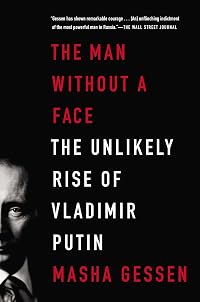
The Man Without a Face: The Unlikely Rise of Vladimir Putin
by M. Gessen
On This Page
Description
This is the chilling account of how a low-level, small-minded KGB operative ascended to the Russian presidency and, in an astonishingly short time, destroyed years of progress and made his country once more a threat to her own people and to the world. Handpicked by the "family" surrounding an ailing and increasingly unpopular Boris Yeltsin, Vladimir Putin seemed like a perfect choice for the oligarchy to shape according to its own designs. Suddenly the boy who had stood in the shadows was a show more public figure, and his popularity soared. Russia and an infatuated West were determined to see the progressive leader of their dreams, even as he seized control of media, sent political rivals and critics into exile or to the grave, and smashed the country's fragile electoral system, concentrating power in the hands of his cronies. As a journalist living in Moscow, Masha Gessen experienced this history firsthand, and she has drawn on sources no other writer has tapped.--From publisher description. show lessTags
Recommendations
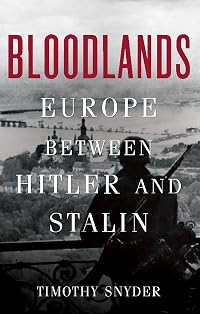
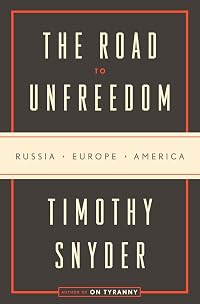
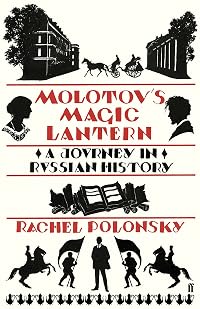
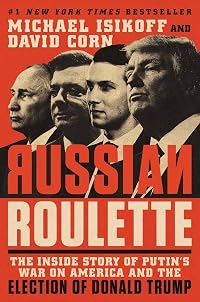


Member Recommendations
Member Reviews
This was a timely read, in light of events in Ukraine/Crimea in the last few weeks. The author, a Russian journalist with, unusually, joint Russian and US citizenship, shows how Putin emerged from relative political obscurity to become head of the FSB in 1998 then Yeltsin's successor as President in 2000; how many of those who had supported him ceased to support him when they realised his true nature, and how he pursued them vengefully using various semi-legal or illegal processes. It also describes how he has suborned the political and judicial systems to his personal rule. In short, the author concludes that he has basically restored Soviet norms and assumptions of arbitrary rule, but within a system based on his personal rule, not show more the rule of an identifiable political ideology such as communism (the dominant ideology, to the extent that there is one, is a form of state capitalism, but Putin appears to stand for nothing).
From a series of official interviews with the man himself in 2000, and from interviews from some of his former friends and associates, a picture emerges of Putin as he was under the Soviet system. Essentially he was an unremarkable young man, but with a self-confessed tendency from boyhood towards violence when he did not get his own way. He unsuccessfully volunteered his services to the KGB when he was still at school and was in turn sought by them while at university. During the years of Gorbachev's perestroika and glasnost, Putin was a minor KGB operative in Dresden in East Germany, gathering low level information from newspapers and attempting to persuade Latin American students to become spies. The fall of the Soviet Union seems to have left him initially bewildered and confused as it meant the relatively sudden collapse of the system that had made him what he was; in the 1990s, he played lip service to notions of reform and democratisation and seems to have been able to fool enough people to get on, including the oligarch Boris Berezovsky, who effectively made him what he became towards the end of that decade.
All this certainly explains Putin's recent actions - along with a large number of his fellow countrymen, he hankers after the certainties of the Soviet system, but unlike them he has a firm grip on the levers of the state with which he can make reality fit with his vision. He has no compunction about the methods he uses in order to achieve this, as he has been used to getting his way after nearly a decade and a half at the top of the Russian state and effectively thinks he can get away with almost anything. He follows a very old (as old as the Tsars) Russian political tradition of completely blackening all political and personal opponents. Seen in this light, his actions in almost certainly sending troops into the Crimea, while denying having done so, abrogating Ukraine's treaty rights, and portraying the Ukraine authorities as fascists who are supposedly suppressing the rights of Russian speakers, make a kind of sense. An important book at the current time. show less
From a series of official interviews with the man himself in 2000, and from interviews from some of his former friends and associates, a picture emerges of Putin as he was under the Soviet system. Essentially he was an unremarkable young man, but with a self-confessed tendency from boyhood towards violence when he did not get his own way. He unsuccessfully volunteered his services to the KGB when he was still at school and was in turn sought by them while at university. During the years of Gorbachev's perestroika and glasnost, Putin was a minor KGB operative in Dresden in East Germany, gathering low level information from newspapers and attempting to persuade Latin American students to become spies. The fall of the Soviet Union seems to have left him initially bewildered and confused as it meant the relatively sudden collapse of the system that had made him what he was; in the 1990s, he played lip service to notions of reform and democratisation and seems to have been able to fool enough people to get on, including the oligarch Boris Berezovsky, who effectively made him what he became towards the end of that decade.
All this certainly explains Putin's recent actions - along with a large number of his fellow countrymen, he hankers after the certainties of the Soviet system, but unlike them he has a firm grip on the levers of the state with which he can make reality fit with his vision. He has no compunction about the methods he uses in order to achieve this, as he has been used to getting his way after nearly a decade and a half at the top of the Russian state and effectively thinks he can get away with almost anything. He follows a very old (as old as the Tsars) Russian political tradition of completely blackening all political and personal opponents. Seen in this light, his actions in almost certainly sending troops into the Crimea, while denying having done so, abrogating Ukraine's treaty rights, and portraying the Ukraine authorities as fascists who are supposedly suppressing the rights of Russian speakers, make a kind of sense. An important book at the current time. show less
Excellent audiobook of 4.5 to 5 stars. Masha Gessen is a journalist who participated in anti-Putin demonstrations, at great risk. She portrays Putin as a childhood thug, now a filthy rich autocrat who suffers from kleptomania and pleonexia (extreme greed for wealth or material possessions; avarice). He’s now worth several billion dollars with palatial homes. To take over a company, all he has to do is put the owner in prison. He doesn’t skim off the top, he takes it all.
There is no law in Russia – only Putin – as he rolls back all democratic laws passed in the 90s, in full support of his puppet legislature, the Duma.
Putin's former campaign manager said: "The Russian regime has no ideology, no party, no politics. It is nothing show more but the power of a single man." ... With Putin's "continuing attempt to turn the country into a super-sized model of the KGB, there can be no room for dissidents or even for independent actors..." because they "are inconvenient, in part, because they refuse to accept the rules of the Mafia."
Two drawbacks of the book:
1 – The author narrates the book which is fine, except that some of the Russian names were mumbled and rushed and hard to understand, even at 95% speed. So a printed book may be easier for the names.
2 – The book was published in 2010 with an audio update in 2012, and more comments in 2014 as Putin invaded Crimea. But so much has happened since then.
I also read Gessen’s The Future Is History: How Totalitarianism Reclaimed Russia (published 2017), and Never Remember: Searching for Stalin's Gulags in Putin's Russia (published 2018), both 5-star books. Perhaps I should have read them in order.
This book covered a new topic for me -- Putin’s childhood.
Highly recommended! show less
There is no law in Russia – only Putin – as he rolls back all democratic laws passed in the 90s, in full support of his puppet legislature, the Duma.
Putin's former campaign manager said: "The Russian regime has no ideology, no party, no politics. It is nothing show more but the power of a single man." ... With Putin's "continuing attempt to turn the country into a super-sized model of the KGB, there can be no room for dissidents or even for independent actors..." because they "are inconvenient, in part, because they refuse to accept the rules of the Mafia."
Two drawbacks of the book:
1 – The author narrates the book which is fine, except that some of the Russian names were mumbled and rushed and hard to understand, even at 95% speed. So a printed book may be easier for the names.
2 – The book was published in 2010 with an audio update in 2012, and more comments in 2014 as Putin invaded Crimea. But so much has happened since then.
I also read Gessen’s The Future Is History: How Totalitarianism Reclaimed Russia (published 2017), and Never Remember: Searching for Stalin's Gulags in Putin's Russia (published 2018), both 5-star books. Perhaps I should have read them in order.
This book covered a new topic for me -- Putin’s childhood.
Highly recommended! show less
Absolutely riveting. I think if Edward Snowden had cracked this book before he accepted Vladimir Putin’s offer of temporary asylum in Russia, he might have come home to face the charges against him. Masha Gessen’s illuminating portrait of the low level KGB agent and his improbable rise to occupy the seat at the head of the Russian parliament (he’s now on an unprecedented third term) had me frantically turning pages well into the night.
Putin was plucked from obscurity in 2000 to take over for the ailing (and drunken) Russian Premier Boris Yeltsin. Suddenly the scrappy boy from Leningrad had the power he had always dreamed of. After dismantling the tentative early steps to democracy begun by Yeltsin, Putin went on to employ henchmen show more to carry out his vision of a return to the old USSR. Among his achievements: the government takeover of the cable TV stations, the seizure of assets from members of the Russian oligarchy, total control and manipulation of elections, the transition of the upper house of parliament from an elected body to an appointed one, and the accumulation of personal wealth that has been estimated at $40 billion dollars. Under Putin’s watch the arrest, imprisonment, murder or poisoning of those who disagreed with him were common. His term has been highlighted by several calamities that were mishandled terribly by Putin. In August of 2000, the nuclear submarine Kursk exploded killing most of the 118 member crew immediately but 23 people were in a part of the submarine that saved them from the initial blast. However, Putin wouldn’t accept help offered by Norway and Great Britain and, indeed, did not have anything to say about the tragedy because he was vacationing at a beach resort on the Black Sea. When he finally spoke five days into the ordeal, he was dismissive of the whole incident and spoke only of salvaging what they could from the submarine. After nine days the 23 seamen perished as well.
Greshen lays out the evidence in a narrative that proceeds at breakneck speed illustrating, step by step, how Putin has pulled off this incredible heist of Russian wealth and a tally of the growing stack of dead bodies he leaves in his wake. This one is not to be missed. show less
Putin was plucked from obscurity in 2000 to take over for the ailing (and drunken) Russian Premier Boris Yeltsin. Suddenly the scrappy boy from Leningrad had the power he had always dreamed of. After dismantling the tentative early steps to democracy begun by Yeltsin, Putin went on to employ henchmen show more to carry out his vision of a return to the old USSR. Among his achievements: the government takeover of the cable TV stations, the seizure of assets from members of the Russian oligarchy, total control and manipulation of elections, the transition of the upper house of parliament from an elected body to an appointed one, and the accumulation of personal wealth that has been estimated at $40 billion dollars. Under Putin’s watch the arrest, imprisonment, murder or poisoning of those who disagreed with him were common. His term has been highlighted by several calamities that were mishandled terribly by Putin. In August of 2000, the nuclear submarine Kursk exploded killing most of the 118 member crew immediately but 23 people were in a part of the submarine that saved them from the initial blast. However, Putin wouldn’t accept help offered by Norway and Great Britain and, indeed, did not have anything to say about the tragedy because he was vacationing at a beach resort on the Black Sea. When he finally spoke five days into the ordeal, he was dismissive of the whole incident and spoke only of salvaging what they could from the submarine. After nine days the 23 seamen perished as well.
Greshen lays out the evidence in a narrative that proceeds at breakneck speed illustrating, step by step, how Putin has pulled off this incredible heist of Russian wealth and a tally of the growing stack of dead bodies he leaves in his wake. This one is not to be missed. show less
Quite a find. I had only a sketchy idea of what happened after the soviet union dissolved. I knew that a lot of people took advantage and corruption reigned big time, so a few got very rich while the majority were on the verge of starvation. This book fills in some of those blanks and explains how Putin rose to the top.
If it hadn't been for the breaking apart of the USSR, it is likely that Putin would never have gotten far. He was a longtime KGB operator, familiar with the structure and the way the organization worked. Not especially intelligent, he was nonetheless savvy and gave the impression that he was a solid company man. He could be counted upon to do as told. Thus entrepreneur and government official Boris Berezovsky, priding show more himself on his role as kingmaker, picked Putin to lead the country in a new direction.
Putin positioned himself as a new kind of leader for Russia. He espoused democratic ideals, he was young and fit, and he sold his country a bill of goods. He loved Russia, but watchers soon realized that he equated Russia with himself. What's good for Vladimir Putin is good for the country.
From the start he was popular, not only with the Russian people, but with leaders in the West. Distracted by other non-Russian concerns, U.S. media and politicians expressed delight in the turn Russia had taken. It took years for them to catch on to what was really happening.
Little by little, Putin was bringing back almost all of the worst aspects of the Soviet Union. He became a master of corruption, essentially stealing food from his own people. He clamped down on rights and freedoms, making it harder for people to protest and to learn about what was happening. He shut down anyone who got in his way, using classic KGB tactics.
Over time, Putin transformed the laws to suit himself and his friends, although he didn't have many friends.
The book was published in 2011 and a postscript was added in 2014, so we are seven years further into Putin's self-serving government, and at least now the rest of the world has a clue what he's up to.
I found the book valuable for explaining how the USSR dissolved, how some order was brought out of the resulting chaos, and how the country is now one of the most corrupt in the world. The international group Transparency International ranks countries by how corrupt they are. In 2003 they ranked Russia at 64% more corrupt than others. By 2010 it ranked 86%. It all can be laid at the feet of one man: Putin.
Transparency Internation defines corruption as the "intentional misuse of public resources for personal gain".
In addition to raiding the treasury, Putin has raised bigotry to an art form, going backwards by several decades.
The book contains an index and bibliography for those who wish to explore each topic further.
The author has dual citizenship in Russia and the United States. They (Gessen is non-binary, preferring they/them pronouns) were born in Moscow and currently reside in the U.S. as Distinguished Writer in Residence at Bard College. show less
If it hadn't been for the breaking apart of the USSR, it is likely that Putin would never have gotten far. He was a longtime KGB operator, familiar with the structure and the way the organization worked. Not especially intelligent, he was nonetheless savvy and gave the impression that he was a solid company man. He could be counted upon to do as told. Thus entrepreneur and government official Boris Berezovsky, priding show more himself on his role as kingmaker, picked Putin to lead the country in a new direction.
Putin positioned himself as a new kind of leader for Russia. He espoused democratic ideals, he was young and fit, and he sold his country a bill of goods. He loved Russia, but watchers soon realized that he equated Russia with himself. What's good for Vladimir Putin is good for the country.
From the start he was popular, not only with the Russian people, but with leaders in the West. Distracted by other non-Russian concerns, U.S. media and politicians expressed delight in the turn Russia had taken. It took years for them to catch on to what was really happening.
Little by little, Putin was bringing back almost all of the worst aspects of the Soviet Union. He became a master of corruption, essentially stealing food from his own people. He clamped down on rights and freedoms, making it harder for people to protest and to learn about what was happening. He shut down anyone who got in his way, using classic KGB tactics.
Over time, Putin transformed the laws to suit himself and his friends, although he didn't have many friends.
The book was published in 2011 and a postscript was added in 2014, so we are seven years further into Putin's self-serving government, and at least now the rest of the world has a clue what he's up to.
I found the book valuable for explaining how the USSR dissolved, how some order was brought out of the resulting chaos, and how the country is now one of the most corrupt in the world. The international group Transparency International ranks countries by how corrupt they are. In 2003 they ranked Russia at 64% more corrupt than others. By 2010 it ranked 86%. It all can be laid at the feet of one man: Putin.
Transparency Internation defines corruption as the "intentional misuse of public resources for personal gain".
In addition to raiding the treasury, Putin has raised bigotry to an art form, going backwards by several decades.
The book contains an index and bibliography for those who wish to explore each topic further.
The author has dual citizenship in Russia and the United States. They (Gessen is non-binary, preferring they/them pronouns) were born in Moscow and currently reside in the U.S. as Distinguished Writer in Residence at Bard College. show less
The negative reviews I saw on Goodreads criticized this book for not being an objective biography of Putin. And it is not.
This book is a careful explanation (I presume to an American or other westerner) of how Putin came to be in Russia, how he rules in Russia, and why it is bad. Gessen sometimes writes with positive disdain, albeit a well-written and engaging disdain. For this American, whose contemporary Russian history could use some help, it was enlightening.
This book is a careful explanation (I presume to an American or other westerner) of how Putin came to be in Russia, how he rules in Russia, and why it is bad. Gessen sometimes writes with positive disdain, albeit a well-written and engaging disdain. For this American, whose contemporary Russian history could use some help, it was enlightening.
One of those books that makes complex affairs understandable, The Man Without a Face is a well-written primer for anyone who wants to learn about how Putin has inserted Russia into a time machine aimed at its Soviet past. I came to Gessen’s book a neophyte who only knew Putin as a KGB bureaucrat; I put it down with an understanding of Putin’s M.O. in dealing with threats to his ego or position. Gessen does a fine job of linking together a number of events about which I recall reading—the Angleterre Hotel bombing, the Kursk, the massacre of schoolkids in Beslan—and arguing that each was another example of an opportunity Putin took to flex his (often exposed) muscles. Putin comes across as someone with no ideas, no imagination, no show more personality--the banality of evil. show less
If you've been feeling guilty about ignoring Russia over the past decade, reading just enough news to realize that the political situation has gotten ugly and not enough to have a real sense of how ugly, or just how, THE MAN WITHOUT A FACE is the book for you.
Gessen lays responsibility for Russia's devolution from a fledgling democracy in the nineties to a corrupt dictatorship in the aughts at Vladimir Putin's feet, though she simultaneously argues that Putin was just one of a type, a member of the old guard that retreated during the 90s but never went away.
When Putin was selected as Yeltsin's successor, he was an anonymous bureaucrat, a behind-the-scenes KGB agent. A nobody. Within weeks of being elected, Putin began began show more systematically shutting down the instruments of democracy: city councils, free elections, television stations.
Putin consolidated power around himself at the expense of his countrymen, progress, freedom, etc. As an American, it's terrifying to read about how quickly Putin dismantled the building blocks of democracy in Russia. By the time most people took notice, the damage had been done. They had no avenue of protest: the courts were rigged, the elections were rigged, the news was rigged.
And if that were Putin's sole legacy, it would be bad enough. But what really makes THE MAN WITHOUT A FACE chilling is Putin's gleeful thuggishness. Gessen spends time on the made-to-order biography of Putin published around the time of his first election. The biography is apparently full of stories about how Putin, as a scrappy youth, engaged in streetfights at the least provocation. That's what he wanted his people to know about himself -- that he was a violent, short-tempered bully.
As President, he was very gung-ho about national security. He apparently likes to threaten, in his cheerfully thuggish language, "to rub out" his enemies, or "rub them out in an outhouse". And it seems that from the first, he saw his own people as his greatest enemy. Gessen writes about the Beslan hostage crisis in 2004, when a group of Islamic separatists took a school full of children hostage. Putin ordered federal troops to attack the school; tanks fired on the gymnasium full of hostages, soldiers launched flamethrowers through gaps in the wall made by tanks. Hundreds of children died.
Gessen catalogues several similar catastrophes. During a countrywide famine, Putin was in charge of importing food from abroad for St Petersburg. He embezzled funds designated for the purpose, blocked the city council's attempts to purchase meat, and let the citizens starve. During a botched military exercise, Putin let dozens of trapped seamen die in a submarine (the Kursk) rather than accept aid from foreign divers. When he visited the widows of the fallen soldiers, he took their anger and grief as a personal affront. He ranted at them, and it was after news networks broadcast audio of his tirade that Putin decided to end freedom of the press.
And then, if that's not enough, Gessen catalogues a laundry list of murders that Putin appears to be responsible for: bizarre poisonings, assassins lurking in stairwells. Putin seems to relish a good threat and Gessen relishes the task of repeating them - everything from phone calls to police raids to one ominous incident where Garry Kasparov was splattered with ketchup.
Gessen ends the book on a hopeful note - misplaced, in retrospect. But she successfully portrays Putin as a true psychopath, a man with infinite self-regard and no concern for human life, a man with a delicate ego and no empathy, easy to offend and baffled when others find his violence outrageous.
Twenty years of Russian history turns out to be a lot for one volume, and Gessen isn't aiming to be comprehensive. I would have liked to know more about the changing economic situation in Russia, which she glosses over (diverting only to mention the wealthy entrepreneurs that Putin has put in prison, or mention Putin's personal wealth, estimated at $40 billion - a huge sum for a man who's worked for the government all his life), or how she'd managed to keep her own career alive in such a repressive, hostile regime. But this isn't the work of a historian, surrounded by books in a university somewhere. It's written in the trenches, in the first person, by a journalist who counts herself part of the opposition.
I listened to the audiobook of THE MAN WITHOUT A FACE and I absolutely loathed the narrator. She pronounced every sentence in this intense, portentous way and voiced all direct quotations in the same horrible Russian accent, as though the speakers were extremely elderly and trembling with fear. I mean this trembling, vibrating, half-moaning speech pattern that made everyone sound feeble and overcome. Awful. show less
Gessen lays responsibility for Russia's devolution from a fledgling democracy in the nineties to a corrupt dictatorship in the aughts at Vladimir Putin's feet, though she simultaneously argues that Putin was just one of a type, a member of the old guard that retreated during the 90s but never went away.
When Putin was selected as Yeltsin's successor, he was an anonymous bureaucrat, a behind-the-scenes KGB agent. A nobody. Within weeks of being elected, Putin began began show more systematically shutting down the instruments of democracy: city councils, free elections, television stations.
Putin consolidated power around himself at the expense of his countrymen, progress, freedom, etc. As an American, it's terrifying to read about how quickly Putin dismantled the building blocks of democracy in Russia. By the time most people took notice, the damage had been done. They had no avenue of protest: the courts were rigged, the elections were rigged, the news was rigged.
And if that were Putin's sole legacy, it would be bad enough. But what really makes THE MAN WITHOUT A FACE chilling is Putin's gleeful thuggishness. Gessen spends time on the made-to-order biography of Putin published around the time of his first election. The biography is apparently full of stories about how Putin, as a scrappy youth, engaged in streetfights at the least provocation. That's what he wanted his people to know about himself -- that he was a violent, short-tempered bully.
As President, he was very gung-ho about national security. He apparently likes to threaten, in his cheerfully thuggish language, "to rub out" his enemies, or "rub them out in an outhouse". And it seems that from the first, he saw his own people as his greatest enemy. Gessen writes about the Beslan hostage crisis in 2004, when a group of Islamic separatists took a school full of children hostage. Putin ordered federal troops to attack the school; tanks fired on the gymnasium full of hostages, soldiers launched flamethrowers through gaps in the wall made by tanks. Hundreds of children died.
Gessen catalogues several similar catastrophes. During a countrywide famine, Putin was in charge of importing food from abroad for St Petersburg. He embezzled funds designated for the purpose, blocked the city council's attempts to purchase meat, and let the citizens starve. During a botched military exercise, Putin let dozens of trapped seamen die in a submarine (the Kursk) rather than accept aid from foreign divers. When he visited the widows of the fallen soldiers, he took their anger and grief as a personal affront. He ranted at them, and it was after news networks broadcast audio of his tirade that Putin decided to end freedom of the press.
And then, if that's not enough, Gessen catalogues a laundry list of murders that Putin appears to be responsible for: bizarre poisonings, assassins lurking in stairwells. Putin seems to relish a good threat and Gessen relishes the task of repeating them - everything from phone calls to police raids to one ominous incident where Garry Kasparov was splattered with ketchup.
Gessen ends the book on a hopeful note - misplaced, in retrospect. But she successfully portrays Putin as a true psychopath, a man with infinite self-regard and no concern for human life, a man with a delicate ego and no empathy, easy to offend and baffled when others find his violence outrageous.
Twenty years of Russian history turns out to be a lot for one volume, and Gessen isn't aiming to be comprehensive. I would have liked to know more about the changing economic situation in Russia, which she glosses over (diverting only to mention the wealthy entrepreneurs that Putin has put in prison, or mention Putin's personal wealth, estimated at $40 billion - a huge sum for a man who's worked for the government all his life), or how she'd managed to keep her own career alive in such a repressive, hostile regime. But this isn't the work of a historian, surrounded by books in a university somewhere. It's written in the trenches, in the first person, by a journalist who counts herself part of the opposition.
I listened to the audiobook of THE MAN WITHOUT A FACE and I absolutely loathed the narrator. She pronounced every sentence in this intense, portentous way and voiced all direct quotations in the same horrible Russian accent, as though the speakers were extremely elderly and trembling with fear. I mean this trembling, vibrating, half-moaning speech pattern that made everyone sound feeble and overcome. Awful. show less
Members
- Recently Added By
Published Reviews
ThingScore 100
Gessen's clear, brave book makes a strong case that Putin is not merely turning a blind eye to embezzlement and skimming. He is, she asserts, an arch-practitioner.
added by Shortride
Lists

Club Read's Recommended Nonfiction Written by Women
618 works; 30 members
Author Information

32+ Works 3,947 Members
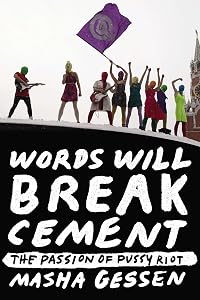
Masha Gessen is a Russian American journalist. She has written several books including The Man Without a Face: The Unlikely Rise of Vladimir Putin, Words Will Break Cement: The Passion of Pussy Riot, and The Brothers: The Road to an American Tragedy. The Future Is History: How Totalitarianism Reclaimed Russia won the National Book Award for show more Nonfiction in 2017. (Bowker Author Biography) show less
Awards and Honors
Common Knowledge
- Canonical title*
- Kasvoton mies: Vladimir Putinin nousu Venäjän valtiaaksi
- Original publication date
- 2012
- People/Characters
- Vladimir Putin
- First words
- (Prologue) I woke up because someone was shaking me.
Imagine you have a country and no one to run it. - Last words
- (Click to show. Warning: May contain spoilers.)And with this, the tranformation of Russia back into the USSR was, for all Putin's intents and purposes, complete.
(Click to show. Warning: May contain spoilers.)(Epilogue) By morning, the countryside will be covered in white. - Original language
- English
- Canonical DDC/MDS
- 947.0862092
- Canonical LCC
- DK510.766.P87
*Some information comes from Common Knowledge in other languages. Click "Edit" for more information.
Classifications
- Genres
- General Nonfiction, History, Nonfiction, Biography & Memoir, Politics and Government
- DDC/MDS
- 947.0862092 — History & geography History of Europe Eastern European Counties and Russia Russian & Slavic History by Period 1855- 1991-
- LCC
- DK510.766 .P87 — History of Europe, Asia, Africa and Oceania Russia. Soviet Union. Former Soviet Republics – Poland History of Russia. Soviet Union. Former Soviet Republics Local history and description Russia (Federation). Russian S.F.S.R.
- BISAC
Statistics
- Members
- 981
- Popularity
- 26,882
- Reviews
- 34
- Rating
- (3.85)
- Languages
- 13 — Danish, Dutch, English, Finnish, French, German, Hebrew, Italian, Norwegian (Bokmål), Polish, Portuguese, Spanish, Swedish
- Media
- Paper, Audiobook, Ebook
- ISBNs
- 43
- ASINs
- 9