On This Page
Description
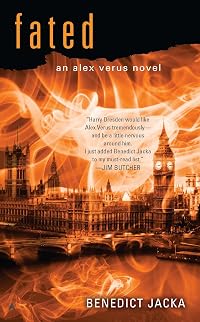
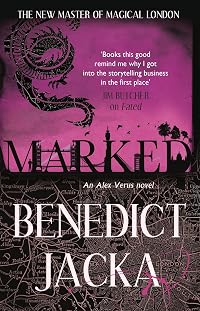
Alex Verus is part of a world hidden in plain sight, running a magic shop in London. And while Alex's own powers aren't as showy as some mages, he does have the advantage of foreseeing the possible future-allowing him to pull off operations that have a million-to-one-chance of success. But when Alex is approached by multiple factions to crack open a relic from a long-ago mage war, he knows that whatever's inside must be beyond powerful. And thanks to his abilities, Alex can predict that by show more taking the job, his odds of survival are about to go from slim to none . . . show lessTags
Recommendations


Member Reviews
Thanks to Halloween Bingo, I finally got around to listening to the audiobook of 'Fated', the first book in the Alex Verus series, which has been buried in my TBR pile for almost nine years. I read it because it was a perfect fit for the DARKEST LONDON square. I'll be reading 'Cursed', the next book in this fourteen-book series, because I'm interested in seeing what Alex Verus does next,
While it's true that Alex Verus is a sort of English version of Harry Dresden, what makes him interesting is that he's not just Dresden with a posh English accent. His attitudes and behaviours reminded me of people I've known who survived being sent to a Public School that was more a test of endurance than an education. He doesn't have Dresden's need to show more be a hero, quite the opposite. His upbringing as an apprentice to a Dark Mage has conditioned him to keep his head down, avoid confrontation with powerful magic wielders, eschew close personal attachments and distrust the motives of everyone he meets. He copes with his undying rage at the system he was raised in by keeping his emotions locked down and his humour dry. His self-imposed isolation has become so much of a habit that he no longer considers it a choice. Unlike Dresden, Verus isn't a heavy-hitter battle mage. Verus is a Diviner. His one talent is to see possible futures in enough detail to allow him to avoid the (many) futures in which he meets a violent end. That he has survived is a sign of how well he thinks things through and how devious he can be.
The magic system in 'Fated' is complicated and well thought through. Although Verus explains clearly and succinctly how his magic works, I did sometime feel as if I was sitting in on a series of 'A Novice's Guide To Magic Fundamentals' lectures. What stopped that from spoiling the book was that the content was interesting and each new 'lecture' helped me slide around a new twist in the plot.
The plot itself is pleasingly complicated. It's filled with threats, violence, betrayals and a driving need to solve a puzzle. It introduces all the main characters, sets up the central conflict (which turns out to be more complicated than it at first appears) and demonstrates how appalling their cultural norms are. I particularly enjoyed the heist-movie-with-magic feel of the last third of the book..
I recommend the audiobook version of 'Fated'. Gildart Jackson's narration fits the story perfectly: emotion held in check, steel in the voice whenever needed, a Modified Received Pronunciation accent that says powerful witout quite pushing over into arrogant and suggests sarcasm as its mother tongue. Click on the SoundCloud link below to hear a sample.
https://soundcloud.com/hachetteaudiouk/fated-by-benedict-jacka-the-first-alex-ve... show less
While it's true that Alex Verus is a sort of English version of Harry Dresden, what makes him interesting is that he's not just Dresden with a posh English accent. His attitudes and behaviours reminded me of people I've known who survived being sent to a Public School that was more a test of endurance than an education. He doesn't have Dresden's need to show more be a hero, quite the opposite. His upbringing as an apprentice to a Dark Mage has conditioned him to keep his head down, avoid confrontation with powerful magic wielders, eschew close personal attachments and distrust the motives of everyone he meets. He copes with his undying rage at the system he was raised in by keeping his emotions locked down and his humour dry. His self-imposed isolation has become so much of a habit that he no longer considers it a choice. Unlike Dresden, Verus isn't a heavy-hitter battle mage. Verus is a Diviner. His one talent is to see possible futures in enough detail to allow him to avoid the (many) futures in which he meets a violent end. That he has survived is a sign of how well he thinks things through and how devious he can be.
The magic system in 'Fated' is complicated and well thought through. Although Verus explains clearly and succinctly how his magic works, I did sometime feel as if I was sitting in on a series of 'A Novice's Guide To Magic Fundamentals' lectures. What stopped that from spoiling the book was that the content was interesting and each new 'lecture' helped me slide around a new twist in the plot.
The plot itself is pleasingly complicated. It's filled with threats, violence, betrayals and a driving need to solve a puzzle. It introduces all the main characters, sets up the central conflict (which turns out to be more complicated than it at first appears) and demonstrates how appalling their cultural norms are. I particularly enjoyed the heist-movie-with-magic feel of the last third of the book..
I recommend the audiobook version of 'Fated'. Gildart Jackson's narration fits the story perfectly: emotion held in check, steel in the voice whenever needed, a Modified Received Pronunciation accent that says powerful witout quite pushing over into arrogant and suggests sarcasm as its mother tongue. Click on the SoundCloud link below to hear a sample.
https://soundcloud.com/hachetteaudiouk/fated-by-benedict-jacka-the-first-alex-ve... show less
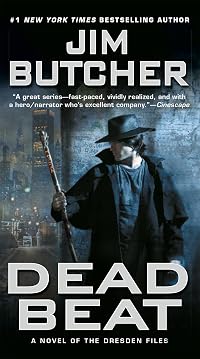
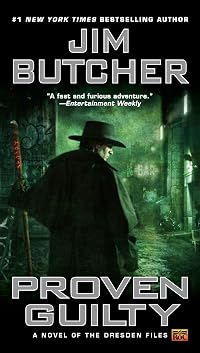
Doesn't live up to the high recommendations by Jim Butcher on both the front and back covers. Alex Verus has a background that's essentially a clone of Harry Dresden's, but as a character he's nowhere near as relatable and in fact has some distinctly off-putting traits (honestly, they slam Dresden for alleged sexism, but how condescending is it to call the main female protagonist a "good girl" not once, but several times?) The writing struck me as somewhat uneven, leaning too heavily towards infodumps and little lectures to the reader; these seem to show up every time Alex Verus needs to use a new and hitherto unmentioned ability. Setting aside that these abilities are thus presented like so many rabbits pulled out of a stage magician's show more hat, not all of them come off as intrinsically convincing: one of the things that I found hardest to swallow was that, in this world, using magic seems to come at no cost whatsoever. Alex Verus can look into the future and "path-walk" and all the rest of it seemingly at libitum, with no limitations on how long or how often he can use the skill, which leaves one wondering why he ever gets blindsided by the bad guys for long enough to make for a halfway engrossing plot. (In contrast, magic as conceived by Jim Butcher burns up the user's energy and anything a wizard sees by means of the Sight stays with him forever, regardless of how horrible it is, so magic powers don't turn their wielder into an invincible superhero.)
There are other things in the plot that don't stack up for me, like the way Alex insists that Luna has to go into hiding, only to turn around and take her along to the ball that same evening right under the noses of the people she's supposed to be hiding from. Like the way the air elemental that serves as his supernatural means of transport has an attention span so short she forgets who Luna is within two seconds of being introduced to her, but never seems to forget where she's supposed to be taking him. Like the way the curse on Luna brings terrible harm to anyone who gets within arm's reach of her; since this is an hereditary curse, how on earth do its victims manage to raise children to pass it on to? Like the way Alex repeatedly notes that diviners are the weakest of all the mages... only to outsmart his more powerful opponents with such insufferable smugness.
Which brings me back to the issue of relatability. By the end of chapter 9 I found myself not caring enough about either Alex or any of the other characters to want to know what happens to them, so I gave up on the book. show less
There are other things in the plot that don't stack up for me, like the way Alex insists that Luna has to go into hiding, only to turn around and take her along to the ball that same evening right under the noses of the people she's supposed to be hiding from. Like the way the air elemental that serves as his supernatural means of transport has an attention span so short she forgets who Luna is within two seconds of being introduced to her, but never seems to forget where she's supposed to be taking him. Like the way the curse on Luna brings terrible harm to anyone who gets within arm's reach of her; since this is an hereditary curse, how on earth do its victims manage to raise children to pass it on to? Like the way Alex repeatedly notes that diviners are the weakest of all the mages... only to outsmart his more powerful opponents with such insufferable smugness.
Which brings me back to the issue of relatability. By the end of chapter 9 I found myself not caring enough about either Alex or any of the other characters to want to know what happens to them, so I gave up on the book. show less
Meet Alex Verus. He owns and runs a magic shop in London. Nope, not the kind that sells cards and fake crystal balls - the real deal.
Benedict Jacka's first novel introduces us to yet another magical version of London - with the normals not seeing the magical world (as usual) and the magical world on the brink of a war (again). Alex is a diviner - he can see the future - which turns out to be more flexible than one expects and his gifts allows him to judge probabilities and basically know what is going to happen - when he pays attention anyway. Unfortunately he is like most diviners - he does not pay attention and he is curious. Which is apparently why there aren't that many of them left.
Diviners are considered the lightweights of the show more magical world - in a world where matter can be manipulated, it seems like seeing the future is not really that interesting. Until one starts thinking about it.
When the novel opens, Alex is being recruited from both factions of wizards out there -- both the light and the dark side needs him for something. Which does not happen often - he had escaped from the dark side and the light one does not like him much. And still, the offer is there. And it seems like this time, they also need his friend Luna - the girl who was cursed to never have anything bad happen to her. In case you wonder how that can be a curse, there is one think you need to know about that universe - bad things and bad luck are like matter, they do not disappear. So if her curse makes sure she is safe, it also makes sure noone around her is... in the worst possible way.
The job everyone seems to be after is an old artifact - a very old and powerful one. And everyone is off - a few dark mages, a few betrayals, Arachne, elementals (some on the good side, some on the bad) and a lot of chasing and running and not very bright decision on all sides lead everyone to a showdown that almost takes out our hero.
If that sounds very close to Dresden, then you are on the right path - this is the inspiration - it is just across the pond. But it is not a carbon copy - Alex is different enough to make a difference and the world is actually interesting on its own. I think I am going to stick with this series for now and see what happens next. show less
Benedict Jacka's first novel introduces us to yet another magical version of London - with the normals not seeing the magical world (as usual) and the magical world on the brink of a war (again). Alex is a diviner - he can see the future - which turns out to be more flexible than one expects and his gifts allows him to judge probabilities and basically know what is going to happen - when he pays attention anyway. Unfortunately he is like most diviners - he does not pay attention and he is curious. Which is apparently why there aren't that many of them left.
Diviners are considered the lightweights of the show more magical world - in a world where matter can be manipulated, it seems like seeing the future is not really that interesting. Until one starts thinking about it.
When the novel opens, Alex is being recruited from both factions of wizards out there -- both the light and the dark side needs him for something. Which does not happen often - he had escaped from the dark side and the light one does not like him much. And still, the offer is there. And it seems like this time, they also need his friend Luna - the girl who was cursed to never have anything bad happen to her. In case you wonder how that can be a curse, there is one think you need to know about that universe - bad things and bad luck are like matter, they do not disappear. So if her curse makes sure she is safe, it also makes sure noone around her is... in the worst possible way.
The job everyone seems to be after is an old artifact - a very old and powerful one. And everyone is off - a few dark mages, a few betrayals, Arachne, elementals (some on the good side, some on the bad) and a lot of chasing and running and not very bright decision on all sides lead everyone to a showdown that almost takes out our hero.
If that sounds very close to Dresden, then you are on the right path - this is the inspiration - it is just across the pond. But it is not a carbon copy - Alex is different enough to make a difference and the world is actually interesting on its own. I think I am going to stick with this series for now and see what happens next. show less
Instant favourite. Harry Dresden set in London, owner of a curio shop rather than a PI, and a hat-tip to dresden in the early paragraphs. Very glad to know there's 12 novels in the series to seek out. I've always enjoyed clever heroes who can think their way out of problem rather than by using brute force. There's a nice balance of power levels too which sometimes gets away from being believable in UF. I hope the author manages to maintain this through the series as Alex develops.
Alex Verus is a diviner - a mage who can sense the manifold consequences of an action, and through hard work and perseverance control this to see a limited amount of useful futures. And he's not affiliated to either the Council of Light mages, or the show more individual 'Dark' mages who seek power for themselves. Both sides see him as a rogue, but there are few other diviners around. When a friend brings him an unusual magical artefact Alex can already tell there's trouble ahead. He's quickly pursued by both the Light and the Dark 'asking' more or less politely for his help. Another very powerful historical statue has been found but it's guarded by a lightning elemental, and neither side knows how to access it.
The world building is good, and seems thought through, there remain limits on what magic can do - destructive potential is huge, but consequences are very possible. A Diviner can't know what choice as yet to be made, but can find things that influence that decision. Mages only seem to have access to a limited branch of magic, something to check in future books, there seem to be a few basics, but even there are variability. Not much indication of why some individuals have access and others don't but it's rare, and everyone is aware of the weight of numbers ordinary people can bring to bear. Many creatures from legend still abound, and it will be interesting to see which further ones Alex meets, and how relevant the current connections remain. I dislike Jim Butcher's habit of phasing out people we've engaged with after a few stories.
Just well constructed fun, good characters, great world, clever plot everything I could want to read. Hope the rest are as good. show less
Alex Verus is a diviner - a mage who can sense the manifold consequences of an action, and through hard work and perseverance control this to see a limited amount of useful futures. And he's not affiliated to either the Council of Light mages, or the show more individual 'Dark' mages who seek power for themselves. Both sides see him as a rogue, but there are few other diviners around. When a friend brings him an unusual magical artefact Alex can already tell there's trouble ahead. He's quickly pursued by both the Light and the Dark 'asking' more or less politely for his help. Another very powerful historical statue has been found but it's guarded by a lightning elemental, and neither side knows how to access it.
The world building is good, and seems thought through, there remain limits on what magic can do - destructive potential is huge, but consequences are very possible. A Diviner can't know what choice as yet to be made, but can find things that influence that decision. Mages only seem to have access to a limited branch of magic, something to check in future books, there seem to be a few basics, but even there are variability. Not much indication of why some individuals have access and others don't but it's rare, and everyone is aware of the weight of numbers ordinary people can bring to bear. Many creatures from legend still abound, and it will be interesting to see which further ones Alex meets, and how relevant the current connections remain. I dislike Jim Butcher's habit of phasing out people we've engaged with after a few stories.
Just well constructed fun, good characters, great world, clever plot everything I could want to read. Hope the rest are as good. show less
So I was just falling off the wagon and wetting my whistle with a bit of Urban Fantasy that was recommended to me recently, and I can honestly say that I got really drunk. (Not alcohol, alas, but on magic.)
I'd just been sifting through all the wonders of the Spacing Guild from Dune and the minor predictive powers of the Jedi recently, so imagine my surprise when I get to read about a Dresden-ish mage in London who can augur himself through all the twisty paths of time to answer important questions like, "Who's going to be killing me in the next fifteen seconds, and how can I get out of this damn mess?", or "This is a pretty nasty puzzle placed before me. If I can walk all the paths and figure out how to solve it without becoming a show more crispy critter, then go, me!"
I admit I laughed loud when Mr. Jacka gave an explicit literary nod to a certain mage in Chicago. It warmed my cockles. And it also set the tone for the mind-candy treat that I was about to gobble up.
The trick with these kinds of books is how to balance powerful magic against natural limitations and/or outside mitigations while keeping in the reader enthralled with a good tale, and he did it. The plot put this poor neutral mage into the leading roll of a ping-pong ball between the white mages and the black mages of London, all of whom want him because of his powers of Divination and the fact that he was the only Diviner stupid enough to have not headed for the hills when the storm began to rise.
Fun! Exciting! We've even got a bit of a love interest beginning to brew, and I think I like her problems a lot more than Alex's! Oh wait... this isn't her tale. But I'm guessing she's going to get a lot more screen time with a second book named Cursed. Goodie!
I have no complaints about this novel. It's light and fun and there's lots of action and even a bit of snark. Sound like UF? Wait! It's Good Urban Fantasy! I've only read one book so far, but it's shaping up to be as good as the best stuff of that little mage in Chicago. We'll see! I've got high hopes. show less
I'd just been sifting through all the wonders of the Spacing Guild from Dune and the minor predictive powers of the Jedi recently, so imagine my surprise when I get to read about a Dresden-ish mage in London who can augur himself through all the twisty paths of time to answer important questions like, "Who's going to be killing me in the next fifteen seconds, and how can I get out of this damn mess?", or "This is a pretty nasty puzzle placed before me. If I can walk all the paths and figure out how to solve it without becoming a show more crispy critter, then go, me!"
I admit I laughed loud when Mr. Jacka gave an explicit literary nod to a certain mage in Chicago. It warmed my cockles. And it also set the tone for the mind-candy treat that I was about to gobble up.
The trick with these kinds of books is how to balance powerful magic against natural limitations and/or outside mitigations while keeping in the reader enthralled with a good tale, and he did it. The plot put this poor neutral mage into the leading roll of a ping-pong ball between the white mages and the black mages of London, all of whom want him because of his powers of Divination and the fact that he was the only Diviner stupid enough to have not headed for the hills when the storm began to rise.
Fun! Exciting! We've even got a bit of a love interest beginning to brew, and I think I like her problems a lot more than Alex's! Oh wait... this isn't her tale. But I'm guessing she's going to get a lot more screen time with a second book named Cursed. Goodie!
I have no complaints about this novel. It's light and fun and there's lots of action and even a bit of snark. Sound like UF? Wait! It's Good Urban Fantasy! I've only read one book so far, but it's shaping up to be as good as the best stuff of that little mage in Chicago. We'll see! I've got high hopes. show less
This is a Very Good Story. I would give it another half-star if I could on here. (I can on the StoryGraph beta.) I stayed interested all the way through this fairly long novel. When I brought it up again in amazon, (I got it from my library), I was startled to see there are many more novels in this series. Be reassured that this one ends really well. I'm intrigued and may continue on, but I don't need to immediately. That's nice. I appreciate that.
I really enjoyed all of the characters, a lot. I can see potential for future books, without any of it being overt.
I was annoyed reading a scene early on (first conversation with Lyle) in which a phrase is repeated three times in four or five pages, something an editor should've flagged. I show more was afraid there'd be more things like this, but there weren't, so that's good. But the author does have a habit I find irritating: a side character says something, MC has an internal reaction, then the side character continues in the same paragraph with MC's reaction. But the reaction was about the previous thing said. Most people won't notice, but it throws me off, so if you're like me, there's your heads-up.
But seriously, if the blurb intrigues you, give this one a try. show less
I really enjoyed all of the characters, a lot. I can see potential for future books, without any of it being overt.
I was annoyed reading a scene early on (first conversation with Lyle) in which a phrase is repeated three times in four or five pages, something an editor should've flagged. I show more was afraid there'd be more things like this, but there weren't, so that's good. But the author does have a habit I find irritating: a side character says something, MC has an internal reaction, then the side character continues in the same paragraph with MC's reaction. But the reaction was about the previous thing said. Most people won't notice, but it throws me off, so if you're like me, there's your heads-up.
But seriously, if the blurb intrigues you, give this one a try. show less
Feels like Jacka was not taking any risks and staying somewhat superficial with the storyline. Except for the uncomfortable master mage and apprentice-slave scenario that runs through the entire novel. Clearly, the main character has some form of PTSD after having been involved in such a scenario. Alex Verus mentions it in the sort of way people mention things when they do not want to seem like they want to talk about a thing, but they really, really do.
Overall, though, this novel is a decent read. Its not above average because it feels like a lot of the elements needed to be solidified and tidied up. The Council, for example: we are left with all sorts of impressions of it.
Overall, though, this novel is a decent read. Its not above average because it feels like a lot of the elements needed to be solidified and tidied up. The Council, for example: we are left with all sorts of impressions of it.
Members
- Recently Added By
Lists

Best Urban Fantasy
632 works; 78 members

The Best Vampires, Werebeasts, Witches Books
192 works; 12 members

London Urban Fantasy
33 works; 6 members

Books Read in 2023
5,547 works; 145 members

Best Antagonist Role in Urban Fantasy
214 works; 1 member

Best BRUTAL of Urban Fantasy
244 works; 1 member

Books Read in 2018
4,360 works; 110 members

Books Read in 2020
4,379 works; 124 members
Author Information

24+ Works 7,510 Members
Benedict Jacka is a British author who was born in England in 1980. He earned his bachelors degree in philosophy at Cambridge University. He started writing soon after graduation and authored three children's fantasy novels which were not published. His first published work was a children's non-fantasy novel called "To be a Ninja" later changed to show more "Ninja: The Beginnng". In 2000 he developed a fantasy setting for which he wrote four books, whose main characters were teenage elementals. These book also went unpublished. In 2009, he decided to try again with an adult character with a more information-based ability. Three years later, in 2012, he published the first book of the Alex Verus Series, with two more to follow that year. In December 2013, an audio version of Fated was released in the US, the next three books followed. (Bowker Author Biography) show less
Some Editions
Series

Work Relationships
Common Knowledge
- Canonical title
- Fated
- Original title
- Fated
- Alternate titles
- Fated: Alex Verus, Book 1
- Original publication date
- 2012-02-28
- People/Characters
- Alex Verus; Luna Mancuso; Lyle Trahelis; David Sonder; Deleo; Cinder (show all 22); Khazad; Morden; Onyx; Talisid; Vaal Levistus; Arachne; Griff Blackstone; Thirteen; Lisa; Selene; Shireen; Tobruk; Starbreeze; Abithriax; Councillor Travis; Helikaon
- Important places
- Camden Town, London, England, UK; British Museum, London, England, UK; Wales, UK
- First words
- It was a slow day, so I was reading a book at my desk and seeing into the future.
- Quotations
- I’ve even heard of one guy in Chicago who advertises in the phone book under ‘Wizard’, though that’s probably an urban legend.
What you know can hurt you, but what you don’t know can hurt you a lot worse.
If there’s one thing all diviners share, it’s curiosity. We really can’t help it; it’s just part of who we are. If you dug out a tunnel somewhere in the wilderness a thousand miles from anywhere and hung a sign on it ... (show all)saying, ‘Warning, this leads to the Temple of Horrendous Doom. Do not enter, ever. No, not even then’, you’d get back from lunch to find a diviner already inside and two more about to go in.
Come to think about it, that might explain why there are so few of us. - Last words
- (Click to show. Warning: May contain spoilers.)But in my little corner of the city, things aren't so bad. So if there's something you need help with, drop by the Arcana Emporium. It's easy enough to find if you try. You probably won't take it seriously at first, but that's okay.
Seeing is believing, after all. - Blurbers
- Butcher, Jim
- Original language
- English
Classifications
Statistics
- Members
- 1,633
- Popularity
- 13,816
- Reviews
- 85
- Rating
- (3.65)
- Languages
- Czech, English, French, German
- Media
- Paper, Audiobook, Ebook
- ISBNs
- 13
- ASINs
- 13