On This Page
Description
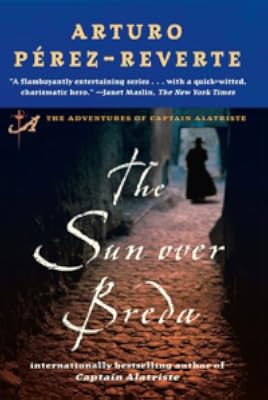
The third swashbuckling adventure in the internationally acclaimed Captain Alatriste series. Fifteen-year-old Iñigo Balboa enlists to serve as his master's aide, and narrates their further adventures of swordplay and skirmishes, mutiny and wartime honor, as Captain Alatriste rejoins his Cartagena regiment to take part in the battles and siege of Breda. In Spain, Alatriste's nemesis, Luis de Alquézar, grows more powerful, as Iñigo's mysterious friend Angélica hints at some plans upon his show more return. Once again the exploits of the seventeenth-century mercenary will thrill and delight the legions of readers eager to cheer a hero for the ages. show lessTags
Recommendations




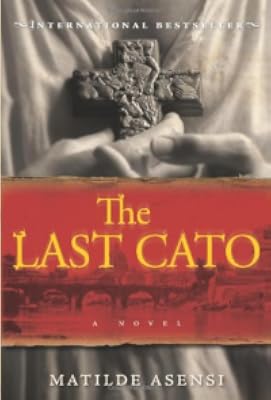
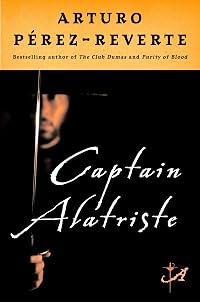



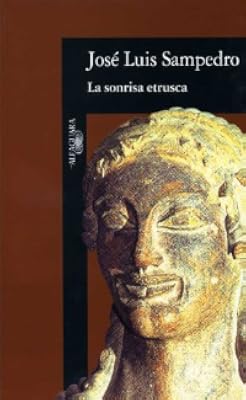


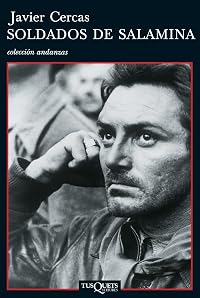






















Member Recommendations

leosabana Es una muy buena novela seudo-policíaca en la que se hace un retrato costumbrista de la sociedad sevillana actual.
Member Reviews
The black sheep of the Alatriste novels, The Sun Over Breda sees author Arturo Pérez-Reverte abandon his usual Dumas-lite adventure tendencies in favour of a rather pedestrian war story. Captain Alatriste and our narrator Íñigo are bogged down in the mud of the siege of Breda, in a war against the Dutch, and unfortunately the narrative is bogged down too. There's no adventure developing, no plot, just a succession of (occasionally interesting) battle scenes.
It's well-written (there's a good scene in the aftermath of the main battle, as the young and introspective Íñigo explores his after-battle emotions) and as a war tale/historical novel it's sort of good. The problem is it's not so good you can recommend it on that basis alone, show more and it falls far short of slaking the adventure thirst that readers of the series will be expecting. Captain Alatriste himself is a peripheral figure in the story, but no one else steps up to fill his shoes. show less
It's well-written (there's a good scene in the aftermath of the main battle, as the young and introspective Íñigo explores his after-battle emotions) and as a war tale/historical novel it's sort of good. The problem is it's not so good you can recommend it on that basis alone, show more and it falls far short of slaking the adventure thirst that readers of the series will be expecting. Captain Alatriste himself is a peripheral figure in the story, but no one else steps up to fill his shoes. show less
The historian in me absolutely loved this. If the greatest strength of the first Alatriste novel was how vividly it brought early 17th century Madrid to life, here Perez-Reverte really brings to life the war in the low countries. I suppose one might feel that the novel is more a series of vignettes than a fully structured story, but I thought that it succeeded wonderfully in capturing a certain period in the lives of the two main characters. The descriptions of the siege, the trench warfare and life in the tercios of Imperial Spain are brilliantly conceived and executed and to my mind as vivid as any classic war novel. The development of the relationship between Alatriste and his ward, Inigo is also well done. I also liked the departure show more from the swashbuckling adventure of the previous books and the exquisite dissection of the horrors of war. show less
Captain Diego Alatriste is in the miserable damp fog of the Netherlands fighting the "Hollanders" and trying to break the siege of Breda. This book, like the other Alatriste novels, is narrated by his Basque mochilero/sidekick Iñigo Balboa. Iñigo is starting to feel like more of a man as he tastes his first real combat. This book is more about honor and battle glory etc. than the other two, which were more about personal exploits. As usual, the somewhat heavy-handed writing style of Pérez-Reverte only adds to the atmosphere, charm, and derring-do of the book. One example of this is the opening paragraph, "...The canals of these Dutch are damp on autumn mornings. Somewhere above the curtain of fog that veiled the dike, a blurred sun show more shone palely on the silhouettes moving along the road in the direction of the city.....That sun was a cold, Calvinist, invisible star unworthy of the name, its dirty gray light falling on...." Other turns of phrase that I appreciated were "you would have thought the devil was vomiting heretics" to describe advancing soldiers coming out of nowhere and Alatriste's taunt "You would never want people to call you the baby butcher." Another favorite descriptive passage in the book is this image of Alatriste himself, "Diego Alatriste seemed to be somewhere fay beyond all that. He had thrown off his hsat, and tangled, dirty hair fell over his forehead and ears. His legs were planted firmly apart as if nailed to hte ground, and all his energy and wrath were concentrated in his eyes, which gleamed red and dangerous in his smoke-blackened face." show less
I've heard good things about Pérez-Reverte, but this was a bit of a disappointment. The English translation is dreadful - no translator is listed in the colophon, so presumably it was done by a committee, some of them taking Donald Rumsfeld as their model of English prose style ("...this soldier has gifted us with his opinion"), and others the late Edward Bulwer-Lytton. The sentences are long and winding, the parentheses endless, the grammar eccentric, and the vocabulary as full of bogus archaisms as any Victorian historical novel. There are a few extra special ways in which the perpetrators manage to torture the reader, like the odd idea of translating the formal Usted literally as "Your Mercy", rather than the much more natural "you" show more or the conventional English form "your grace". Surely only a theologian would quibble about the difference between grace and mercy in this context? Then there are the horribly flat translations of the many bits of poetry interspersed in the text. Ugh.
I'm prepared to accept that Pérez-Reverte may be a good and interesting historical novelist, and worth reading in Spanish: there is a lot in his descriptions of the everyday life of seventeenth century infantrymen, and in the battle sequences, that leads me to think that he knows what he is talking about both historically and psychologically - presumably his background as a war correspondent comes into play here. But I'm certainly not going to attempt to read any more of his books in English. I wonder what the French translations are like? show less
I'm prepared to accept that Pérez-Reverte may be a good and interesting historical novelist, and worth reading in Spanish: there is a lot in his descriptions of the everyday life of seventeenth century infantrymen, and in the battle sequences, that leads me to think that he knows what he is talking about both historically and psychologically - presumably his background as a war correspondent comes into play here. But I'm certainly not going to attempt to read any more of his books in English. I wonder what the French translations are like? show less
The third in Arturo Perez-Reverte's Captain Alatriste series, The Sun Over Breda picks up where Purity of Blood leaves off. We find our trusty narrator (Inigo Balboa) and Captain Alatriste in the trenches of Holland, fighting for Spain against the independence-seeking Dutch and their English allies. Perez-Reverte's incomparably lyrical prose is on full display here as always, but like the other books in this series, this one underwhelms.
There is more action in this one than the first two, including some detailed battle scenes, but there is also more than enough slow, almost ponderous exposition on camp life and culture, reminiscences of adventures past (I don't recommend dipping into this series in the middle) and clues foreshadowing show more things to come.
As I said about the last book, I'll keep reading these, but I'll keep hoping they progress into something more than the first three books have offered.
http://philobiblos.blogspot.com/2008/07/book-review-sun-over-breda.html show less
There is more action in this one than the first two, including some detailed battle scenes, but there is also more than enough slow, almost ponderous exposition on camp life and culture, reminiscences of adventures past (I don't recommend dipping into this series in the middle) and clues foreshadowing show more things to come.
As I said about the last book, I'll keep reading these, but I'll keep hoping they progress into something more than the first three books have offered.
http://philobiblos.blogspot.com/2008/07/book-review-sun-over-breda.html show less
Beforehand I was not convinced about the idea of this book being a war story rather than an adventure swashbuckling story. However I am a convert now. I complained in my review of the previous book that Reverte did not completely get into the story, that he was perhaps a bit too interested in the didactic part of these books to truly do the story justice. That problem does not exist here. Reverte gets into the story all right and as a result the pace is better, without losing the distinctive style of the series.
The only problem is that the ending is a bit rushed, almost anticlimatic, but the novel remains very enjoyable.
The only problem is that the ending is a bit rushed, almost anticlimatic, but the novel remains very enjoyable.
The third installment in the Captain Alatriste series. This time the action has moved to the Spanish Netherlands and the famous seige of Breda.
A much darker book, it focuses more on the realities of soldiering. Alatriste, Íñigo, et al, are fighting for the Spanish crown in terrible conditions. Having not been paid, the army is on the brink of mutiny. They are fighting far from home and, it seems, all but forgotten by their superiors in Spain. Alatriste continues to try to protect Íñigo, but without avoiding to show the harsh truths of war - it is us or them.
This differs from the previous two books as it is more of a description of the seige, there is no intrigue as with the previous books. This makes it more stand alone, and while show more less attractive for those expecting a continuation, I felt that it was informative but still a cracking read. show less
A much darker book, it focuses more on the realities of soldiering. Alatriste, Íñigo, et al, are fighting for the Spanish crown in terrible conditions. Having not been paid, the army is on the brink of mutiny. They are fighting far from home and, it seems, all but forgotten by their superiors in Spain. Alatriste continues to try to protect Íñigo, but without avoiding to show the harsh truths of war - it is us or them.
This differs from the previous two books as it is more of a description of the seige, there is no intrigue as with the previous books. This makes it more stand alone, and while show more less attractive for those expecting a continuation, I felt that it was informative but still a cracking read. show less
Members
- Recently Added By
Author Information

75+ Works 37,913 Members
Novelist and former journalist Arturo Pérez-Reverte Gutiérrez was born in Cartagena, Spain on November 25, 1951. He started his journalistic career writing for the Spanish newspaper Pueblo and later for Television Espanola - the Spanish state owned television, in the role of war correspondant. He worked as a war correspondent from 1973 to1994 show more before becoming a full-time writer. His first novel, El húsar, which was set in the Napoleonic Wars, was published in 1986, and he is well-known internationally for his popular Captain Alatriste fiction series, which takes place in 17th-century Europe. Pérez-Reverte has been elected to the Spanish Royal Academy. (Bowker Author Biography) show less
Awards and Honors
Distinctions
Series

Work Relationships
Common Knowledge
- Canonical title
- The Sun Over Breda
- Original title
- El sol de Breda
- Original publication date
- 1998
- People/Characters
- Diego Alatriste y Tenorio; Iñigo Balboa
- Dedication
- For Jean Schalekamp, damned heretic, translator, and friend
- First words
- 'Pon my oath, the canals of these Dutch are damp on autumn mornings.
- Last words
- (Click to show. Warning: May contain spoilers.)And nine years later, in Madrid, standing before Diego Velazquez's panorama, it seemed that I could again hear the drum and that I was watching, amid the forts and smoking trenches in the distance, near Breda, the slow advance of the old, implacable squads, the pikes and standards of what was the last and best infantry in the world: despised, cruel, arrogant Spaniards disciplined only when under fire, who suffered everything in any assault but would allow no man to raise his voice to them.
- Original language
- Spanish
Classifications
- Genres
- Fiction and Literature, General Fiction, Historical Fiction
- DDC/MDS
- 863.64 — Literature & rhetoric Spanish Literature Spanish fiction 20th Century 1945-2000
- LCC
- PQ6666 .E765 .S65 — Language and Literature French, Italian, Spanish and Portuguese literatures Spanish literature Individual authors, 1961-2000
- BISAC
Statistics
- Members
- 1,304
- Popularity
- 18,627
- Reviews
- 45
- Rating
- (3.51)
- Languages
- 12 — Danish, Dutch, English, Finnish, French, Greek, Italian, Polish, Portuguese, Romanian, Spanish, Swedish
- Media
- Paper, Audiobook, Ebook
- ISBNs
- 52
- ASINs
- 12