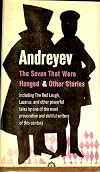
The Seven That Were Hanged and Other Stories
by Leonid Andreyev
On This Page
Tags
Recommendations
















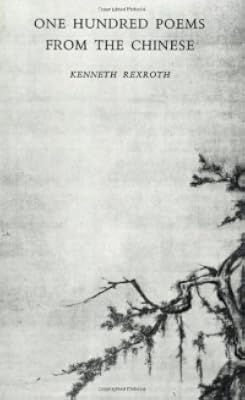

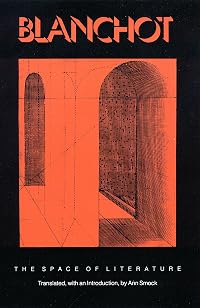


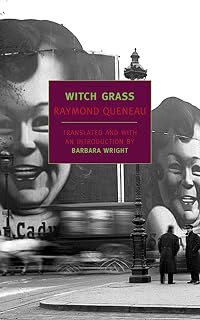

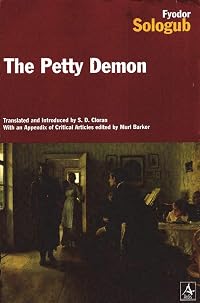
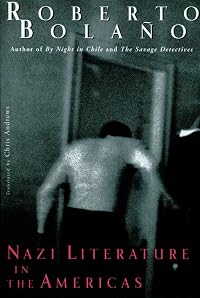
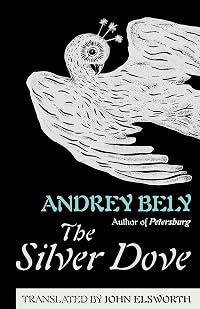

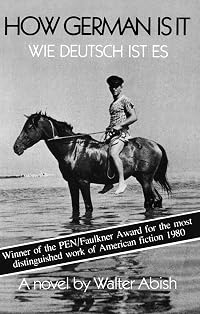
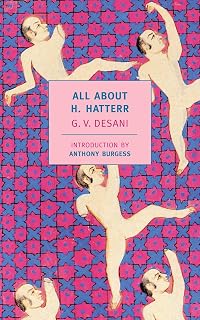

Member Recommendations
susanbooks Lagerkvist & Andreyev each give intriguing versions of the Lazarus story.
Member Reviews
Collection of nine short stories of Leonid Andreyev (1891 - 1919) written c. 1904 - 1913 depicting the fear, madness, bewilderment and desolation of the Russian soul at the end of Tsar Nicholas II's reign and the beginning of the Bolshevik regime. The Seven That Were Hanged is the most famous story ('To die is not so terrible; the terrible thing is to know that one is going to die. It would be quite impossible for a man to live if he knew the hour and day of his death with absolute certainty.'), decrying capital punishment in a society where “people and life had transformed theselves for him into an unspeakably frightful world filled with mechanical dolls.”
The Abyss peels back layers of socially constructed high-mindedness in the show more male protagonist to reveal individual's capabilty for debasement. Beautiful prose depicting weather in inspired detail sets off sordid acts. The Lie examines one of author's fears, infinity: 'never did I understand so profoundly and terribly the meaning of infinity, norever realized it with such force. I felt in fear and pain that my very life was passing out in a slender ray...until I became a stranger to myself--desolated, speechless, almost dead.' Also: 'what madness it is--to be man and to seek the truth! What pain!' In Laughter, society's pain: 'Don't you feel that there's a living, suffering face behind my rediculous mask'.
Last story, The Red Laugh, also more famous, early account re war's reality: the first line reads 'Horror and madness.' Preceeded 'All Quiet On The Western Front' in depicting immediate horror and longterm madness of war. 'All were silent, as if an army of dumb people were moving, and when anyone fell down, he fell in silence;...as though these bumb men were also blind and deaf. I sutmbled and fell several times and then involuntarily opened my eyes, and all that I saw seemed a wild fiction, the terrible raving of a mad world.' Red laugh possibly = Bolshevik asendence. 'Something occured, something darkened our vision, and two regiments, belonging to the same army, facing each other at a distance of one verst, had been destroying each other for a whole hour in the full conviction that iw was the enemy they had before them' = White vs Red Armies? Foresaw Iron Curtain: 'A time will come when nobody will be able to go away from here.' show less
The Abyss peels back layers of socially constructed high-mindedness in the show more male protagonist to reveal individual's capabilty for debasement. Beautiful prose depicting weather in inspired detail sets off sordid acts. The Lie examines one of author's fears, infinity: 'never did I understand so profoundly and terribly the meaning of infinity, norever realized it with such force. I felt in fear and pain that my very life was passing out in a slender ray...until I became a stranger to myself--desolated, speechless, almost dead.' Also: 'what madness it is--to be man and to seek the truth! What pain!' In Laughter, society's pain: 'Don't you feel that there's a living, suffering face behind my rediculous mask'.
Last story, The Red Laugh, also more famous, early account re war's reality: the first line reads 'Horror and madness.' Preceeded 'All Quiet On The Western Front' in depicting immediate horror and longterm madness of war. 'All were silent, as if an army of dumb people were moving, and when anyone fell down, he fell in silence;...as though these bumb men were also blind and deaf. I sutmbled and fell several times and then involuntarily opened my eyes, and all that I saw seemed a wild fiction, the terrible raving of a mad world.' Red laugh possibly = Bolshevik asendence. 'Something occured, something darkened our vision, and two regiments, belonging to the same army, facing each other at a distance of one verst, had been destroying each other for a whole hour in the full conviction that iw was the enemy they had before them' = White vs Red Armies? Foresaw Iron Curtain: 'A time will come when nobody will be able to go away from here.' show less
A fantastic bunch of stories, but the final one, "The Red Laugh," is mind-blowing (or at least the second half of it is). An excellent way to end the book. "Lazarus" and "Ben Tobit" were two of my other favorites from the collection.
Ratings
Members
- Recently Added By
Author Information

202+ Works 1,496 Members
Leonid Andreyev became one of the most popular writers of the first decade of the twentieth century because of his ability to combine modernist and realist techniques and his willingness to break taboos of theme. His subjects included topics, such as venereal disease, and various abnormalities. His works caused a scandal but won their author a show more wide following. In the aftermath of 1905, Andreyev dealt with the defeated revolutionaries' moral and psychological dilemmas and with the intelligentsia as a whole, while in The Tale of the Seven Who Were Hanged (1909), he produced a stunning condemnation of the death penalty. Andreyev had a talent for depicting the dark, irrational forces in life within existential dilemmas. However, his pessimism and mysticism are sometimes undercut by a blatant tugging on the heartstrings and a lack of personal engagement and authenticity. Andreyev died in 1919. (Bowker Author Biography) show less
Work Relationships
Common Knowledge
- Canonical title
- The Seven That Were Hanged and Other Stories
- Original publication date
- 1908: The Seven That Were Hanged; 1900-1906: Other Stories
Classifications
Statistics
- Members
- 41
- Popularity
- 717,759
- Reviews
- 2
- Rating
- (3.50)
- Languages
- English, French
- Media
- Paper, Ebook
- ASINs
- 4