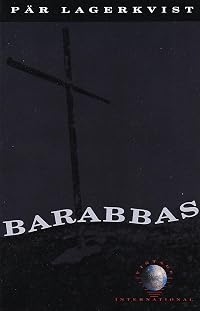
Barabbas
by Pär Lagerkvist
On This Page
Description
Swift, sparing, limpid, and hauntingly intense.Tags
Recommendations




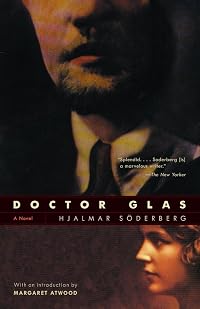
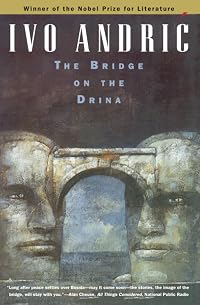

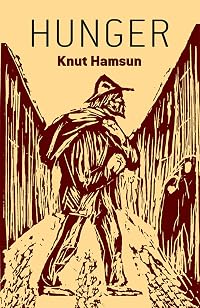






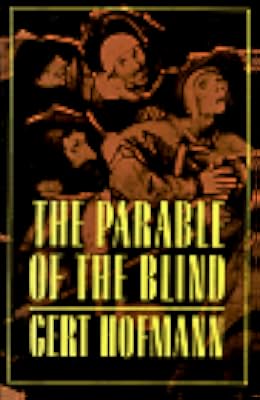
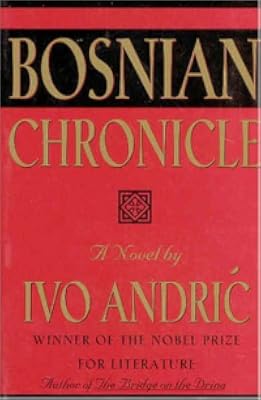

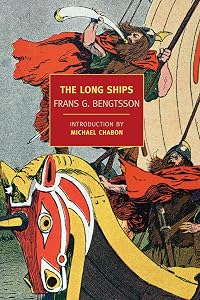
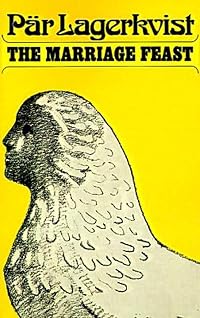





Member Recommendations
by askthedust

susanbooks Lagerkvist & Andreyev each give intriguing versions of the Lazarus story.
CGlanovsky Both books attempt address the life and death of Jesus from an objective perspective, showing how it might have been viewed by contemporaries not predisposed to believe the full religious account
Member Reviews
The main focus of Barabbas is of course Barabbas himself, but ever since I put the book down over a month ago, I haven't stopped thinking about one particular side character, a small girl with a cleft lip.
Despite being a genuine, good-hearted person, the girl with the cleft lip was kicked out of her house by her mother at a very young age for being "cursed." She lived the rest of her life on the streets of Jerusalem. At one point she entered into a very one-sided relationship with Barabbas, who frequently took advantage of her desperate desire to be told by someone, anyone, just once, that they loved her, even if they didn't mean it. She once encountered Jesus, who she firmly believed could heal her.
That was no easy task. After Jesus' death, the girl with the cleft lip attempted to speak at a gathering of a group of disciples, but because she was a little nervous and hard to understand, she made the men uncomfortable and they ignored her. She tried instead to preach to those who had been rejected by society in the same way she had. She spoke to lepers and cripples about the healing power of Christ, and how they, too, would be allowed to enter the house of the Lord. She was overheard by a local blind man, who reported her to the Sanhedrin. She was condemned to death, and she was stoned. Her last words were, "Lord, how can I witness for thee? Forgive me. forgive..."
I don't have a good answer for how to consider such a life. A life filled with unimaginable suffering, and at the end she was still convinced that she had done wrong, or hadn't done enough. Despite spending my entire life within the Church, I couldn't help but read her last words and think that, rather than asking the Lord for forgiveness, it should be the other way around. Jesus should be on his knees, begging to be forgiven for all the torment he put her through. And if that's my reaction, then what could we possibly expect from Barabbas?
This is a man who watched Jesus die on the cross for his sins, in a more direct way than any of the rest of us can claim. At the same time, he saw the purest human being he knew suffer the same fate, all because she believed in Jesus. How does a man in that position come to terms with it all?
Lagerkvist explores this question brilliantly. I won't say any more about it, but I'll be reading this book every Lenten season for the rest of my life. show less
Despite being a genuine, good-hearted person, the girl with the cleft lip was kicked out of her house by her mother at a very young age for being "cursed." She lived the rest of her life on the streets of Jerusalem. At one point she entered into a very one-sided relationship with Barabbas, who frequently took advantage of her desperate desire to be told by someone, anyone, just once, that they loved her, even if they didn't mean it. She once encountered Jesus, who she firmly believed could heal her.
"She might well have asked him toshow more
cure her of her deformity, but she didn't want to. It would have been easy for him to do so, but she didn't want to ask him. He helped those who really needed help; his were the very great deeds. She would not trouble him with so little."Jesus then approached her and said to her, "You shall bear witness for me."
That was no easy task. After Jesus' death, the girl with the cleft lip attempted to speak at a gathering of a group of disciples, but because she was a little nervous and hard to understand, she made the men uncomfortable and they ignored her. She tried instead to preach to those who had been rejected by society in the same way she had. She spoke to lepers and cripples about the healing power of Christ, and how they, too, would be allowed to enter the house of the Lord. She was overheard by a local blind man, who reported her to the Sanhedrin. She was condemned to death, and she was stoned. Her last words were, "Lord, how can I witness for thee? Forgive me. forgive..."
I don't have a good answer for how to consider such a life. A life filled with unimaginable suffering, and at the end she was still convinced that she had done wrong, or hadn't done enough. Despite spending my entire life within the Church, I couldn't help but read her last words and think that, rather than asking the Lord for forgiveness, it should be the other way around. Jesus should be on his knees, begging to be forgiven for all the torment he put her through. And if that's my reaction, then what could we possibly expect from Barabbas?
This is a man who watched Jesus die on the cross for his sins, in a more direct way than any of the rest of us can claim. At the same time, he saw the purest human being he knew suffer the same fate, all because she believed in Jesus. How does a man in that position come to terms with it all?
Lagerkvist explores this question brilliantly. I won't say any more about it, but I'll be reading this book every Lenten season for the rest of my life. show less
Read this one on a whim. I'm not particularly interested in Barabbas, but I did recognize the name and saw that the book took the Nobel Prize for Literature in 1951. That was enough to pick it up.
According to the Gospels, Barabbas is the criminal who is spared from death by crucifixion on Golgotha and in the process becomes a narrative adjunct to one of the most important events in Christian theology. Is Barabbas a changed man after the event? This is what Lagerkvist seems to explore. If the crucifixion was a self-sacrifice on behalf of the wretched and sinful, what immediate effect does it have? And who better to examine than the wretched, sinful person most directly and literally the beneficiary of this self-sacrifice?
One way to read show more the events that follow is that Barabbas remains doubtful. There is certainly doubt about the canonical miracles associated with Christianity, but there is also evidence that Barabbas is changed by at least the experience of being spared. He can't make the same choice of self-sacrifice, ultimately, but he does seem to be more tuned in to the suffering of others even if his attempts to do anything about it are misguided, ineffectual, and late.
It is an enjoyable novel, very spare and short. Good for inspiring a bit of deep thinking. show less
According to the Gospels, Barabbas is the criminal who is spared from death by crucifixion on Golgotha and in the process becomes a narrative adjunct to one of the most important events in Christian theology. Is Barabbas a changed man after the event? This is what Lagerkvist seems to explore. If the crucifixion was a self-sacrifice on behalf of the wretched and sinful, what immediate effect does it have? And who better to examine than the wretched, sinful person most directly and literally the beneficiary of this self-sacrifice?
One way to read show more the events that follow is that Barabbas remains doubtful. There is certainly doubt about the canonical miracles associated with Christianity, but there is also evidence that Barabbas is changed by at least the experience of being spared. He can't make the same choice of self-sacrifice, ultimately, but he does seem to be more tuned in to the suffering of others even if his attempts to do anything about it are misguided, ineffectual, and late.
It is an enjoyable novel, very spare and short. Good for inspiring a bit of deep thinking. show less
My kids love churches, but not having been brought up religiously, they don't understand any of the iconography. Trying to explain to a six-year-old why they all have statues of this beardy guy slowly dying on a stick has really brought home to me what a hideous and morbid idea Christianity is built on. I understand that some people find it very touching and beautiful, but I find it difficult to see it that way. Telling people that this man went through agony, and then died, on your behalf, whether you like it or not, is a heavy load to lay on someone and entails a serious amount of what I suppose psychologists would call guilt.
What's very clever about this book is that Pär Lagerkvist has found a way to examine this idea which works show more whether or not you believe in the metaphysics: Barabbas, the man acquitted in Jesus's place, is someone in whom the central myth of Christianity is literally true.
They spoke of his having died for them. That might be. But he really had died for Barabbas, no one could deny it!
So the reactions of Barabbas – relief, disbelief, morbid curiosity, survivor's guilt – become a kind of study in what Christian dogma might imply for the human mind. Barabbas can never quite bring himself to believe in Jesus as a divine figure, but, as he says in the novel's most famous passage: ‘I want to believe.’ That conflict is the essence of the book.
Barabbas is a great figure to expand upon, since in the source material he is both crucial and barely mentioned. The Bible gives very few details about him, though there's some suggestion in Luke that he took part in riots in Jerusalem. John, usually the most poetic of the gospels, is disappointingly brief: it simply says, ‘Barabbas was a bandit [λῃστής].’ This gives Lagerkvist great freedom to construct a suitably rough past for him, and the scope to imagine how this one act of being freed might have affected the rest of his life.
In some versions of the Biblical text, Barabbas's full name is ‘Jesus Barabbas’ (which would make sense of Pilate's question to the crowd in Luke – ‘Who would you have me free, [Jesus] Barabbas or the Jesus that is called Christ?’). This may reflect a later mythological tradition, but even so, it points to a deep sense in which the two are equated – indeed, there are serious Biblical scholars who believe that they are one and the same person. This duality is fully explored in Lagerkvist's story, which sees Barabbas go through similar ordeals and, for that matter, end up nailed in the same place.
His state of mind and his state of belief at that point are open to interpretation. It's a very incisive way of looking at the challenges and mysteries of such big topics as atonement, the crucifixtion, and faith – and one which goes to the heart of them in a way that theological texts generally do not. show less
What's very clever about this book is that Pär Lagerkvist has found a way to examine this idea which works show more whether or not you believe in the metaphysics: Barabbas, the man acquitted in Jesus's place, is someone in whom the central myth of Christianity is literally true.
They spoke of his having died for them. That might be. But he really had died for Barabbas, no one could deny it!
So the reactions of Barabbas – relief, disbelief, morbid curiosity, survivor's guilt – become a kind of study in what Christian dogma might imply for the human mind. Barabbas can never quite bring himself to believe in Jesus as a divine figure, but, as he says in the novel's most famous passage: ‘I want to believe.’ That conflict is the essence of the book.
Barabbas is a great figure to expand upon, since in the source material he is both crucial and barely mentioned. The Bible gives very few details about him, though there's some suggestion in Luke that he took part in riots in Jerusalem. John, usually the most poetic of the gospels, is disappointingly brief: it simply says, ‘Barabbas was a bandit [λῃστής].’ This gives Lagerkvist great freedom to construct a suitably rough past for him, and the scope to imagine how this one act of being freed might have affected the rest of his life.
In some versions of the Biblical text, Barabbas's full name is ‘Jesus Barabbas’ (which would make sense of Pilate's question to the crowd in Luke – ‘Who would you have me free, [Jesus] Barabbas or the Jesus that is called Christ?’). This may reflect a later mythological tradition, but even so, it points to a deep sense in which the two are equated – indeed, there are serious Biblical scholars who believe that they are one and the same person. This duality is fully explored in Lagerkvist's story, which sees Barabbas go through similar ordeals and, for that matter, end up nailed in the same place.
His state of mind and his state of belief at that point are open to interpretation. It's a very incisive way of looking at the challenges and mysteries of such big topics as atonement, the crucifixtion, and faith – and one which goes to the heart of them in a way that theological texts generally do not. show less
This is probably Lagerkvist's most famous book, although most people know the story from the film adaptation by Christopher Fry, directed by Richard Fleischer, and starring Anthony Quinn in the title role. To the side of the crowd as Jesus is crucified on Mount Golgotha stands Barabbas. Being a violent man, a brigand and a rebel, he cannot muster much respect for the resignation of the man who died in his place. While skeptical about the holiness of Jesus he is also fascinated by the sacrifice and he seeks out the different followers of Jesus trying to understand, but finds that their exalted views of Jesus do not match his down to earth observation of the man. More importantly, since he had not ever been the recipient of love, he finds show more that he is neither able to understand love nor to understand the Christian faith. Barabbas says that he "Wants to believe," but for Barabbas, like many skeptics before and since, understanding is a prerequisite for belief, so he is unable. During his life Pär Lagerkvist struggled with his lack of faith and this is a theme in many of his novels. In this story Barabbas too is a man who does not understand Jesus and does not know how to love him. The novel presents many Christians with some wrong concepts of the faith as negative examples, to bring out the message about how to love Jesus. While I enjoyed the book I think more highly of Lagerkvist's less well-known works, especially The Dwarf. show less
Pär Lagerkvist's "Barabbas," translated to English by Alan Blair, is truly epic, despite being short and concise. It is the imagined story of Barabbas, a criminal who was granted amnesty by Pontius Pilate instead of Jesus. As he ages, Barabbas never comes to terms with the guilt created by his amnesty because he is constantly confronted by early Christians who are ambivalent to him.
Barabbas travels between Jerusalem and the countryside, where he earns a living as a hunter and bandit. He may be a zealot as well, which led to the crowd demanding his amnesty, something that happens before the open of the book. Barabbas witnesses Jesus' crucifixion and resurrection, an event that Barabbas is able to explain away. While living with a show more prostitute and spending time with "the Hare-Lipped Woman," a believer in Christ, Barabbas meets Peter, who confides that he feels guilty for not witnessing the resurrection and for denying Jesus. The book then jumps to Barabbas' hypothetical enslavement on Cyprus, where he is chained to a tall early Christian who eventually achieves partial abolition for Barabbas. Barabbas discovers more believers but he is never able to understand or realize their faith. In fact, he scorns them in the climax.
Lagerkvist's "Barabbas" is about a character, a man whose ideas are indefinable, like many of our ideas. He can't quite accept the proposition that Jesus is the Messiah, but he doesn't reject it outright either. He is not passive or indifferent, but curious. This turmoil and conflict drive the book.
As in "The Dwarf," Lagerkvist is scant on details. He doesn't need to describe the culture or architecture of Jerusalem or Rome to accomplish the narrative goal. "Barabbas" is neither proselytizing nor pedantic. It is immensely philosophical. Most readers, like myself I believe, will probably see their own inner struggle in Barabbas. show less
Barabbas travels between Jerusalem and the countryside, where he earns a living as a hunter and bandit. He may be a zealot as well, which led to the crowd demanding his amnesty, something that happens before the open of the book. Barabbas witnesses Jesus' crucifixion and resurrection, an event that Barabbas is able to explain away. While living with a show more prostitute and spending time with "the Hare-Lipped Woman," a believer in Christ, Barabbas meets Peter, who confides that he feels guilty for not witnessing the resurrection and for denying Jesus. The book then jumps to Barabbas' hypothetical enslavement on Cyprus, where he is chained to a tall early Christian who eventually achieves partial abolition for Barabbas. Barabbas discovers more believers but he is never able to understand or realize their faith. In fact, he scorns them in the climax.
Lagerkvist's "Barabbas" is about a character, a man whose ideas are indefinable, like many of our ideas. He can't quite accept the proposition that Jesus is the Messiah, but he doesn't reject it outright either. He is not passive or indifferent, but curious. This turmoil and conflict drive the book.
As in "The Dwarf," Lagerkvist is scant on details. He doesn't need to describe the culture or architecture of Jerusalem or Rome to accomplish the narrative goal. "Barabbas" is neither proselytizing nor pedantic. It is immensely philosophical. Most readers, like myself I believe, will probably see their own inner struggle in Barabbas. show less
This novel is a fictional account of what happens to the historical Barabbas, who was acquitted in stead of Jesus - we follow Barabbas from the time he is freed from his death sentence. He’s drawn to this mystical figure who is innocent yet who give up his life. He watches the crucifixion, he visit the grave, he talks to Lazarus, but all the time he has rational answers for the miracles.
He didn't remember ever having seen anyone like him before. Though it must have been because he came straight from the dungeon and his eyes were still unused to the glare. That is why at first glance the man seemed to be surrounded by a dazzling light.
His life is one big crisis of faith - he’s seeking, watching the Christians, analyzing their show more behavior, wanting to have the assurance of faith yet are unable to grasp it.
The swedish Nobel-prize winner Pär Lagerkvist draws a powerful portrait of the modern sceptic. Lagerkvist called himself "a believer without a belief, a religious atheist". It’s remarkable how honest this crisis of faith is portrayed in Barabbas. It’s not a relief, but a real dilemma - one that Lagerkvist knows all too well. show less
He didn't remember ever having seen anyone like him before. Though it must have been because he came straight from the dungeon and his eyes were still unused to the glare. That is why at first glance the man seemed to be surrounded by a dazzling light.
His life is one big crisis of faith - he’s seeking, watching the Christians, analyzing their show more behavior, wanting to have the assurance of faith yet are unable to grasp it.
The swedish Nobel-prize winner Pär Lagerkvist draws a powerful portrait of the modern sceptic. Lagerkvist called himself "a believer without a belief, a religious atheist". It’s remarkable how honest this crisis of faith is portrayed in Barabbas. It’s not a relief, but a real dilemma - one that Lagerkvist knows all too well. show less
4.5/5
It amuses me, sometimes, the way people judge books. They'll ban them for epithets, they'll ban them for sex, they'll ban them for witchcraft. More often than not, they'll ban them for raising uncomfortable questions in the minds of children who have not yet been conditioned to follow the proper path. Ignore, and if you cannot ignore, condemn until you can, and if you cannot condemn until you can. Eradicate.
You could ban this book for any of those reasons, much as you could ban the Bible. Either one poses much more danger than most literature that is deemed unsafe. For one has resulted in millenia of misguided atrocities and the other is, well. A glimpse of its birth, before all the context, before all the history, before all the show more rules. Of what could have resulted without it.
The New York Times and Time magazine both referred to it as a parable. I really have to wonder how seriously they took it. It's true that it's not that long, and has religions underpinnings. The 'conveying a truth, religious principle, moral lesson, or meaning' part, though. To put it succinctly, in comparison to this 'parable', nihilism seems vastly more definitive, even encouraging. At least there's an end goal with that.
I will admit to bias, seeing how I was raised Catholic without once grasping the concept behind it all. The question has always fascinated me, though. The meaning of existence. And what a broad field it is! Sophisticated existentialism, misinformed agnosticism, misinterpreted atheism. The hydra of faith. It's all very fascinating, really. To see what extensive lengths humanity has gone in its attempt to reconcile the matter of its wandering in the world. All the shields it has built up between it and the dark.
If this book doesn't make you question whatever shield you have chosen, I would be worried. It doesn't matter that this is framed within the context of one of many religions. It is a human story, subject to the facts of life, the whims of fate, and the maelstrom of the mind. Ultimately, it is cruel, and strange, and will not divulge its secrets, for the truth is that it has no secrets to divulge. What it has is a chain of events that could mean one thing, or another, unless perhaps you missed a lesson here, or heard something incorrectly there, and maybe that person really wasn't the right one you should have listened to, or it was that one happenstance that really messed things up, and if it wasn't for that one specific moment in time you'd know exactly what you were supposed to do, and how things were going to happen, and what it all meant.
Chitterings in the void.
You know what, go ahead and think that this is a parable. Settle on some kind of conclusion, at least, and get it out of your head. It's not conducive to living, this kind of talk. Banning is a bit much, but temperance. Yes. Temperance is a must. show less
It amuses me, sometimes, the way people judge books. They'll ban them for epithets, they'll ban them for sex, they'll ban them for witchcraft. More often than not, they'll ban them for raising uncomfortable questions in the minds of children who have not yet been conditioned to follow the proper path. Ignore, and if you cannot ignore, condemn until you can, and if you cannot condemn until you can. Eradicate.
You could ban this book for any of those reasons, much as you could ban the Bible. Either one poses much more danger than most literature that is deemed unsafe. For one has resulted in millenia of misguided atrocities and the other is, well. A glimpse of its birth, before all the context, before all the history, before all the show more rules. Of what could have resulted without it.
The New York Times and Time magazine both referred to it as a parable. I really have to wonder how seriously they took it. It's true that it's not that long, and has religions underpinnings. The 'conveying a truth, religious principle, moral lesson, or meaning' part, though. To put it succinctly, in comparison to this 'parable', nihilism seems vastly more definitive, even encouraging. At least there's an end goal with that.
I will admit to bias, seeing how I was raised Catholic without once grasping the concept behind it all. The question has always fascinated me, though. The meaning of existence. And what a broad field it is! Sophisticated existentialism, misinformed agnosticism, misinterpreted atheism. The hydra of faith. It's all very fascinating, really. To see what extensive lengths humanity has gone in its attempt to reconcile the matter of its wandering in the world. All the shields it has built up between it and the dark.
If this book doesn't make you question whatever shield you have chosen, I would be worried. It doesn't matter that this is framed within the context of one of many religions. It is a human story, subject to the facts of life, the whims of fate, and the maelstrom of the mind. Ultimately, it is cruel, and strange, and will not divulge its secrets, for the truth is that it has no secrets to divulge. What it has is a chain of events that could mean one thing, or another, unless perhaps you missed a lesson here, or heard something incorrectly there, and maybe that person really wasn't the right one you should have listened to, or it was that one happenstance that really messed things up, and if it wasn't for that one specific moment in time you'd know exactly what you were supposed to do, and how things were going to happen, and what it all meant.
Chitterings in the void.
You know what, go ahead and think that this is a parable. Settle on some kind of conclusion, at least, and get it out of your head. It's not conducive to living, this kind of talk. Banning is a bit much, but temperance. Yes. Temperance is a must. show less
Members
- Recently Added By
Lists

1001 Books You Must Read Before You Die
1,448 works; 1,134 members

Best Historical Fiction
620 works; 261 members

Historical Fiction
889 works; 90 members

1950s
340 works; 22 members

Canon de la narrativa universal del siglo XX
254 works; 6 members

Nobel Price Winners
222 works; 20 members

EU Fiction: 1950-2022
223 works; 70 members

Short and Sweet
246 works; 24 members

Harold Bloom - The Western Canon: D. The Chaotic Age
833 works; 24 members

Recommended Reading : 600 Classics Reviewed, Editors of Salem Press, 2015
634 works; 6 members

Books Read in 2025
4,128 works; 98 members

Best of World Literature
435 works; 52 members
Author Information

138+ Works 5,030 Members
Swedish novelist, poet and playwright Par Lagerkvist was born on May 23, 1891 in Vaxjo, Sweden. He attended the University of Uppsala briefly, but did not complete a degree. His first book was published in 1912, the same year he left the University. In 1913 Lagerkvist moved to Paris. He lived abroad, mainly in France and Italy, for many years, and show more even after returning to Sweden, he traveled frequently in Europe. In his earlier writing, Lagerkvist was often bleakly pessimistic. His strong opposition to totalitarianism was voiced in the plays Victor in the Darkness and The Man without a Soul. In the 1940s, however, his focus shifted, and his writing began to explore religious and moral themes, such as the struggle between good and evil or reconciliation with God. Works from this period include The Sibyl, The Death of Ahasuerus, Herod and Mariamne, and The Dwarf. Although he is now probably best known for The Dwarf, which was first published in the 1940s, Lagerkvist's first international success came in 1951, with the publication of Barrabas, a story about the life of the biblical character after he, rather than Jesus Christ, was pardoned. Barrabas was translated into several languages, and adapted as both a play and a movie. Par Lagerkvist was named as one of the 18 "immortals" of the Swedish Academy in 1940. Several years later, in 1951, he received the Nobel Prize for Literature. He died in Stockholm on July 11, 1974. (Bowker Author Biography) show less
Some Editions
Awards and Honors
Awards
Distinctions
Series
Belongs to Publisher Series
Meulenhoff pockets (123)
Work Relationships
Is contained in
Has the adaptation
Common Knowledge
- Canonical title
- Barabbas
- Original title
- Barabbas
- Original publication date
- 1950
- Important places
- Jerusalem; Rome, Italy
- Related movies
- Barabbas (1953 | IMDb); Barabba (1961 | IMDb); Khent hreshtak (2001 | IMDb)
- First words
- Everyone knows how they hung there on the crosses, and who they were that stood gathered around him: Mary his mother and Mary Magdalene, Veronica, Simon of Cyrene, who carried the cross, and Joseph of Arimathea, who shrouded ... (show all)him.
In a body of literature which has been for the most part preoccupied with national background, with painting the manners of Stockholm and of the Swedish countryside, and - apart from its exploitation of a rich lyric strain - ... (show all)with folklore and epic fantasy, Par Lagerkvist, since his early “Expressionist” days, has stood as representative of an intellectualism which, like himself, has remained somewhat remote and dignified, somewhat unresponsive to the noisy methods of modern publicity. (Preface)
My dear Lucien Maury:
Par Lagerkvist's Barabbas is, beyond all possibility of doubt, a remarkable book. (Letter from Andre Gide) - Last words
- (Click to show. Warning: May contain spoilers.)And then he gave up the ghost.
(Click to show. Warning: May contain spoilers.)Barabbas is the last phase in a process of thought which has moved beyond mere literature, of an art which, with its admirable sobriety, embodies the emotional climate of our times. (Preface)
(Click to show. Warning: May contain spoilers.)We need to be in the position to appreciate the important part likely to be played by Sweden in the Concert of Europe. (Letter from Andre Gide) - Original language
- Swedish
Classifications
- Genres
- Fiction and Literature, General Fiction, Historical Fiction
- DDC/MDS
- 839.7372 — Literature & rhetoric German & related literatures Other Germanic literatures Swedish literature Swedish fiction 1900-1999 1900-1945
- LCC
- PT9875 .L2 .B313 — Language and Literature German, Dutch and Scandinavian literatures Swedish literature Individual authors or works 1900-1960
- BISAC
Statistics
- Members
- 1,562
- Popularity
- 14,665
- Reviews
- 27
- Rating
- (3.94)
- Languages
- 19 — Arabic, Catalan, Czech, Danish, Dutch, English, Estonian, Faroese, French, German, Italian, Lithuanian, Norwegian (Bokmål), Norwegian, Romanian, Russian, Spanish, Swedish, Ukrainian
- Media
- Paper, Audiobook, Ebook
- ISBNs
- 53
- ASINs
- 31