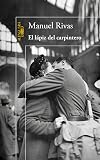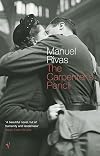
The Carpenter's Pencil
by Manuel Rivas
On This Page
Description
A bestseller in Spain, The Carpenter's Pencil has been published in nine countries. Set in the dark days of the Spanish Civil War, The Carpenter's Pencil charts the linked destinies of a remarkable cast of unique characters. All are bound by the events of the Civil War-the artists and the peasants alike-and all are brought to life, in Rivas's skillful hand, with the power of the carpenter's pencil, a pencil that draws both the measured line and the artist's dazzling vision. Translated from show more the Galician by Jonathan Dunne. show lessTags
Recommendations


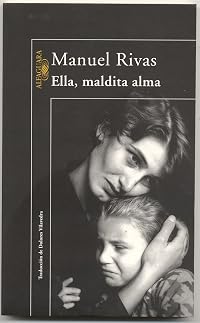
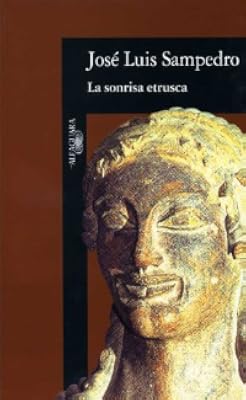


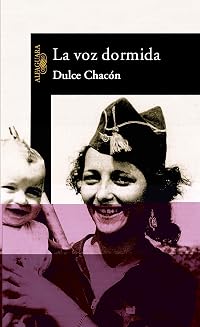
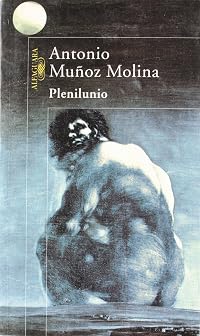












Member Recommendations

Member Reviews
A story about two men - a Francoist jailer and a Republican prisoner-of-war - and one woman (and one ghost) set in and around the Spanish civil war. Avoids the obvious traps of either becoming a maudlin love triangle or an angry political novel, thanks both to Rivas' almost-too-poetic prose and the central idea: The story is, for the most part, narrated by the one who'd ordinarily be the bad guy - Herbal, the man who fought for Franco, who became a jailer and an executioner ridding the fascists of political prisoners, and who then becomes haunted by the soul of a painter kills. He takes the painter's pencil, puts it behind his ear, and cannot stop hearing his voice; empathy forced upon those who can't use it.
It's a great idea, and show more Rivas' prose is often stunningly beautiful. The problem, if there is such a thing because this is a quite good novel, is that its two strengths don't necessarily pull in the same direction. Rivas gets so busy shifting perspective, timelines and character focus that the novel gets a bit vaguer than I'd like, at least for a holiday read (which is my bad). In bits and pieces it's breathtaking, I just feel like the heart of it gets lost a bit at times. But very worthwhile nonetheless, and definitely marked for a re-read at some point. show less
It's a great idea, and show more Rivas' prose is often stunningly beautiful. The problem, if there is such a thing because this is a quite good novel, is that its two strengths don't necessarily pull in the same direction. Rivas gets so busy shifting perspective, timelines and character focus that the novel gets a bit vaguer than I'd like, at least for a holiday read (which is my bad). In bits and pieces it's breathtaking, I just feel like the heart of it gets lost a bit at times. But very worthwhile nonetheless, and definitely marked for a re-read at some point. show less
The Carpenter's Pencil is set in 1936 and concerns early months of the Spanish Civil War and Franco's brutal suppression of any opposition. It is a portrayal of those involved on both sides of the conflict.
The story contains two main characters - Doctor Daniel da Barca and the prison guard, Herbal. Herbal is the narrator so it is through his eyes that we see the doctor. Herbal is a conflicted character, both fascinated and hating the doctor and at the same time, at times his persecutor and others his protector. In contrast the doctor is portrayed as having almost religious qualities, working tirelessly to treat his fellow prisoners whilst seemingly having divine protection akin to the biblical character that he is named after. On his show more release from prison the doctor goes into exile in America and only returns to his native Galicia after Franco's death.
The story is told many years after the end of the civil war and moves backwards and forwards through time and from one viewpoint to another. Herbal is recounting the doctor's story to a young prostitute in a brothel.
Early in the book Herbal blows the top off the head of an artist. The pencil in the title is one used by the artist to sketch a church porch in which the faces of the prophets and elders are replaced by the heads of his fellow Republican prisoners. Herbal takes the pencil as a keepsake, but finds when he puts it behind his ear that the artist has conversations with him about art and Da Barca. But this isn't a book that is full of doom and gloom because alongside the horror there is also an enduring love story.
The book is little more than a novella (my copy had 160 pages) and the writing is poetic in nature. But it isn't overblown poetry but simple and powerful poetical phrases that evoke imagery and emotions perfectly and is full of humanity and tenderness. As one of the blurbs on the back of my copy states "I have rarely read a piece of writing so poetic."
Perhaps I wanted to enjoy this book too much or perhaps I just wanted and hoped to learn more about a conflict that I know little about but despite really admiring the writing style, at the end of this book I felt a little disappointed. The book was originally written in the author's native Galician so perhaps it lost something in translation. But don't let me put you off as all the same I would heartily recommend it to anyone who admires great writing and certainly wouldn't shy away from reading another of the author's works. show less
The story contains two main characters - Doctor Daniel da Barca and the prison guard, Herbal. Herbal is the narrator so it is through his eyes that we see the doctor. Herbal is a conflicted character, both fascinated and hating the doctor and at the same time, at times his persecutor and others his protector. In contrast the doctor is portrayed as having almost religious qualities, working tirelessly to treat his fellow prisoners whilst seemingly having divine protection akin to the biblical character that he is named after. On his show more release from prison the doctor goes into exile in America and only returns to his native Galicia after Franco's death.
The story is told many years after the end of the civil war and moves backwards and forwards through time and from one viewpoint to another. Herbal is recounting the doctor's story to a young prostitute in a brothel.
Early in the book Herbal blows the top off the head of an artist. The pencil in the title is one used by the artist to sketch a church porch in which the faces of the prophets and elders are replaced by the heads of his fellow Republican prisoners. Herbal takes the pencil as a keepsake, but finds when he puts it behind his ear that the artist has conversations with him about art and Da Barca. But this isn't a book that is full of doom and gloom because alongside the horror there is also an enduring love story.
The book is little more than a novella (my copy had 160 pages) and the writing is poetic in nature. But it isn't overblown poetry but simple and powerful poetical phrases that evoke imagery and emotions perfectly and is full of humanity and tenderness. As one of the blurbs on the back of my copy states "I have rarely read a piece of writing so poetic."
Perhaps I wanted to enjoy this book too much or perhaps I just wanted and hoped to learn more about a conflict that I know little about but despite really admiring the writing style, at the end of this book I felt a little disappointed. The book was originally written in the author's native Galician so perhaps it lost something in translation. But don't let me put you off as all the same I would heartily recommend it to anyone who admires great writing and certainly wouldn't shy away from reading another of the author's works. show less
I don't know. But somewhere between 3-4 stars so far.
This is one of the weirdest and most complex books I've read. It is in parts symbolic, historical, romantic, and human. It is not one story, but quite a few woven together in a weird narrative that somehow, despite its short length, gives birth to a complex novella that seems as good as any full-length novel. It is bigger than its mere 150 pages. And as any magical realism work of fiction, this will put your brain to work!
However, this was a bit of a difficult read (partly because of the narrative style that is confusing in of itself, and partly, I think, because I read it in Arabic). It definitely needs a second and more focused read (damn you, short attention span) to really show more appreciate it and let it sink in the way it should. I hope I get that chance someday. show less
This is one of the weirdest and most complex books I've read. It is in parts symbolic, historical, romantic, and human. It is not one story, but quite a few woven together in a weird narrative that somehow, despite its short length, gives birth to a complex novella that seems as good as any full-length novel. It is bigger than its mere 150 pages. And as any magical realism work of fiction, this will put your brain to work!
However, this was a bit of a difficult read (partly because of the narrative style that is confusing in of itself, and partly, I think, because I read it in Arabic). It definitely needs a second and more focused read (damn you, short attention span) to really show more appreciate it and let it sink in the way it should. I hope I get that chance someday. show less
1936. Daniel da Barca é un médico e intelectual socialista. A súa moza, Marisa, é filla dun home de negocios cercano ós fascistas e oponse á súa relación. Cando comeza a Guerra Civil, Daniel é detido polo garda Herbal e trasladado á cadea. Os presos, sempre vixiados polo sombrío Herbal, tratan de superar a angustia do encerro utilizando a imaxinación. Mentres, o pai de Marisa intenta que a filla case cun militar, pero ela négase a renunciar a Daniel e loita por liberalo. En prisión, os falanxistas comezan a fusilar presos clandestinamente. Pronto lle tocará a Daniel. E entón estará en mans de Herbal, o centinela que se debate entre a violencia e a conciencia e que agacha un perigoso segredo que o une a Daniel.
Una història desgranada sense passió, amb petits detalls que s'entremesclen i van construint, a poc a poc, l'univers de la postguerra franquista. La traducció catalana de Lluïsa Soaz és excel·lent.
Beautifully written;
I felt I never quite got into the story, and remained slightly confused about the characters--how did the painter fit the picture, for example, but I think it was me rather than the book.
Members
- Recently Added By
Lists

Books about the Spanish Civil War
57 works; 3 members

Favorite Books in Translation
320 works; 133 members
Author Information

66+ Works 2,194 Members
Series
Belongs to Publisher Series
Common Knowledge
- Canonical title
- The Carpenter's Pencil
- Original title
- O lapis do carpinteiro
- Original publication date
- 1998 (original Galician) (original Galician); 2001 (English: Dunne) (English: Dunne); 1998
- Important places*
- Santiago de Compostela, Galicia, España
- Related movies
- El lápiz del carpintero (2003 | IMDb)
- First words*
- Er ist oben in der Galerie und hört den Amseln zu.
- Last words*
- (Click to show. Warning: May contain spoilers.)Was sagst du, Herbal?
Nichts. - Original language*
- Galicisch
*Some information comes from Common Knowledge in other languages. Click "Edit" for more information.
Classifications
Statistics
- Members
- 595
- Popularity
- 49,286
- Reviews
- 25
- Rating
- (3.52)
- Languages
- 14 — Catalan, Dutch, English, Finnish, French, German, Galician, Italian, Norwegian (Bokmål), Norwegian, Portuguese, Spanish, Swedish, Turkish
- Media
- Paper, Audiobook, Ebook
- ISBNs
- 41
- ASINs
- 9