Unholy Night
by Seth Grahame-Smith
On This Page
Description
Depicts the lives of the Three Kings of the Nativity, casting them as a set of infamous thieves who accidentally happen upon Joseph, Mary, and the newborn king and help them escape to Egypt.Tags
Recommendations




Member Recommendations
Member Reviews
We generally know the story of the three wise men, who came to Jesus in the manger bearing gifts of gold, frankincense, and myrrh. Some say they were sages. Some say they were ancient astronomers. But what if the real story was entirely different and not told until now?
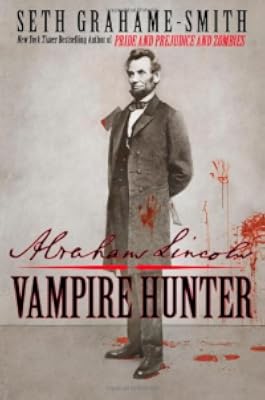
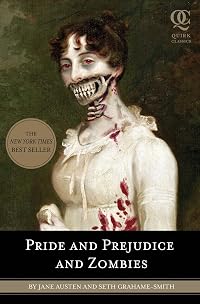
Okay, okay, it's not the “real” story, per se, but it's still a story. Unholy Night is written by Seth Grahame-Smith, who wrote the other re-imaginings Pride and Prejudice and Zombies and the recently-turned-into-a-movie Abraham Lincoln: Vampire Hunter. Having read the others, I can definitely say that Unholy Night is Grahame-Smith's most solid work so far.
The story primarily follows Balthazar, a thief who is known more commonly as the Antioch Ghost. After a series of show more mishaps on his latest caper, he is captured and brought before the diseased and decrepit Herod, who sentences him to death. While awaiting his fate in the dungeon cell, he meets two other thieves, Gaspar and Melchyor, and the three escape disguised in magis' robes. They flee to the nearest location they can find to hide, which happens to be a manger in the nearby town of Bethlehem... You see where this is going?
The story is actually a lot more complicated than this, involving a deep pain in Balthazar's past, the search for a lost pendant, and political dealing between the Romans and the Judeans. And, to be honest, I kind of liked it.
This is a much more solid book than the author's previous work. I was really disappointed with Pride and Prejudice and Zombies, but that may have more to do with the fact that I'm not that fond of the source material. Abraham Lincoln: Vampire Hunter felt like it was just okay and unevenly paced. It wasn't that good, but it wasn't bad either; it was just okay. With Unholy Night, Seth Grahame-Smith seems to have found his voice. It's actually an exciting adventure story, involving sword and sorcery (as the runners are being pursued by a real magi) with decent pacing, some good mystery, and actually character development. Granted, the character development can be a little ham-fisted at times, but at least they actually develop and the author put some clear thought into it, and you find yourself caring about what happens to the characters as they flee from Herod's soldiers with a newlywed couple and a baby in tow.
The only complaint I can give is really a half-complaint, because it is sort of the underlying point of the novel. Things seem to wrap up a little too neatly, with lots of coincidences. I know that's supposed to be part of the point as it's supposed to show the hand of God at work in the story, but it still felt way too tidy and could probably have used a little more realism. I would have suggested that some details be altered to deviate from the Biblical story a little more, since it's such an ancient text that details could easily have been lost or changed over time. It felt like a missed opportunity. But that's more a matter of taste probably. And, hey, we get an actual answer as to what caused the Great Fire of Rome that Nero ultimately blamed on the Christians. It's actually kind of a clever reveal.
While it's not perfect, it's definitely a fun adventure story that makes a good read for adventure or fantasy fans. It's a classic Bibilical story mixed with a popcorn adventure movie. A bit Indiana Jonesish, if you will.
Unholy Night by Seth Grahame-Smith earns 4 golden pendants out of 5. show less
Okay, okay, it's not the “real” story, per se, but it's still a story. Unholy Night is written by Seth Grahame-Smith, who wrote the other re-imaginings Pride and Prejudice and Zombies and the recently-turned-into-a-movie Abraham Lincoln: Vampire Hunter. Having read the others, I can definitely say that Unholy Night is Grahame-Smith's most solid work so far.
The story primarily follows Balthazar, a thief who is known more commonly as the Antioch Ghost. After a series of show more mishaps on his latest caper, he is captured and brought before the diseased and decrepit Herod, who sentences him to death. While awaiting his fate in the dungeon cell, he meets two other thieves, Gaspar and Melchyor, and the three escape disguised in magis' robes. They flee to the nearest location they can find to hide, which happens to be a manger in the nearby town of Bethlehem... You see where this is going?
The story is actually a lot more complicated than this, involving a deep pain in Balthazar's past, the search for a lost pendant, and political dealing between the Romans and the Judeans. And, to be honest, I kind of liked it.
This is a much more solid book than the author's previous work. I was really disappointed with Pride and Prejudice and Zombies, but that may have more to do with the fact that I'm not that fond of the source material. Abraham Lincoln: Vampire Hunter felt like it was just okay and unevenly paced. It wasn't that good, but it wasn't bad either; it was just okay. With Unholy Night, Seth Grahame-Smith seems to have found his voice. It's actually an exciting adventure story, involving sword and sorcery (as the runners are being pursued by a real magi) with decent pacing, some good mystery, and actually character development. Granted, the character development can be a little ham-fisted at times, but at least they actually develop and the author put some clear thought into it, and you find yourself caring about what happens to the characters as they flee from Herod's soldiers with a newlywed couple and a baby in tow.
The only complaint I can give is really a half-complaint, because it is sort of the underlying point of the novel. Things seem to wrap up a little too neatly, with lots of coincidences. I know that's supposed to be part of the point as it's supposed to show the hand of God at work in the story, but it still felt way too tidy and could probably have used a little more realism. I would have suggested that some details be altered to deviate from the Biblical story a little more, since it's such an ancient text that details could easily have been lost or changed over time. It felt like a missed opportunity. But that's more a matter of taste probably. And, hey, we get an actual answer as to what caused the Great Fire of Rome that Nero ultimately blamed on the Christians. It's actually kind of a clever reveal.
While it's not perfect, it's definitely a fun adventure story that makes a good read for adventure or fantasy fans. It's a classic Bibilical story mixed with a popcorn adventure movie. A bit Indiana Jonesish, if you will.
Unholy Night by Seth Grahame-Smith earns 4 golden pendants out of 5. show less
On a dark night a long time ago, a child is born to a poor carpenter and his wife. It is a story that is familiar to Christians and non-Christians alike. What is not known is more about the Three Wise Men who greet the newborn king and the subsequent journey of this little family from Bethlehem to Egypt. Famous for his tongue-in-cheek revisions of well-known stories, Seth Grahame-Smith tries his hand at something more ambitious with Unholy Night - his unique vision of the true story of the Three Kings that includes more than just a chance encounter with Joseph, Mary, their newborn son, and other famous biblical figures. Surprisingly reverent, it definitely brings a whole new perspective to this famous tale.
There is something endearing show more about a scoundrel forced to show his true, highly sympathetic, colors. Balthazar, as envisioned by Mr. Grahame-Smith, follows a long line of such scoundrels, only out for themselves but who eventually show that they are not as mercenary as even they may think. His growth from pure criminal, cagey and intelligent, to a man bent on the protection of the innocent is one of the highlights of the novel. Mr. Grahame-Smith deftly weaves the tale of Balthazar’s formative years with the current one, evoking sympathy and a depth to his character that does not exist without it. Moreover, he is not a stereotypical scoundrel, and readers trying to figure out his next plan of action will be pleasantly surprised by what he does or does not do. A reader might understand his motivations, given his past, but he proves through his unpredictability that he is still not the cliché one might first believe.
The use of magical elements only seems natural given this oft-told tale of miracle and wonder that is the Holy Family. The darker forces at play provide a nice balance to the forces of good that surround the little band of fugitives. Similarly, neither side proves to stretch the imagination beyond belief. If an infant can create water in the desert when it is most needed, then it seems only natural that the bad guys have their own access to darker magicks. In doing so, Mr. Grahame-Smith does not dilute the power of the story in any way but serves to prove its importance as it highlights the depths to which the Romans were willing to go to save themselves from the prophesies surrounding this one infant.
Peter Berkrot has a great voice for the narrative of this particular novel. It is rough, weathered, slightly indignant, and supremely confident - all of which fits Balthazar’s character. He does not try to use a falsetto to indicate the female characters, which is a good thing because Mr. Berkrot does not have the right voice for it. However, he does manage to capture the shrill desperation of King Herod and the firm confidence of Pontius Pilate, as well as the supreme youth of Mary and Joseph. It is not the best audio performance ever, but it is more than sufficient for the story.
With Mr. Grahame-Smith, one never knows what one is going to get. His version of the Three Kings could have been highly irreverent, bordering on blasphemous. Instead, he presents a highly entertaining, creative, what-if scenario that only serves to highlight and revere the miraculous rather than mock them. Balthazar is the confident master criminal forced to question everything he has ever believed as he attempts to make good on his promise to deliver this newborn boy and his parents safely to Egypt. The drama – both magical and ordinary – is very interesting, made more so by the idea that since this is a story not specifically mentioned in the Bible, there is nothing to say that the flight to Egypt did not happen just the way Mr. Grahame-Smith says it does. While not his best revisionist novel, Unholy Night is still an entertaining possibility about the Holy Family’s flight to Egypt. show less
There is something endearing show more about a scoundrel forced to show his true, highly sympathetic, colors. Balthazar, as envisioned by Mr. Grahame-Smith, follows a long line of such scoundrels, only out for themselves but who eventually show that they are not as mercenary as even they may think. His growth from pure criminal, cagey and intelligent, to a man bent on the protection of the innocent is one of the highlights of the novel. Mr. Grahame-Smith deftly weaves the tale of Balthazar’s formative years with the current one, evoking sympathy and a depth to his character that does not exist without it. Moreover, he is not a stereotypical scoundrel, and readers trying to figure out his next plan of action will be pleasantly surprised by what he does or does not do. A reader might understand his motivations, given his past, but he proves through his unpredictability that he is still not the cliché one might first believe.
The use of magical elements only seems natural given this oft-told tale of miracle and wonder that is the Holy Family. The darker forces at play provide a nice balance to the forces of good that surround the little band of fugitives. Similarly, neither side proves to stretch the imagination beyond belief. If an infant can create water in the desert when it is most needed, then it seems only natural that the bad guys have their own access to darker magicks. In doing so, Mr. Grahame-Smith does not dilute the power of the story in any way but serves to prove its importance as it highlights the depths to which the Romans were willing to go to save themselves from the prophesies surrounding this one infant.
Peter Berkrot has a great voice for the narrative of this particular novel. It is rough, weathered, slightly indignant, and supremely confident - all of which fits Balthazar’s character. He does not try to use a falsetto to indicate the female characters, which is a good thing because Mr. Berkrot does not have the right voice for it. However, he does manage to capture the shrill desperation of King Herod and the firm confidence of Pontius Pilate, as well as the supreme youth of Mary and Joseph. It is not the best audio performance ever, but it is more than sufficient for the story.
With Mr. Grahame-Smith, one never knows what one is going to get. His version of the Three Kings could have been highly irreverent, bordering on blasphemous. Instead, he presents a highly entertaining, creative, what-if scenario that only serves to highlight and revere the miraculous rather than mock them. Balthazar is the confident master criminal forced to question everything he has ever believed as he attempts to make good on his promise to deliver this newborn boy and his parents safely to Egypt. The drama – both magical and ordinary – is very interesting, made more so by the idea that since this is a story not specifically mentioned in the Bible, there is nothing to say that the flight to Egypt did not happen just the way Mr. Grahame-Smith says it does. While not his best revisionist novel, Unholy Night is still an entertaining possibility about the Holy Family’s flight to Egypt. show less
For some reason, I can’t write this review without framing around my experience with Grahame-Smith’s Abraham Lincoln: Vampire Hunter (AL:VH). I loved that book. Having read a half dozen works on Abraham Lincoln and dozens more on the Civil War in general, its source material was dear to my heart. AL:VH was clearly the work of a man who steeped himself in the source material—the 19th Century prose oozing out of him and with an inspired twist on not only American history but on the character of Lincoln. There was a deep respect for his source material, a respect that was almost entirely absent from Unholy Night.
I greatly anticipated this book. As a trained biblical scholar, I was hoping that Grahame-Smith would approach the show more biblical source with as much careful consideration as he had in his previous work. Given his track record, I assumed he could do at least as good of a job as others who fictionalized scripture, authors like Anne Rice in her Christ the Lord series, or Walt Wangerin in Paul or even Nikos Kazantzakis in Last Temptation of Christ. I figured that by sticking with the infancy narrative of Jesus (which is pretty sparse), Grahame-Smith could easily use what was there and add his alternative history with much more innovation and creativity than he even displayed in AH:VH. He is clearly gifted enough to achieve this, but I was wrong—and I was greatly disappointed.
He presented his work as playing within the confines of the biblical text, but ignored the narrative at several points when it didn’t serve his story. I’d extend him the benefit of the doubt, if it weren’t for the boring prose and uninspired storylines. His characters were predictable sketches, even the central character. Religious characters were sophomoric in their construction. It’s clear that not only does Grahame-Smith not respect spiritual traditions, he doesn’t feel he needs to explore them any deeper than to ignorantly present characters like Mary and Joseph as his perception of pious stereotypes. You don’t have to be a Christian to write Christian characters well, Ken Follet does it well in Pillars of the Earth and so does Neil Gaiman in American Gods or Mary Doria Russell in The Sparrow. When I opened this book, I had naively hoped to add Grahame-Smith to that list.
Not only are the pious given short shrift, so was the historical backdrop. His portrayal of Jewish thought—especially on Messianic expectations—was what I would expect from a believer who graduates from a second-rate Sunday school program in a country church. Grahame-Smith’s Herod connects the dots of Messianic prophecies as though they were a Jewish mathematical equation where 1+1 unambiguously equals two and not a complex, mysterious puzzle. I have to wonder if Grahame-Smith has even read the complete prophecies he pulls quotes from--it would have only taken him a couple extra hours. Perhaps rather than read his source material, Grahame-Smith spent his time dreaming up new ways to describe disgustingly gory scenes. The gory violence, which permeates the novel, almost seems as a device which helps the reader cope with the unshocking way the narrative pans out by compensating with shocking images like that of a hot poker being shoved up a living person’s nasal cavity and then into their brain. He clearly put more time in coming up with these vulgar images than he did meditating on the religious world the story takes place in.
It’s ironic, really, that someone who has so little respect for the religious tradition central to his book presented its foundation as though the simplistic Sunday school version of the Nativity were true. It’s like he thinks he can score points with Christians by presenting their origin story with kid gloves on, yet he portrays all the faithful people in that tradition as shallow morons.
The whole book screamed as though the author's attitude was, “I don’t have time to bother with…” The simple plot, the uninteresting characters, the dull conventional prose, the stupid conclusion that shocked readers with buckets of gore instead of with a creative resolve: it’s all what I would expect of someone who is gifted and has started interpreting his success as a sign that he doesn’t have to try very hard. I wish he had. This book’s set-up could have made for really fun and insightful literature. Instead, it’s jejune. show less
I greatly anticipated this book. As a trained biblical scholar, I was hoping that Grahame-Smith would approach the show more biblical source with as much careful consideration as he had in his previous work. Given his track record, I assumed he could do at least as good of a job as others who fictionalized scripture, authors like Anne Rice in her Christ the Lord series, or Walt Wangerin in Paul or even Nikos Kazantzakis in Last Temptation of Christ. I figured that by sticking with the infancy narrative of Jesus (which is pretty sparse), Grahame-Smith could easily use what was there and add his alternative history with much more innovation and creativity than he even displayed in AH:VH. He is clearly gifted enough to achieve this, but I was wrong—and I was greatly disappointed.
He presented his work as playing within the confines of the biblical text, but ignored the narrative at several points when it didn’t serve his story. I’d extend him the benefit of the doubt, if it weren’t for the boring prose and uninspired storylines. His characters were predictable sketches, even the central character. Religious characters were sophomoric in their construction. It’s clear that not only does Grahame-Smith not respect spiritual traditions, he doesn’t feel he needs to explore them any deeper than to ignorantly present characters like Mary and Joseph as his perception of pious stereotypes. You don’t have to be a Christian to write Christian characters well, Ken Follet does it well in Pillars of the Earth and so does Neil Gaiman in American Gods or Mary Doria Russell in The Sparrow. When I opened this book, I had naively hoped to add Grahame-Smith to that list.
Not only are the pious given short shrift, so was the historical backdrop. His portrayal of Jewish thought—especially on Messianic expectations—was what I would expect from a believer who graduates from a second-rate Sunday school program in a country church. Grahame-Smith’s Herod connects the dots of Messianic prophecies as though they were a Jewish mathematical equation where 1+1 unambiguously equals two and not a complex, mysterious puzzle. I have to wonder if Grahame-Smith has even read the complete prophecies he pulls quotes from--it would have only taken him a couple extra hours. Perhaps rather than read his source material, Grahame-Smith spent his time dreaming up new ways to describe disgustingly gory scenes. The gory violence, which permeates the novel, almost seems as a device which helps the reader cope with the unshocking way the narrative pans out by compensating with shocking images like that of a hot poker being shoved up a living person’s nasal cavity and then into their brain. He clearly put more time in coming up with these vulgar images than he did meditating on the religious world the story takes place in.
It’s ironic, really, that someone who has so little respect for the religious tradition central to his book presented its foundation as though the simplistic Sunday school version of the Nativity were true. It’s like he thinks he can score points with Christians by presenting their origin story with kid gloves on, yet he portrays all the faithful people in that tradition as shallow morons.
The whole book screamed as though the author's attitude was, “I don’t have time to bother with…” The simple plot, the uninteresting characters, the dull conventional prose, the stupid conclusion that shocked readers with buckets of gore instead of with a creative resolve: it’s all what I would expect of someone who is gifted and has started interpreting his success as a sign that he doesn’t have to try very hard. I wish he had. This book’s set-up could have made for really fun and insightful literature. Instead, it’s jejune. show less
I've read Seth's other book Abraham Lincoln Vampire Slayer, and I really enjoyed that. Delving into this book, was pretty interesting. I enjoyed the take of the 3 wise men breaking Mary and Joseph out of Bethlehem when Herod put out the decree to kill all new born sons. But what I really enjoyed was Mary and Joseph's struggles with the whole 'their baby is the Messiah' thing. When Joseph recants the story of how Mary came to him prior to be wed, she tells him that she is with child and it's not his, it's 'Gods'...His inner struggles believing she's lying, or maybe mad or completely telling the truth. And on the flipside of Mary suddenly being chosen to carry the son of 'God' when all she really wanted was a quiet life with family and show more friends, really brings out a side of her that a lot of the scriptures don't talk about.
I enjoyed Balthazar's broken faith in gods and the only thing he believes in is the sword in his hand...but yet he has the capacity to love, ache and long for lost love in his past. I felt that brought a real human quality to him throughout the book.
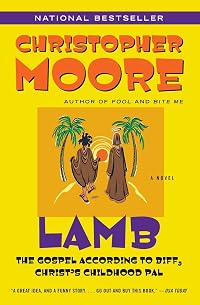
Having said all that, I've read Lamb and I enjoyed the take on the 3 wise men whom Josh visits in order to understand his role in the world. But this take on the 3 wise men is a great take on the biblical fiction genre. show less
I enjoyed Balthazar's broken faith in gods and the only thing he believes in is the sword in his hand...but yet he has the capacity to love, ache and long for lost love in his past. I felt that brought a real human quality to him throughout the book.
Having said all that, I've read Lamb and I enjoyed the take on the 3 wise men whom Josh visits in order to understand his role in the world. But this take on the 3 wise men is a great take on the biblical fiction genre. show less
Stories of the birth in Bethlehem always centre on Jesus, Mary and Joseph, however there were three other fairly significant beings there that night. Always mentioned, and then glossed over, no one really know much about the three wise men who brought gifts on the eve of baby Jesus’ birth. Seth Grahame-Smith means to remedy that with this book by telling us the story behind the wise men … at least his version of their reluctant place in biblical history.
It’s always difficult to take a story, particularly one as well known and respected as the birth of baby Jesus, and give it a different spin. Mr. Grahame-Smith does it well with this book, and does it in such a way as not to be blasphemous. Yes, there may be some outcry about the show more fate given to the “real wise men”, and there may be some head shaking about Joseph’s original thoughts on Mary’s pregnancy, and there may be some fall out about Mary’s liberated attitude, but let’s face it, you pick up a book like this and you have to set some things aside. I enjoy Mr. Grahame-Smith’s books because despite how outrageous his scenarios there is always that little feeling of “wow, it could have happened that way!” show less
It’s always difficult to take a story, particularly one as well known and respected as the birth of baby Jesus, and give it a different spin. Mr. Grahame-Smith does it well with this book, and does it in such a way as not to be blasphemous. Yes, there may be some outcry about the show more fate given to the “real wise men”, and there may be some head shaking about Joseph’s original thoughts on Mary’s pregnancy, and there may be some fall out about Mary’s liberated attitude, but let’s face it, you pick up a book like this and you have to set some things aside. I enjoy Mr. Grahame-Smith’s books because despite how outrageous his scenarios there is always that little feeling of “wow, it could have happened that way!” show less
Although this book was nothing like I thought it would be (I assumed, based on the title, it would lean into the horror genre - it didn't), it was a really great read.
The story follows Balthazar, known to the world as The Antioch Ghost, who is introduced as one of the greatest thieves who ever lived. A bungled collection of circumstances place him and two other criminals in the manager just after the birth of Jesus (the three of them in the story are the Wise Men). While the criminals are on the run from the authorities, Mary and Joseph are running from Roman soldiers who have been ordered by King Herod to kill every male child in fear of a prophecy of the fall of Rome. Their coincidental meeting causes an unlikely team-up and leads to show more a great series of fantastic events.
While biblical events do play out in the story, the shining light (no pun intended) of the book is Balthazar. Eventually we see into his tragic past, and the last chapter wonderfully caps off his incredibly interesting life. Mary, Joseph, and their child are important characters to be sure, but Balthazar is the star of this tale.
More an adventure story than anything else, and just enough gore to keep me shocked and wanting to read more. show less
The story follows Balthazar, known to the world as The Antioch Ghost, who is introduced as one of the greatest thieves who ever lived. A bungled collection of circumstances place him and two other criminals in the manager just after the birth of Jesus (the three of them in the story are the Wise Men). While the criminals are on the run from the authorities, Mary and Joseph are running from Roman soldiers who have been ordered by King Herod to kill every male child in fear of a prophecy of the fall of Rome. Their coincidental meeting causes an unlikely team-up and leads to show more a great series of fantastic events.
While biblical events do play out in the story, the shining light (no pun intended) of the book is Balthazar. Eventually we see into his tragic past, and the last chapter wonderfully caps off his incredibly interesting life. Mary, Joseph, and their child are important characters to be sure, but Balthazar is the star of this tale.
More an adventure story than anything else, and just enough gore to keep me shocked and wanting to read more. show less
Meet Balthazar, a thieve, occasional murderer, and con artist. From a young age, he has used his wits and flexible morals to keep himself fed and alive. He joined forces with two other criminals while in Herod’s dungeons, fleeing on camelback. They stopped to rest at a barn, only to find a slip of woman, who had recently given birth, and her husband pointing a pitchfork at them menacingly. That’s right. The three wise men mentioned in the bible were criminals in disguise and on the run.
I do believe this has become my favorite Baby Jesus story. I really enjoyed the author’s Pride and Prejudice and Zombies, but found his other famous work Abraham Lincoln: Vampire Hunter to be rather boring. I am glad to say that I found this book to show more be pretty entertaining. I was a little worried that it would be too religious for me. But that was not the case at all.
The story is pretty gritty. It’s a rough time historically. There’s no indoor plumbing, you have to work pretty hard for your food and shelter, and might makes right. Balthazar is a really interesting character. You don’t have to like him to be intrigued. Pretty soon he becomes known as the Antioch Ghost, being Syrian and able to flit about stealing this bit of jewelry here and that bit of coin there. Alas, he ends up on Herod’s radar and he whips his little army into a frenzy to catch the Antioch Ghost.
In Herod’s dungeons, he meets two other criminals, Gaspar and Melchyor. The three of them make a plan and escape, complete with disguises and camels. It looks like the worst is behind them, until they meet Mary and Joseph and their newborn and get caught up in Herod’s blood lust for the baby. The fighting does contain gory bits, which makes it that much more real and also shows the clear motivation for our characters to either fight or flee.
My one little criticism is one I am sure many can guess: the female characters are few and far between. Early on, there is a lady sex object that Balthazar cons out of some baubles. Then there is Mary, who starts off mute then moves to timid and eventually finds a small voice. Later in the story, there is Sela, who is a fortune teller. She is the most fleshed out of the female characters but since she comes into the story so late, we have only a little time with her. I would have liked to see a better gender balance.
OK, so back to the good stuff. I loved the humor, which was often harsh. The author doesn’t flinch from keeping things real. There is very little reverence in this story and even when you get a few touches of it, there’s still plenty of room for a reader’s personal interpretation. For instance, Balthazar doesn’t believe that Mary was a virgin, but he is most definitely against Herod and his men killing babies. Balthazar is very skeptical about any mystical or religious significance that Mary and Joseph attach to their son and for the story, this comes off as very practical.
As their adventures become more dire and injuries and deaths occur, Balthazar starts to wonder if there is some divine power helping them along. Yet if he considers that, then he has to consider if there is some malevolent force assisting Herod in his hunt for baby Jesus. I really liked that the author left the determination of this up to the reader. At the beginning of the story, I didn’t like Balthazar but he was interesting. By the end, I felt he deserved a pat on the back, a chilled beer, and a month’s worth of rest.
Narration: Peter Berkrot did a really good job with this book. He had a variety of accents and kept all his characters distinct. His voice for Balthazar was the best and he put a lot of emotion in to all the right places. While there were only a few lady characters, his female voices were believable. His voice for the spoiled, angry Herod was also well done. show less
I do believe this has become my favorite Baby Jesus story. I really enjoyed the author’s Pride and Prejudice and Zombies, but found his other famous work Abraham Lincoln: Vampire Hunter to be rather boring. I am glad to say that I found this book to show more be pretty entertaining. I was a little worried that it would be too religious for me. But that was not the case at all.
The story is pretty gritty. It’s a rough time historically. There’s no indoor plumbing, you have to work pretty hard for your food and shelter, and might makes right. Balthazar is a really interesting character. You don’t have to like him to be intrigued. Pretty soon he becomes known as the Antioch Ghost, being Syrian and able to flit about stealing this bit of jewelry here and that bit of coin there. Alas, he ends up on Herod’s radar and he whips his little army into a frenzy to catch the Antioch Ghost.
In Herod’s dungeons, he meets two other criminals, Gaspar and Melchyor. The three of them make a plan and escape, complete with disguises and camels. It looks like the worst is behind them, until they meet Mary and Joseph and their newborn and get caught up in Herod’s blood lust for the baby. The fighting does contain gory bits, which makes it that much more real and also shows the clear motivation for our characters to either fight or flee.
My one little criticism is one I am sure many can guess: the female characters are few and far between. Early on, there is a lady sex object that Balthazar cons out of some baubles. Then there is Mary, who starts off mute then moves to timid and eventually finds a small voice. Later in the story, there is Sela, who is a fortune teller. She is the most fleshed out of the female characters but since she comes into the story so late, we have only a little time with her. I would have liked to see a better gender balance.
OK, so back to the good stuff. I loved the humor, which was often harsh. The author doesn’t flinch from keeping things real. There is very little reverence in this story and even when you get a few touches of it, there’s still plenty of room for a reader’s personal interpretation. For instance, Balthazar doesn’t believe that Mary was a virgin, but he is most definitely against Herod and his men killing babies. Balthazar is very skeptical about any mystical or religious significance that Mary and Joseph attach to their son and for the story, this comes off as very practical.
As their adventures become more dire and injuries and deaths occur, Balthazar starts to wonder if there is some divine power helping them along. Yet if he considers that, then he has to consider if there is some malevolent force assisting Herod in his hunt for baby Jesus. I really liked that the author left the determination of this up to the reader. At the beginning of the story, I didn’t like Balthazar but he was interesting. By the end, I felt he deserved a pat on the back, a chilled beer, and a month’s worth of rest.
Narration: Peter Berkrot did a really good job with this book. He had a variety of accents and kept all his characters distinct. His voice for Balthazar was the best and he put a lot of emotion in to all the right places. While there were only a few lady characters, his female voices were believable. His voice for the spoiled, angry Herod was also well done. show less
Members
- Recently Added By
Author Information

17+ Works 21,332 Members
Seth Grahame-Smith is an author and a film and television writer/producer. His books include How to Survive a Horror Movie: All the Skills to Dodge the Kills, Abraham Lincoln: Vampire Hunter, Pride and Prejudice and Zombies, Unholy Night, and The Last American Vampire. In addition to adapting the screenplay for his novel Abraham Lincoln: Vampire show more Hunter, he also wrote Tim Burton's film Dark Shadows. (Bowker Author Biography) show less
Some Editions
Common Knowledge
- Canonical title
- Unholy Night
- Original title
- Unholy Night
- Original publication date
- 2012
- People/Characters
- Balthasar, the wise man; Melchior, the wise man; Gaspar, the wise man; Herod the Great; Herod Antipater ("Antipas"); John the Baptist (show all 11); Pontius Pilate; Mary, mother of Jesus (Luke 2); Joseph of Nazareth; Zechariah, the priest, father of John the Baptist; Sela
- Important places
- Jerusalem; Bethlehem; Antioch
- Important events
- Birth of Jesus; Roman Empire; 1st century
- Epigraph
- Go tell that long tongue liar,
Go and tell that midnight rider,
Tell the rambler, the gambler, the back biter,
Tell'em that God's gonna cut'em down.
-Traditional folk song - Dedication
- For Gordon, who wouldn't have believed a word of it.
- First words
- A herd of ibex grazed on a cliff high above the Judean Desert -- each of their tiny, antelope-like bodies dwarfed by a pair of giant, curved horns.
- Last words
- (Click to show. Warning: May contain spoilers.)They were riding toward that strangely bright star in the east.
Classifications
Statistics
- Members
- 613
- Popularity
- 47,713
- Reviews
- 30
- Rating
- (3.44)
- Languages
- 5 — English, French, German, Italian, Spanish
- Media
- Paper, Audiobook, Ebook
- ISBNs
- 23
- ASINs
- 6