On This Page
Description
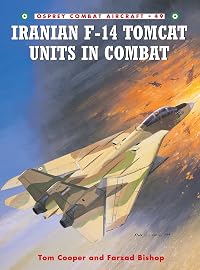
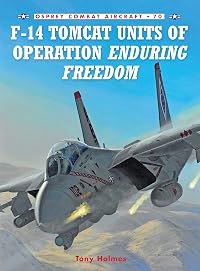
So formidable an opponent did the Iraqi airforce consider the F-14 that during the Iran-Iraq war, they ordered their pilots not to engage F-14s and the presence of one in an area was usually enough to empty it of Iraqi aircraft. Officially losses where tiny; only one F-14 was lost in aerial combat (to a MiG-21), one to a control problem and one downed by a ground-to-air missile. This book looks at the F-14's Iranian combat history and includes first hand accounts from the pilots themselves. show more It will consider key engagements and the central figures involved, illustrating the realities, succes show lessTags
Recommendations










Member Reviews
Impressed with this title. Despite the troubles in acquiring accurate information the author does a good job of presenting an interesting and believable narrative. A lot of the various air to air actions lined up with what I consider to be the Bible on the Iran-Iraq conflict, The Iran-Iraq War which was a wonderful indication as to their accuracy.
Excellent overview of the Iraq-Iran war, its air campaign.
F-14, plane that marked an era and until the appearance of the sleek Su-27 series and Mig-29s was aircraft that spun lots of movies and shows (including SF and animated) with airplanes with similar look and characteristic, was a very complex war-machine that Imperial Iran was more than happy to introduce into its air force. By all means and purposes it was much more capable than F-15s and main reason IMHO is long range intercept capability using its powerful radar and missiles. With its powerful AWG-9 radar and Phoenix missiles F-14 proved to be a very capable platform and deadly interceptor. Iran was truly dedicated to introducing the F-14's and soon lots of pilots and show more technicians found themselves working extensively with Grumman personnel and US Navy to learn as much as possible about the aircraft, its maintenance, so they can become self-sufficient in terms of logistics and use of the airplane.
Up to revolution in 1979, all was well, but after revolution, US and Iran found themselves on opposite sides. And then Iraq-Iran war started, with Iraq being supported by West and East against the Iran (support was very much in vein of current support when it comes to West and Eastern Europe, including intelligence, and weapon fire mission planning and guidance assistance).
What nobody expected was that Iran will remain technologically capable to continue successful use of a very complex weapon system for the entire duration of the conflict. F-14's played the pivotal role although West constantly denigrated their capabilities and claimed that very small number of planes and missiles is in use, if any at all (again, rhetoric very similar to what we hear today for Eastern Europe). What surprised the West, and US especially, is that F-14 was successfully maintained and used by Iran's air force in a way that managed to blunt the Iraq's air offensives. It is funny to read statements from the Iran's pilots where they are amazed how propaganda tried to bury their accomplishments during the war. Even if one looks at Iran's revolutionary government, one can find very pragmatic approach to war. They mobilized (usually directly from prisons where these qualified technical personnel ended during the revolution due to their support to Imperial government) pilots to fly F-14's and technicians to support them, against the Iraq's fliers (situation very similar to what happened to old Imperial Russian officers after the October Revolution). Local industry was mobilized for more than successful technical support and building infrastructure for repair and improvements of the airplane. One more proof that when talking about Iran's regime, cliche view of religious fanatics is not a true picture of this society. They are much more pragmatic and adaptable to deadly game of war.
Excellent book, highly recommended to anyone interested in probably one of the most iconic airplanes and its combat use in very long war of attrition. show less
F-14, plane that marked an era and until the appearance of the sleek Su-27 series and Mig-29s was aircraft that spun lots of movies and shows (including SF and animated) with airplanes with similar look and characteristic, was a very complex war-machine that Imperial Iran was more than happy to introduce into its air force. By all means and purposes it was much more capable than F-15s and main reason IMHO is long range intercept capability using its powerful radar and missiles. With its powerful AWG-9 radar and Phoenix missiles F-14 proved to be a very capable platform and deadly interceptor. Iran was truly dedicated to introducing the F-14's and soon lots of pilots and show more technicians found themselves working extensively with Grumman personnel and US Navy to learn as much as possible about the aircraft, its maintenance, so they can become self-sufficient in terms of logistics and use of the airplane.
Up to revolution in 1979, all was well, but after revolution, US and Iran found themselves on opposite sides. And then Iraq-Iran war started, with Iraq being supported by West and East against the Iran (support was very much in vein of current support when it comes to West and Eastern Europe, including intelligence, and weapon fire mission planning and guidance assistance).
What nobody expected was that Iran will remain technologically capable to continue successful use of a very complex weapon system for the entire duration of the conflict. F-14's played the pivotal role although West constantly denigrated their capabilities and claimed that very small number of planes and missiles is in use, if any at all (again, rhetoric very similar to what we hear today for Eastern Europe). What surprised the West, and US especially, is that F-14 was successfully maintained and used by Iran's air force in a way that managed to blunt the Iraq's air offensives. It is funny to read statements from the Iran's pilots where they are amazed how propaganda tried to bury their accomplishments during the war. Even if one looks at Iran's revolutionary government, one can find very pragmatic approach to war. They mobilized (usually directly from prisons where these qualified technical personnel ended during the revolution due to their support to Imperial government) pilots to fly F-14's and technicians to support them, against the Iraq's fliers (situation very similar to what happened to old Imperial Russian officers after the October Revolution). Local industry was mobilized for more than successful technical support and building infrastructure for repair and improvements of the airplane. One more proof that when talking about Iran's regime, cliche view of religious fanatics is not a true picture of this society. They are much more pragmatic and adaptable to deadly game of war.
Excellent book, highly recommended to anyone interested in probably one of the most iconic airplanes and its combat use in very long war of attrition. show less
Ratings
Members
- Recently Added By
Author Information
58+ Works 601 Members
Series

Classifications
Statistics
- Members
- 37
- Popularity
- 782,386
- Reviews
- 2
- Rating
- (4.00)
- Languages
- English
- Media
- Paper, Ebook
- ISBNs
- 2
- ASINs
- 1