On This Page
Description
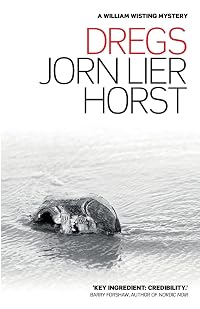
Chief Inspector William Wisting is an experienced policeman familiar with the dark side of human nature. He lives in challenging times for the Norwegian police force, meeting them with integrity and humanity, and a fragile belief that he can play a part in creating a better world. Dregs begins with a police report giving the place and time of the discovery of a training shoe washed up on the sand, containing a severed foot. Soon a second shoe is washed up, but it is another left foot. What show more is the explanation for this? Has there been some kind of terrible accident at sea? Does it indicate the killing and dismembering of two victims? Is there a link with the unsolved mystery of a number of disappearances in the Larvik area in recent months? In this gripping police procedural, Wisting gradually gets to the bottom of the mystery with the help of his all too human colleagues and his journalist daughter, Line. show lessTags
Recommendations












Member Reviews
I forget who recommended another book in this series, but I'm glad she did. It's a Scandi police procedural that's new to me. This first in the series comes with a forward that introduces the police detective, in case the text itself doesn't provide enough information. I thought that a little quaint, and mistrustful on the part of the author. Otherwise, this is a very interesting police procedural set in Norway, involving some historical detail about the Cold War fears that seem prescient now that Russia has invaded Ukraine.
Dregs is the sixth novel in Jørn Lier Horst’s series featuring Chief Inspector William Wisting who lives and works in Stavern south of Oslo, though annoyingly (for the linguistically challenged like myself) it’s the first to be translated to English. It is a classic police procedural that sees Wisting and his team investigating the appearance of two severed left feet clad in running shoes which wash ashore in separate incidents. The area is not exactly rife with crime so the Police have a reasonably good idea that the feet are probably related to four outstanding missing persons cases on their books. However, they still have a lot of work to do to piece together the case and the feet on their own do not provide much help and the show more coppers have to rely on good, old-fashioned legwork to get to the bottom of things.
I enjoyed this book very much not least because it often went in a direction I wasn’t expecting. I love that in a plot. Without car chases, gruesomely described violence (I know severed feet sounds bad but it is handled well) or any of the other hallmarks of a certain kind of crime fiction Horst has produced a very clever and readable story that has a number of surprises. Although sometimes hindered by their boss who is a little too keen to discuss cases with the media Wisting and the team do manage make some sense out of the bizarre case by linking it to events from the area’s past history and I enjoyed seeing the police work depicted so credibly. The fact there is a good team and a subtle sense of humour on display added to my enjoyment.
Wisting is a great character and though I would like to read about his earlier exploits (hint hint publishers) I thought the book did a good job of presenting him.There’s enough of his background so that new readers are not left floundering but not so much that those familiar with the series would be bored. What I liked about Wisting is that although he has had some tragedy in his life (he is a widower for example) it has not left him the dysfunctional wreck common to crime fiction. He’s in a new relationship with a woman in the town and he manages to maintain a good relationship with his daughter. He doesn’t think much of her current job interviewing convicted murderers or her boyfriend (who has been in prison twice) but he refrains from getting on her case about these things which is undoubtedly the hardest but most sensible thing to do in the situation. On the other hand Wisting has his head in the sand a bit about his own health but this is such a realistic trait that I thought it added very well to his overall character.
I also liked the way the author gently but intelligently explored social themes. Probably the most interesting of these for me was the notion of imprisonment as punishment being an ineffective method for dealing with murderers. Horst uses the character of Line, Wisting’s daughter who is a journalist, to tease this issue out in a series of interviews with convicted murderers who have been released from prison. It was a somewhat surprisingly thoughtful and balanced look at the issue, especially considering Horst was a policeman himself and could be expected to perhaps take a harder line on such an issue.
Dregs was very readable to me which I always attribute to excellent translation, in this case by Anne Bruce, as well as good original writing. I will look forward to reading more of this series though whether that proves to me earlier books or later ones remains to be seen.
My rating 4.5 show less
I enjoyed this book very much not least because it often went in a direction I wasn’t expecting. I love that in a plot. Without car chases, gruesomely described violence (I know severed feet sounds bad but it is handled well) or any of the other hallmarks of a certain kind of crime fiction Horst has produced a very clever and readable story that has a number of surprises. Although sometimes hindered by their boss who is a little too keen to discuss cases with the media Wisting and the team do manage make some sense out of the bizarre case by linking it to events from the area’s past history and I enjoyed seeing the police work depicted so credibly. The fact there is a good team and a subtle sense of humour on display added to my enjoyment.
Wisting is a great character and though I would like to read about his earlier exploits (hint hint publishers) I thought the book did a good job of presenting him.There’s enough of his background so that new readers are not left floundering but not so much that those familiar with the series would be bored. What I liked about Wisting is that although he has had some tragedy in his life (he is a widower for example) it has not left him the dysfunctional wreck common to crime fiction. He’s in a new relationship with a woman in the town and he manages to maintain a good relationship with his daughter. He doesn’t think much of her current job interviewing convicted murderers or her boyfriend (who has been in prison twice) but he refrains from getting on her case about these things which is undoubtedly the hardest but most sensible thing to do in the situation. On the other hand Wisting has his head in the sand a bit about his own health but this is such a realistic trait that I thought it added very well to his overall character.
I also liked the way the author gently but intelligently explored social themes. Probably the most interesting of these for me was the notion of imprisonment as punishment being an ineffective method for dealing with murderers. Horst uses the character of Line, Wisting’s daughter who is a journalist, to tease this issue out in a series of interviews with convicted murderers who have been released from prison. It was a somewhat surprisingly thoughtful and balanced look at the issue, especially considering Horst was a policeman himself and could be expected to perhaps take a harder line on such an issue.
Dregs was very readable to me which I always attribute to excellent translation, in this case by Anne Bruce, as well as good original writing. I will look forward to reading more of this series though whether that proves to me earlier books or later ones remains to be seen.
My rating 4.5 show less
An excellent Norwegian police procedural, #6 in the William Wisting series, but the first to be translated into English, that has me grinding my teeth that there are not more available.
The idea of the appearance of using specific body parts, in this case left feet, washing up on beaches one after another, is not a new one but definitely a good hook into a murder mystery.
William Wisting, Chief Inspector of Police, is at burn out point, and at the beginning of the novel we meet him as he leaves the doctor's surgery where he has had some blood tests. He believes that crime in Norway is beginning to pay, growing rather than decreasing, and that none of the counter measures are effective deterrents. His daughter Lina is a journalist writing show more an article on the effects of long prison sentences on criminals, particularly those who have committed murder. There is inevitably an overlap between elements of her father's new case, and the interviews with murderers that she has set up.
As the number of left feet being washed up on nearby shorelines reaches 3, the police establish a link between one of them and an old man who disappeared from a nursing home 9 months earlier. But three elderly men disappeared without trace at that time, and the story is made more complex by the fact two women also disappeared: one a schizophrenic disappeared 9 months ago, and one, more recently, also from the nursing home.
A very engaging read, with good strong characters. show less
The idea of the appearance of using specific body parts, in this case left feet, washing up on beaches one after another, is not a new one but definitely a good hook into a murder mystery.
William Wisting, Chief Inspector of Police, is at burn out point, and at the beginning of the novel we meet him as he leaves the doctor's surgery where he has had some blood tests. He believes that crime in Norway is beginning to pay, growing rather than decreasing, and that none of the counter measures are effective deterrents. His daughter Lina is a journalist writing show more an article on the effects of long prison sentences on criminals, particularly those who have committed murder. There is inevitably an overlap between elements of her father's new case, and the interviews with murderers that she has set up.
As the number of left feet being washed up on nearby shorelines reaches 3, the police establish a link between one of them and an old man who disappeared from a nursing home 9 months earlier. But three elderly men disappeared without trace at that time, and the story is made more complex by the fact two women also disappeared: one a schizophrenic disappeared 9 months ago, and one, more recently, also from the nursing home.
A very engaging read, with good strong characters. show less
Jørn Lier Horst is a former Chief Inspector in the Criminal Investigation Department of Larvik, Norway, just like his main character William Wisting, and this insider information shows in his first mystery, Dregs.
Wisting is the widowed father of grown-up twins. Thomas is in the military, serving in Afghanistan while his daughter, Line, is an investigative journalist based in Oslo. Line is busy with a new project: interviewing six convicted killers who have served more than one hundred years behind bars between them. She intends to prove that a gentler approach would work better in rehabilitating prisoners like these.
The mystery is well-plotted and intricate. It takes a lot of work from Wisting and his team to even begin to figure out show more what's going on, and it was interesting to see how Line's project intersected with her father's investigation. Something tells me this is going to be an ongoing occurrence in this series, and it's something that's going to take Wisting, in his role as father, to become used to.
Dregs is a solid mystery that I enjoyed listening to. I can see myself reaching for the next book in the series. show less
Wisting is the widowed father of grown-up twins. Thomas is in the military, serving in Afghanistan while his daughter, Line, is an investigative journalist based in Oslo. Line is busy with a new project: interviewing six convicted killers who have served more than one hundred years behind bars between them. She intends to prove that a gentler approach would work better in rehabilitating prisoners like these.
The mystery is well-plotted and intricate. It takes a lot of work from Wisting and his team to even begin to figure out show more what's going on, and it was interesting to see how Line's project intersected with her father's investigation. Something tells me this is going to be an ongoing occurrence in this series, and it's something that's going to take Wisting, in his role as father, to become used to.
Dregs is a solid mystery that I enjoyed listening to. I can see myself reaching for the next book in the series. show less
When a severed foot is washed up on the Norwegian shoreline it doesn't seem particularly important but when a second and a third appear the police draft in Wisting. His daughter Line is working on a new profile of murderers recently released from prison and one of these is related to one of the missing people whose foot has been found. As Wisting investigates further he finds a connection between all the victims and a hoard of missing money.
This is rerelease of an older novel in the William Wisting series but is no less excellent for that. The Wisting novels are not as dark as some scans-crime but are twisty enough to satisfy. I would have preferred to read in order - Line doesn't have a child here and Wisting does have a relationship - show more but otherwise excellent in its field! show less
This is rerelease of an older novel in the William Wisting series but is no less excellent for that. The Wisting novels are not as dark as some scans-crime but are twisty enough to satisfy. I would have preferred to read in order - Line doesn't have a child here and Wisting does have a relationship - show more but otherwise excellent in its field! show less
I finally got round to reading Jorn Lier Horst in English. Unfortunately, this is the first translation from Norwegian into English and it started off with the 6th volume, not with the first. Shame on you publishers!! Now I'll have to buy the first volumes in German, to see what the fuss is all about. I should have waited, but I wasn't sure whether I should buy the first 5 volumes in German.
There's lots of so-and-so (and let's say it outright, bad...) fiction coming out of Scandinavia nowadays, that's why I was reluctant to buy the first volumes in German. I fondly remember the days that if you wanted to read Scandinavian Fiction you'd have to read them in German (the Scandinavian and German editions were published almost at the same show more time). The english publishers found the rich vein of the scandinavian crime fiction 4 or 5 year's ago, but now only the gems remain...
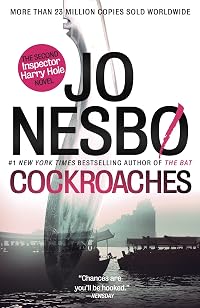
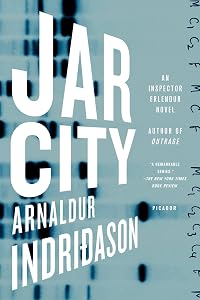
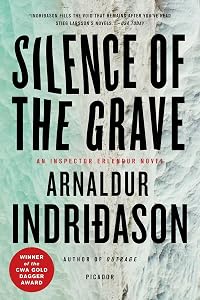
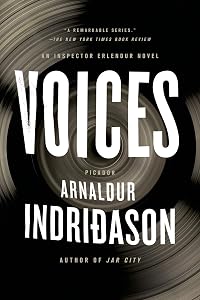
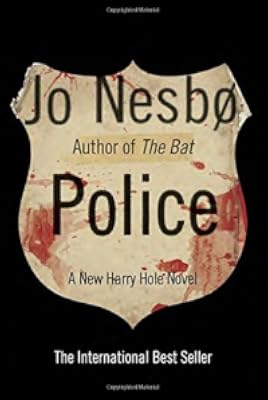
Horst is nothing like Jo Nesbo (a fellow Norwegian). I would tend to compare Horst more with Maj Sjöwall, Per Wahlöö, Arnaldur Indridason or Henning Mankell (all Swedish, with the Arnaldur's exception - Icelander), while Jo Nesbo tries to emulate the american crime fiction writing. Not so with Horst, Maj Sjöwall, Arnaldur Indridason, Per Wahlöö or Henning Mankell. And that's one of the reasons why I tend to prefer Scandinavian Crime Fiction than its american counterpart (there're exceptions naturally).
I won't get into details about the plot. Suffice to say, is that, if your tastes go in the direction of the more traditional Crime Fiction coming out of Scandinavia, you'll most certainly like this book. I certainly did.
NB:I'm curious to find how the relationship between Line and Wisting came to the point portraid in this book. show less
There's lots of so-and-so (and let's say it outright, bad...) fiction coming out of Scandinavia nowadays, that's why I was reluctant to buy the first volumes in German. I fondly remember the days that if you wanted to read Scandinavian Fiction you'd have to read them in German (the Scandinavian and German editions were published almost at the same show more time). The english publishers found the rich vein of the scandinavian crime fiction 4 or 5 year's ago, but now only the gems remain...
Horst is nothing like Jo Nesbo (a fellow Norwegian). I would tend to compare Horst more with Maj Sjöwall, Per Wahlöö, Arnaldur Indridason or Henning Mankell (all Swedish, with the Arnaldur's exception - Icelander), while Jo Nesbo tries to emulate the american crime fiction writing. Not so with Horst, Maj Sjöwall, Arnaldur Indridason, Per Wahlöö or Henning Mankell. And that's one of the reasons why I tend to prefer Scandinavian Crime Fiction than its american counterpart (there're exceptions naturally).
I won't get into details about the plot. Suffice to say, is that, if your tastes go in the direction of the more traditional Crime Fiction coming out of Scandinavia, you'll most certainly like this book. I certainly did.
NB:I'm curious to find how the relationship between Line and Wisting came to the point portraid in this book. show less
This is the second one of Horst's novels I have read, and I felt that all of the elements didn't come together as smoothly as they did in The Hunting Dogs. I did like Horst's discussion of the role of prison in society, which was carried out by the daughter throughout the course of the novel. Her
interviews with people who had been in prison for long periods of time for murder were both interesting in themselves and as a concept. I felt at those points that Horst's background in policework made the novel much deeper than it would otherwise have been; I really wanted to know what his experiences told him about the effects of prison on inmates. Of course I suppose that I was assuming that William Wisting is, to some extent, speaking for show more the author, though it's an interesting question, then, to what extent his daughter Line also speaks for the author with her opinions about prison. If I could speak in Norwegian, that is what I would ask Jorn Lier Horst. show less
interviews with people who had been in prison for long periods of time for murder were both interesting in themselves and as a concept. I felt at those points that Horst's background in policework made the novel much deeper than it would otherwise have been; I really wanted to know what his experiences told him about the effects of prison on inmates. Of course I suppose that I was assuming that William Wisting is, to some extent, speaking for show more the author, though it's an interesting question, then, to what extent his daughter Line also speaks for the author with her opinions about prison. If I could speak in Norwegian, that is what I would ask Jorn Lier Horst. show less
Members
- Recently Added By
Lists

Reading List - Scandinavian Fiction
134 works; 3 members

Allie's List of Books I Want To Read
93 works; 1 member

Jorn Lier Horst
19 works; 1 member
Author Information

150+ Works 3,315 Members
Some Editions
Series


Common Knowledge
- Canonical title
- Dregs
- Original title
- Bunnfall
- Original publication date
- 2010 (original Norwegian) (original Norwegian); 2011 (English translation) (English translation)
- People/Characters
- William Wisting (police chief inspector); Line Wisting (journalist, daughter of William); Torunn Borg (police inspector); Nils Hammer (police inspector); Espen Mortensen (crime technician); Audun Vetti (assistant chief of police) (show all 20); Eskild Anvik (chief superintendent); Suzanne Bjerke (girlfriend of Wisting); Ken Ronny Hauge (ex-convict); Rune Eiolf Hauge (brother of Ken Ronny); Christian Hauge (grandfather of Ken Ronny and Rune); Carsten Meyer; Daniel Meyer (war historian, grandson of Carsten); Sverre Lund (missing person, old head teacher); Torkel Lauritzen (missing person); Otto Saga (missing person); Hanne Richter (missing person, psychiatric patient); Camilla Thaulow (care home nurse); Ebbe Slettaker (oceanographer); Tommy Kvanter (boyfriend of Line)
- Important places
- Stavern, Norway; Kongsberg, Norway; Helgeroa, Norway
- Dedication
- In memory of Oddvar Lier Olsen
- First words
- The report was phoned in to the police switchboard in Tønsberg on Tuesday 22nd June at 09.32 hours.
- Last words
- (Click to show. Warning: May contain spoilers.)Wisting went over to the railings. 'Soon,' he said, looking towards the horizon. He could make out banks of clouds in the distance.
- Blurbers
- Forshaw, Barry; Peacock, Steven; Meek, Karen
- Original language
- Norwegian
Classifications
- Genres
- Fiction and Literature, Mystery
- DDC/MDS
- 839.8238 — Literature & rhetoric German & related literatures Other Germanic literatures Danish and Norwegian literatures Norwegian literature Norwegian Bokmål fiction 2000–
- LCC
- PT8952.18 .O77 .B8613 — Language and Literature German, Dutch and Scandinavian literatures Norwegian literature Individual authors or works 2001-
- BISAC
Statistics
- Members
- 296
- Popularity
- 108,778
- Reviews
- 15
- Rating
- (3.60)
- Languages
- 8 — Danish, Dutch, English, Finnish, Norwegian (Bokmål), Norwegian, Polish, Swedish
- Media
- Paper, Audiobook, Ebook
- ISBNs
- 32
- ASINs
- 5