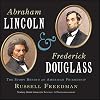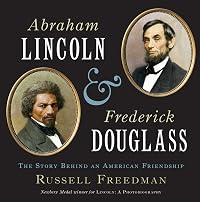
Abraham Lincoln and Frederick Douglass: The Story Behind an American Friendship
by Russell Freedman
On This Page
Description
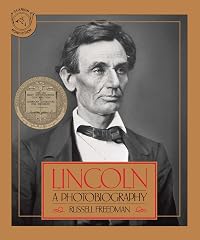
From the author of Lincoln: A Photobiography, comes a clear-sighted, carefully researched account of two surprisingly parallel lives and how they intersected at a critical moment in U.S. history. Abraham Lincoln and Frederick Douglass were both self-taught, both great readers and believers in the importance of literacy, both men born poor who by their own efforts reached positions of power and prominence—Lincoln as president of the United States and Douglass as the most famous and show more influential African American of his time. Though their meetings were few and brief, their exchange of ideas helped to end the Civil War, reunite the nation, and abolish slavery. Includes bibliography, source notes, and index.. show less
Tags
Recommendations




Member Recommendations
Slavery and Freedom on the Middle Ground: Maryland During the Nineteenth Century by Barbara J. Fields
themulhern Probably a good follow-up to any biography of Douglass, describes the milieu in which Douglass grew up and from which he escaped.
Member Reviews
Well written, well illustrated, well constructed, and probably well-researched double biography of Abraham Lincoln and Frederick Douglass. The merits of this book are its straightforward narrative structure and its well-captioned period illustrations. Its defect is sentences that don't really make any sense, that crop up here and there. For a book published in 2012, however, it is pleasantly free of modern gimmicks.
An interesting point that can be gleaned from the book is the obvious fact that the system of slavery was breaking down. This was not the well-managed slavery of a contemporary science fiction movie, but a very ill-regulated institution indeed. At each step, Douglass was favored by a laxness in the system. As a child he was show more taught to read, and books were shared with him by local free boys. As a man, he was expected to maintain himself while working in the Baltimore docks alongside many free persons sympathetic to him. He escaped on the train headed north with papers that had been forged for him by associates he had encountered through his employment. show less
An interesting point that can be gleaned from the book is the obvious fact that the system of slavery was breaking down. This was not the well-managed slavery of a contemporary science fiction movie, but a very ill-regulated institution indeed. At each step, Douglass was favored by a laxness in the system. As a child he was show more taught to read, and books were shared with him by local free boys. As a man, he was expected to maintain himself while working in the Baltimore docks alongside many free persons sympathetic to him. He escaped on the train headed north with papers that had been forged for him by associates he had encountered through his employment. show less
They had both come a long way, rising from poverty and obscurity. They had both educated themselves, and in fact read many of the same books... And they shared a common purpose.
Impressive research leads to thoughtful storytelling. I always enjoy Russell Freedman's work because of the storytelling, but in going through the citations and notes, I am thoroughly gobsmacked at the amount and depth of his research in this book, especially his primary source notes and quotations. Though most students are aware of the historic personalities of Abraham Lincoln and Frederick Douglass, few authors have done much more than mention them as famous figures of the same time period. Freedman shows how their common experiences and beliefs led them from show more one meeting to an unusual friendship. In opening with the lead-up to their first meeting, and then backtracking to take readers through each man's life up to that point, Freedman sets the stage for the actual meeting in the White House. At the end of that meeting on August 10, 1863, Lincoln told him "Mr. Douglass, never come to Washington without calling upon me." Both men were passionate about ending slavery, and holding the country together. Their efforts were pivotal in the course of the Civil War, and in the shaping of the nation in recovery from that war. This is a fantastic book to give to students interested in Lincoln this fall, with the new Spielberg movie coming out soon! 6th grade and up. show less
Impressive research leads to thoughtful storytelling. I always enjoy Russell Freedman's work because of the storytelling, but in going through the citations and notes, I am thoroughly gobsmacked at the amount and depth of his research in this book, especially his primary source notes and quotations. Though most students are aware of the historic personalities of Abraham Lincoln and Frederick Douglass, few authors have done much more than mention them as famous figures of the same time period. Freedman shows how their common experiences and beliefs led them from show more one meeting to an unusual friendship. In opening with the lead-up to their first meeting, and then backtracking to take readers through each man's life up to that point, Freedman sets the stage for the actual meeting in the White House. At the end of that meeting on August 10, 1863, Lincoln told him "Mr. Douglass, never come to Washington without calling upon me." Both men were passionate about ending slavery, and holding the country together. Their efforts were pivotal in the course of the Civil War, and in the shaping of the nation in recovery from that war. This is a fantastic book to give to students interested in Lincoln this fall, with the new Spielberg movie coming out soon! 6th grade and up. show less
The date is August 10, 1863. Frederick Douglass has arrived at the White House, taking a seat on the stairs, determined to speak with President Lincoln. Many others are waiting as well. Douglass stands out in the crowd, not just for his size. All the other petitioners are White. Douglass, a freed Black is an outspoken critic of Lincoln. The two men have never met. Douglass has no appointment. He is prepared to wait.
He does not wait long, however. The President does see Frederick Douglass on August 10, 1863; and in Abraham Lincoln & Frederick Douglass: The Story Behind an American Friendship, award-winning author, Russell Freedman tells us why.
Freedman is a master writer, and ingeniously sets up this story of friendship. Chapter One, show more "Waiting for Mr. Lincoln," sets the stage. The next three chapters detail the life of Frederick Douglass before his meeting with Lincoln. Three subsequent chapters do the same for the President. The final three chapters highlight the collaboration of the two men in pursuit of their mutual interest, abolition.
The extensive use of period photographs and artwork, as well as images of period realia (election poster, paycheck, editorial cartoons and the like) add interest to an already compelling story. The depth of Lincoln's regard for Douglass is cemented by the revelation that Mary Todd Lincoln sent Douglass a memento after Lincoln's death, knowing that Lincoln had "wanted to do something to express his warm personal regard" for Douglass.
Appendix: Dialogue Between a Master and Slave, Historic Sites, Selected Bibliography, Notes (on the sources of more than one hundred quotes) and Picture Credits (including many from the Newbery Medal-winning Russell Freedman book, Lincoln: A Photobiography) round out this extensively researched book.
The Contents page indicates an Index beginning on page 115, however, it was apparently not completed in time for the printing of the Advance Reading Copies.
Abraham Lincoln & Frederick Douglas is suggested for Grades 4-7, and is due on shelves June 19, 2012. It is a fascinating look at two of the most influential men of their time by one of the great children's authors of our time. Highly recommended.
http://shelf-employed.blogspot.com show less
He does not wait long, however. The President does see Frederick Douglass on August 10, 1863; and in Abraham Lincoln & Frederick Douglass: The Story Behind an American Friendship, award-winning author, Russell Freedman tells us why.
Freedman is a master writer, and ingeniously sets up this story of friendship. Chapter One, show more "Waiting for Mr. Lincoln," sets the stage. The next three chapters detail the life of Frederick Douglass before his meeting with Lincoln. Three subsequent chapters do the same for the President. The final three chapters highlight the collaboration of the two men in pursuit of their mutual interest, abolition.
The extensive use of period photographs and artwork, as well as images of period realia (election poster, paycheck, editorial cartoons and the like) add interest to an already compelling story. The depth of Lincoln's regard for Douglass is cemented by the revelation that Mary Todd Lincoln sent Douglass a memento after Lincoln's death, knowing that Lincoln had "wanted to do something to express his warm personal regard" for Douglass.
Appendix: Dialogue Between a Master and Slave, Historic Sites, Selected Bibliography, Notes (on the sources of more than one hundred quotes) and Picture Credits (including many from the Newbery Medal-winning Russell Freedman book, Lincoln: A Photobiography) round out this extensively researched book.
The Contents page indicates an Index beginning on page 115, however, it was apparently not completed in time for the printing of the Advance Reading Copies.
Abraham Lincoln & Frederick Douglas is suggested for Grades 4-7, and is due on shelves June 19, 2012. It is a fascinating look at two of the most influential men of their time by one of the great children's authors of our time. Highly recommended.
http://shelf-employed.blogspot.com show less
This book by Russell Freedman takes us through the lives of Frederick Douglass and Abraham Lincoln, starting from the very beginnings of their lives all through how they became friends and influenced the course of the Abolitionist movement and the Civil War. There's a lot of amazing historical stories in here that most history textbooks don't cover about either of these amazing men. Though we know what they did during their lives and how they each changed the United States with their efforts, this story delves more into the 'how' than the 'what'. The pictures are great, including the early photographs of both men. There are pictures of not just them, but of their environments which also help to farther explain their stories. This is show more great for research projects or for students who just want to learn more about Lincoln or Douglass. I enjoyed reading it. It is also well sourced and documented, and credit is given where it is due. show less
This is an entertaining and well- researched story of an unlikely friendship that influenced the course of history. Period photographs, prints, and drawings enhance this informational text. Source Notes, Bibliography, Historic Sites, Index.
Abraham Lincoln and Frederick Douglass, The Story Behind an American Friendship is a book about the friendship of these two crucial men in history. Frederick Douglass was born a slave in Maryland. He taught himself how to read and write. Douglass escaped to Pennsylvania on September 3, 1838, and there he started his journey as an abolitionist. Douglass married Anna Murray on September 15. Douglass traveled to Britain to become a free man right after he published one of his books, The Life of a Slave. He did this to escape from being brought back into slavery and he started working on his next book. Abraham Lincoln was born in a small town and also taught himself how to read and write. He loved reading because it took him places in his show more mind that he could not go in real life. Abraham's father made him work for his neighbors to earn money but under law and custom, he had to give it all to his father. Abraham became a legislator while in law school. When Abraham finished law school he gained support from being a legislator to go to the presidency. The tensions between the north and the south were rising. Abraham Lincoln elected as president of the United States. When Douglass was invited to the white house, he believed that blacks should be able to fight for their freedom and that this war should eradicate slavery. Abraham was not very fast on making this decision because he was afraid he would lose troops and support from border states. Abraham and Douglass was working together in the war to bring together both sides. Douglass admired Abraham because he treated Douglass like he treated a white person. The Civil War erupted on April 12, 1861. The Civil War went on for three years, and then there was reelection but luckily, Abraham won. He also gained support to let slaves and frees blacks to fight for their country because the people in the north thought that if they had the blacks fight, the war would end sooner. With the help of Douglass, Abraham had the support of blacks to fight. After the war, Abraham had passed the 13th amendment, which abolished slavery. Douglass took a liking to Abraham as a person they needed each other, and they had many things in common. After Abraham's assassination, his wife Mary sent Douglass a cane as a memento of the friendship between Abraham Lincoln and Frederick Douglass.
In my opinion, this was a good book because slavery was abolished. Another one of the reasons why this was a good book was because these two people in history Douglass and Abraham were prominent figures to the Civil war and society in the future. One of the things that were bad about this book was that it did not explain the hardships that both of them faced discrimination and being poor. Although it was a good book, it did not go into detail about them in their personal lives. The author I think, could have added quotes from both Abraham Lincoln and Frederick Douglass this would have made the story better. show less
In my opinion, this was a good book because slavery was abolished. Another one of the reasons why this was a good book was because these two people in history Douglass and Abraham were prominent figures to the Civil war and society in the future. One of the things that were bad about this book was that it did not explain the hardships that both of them faced discrimination and being poor. Although it was a good book, it did not go into detail about them in their personal lives. The author I think, could have added quotes from both Abraham Lincoln and Frederick Douglass this would have made the story better. show less
Good biographical information about both men -- along with brief histories of slavery and the Civil War. The writing is accessible, but not juvenile. A good book for middle school students. Excellent photos and drawings.
Members
- Recently Added By
Author Information

70+ Works 20,453 Members
Russell Freedman was born in San Francisco, California on October 11, 1929. He received a bachelor's degree in English from the University of California, Berkeley in 1951. After college, he served in the U.S. Counter Intelligence Corps during the Korean War. After his military service, he became a reporter and editor with the Associated Press. In show more 1956, he took a position at the advertising agency J. Walter Thompson in New York, where he did publicity writing for television. In 1965, he became a full-time writer. His first book, Teenagers Who Made History, was published in 1961. He went on to publish more than 60 nonfiction titles for young readers including Immigrant Kids, Cowboys of the Old West, Indian Chiefs, Martha Graham: A Dancer's Life, Confucius: The Golden Rule, Because They Marched: The People's Campaign for Voting Rights That Changed America, Vietnam: A History of the War, and The Sinking of the Vasa. He received the Newbery Medal for Lincoln: A Photobiography and three Newbery Honors for Eleanor Roosevelt: A Life of Discovery, The Wright Brothers: How They Invented the Airplane, and The Voice That Challenged a Nation: Marian Anderson and the Struggle for Equal Rights. He also received the Regina Medal, the May Hill Arbuthnot Lecture Award, the Orbis Pictus Award, the Sibert Medal, a Sibert Honor, the Laura Ingalls Wilder Medal, and the National Humanities Medal. He died on March 16, 2018 at the age of 88. (Bowker Author Biography) show less
Awards and Honors
Awards
Distinctions
Notable Lists
Common Knowledge
- People/Characters
- Abraham Lincoln; Frederick Douglass
Classifications
Statistics
- Members
- 237
- Popularity
- 137,669
- Reviews
- 13
- Rating
- (4.18)
- Languages
- English
- Media
- Paper, Ebook
- ISBNs
- 3
- ASINs
- 1