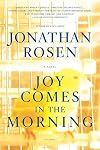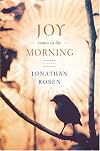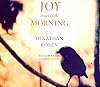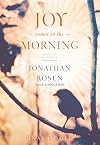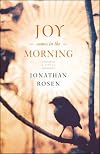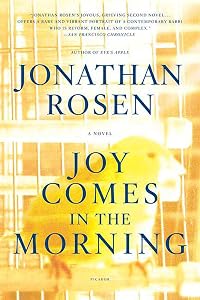
Joy Comes in the Morning: A Novel
by Jonathan Rosen
On This Page
Description
Deborah Green is a woman of passionate contradictions--a rabbi who craves goodness and surety while wrestling with her own desires and with the sorrow and pain she sees around her. Her life changes when she visits the hospital room of Henry Friedman, an older man who has attempted suicide. His parents were murdered in the Holocaust when he was a child, and all his life he's struggled with difficult questions. Deborah's encounter with Henry and his family draws her into a world of tragedy, show more frailty, love, and, finally, hope. show lessTags
Recommendations


























Member Reviews
This book is a wonderful read with plenty of substance. Deborah is naturally strong, positive and spiritual; loves her life as junior rabbi of a NYC Reform temple dealing with challenging situations, accepting people's flaws and hypocrisies.
Henry, as a Holocaust survivor, while managing to live life with his wife and two sons, never stops agonizing about his lost parents and sister, and his aborted childhood. But a stroke stirs up depressing thoughts and memories, and he decides he's had enough.
The two story lines come together, when Deborah meets Henry and worried family in the hospital. Her visits help Henry and give her time to get to know Henry's younger son, Lev. She is impressed by how gentle and sensitive he is with his father show more while her optimism, beliefs and wit attract him.
A well-paced, solid novel which examines issues of religion, memories and depression balanced with love and humor. show less
Henry, as a Holocaust survivor, while managing to live life with his wife and two sons, never stops agonizing about his lost parents and sister, and his aborted childhood. But a stroke stirs up depressing thoughts and memories, and he decides he's had enough.
The two story lines come together, when Deborah meets Henry and worried family in the hospital. Her visits help Henry and give her time to get to know Henry's younger son, Lev. She is impressed by how gentle and sensitive he is with his father show more while her optimism, beliefs and wit attract him.
A well-paced, solid novel which examines issues of religion, memories and depression balanced with love and humor. show less
The main character of this remarkable novel is a very theologically reflective female rabbi. If a book about a Christian clergy were this positively theological, it probably couldn't get published (though I guess the recent books by Elizabeth Strout & Haven Kimmel may belie this assumption). As with most good books about Jewish subjects, the Holocaust looms large in the background. This book is also another example of how good writers are treating the events of 9/11/2001 subtly rather than heavy-handedly. The book takes place over a year ending in the fall of 2000. At that point the rabbi marries, & she & her groom plan to move to Israel. The groom's parents worry that the couple will not be safe in Israel. Meanwhile, they are happy show more that their other son is moving back to New York City to take a job with a financial firm with offices on the upper stories of the World Trade Center. Nothing more is said about it, but what we know as readers confirms on of te book's main themes: that life takes strange turns that don't conform to our best-laid plans. We also learn much about the importance of ritual acts even when our faith does not keep up. show less
For those of you following my reads of Jewish interest, I am sorry to say that I did not find favor with this book that most other readers seem to have truly loved. I keep trying to figure out exactly what it was that bothered me. Perhaps it was that I was disappointed that the story I started to read, of an elderly depressed man, was not the story at all. Maybe it was that I didn’t want to read about a rabbi’s love interest.
The book really has two main characters: Deborah Green, a Reform female rabbi, and Lev Friedman, the son of an elderly man who, in the first chapter of this book, is contemplating suicide. I liked neither of the main characters. The rabbi was crass and annoying. The guy was a pale, fiery redhead who was not show more memorable in any way. I suppose this was the story of how a rabbi could be imperfect, but I saw this book as a romance that was not a romance. I felt as if I were missing in totality what the developing relationship between Rabbi Green and Lev was all about. What was the attraction? How did it develop? I really had to push myself to finish this book. I still wonder what all the hoopla about it was all about.
For someone interested in learning about Jewish culture, there were possible items of interest, none particularly engaging to me because they were all items with which I was familiar. In the narrative, there was a sprinkling of Hebrew words which I understood, but those who do not know Hebrew would not understand.
I found the rabbi to be a particularly disagreeable person. It’s not that rabbis don’t cuss or have sex, it’s just that Rabbi Green’s choice of places and times to do so were bizarre to me (for example, in a counseling session with an upset individual). How unprofessional! Other small things bothered me a lot. In one case, the rabbi throws a live hermit crab down the toilet. Why? Suffice it to say that I am very glad that Rabbi Green is not my rabbi, and I no longer have to read about her. show less
The book really has two main characters: Deborah Green, a Reform female rabbi, and Lev Friedman, the son of an elderly man who, in the first chapter of this book, is contemplating suicide. I liked neither of the main characters. The rabbi was crass and annoying. The guy was a pale, fiery redhead who was not show more memorable in any way. I suppose this was the story of how a rabbi could be imperfect, but I saw this book as a romance that was not a romance. I felt as if I were missing in totality what the developing relationship between Rabbi Green and Lev was all about. What was the attraction? How did it develop? I really had to push myself to finish this book. I still wonder what all the hoopla about it was all about.
For someone interested in learning about Jewish culture, there were possible items of interest, none particularly engaging to me because they were all items with which I was familiar. In the narrative, there was a sprinkling of Hebrew words which I understood, but those who do not know Hebrew would not understand.
I found the rabbi to be a particularly disagreeable person. It’s not that rabbis don’t cuss or have sex, it’s just that Rabbi Green’s choice of places and times to do so were bizarre to me (for example, in a counseling session with an upset individual). How unprofessional! Other small things bothered me a lot. In one case, the rabbi throws a live hermit crab down the toilet. Why? Suffice it to say that I am very glad that Rabbi Green is not my rabbi, and I no longer have to read about her. show less
I don't even remember what interested me in this book. I do know that I got it from one of my favorite sites, www.paperbackswap.com, which I'm happy to tell you about because it rocks!!
One of the reasons I was drawn to this book was because there are really not a lot of modern books that are written towards a Jewish audience that are overtly Jewish in content, especially coming from the Reform movement perspective. I am starting to see more come out lately and am hoping that this is a positive trend. Of course, I am hoping that one day I will start my one genre of literature with plenty of books showcasing strong Jewish women, exactly the way they are written about in other strong female literature, but that's another posting.
Back to show more the book. The book is told primarily in three voices: Deborah, a Reform rabbi in New York City; Henry, a Holocaust survivor who would like to commit suicide now that his quality of life diminishes further with every stroke; and Lev, his son who has recently broken off his engagement. Originally, I was only really impressed with Deborah, saddened by Henry and thoroughly frustrated with the character of Lev.
So how did Deborah become entangled in the lives of Henry, his wife and two sons? Henry had been hospitalized for a stroke and Deborah was doing chaplaincy at the hospital when she happened upon Henry. She started to do some praying for him and then Lev came in very upset, thinking that she was a Christian chaplain. She explained that no, she in fact was a Jewish rabbi.
The two of them slowly start to develop a relationship with each other, very cautiously and with much trepidation-both having been hurt in the past. The relationship starts with them studying Talmud together (Rosen wrote a previous book called Talmud and the Internet which I have sitting on my pile of books to read). Through the Talmudic study, they get to know each other better and better and the relationship becomes stronger yet fragile still at the same time as they both explore what it means to be involved like this.
As with all relationships, there are struggles and some of them quite traumatic and each make mistakes, as people do in relationships but watching their relationship develop is really beautiful and you want them to succeed in their pairing.
I loved the beautiful depictions of Deborah in prayer. She talks about wearing her grandfather's large Tallit that covers her completely and the incongruity of wearing the Tallit over her t-shirt and underwear first thing in the morning when she davens Shacharit. She also talks about her strictness in Kashrut and many other things yet while at the same time still struggling with many of the customs and laws of Judaism. I don't often feel this way, but I felt that I could really identify with this character and could see parts of myself in her and parts of what I want to be within her as well. show less
One of the reasons I was drawn to this book was because there are really not a lot of modern books that are written towards a Jewish audience that are overtly Jewish in content, especially coming from the Reform movement perspective. I am starting to see more come out lately and am hoping that this is a positive trend. Of course, I am hoping that one day I will start my one genre of literature with plenty of books showcasing strong Jewish women, exactly the way they are written about in other strong female literature, but that's another posting.
Back to show more the book. The book is told primarily in three voices: Deborah, a Reform rabbi in New York City; Henry, a Holocaust survivor who would like to commit suicide now that his quality of life diminishes further with every stroke; and Lev, his son who has recently broken off his engagement. Originally, I was only really impressed with Deborah, saddened by Henry and thoroughly frustrated with the character of Lev.
So how did Deborah become entangled in the lives of Henry, his wife and two sons? Henry had been hospitalized for a stroke and Deborah was doing chaplaincy at the hospital when she happened upon Henry. She started to do some praying for him and then Lev came in very upset, thinking that she was a Christian chaplain. She explained that no, she in fact was a Jewish rabbi.
The two of them slowly start to develop a relationship with each other, very cautiously and with much trepidation-both having been hurt in the past. The relationship starts with them studying Talmud together (Rosen wrote a previous book called Talmud and the Internet which I have sitting on my pile of books to read). Through the Talmudic study, they get to know each other better and better and the relationship becomes stronger yet fragile still at the same time as they both explore what it means to be involved like this.
As with all relationships, there are struggles and some of them quite traumatic and each make mistakes, as people do in relationships but watching their relationship develop is really beautiful and you want them to succeed in their pairing.
I loved the beautiful depictions of Deborah in prayer. She talks about wearing her grandfather's large Tallit that covers her completely and the incongruity of wearing the Tallit over her t-shirt and underwear first thing in the morning when she davens Shacharit. She also talks about her strictness in Kashrut and many other things yet while at the same time still struggling with many of the customs and laws of Judaism. I don't often feel this way, but I felt that I could really identify with this character and could see parts of myself in her and parts of what I want to be within her as well. show less
I loved this book. I took it on vacation and was really inspired to step my own observance. I identified with the protagonist: we're both 30ish, single, struggling with finding our place at work, and slightly depressed. I love this book!
Not that believable a story, but provided for much thought-provoking discussion
This religious, Jewish oriented book contains characters which are pretty interesting: a woman rabbi, but also contains a little too much religious undertones.
Members
- Recently Added By
Lists

Fiction
3 works; 1 member
Author Information

12+ Works 1,341 Members
Jonathan Rosen is the author of Eve's Apple and the culture editor of the Forward. He lives in New York City. (Bowker Author Biography)
Awards and Honors
Common Knowledge
- Original publication date
- 2005-07-14
- Epigraph
- Weeping may endure for a night
But joy comes in the morning.
(Psalm 30) - First words
- Someone was dying.
- Quotations
- A Yankees cap extinguished his red hair, except for a flaming tendril that crept out the back.
- Last words
- (Click to show. Warning: May contain spoilers.)The rabbi began to sing.
- Blurbers
- Shteyngart, Gary; Merkin, Daphne
Classifications
Statistics
- Members
- 202
- Popularity
- 162,387
- Reviews
- 7
- Rating
- (3.75)
- Languages
- English
- Media
- Paper, Audiobook, Ebook
- ISBNs
- 10
- ASINs
- 3