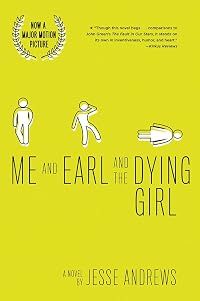
Me and Earl and the Dying Girl
by Jesse Andrews
On This Page
Description
Seventeen-year-old Greg has managed to become part of every social group at his Pittsburgh high school without having any friends, but his life changes when his mother forces him to befriend Rachel, a girl he once knew in Hebrew school who has leukemia.Tags
Recommendations

Member Recommendations
Member Reviews
Afrequently hysterical confessional from a teen narrator who won't be able to convince readers he's as unlikable as he wants them to believe.
"I have no idea how to write this stupid book," narrator Greg begins. Without answering the obvious question—just why is he writing "this stupid book"?—Greg lets readers in on plenty else. His filmmaking ambitions. His unlikely friendship with the unfortunately short, chain-smoking, foulmouthed, African-American Earl of the title. And his unlikelier friendship with Rachel, the titular "dying girl." Punctuating his aggressively self-hating account with film scripts and digressions, he chronicles his senior year, in which his mother guilt-trips him into hanging out with Rachel, who has acute show more myelogenous leukemia. Almost professionally socially awkward, Greg navigates his unwanted relationship with Rachel by showing her the films he's made with Earl, an oeuvre begun in fifth grade with their remake of Aguirre, Wrath of God. Greg's uber-snarky narration is self-conscious in the extreme, resulting in lines like, "This entire paragraph is a moron." Debut novelist Andrews succeeds brilliantly in painting a portrait of a kid whose responses to emotional duress are entirely believable and sympathetic, however fiercely he professes his essential crappiness as a human being.
Though this novel begs inevitable thematic comparisons to John Green's The Fault in Our Stars (2012), it stands on its own in inventiveness, humor and heart. (Fiction. 14 & up)
-Kirkus Review show less
"I have no idea how to write this stupid book," narrator Greg begins. Without answering the obvious question—just why is he writing "this stupid book"?—Greg lets readers in on plenty else. His filmmaking ambitions. His unlikely friendship with the unfortunately short, chain-smoking, foulmouthed, African-American Earl of the title. And his unlikelier friendship with Rachel, the titular "dying girl." Punctuating his aggressively self-hating account with film scripts and digressions, he chronicles his senior year, in which his mother guilt-trips him into hanging out with Rachel, who has acute show more myelogenous leukemia. Almost professionally socially awkward, Greg navigates his unwanted relationship with Rachel by showing her the films he's made with Earl, an oeuvre begun in fifth grade with their remake of Aguirre, Wrath of God. Greg's uber-snarky narration is self-conscious in the extreme, resulting in lines like, "This entire paragraph is a moron." Debut novelist Andrews succeeds brilliantly in painting a portrait of a kid whose responses to emotional duress are entirely believable and sympathetic, however fiercely he professes his essential crappiness as a human being.
Though this novel begs inevitable thematic comparisons to John Green's The Fault in Our Stars (2012), it stands on its own in inventiveness, humor and heart. (Fiction. 14 & up)
-Kirkus Review show less
If you're going to write a YA novel about an awkward teen, then giving him a subject like death to be awkward about turns the dial up to 11. Jesse Andrews has done this with Me and Earl and the Dying Girl. Greg is in his senior year of high school and is hoping to just get by without attracting unwelcome attention from anybody. His strategy for doing this consists of avoiding being part of any clique or group whatsoever. In doing so, he has analysed the social breakdown of his high school to about third-level subgroups.
This all gets derailed when Greg's mum insists that he go and hang out with an acquaintance, Rachel, because she has leukaemia. Greg is browbeaten into this supremely awkward situation, and Rachel is not that keen either. show more His one friend Earl reveals to Rachel that Greg and he have been making films on the sly and Rachel unaccountably turns out to like them.
This book is just splendid. The self-deprecating tone is perfect and there are plenty of laughs along the way. Andrews resists any temptation to be mawkish and there is a degree of brutal frankness between the main characters that cuts through Greg's angsty affectations to some more sober realisations. show less
This all gets derailed when Greg's mum insists that he go and hang out with an acquaintance, Rachel, because she has leukaemia. Greg is browbeaten into this supremely awkward situation, and Rachel is not that keen either. show more His one friend Earl reveals to Rachel that Greg and he have been making films on the sly and Rachel unaccountably turns out to like them.
This book is just splendid. The self-deprecating tone is perfect and there are plenty of laughs along the way. Andrews resists any temptation to be mawkish and there is a degree of brutal frankness between the main characters that cuts through Greg's angsty affectations to some more sober realisations. show less
For the first two thirds of Me and Earl and the Dying Girl, I totally forgot I was reading a “cancer book” because I was laughing too hard. The narrator Greg, a self-described chubby and pimpled teen with zero social savoir-faire, is a laugh riot. His bff Earl, a short black teen with insane skill in cracking dirty jokes and swearing profusely, is equally hilarious. Most of the hilarity comes from Greg’s self-deprecating narration. A few selections of his lol-worthiness:
-upon being forced to see the eponymous “dying girl” Rachel, who is diagnosed with leukemia, Greg asks her mom what Rachel is up to. Her mom says, “she’s just in her room,” aka she’s horribly depressed sitting alone facing a possibly terminal show more diagnosis. Greg deadpans, “livin’ it up!”
-Greg and Earl eat some pho, a type of Thai soup, and find that it has been laced with weed. Greg proceeds to get ridiculously high and perform some of the funniest drug incited shenanigans ever. This whole sequence had me in stitches.
-I had a list of like five more hysterical moments, but I think it’s one of those “you had to be there” type things, except it’s more so “you had to read it” to appreciate the jokes. Basically, this book is FUNNY.
But then the funny stopped. And the lagging pace began. And a very existential crisis developed.
I suppose there are some spoilers in my attempt at literary analysis below but nothing too unexpected. Beware…
So the last third of this book diverges from its funny ways and becomes, at least according to the way I interpreted it, a treatise against cancer books and an argument for the inherent lack of meaning in our lives.
The whole case against cancer books is that you’re making a dying human into a martyr for the cause of making living humans’ lives newly reinvigorated and worth living. Which, admittedly, does seem to suck. While the dying human is forced to face the fact that her life will be meaningless (this situation is heightened when the dying human happens to be tragically youthful), the other living humans are able to find meaning in their lives. Essentially, by rendering cancer person’s life meaningless, our lives become meaningful. Totally fucked up, right? It’s almost like a blood sacrifice to the gods of nihilism; “Please gods of nihilism, take this cancer stricken human as a testament to the lack of meaning in this world. By way of thanks, allow us to find and maintain meaning in our own lives.”
With this in mind, my thoughts turned to a very popular book published in 2012: The Fault in Our Stars by John Green. There are striking similarities between Green’s work and Andrews’ work; they both pack in laughs while discussing CANCER. In the case of The Fault in Our Stars it seems that John Green was trying to deconstruct and subsequently reconstruct the cancer book genre, mostly by trying to refute the idea that a human must die in order for us to find meaning. But although I loved The Fault in Our Stars, I don’t think Green succeeded in that respect because the end is just as teary and full of Important Messages About Life as other cancer books.
On the other hand, Me and Earl and the Dying Girl DOES, in my opinion, succeed in completely avoiding these cancer book tropes. What we’re left with is the idea that, honestly, there isn’t any meaning to life. The dying girl dies, and according to the narrator Greg, there is not much to learn from it. It sucks, of course, but people die, and we just need to learn to deal with the mortality of humanity. And surprisingly, this realization of nothingness might’ve been where the book lost me. I say surprisingly because I’m a huge lover of French existentialism and occasionally subscribe to a somewhat nihilistic philosophy. What I learned from reading this book is that I want it to matter. I want lives and deaths to be meaningful, even if in truth they aren’t. Andrews and the nihilists are probably totally right; life is meaningless, whether you die of leukemia at age 17 or die in your sleep as an octogenarian. But in books, in film, in entertainment, is it so wrong to want to be told that life is meaningful? To find some minor reassurance from the harsh world around us? Shockingly, I find myself saying no. No, it isn’t wrong to want meaning in literature and in life.
So what my assessment of Me and Earl and the Dying Girl comes down to is how I feel about this message of meaninglessness. The last third of the book seems to be supporting this idea, thus it largely failed for me. But because this book made me think so deeply about these existential ideas and managed to thoroughly destroy all cancer book tropes, forcing me to realize that I sort of like cancer book tropes, I have to commend the author. I may not fully agree with what happens at the end of this book, but I surely respect it.
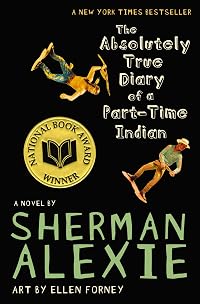
Readalike: [b:The Absolutely True Diary of a Part-Time Indian|693208|The Absolutely True Diary of a Part-Time Indian|Sherman Alexie|http://d.gr-assets.com/books/1327908992s/693208.jpg|829330] by Sherman Alexie. Another book featuring funny moments and a superb narrator voice that attempts to tackle tough issues. show less
-upon being forced to see the eponymous “dying girl” Rachel, who is diagnosed with leukemia, Greg asks her mom what Rachel is up to. Her mom says, “she’s just in her room,” aka she’s horribly depressed sitting alone facing a possibly terminal show more diagnosis. Greg deadpans, “livin’ it up!”
-Greg and Earl eat some pho, a type of Thai soup, and find that it has been laced with weed. Greg proceeds to get ridiculously high and perform some of the funniest drug incited shenanigans ever. This whole sequence had me in stitches.
-I had a list of like five more hysterical moments, but I think it’s one of those “you had to be there” type things, except it’s more so “you had to read it” to appreciate the jokes. Basically, this book is FUNNY.
But then the funny stopped. And the lagging pace began. And a very existential crisis developed.
I suppose there are some spoilers in my attempt at literary analysis below but nothing too unexpected. Beware…
So the last third of this book diverges from its funny ways and becomes, at least according to the way I interpreted it, a treatise against cancer books and an argument for the inherent lack of meaning in our lives.
The whole case against cancer books is that you’re making a dying human into a martyr for the cause of making living humans’ lives newly reinvigorated and worth living. Which, admittedly, does seem to suck. While the dying human is forced to face the fact that her life will be meaningless (this situation is heightened when the dying human happens to be tragically youthful), the other living humans are able to find meaning in their lives. Essentially, by rendering cancer person’s life meaningless, our lives become meaningful. Totally fucked up, right? It’s almost like a blood sacrifice to the gods of nihilism; “Please gods of nihilism, take this cancer stricken human as a testament to the lack of meaning in this world. By way of thanks, allow us to find and maintain meaning in our own lives.”
With this in mind, my thoughts turned to a very popular book published in 2012: The Fault in Our Stars by John Green. There are striking similarities between Green’s work and Andrews’ work; they both pack in laughs while discussing CANCER. In the case of The Fault in Our Stars it seems that John Green was trying to deconstruct and subsequently reconstruct the cancer book genre, mostly by trying to refute the idea that a human must die in order for us to find meaning. But although I loved The Fault in Our Stars, I don’t think Green succeeded in that respect because the end is just as teary and full of Important Messages About Life as other cancer books.
On the other hand, Me and Earl and the Dying Girl DOES, in my opinion, succeed in completely avoiding these cancer book tropes. What we’re left with is the idea that, honestly, there isn’t any meaning to life. The dying girl dies, and according to the narrator Greg, there is not much to learn from it. It sucks, of course, but people die, and we just need to learn to deal with the mortality of humanity. And surprisingly, this realization of nothingness might’ve been where the book lost me. I say surprisingly because I’m a huge lover of French existentialism and occasionally subscribe to a somewhat nihilistic philosophy. What I learned from reading this book is that I want it to matter. I want lives and deaths to be meaningful, even if in truth they aren’t. Andrews and the nihilists are probably totally right; life is meaningless, whether you die of leukemia at age 17 or die in your sleep as an octogenarian. But in books, in film, in entertainment, is it so wrong to want to be told that life is meaningful? To find some minor reassurance from the harsh world around us? Shockingly, I find myself saying no. No, it isn’t wrong to want meaning in literature and in life.
So what my assessment of Me and Earl and the Dying Girl comes down to is how I feel about this message of meaninglessness. The last third of the book seems to be supporting this idea, thus it largely failed for me. But because this book made me think so deeply about these existential ideas and managed to thoroughly destroy all cancer book tropes, forcing me to realize that I sort of like cancer book tropes, I have to commend the author. I may not fully agree with what happens at the end of this book, but I surely respect it.
Readalike: [b:The Absolutely True Diary of a Part-Time Indian|693208|The Absolutely True Diary of a Part-Time Indian|Sherman Alexie|http://d.gr-assets.com/books/1327908992s/693208.jpg|829330] by Sherman Alexie. Another book featuring funny moments and a superb narrator voice that attempts to tackle tough issues. show less
I loved the main character's voice. Funny, true, profane, unrelentingly negative, and in the end, against all expectations, he actually grew a little. A very good read. Recommended.
Wow. I didn't intend to read this one tonight but I started and realized it was impossible to put down. There's so many ways this book could go wrong, but it manages to stay on the tracks (train metaphor!) without crashing into a mountain (plane metaphor!).
Basically, this book is HILARIOUS and gruff and a little frustrating (but in a way that makes sense and works when I sat back and considered things as a whole). The narrator is imperfect but witty; his friend Earl is phenomenal and smart; Rachel (the titular dying girl) is -- well, I can't say anything without destroying what Andrews has created here.
Suffice to say, I bought this book on a whim: GREAT cover description that mentions filmmaking HS kids who watch Aguirre, The Wrath of show more God too much great voice in the opening = winner.
I am not sorry I succumbed to the whim purchase. and now I will begin to champion this book. show less
Basically, this book is HILARIOUS and gruff and a little frustrating (but in a way that makes sense and works when I sat back and considered things as a whole). The narrator is imperfect but witty; his friend Earl is phenomenal and smart; Rachel (the titular dying girl) is -- well, I can't say anything without destroying what Andrews has created here.
Suffice to say, I bought this book on a whim: GREAT cover description that mentions filmmaking HS kids who watch Aguirre, The Wrath of show more God too much great voice in the opening = winner.
I am not sorry I succumbed to the whim purchase. and now I will begin to champion this book. show less
Greg Gaines is a filmmaker but he's retired after making The Worst Movie Ever and instead is writing this book about how he made that terrible movie. And also about how his mom had the worst idea ever when she made him resume a friendship with Rachel after she's diagnosed with leukemia. Greg just wants to get through his senior year in high school as largely invisible and make films with Earl but apparently that's just not an option.
This is not one of those YA novels where a character has cancer and they fall in love or the people around them learn deep lessons about life because of their friendship (as the novel very clearly tells you in the first chapter). Instead it is a funny novel in which one of the characters happens to be dying show more and while there might be a sneaky deeper message in there somewhere, the most enjoyable part of the novel is Greg's hilarious interior monologue. The book made me laugh out loud a lot, which you might not expect from a book with a dying girl in it. show less
This is not one of those YA novels where a character has cancer and they fall in love or the people around them learn deep lessons about life because of their friendship (as the novel very clearly tells you in the first chapter). Instead it is a funny novel in which one of the characters happens to be dying show more and while there might be a sneaky deeper message in there somewhere, the most enjoyable part of the novel is Greg's hilarious interior monologue. The book made me laugh out loud a lot, which you might not expect from a book with a dying girl in it. show less
I remember this book being praised when it came out for being "so real," and maybe it is realistic if you're a cruel, bitter, cynical teenager with the maturity, emotional acumen, and compassion of a toddler who is actively throwing a temper tantrum.
The protagonist, Greg, repulsed me so thoroughly. He was practically allergic to any type of growth or, hell, any kind of action at all. He whines about everything and the only time he moves the story forward is because someone (his mom, his friends, etc) had to peer pressure him to do something. The whole time he's doing it though, you can be sure he'll gripe about how annoying and stupid it is (when the thing he's doing is often just being caring towards other human beings).
Also buckle up show more for some really vile sexism, racism, and homophobia. Like geez, I know this came out in 2012 and we've come a long way, but I don't remember us being quite that disgusting and horrid to other people. According to Greg, women are either nagging mothers or walking boobs, and Black people? He can't seem to fathom that they're people with inner worlds.
Throughout the book there'd be asides that spoke directly to the reader, saying things like "why are you even reading this stupid book? You must be an idiot for reading this. If I had to read this, I'd punch myself in the eyeball for being so moronic!" And frankly, Greg, yeah, I should've stopped reading right then and there because you're right--this book was not worth my time. show less
The protagonist, Greg, repulsed me so thoroughly. He was practically allergic to any type of growth or, hell, any kind of action at all. He whines about everything and the only time he moves the story forward is because someone (his mom, his friends, etc) had to peer pressure him to do something. The whole time he's doing it though, you can be sure he'll gripe about how annoying and stupid it is (when the thing he's doing is often just being caring towards other human beings).
Also buckle up show more for some really vile sexism, racism, and homophobia. Like geez, I know this came out in 2012 and we've come a long way, but I don't remember us being quite that disgusting and horrid to other people. According to Greg, women are either nagging mothers or walking boobs, and Black people? He can't seem to fathom that they're people with inner worlds.
Throughout the book there'd be asides that spoke directly to the reader, saying things like "why are you even reading this stupid book? You must be an idiot for reading this. If I had to read this, I'd punch myself in the eyeball for being so moronic!" And frankly, Greg, yeah, I should've stopped reading right then and there because you're right--this book was not worth my time. show less
Members
- Recently Added By
Lists

Recommend the 20 best books you've read in the last five years
2,168 works; 606 members

ALA's Top 10 Most Challenged Books of 2021
10 works; 1 member

SantaThing 2014 Gifts
299 works; 17 members

Books Read in 2013
1,630 works; 51 members

Top Five Books of 2016
795 works; 229 members

Literary Pittsburgh
45 works; 1 member

School library books removed after TX state legislator inquiry
429 works; 6 members

Florida's Book Bans and Challenges
311 works; 4 members

Banned or Challenged Books
400 works; 41 members

Florida
366 works; 3 members
Virginia Banned Books 2023
68 works; 3 members
Banned Books
40 works; 2 members

Hazel & Katniss & Harry & Starr Podcast
195 works; 1 member

B-B to Get
131 works; 1 member
Author Information

7 Works 4,191 Members
Jesse Andrews is an American author and screenwriter. He was born and raised in Pittsburgh, PA, and graduated from Schenley High School and Harvard University. His debut novel, Me and Earl and the Dying Girl, won the Cybils Award for Young Adult Fiction when it was published in 2012. Andrews wrote the feature-film adaptation of his novel, also show more entitled Me and Earl and the Dying Girl. The film premiered at the 2015 Sundance film festival, where it won both the Grand Jury Prize and the Audience Award. (Bowker Author Biography) show less
Awards and Honors
Awards
Distinctions
Notable Lists
Work Relationships
Has the adaptation
Common Knowledge
- Canonical title
- Me and Earl and the Dying Girl
- Original title
- Me and Earl and the Dying Girl
- Original publication date
- 2012-03-01
- People/Characters
- Greg S. Gaines; Rachel Kushner; Allan McCormick; Scott Mayhew; Madison Hartner; Olivia Ryan (show all 18); Marla Gaines; Nizar the Surly Syrian; Dr. Victor Gaines; Gretchen Gaines; Grace Gaines; Cat Stevens Gaines; Earl Jackson; Denise Kushner; Naomi Shapiro; Anna Tuchman; Mr. McCarthy; Jared "Crackhead" Krakievich
- Important places
- Pittsburgh, Pennsylvania, USA
- Related movies
- Me and Earl and the Dying Girl (2015 | IMDb)
- First words
- So in order to understand everything that happened, you have to start from the premise that high school sucks.
- Last words
- (Click to show. Warning: May contain spoilers.)I don't know what the hell I'm talking about.
- Original language
- English
Classifications
Statistics
- Members
- 3,584
- Popularity
- 4,566
- Reviews
- 144
- Rating
- (3.52)
- Languages
- 10 — Danish, English, Finnish, French, German, Hungarian, Italian, Portuguese, Spanish, Swedish
- Media
- Paper, Audiobook, Ebook
- ISBNs
- 58
- ASINs
- 22