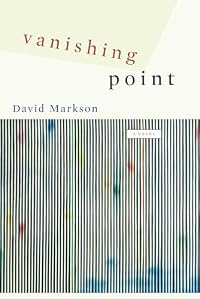
On This Page
Description
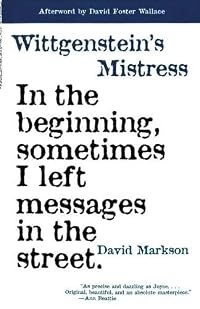
In the literary world, there is little that can match the excitement of opening a new book by David Markson. From Wittgenstein's Mistress to Reader's Block to Springer's Progress to This Is Not a Novel, he has delighted and amazed readers for decades. And now comes his latest masterwork, Vanishing Point, wherein an elderly writer (identified only as "Author") sets out to transform shoeboxes crammed with notecards into a novel--and in so doing will dazzle us with an astonishing parade of show more revelations about the trials and calamities and absurdities and often even tragedies of the creative life--and all the while trying his best (he says) to keep himself out of the tale. Naturally he will fail to do the latter, frequently managing to stand aside and yet remaining undeniably central throughout--until he is swept inevitably into the narrative's starting and shattering climax. A novel of death and laughter both--and of extraordinary intellectual richness. show lessTags
Recommendations












Member Reviews
Half of this book isn't written down. It's in the reader's head. It is different for each reader. If nothing else, it is certainly more than the sum of its parts. This is not surprising considering its 'parts' are scarcely more than random facts.
The premise is simple: an author is reorganizing a stack of index cards, each of which bears a factoid. He has them pretty much in the order he likes, and this is what you, the reader, are presented with.
But it is what goes on in your head while reading these 'cards' that makes the book. Weirdly, it is every bit as addictive as it is plotless. By some mystery of literary mastery, it all makes perfect and coherent sense in the end. The truth you are left with is long-lasting, and would shake show more even the stoniest of hearts.
It is a credit to the author-- the book's true author-- that he has accomplished so much with little more than what seems to be an experiment in the employment of excessive non-sequitors. However, I suppose that in order to be a master of prose as Markson is hailed, one would have to be a master in its deconstruction as well. show less
The premise is simple: an author is reorganizing a stack of index cards, each of which bears a factoid. He has them pretty much in the order he likes, and this is what you, the reader, are presented with.
But it is what goes on in your head while reading these 'cards' that makes the book. Weirdly, it is every bit as addictive as it is plotless. By some mystery of literary mastery, it all makes perfect and coherent sense in the end. The truth you are left with is long-lasting, and would shake show more even the stoniest of hearts.
It is a credit to the author-- the book's true author-- that he has accomplished so much with little more than what seems to be an experiment in the employment of excessive non-sequitors. However, I suppose that in order to be a master of prose as Markson is hailed, one would have to be a master in its deconstruction as well. show less
Half of this book isn't written down. It's in the reader's head. It is different for each reader. If nothing else, it is certainly more than the sum of its parts. This is not surprising considering its 'parts' are scarcely more than random facts.
The premise is simple: an author is reorganizing a stack of index cards, each of which bears a factoid. He has them pretty much in the order he likes, and this is what you, the reader, is presented with.
But it is what goes on in your head, while reading these 'cards' that makes the book. Weirdly, it is every bit as addictive as it is plotless. By some mystery of literary mastery, it all makes perfect and coherent sense in the end. The truth you are left with is long-lasting, and would shake show more even the most stoney of hearts.
It is a credit to the author-- the book's true author-- that he has accomplished so much with little more than what seems to be an experiment in the employment of excessive non-sequitors. However, I suppose that in order to be a master of prose as Markson is hailed, one would have to be a master in its deconstruction as well. show less
The premise is simple: an author is reorganizing a stack of index cards, each of which bears a factoid. He has them pretty much in the order he likes, and this is what you, the reader, is presented with.
But it is what goes on in your head, while reading these 'cards' that makes the book. Weirdly, it is every bit as addictive as it is plotless. By some mystery of literary mastery, it all makes perfect and coherent sense in the end. The truth you are left with is long-lasting, and would shake show more even the most stoney of hearts.
It is a credit to the author-- the book's true author-- that he has accomplished so much with little more than what seems to be an experiment in the employment of excessive non-sequitors. However, I suppose that in order to be a master of prose as Markson is hailed, one would have to be a master in its deconstruction as well. show less
I just noticed below that Dewey dumps this book in the "813" range of nonfiction as opposed to the usual "Fiction." According to Dewey, the 813 classification denotes books about American fiction in English, rather than plain old American fiction.
However Dewey views it, Markson's book slides defiantly into some netherworld that nullifies classification. It's basically a work of fiction built with anecdotes and folklore about previous works of literature, art and music. The framework is thin: an "Author" writes a book - "A novel of intellectual reference and allusion, so to speak minus much of the novel." And Vanishing Point is that book, Markson the "Author."
Within a few pages, you're either caught in the point-counter-point rhythm of show more Markson's carefully chosen trivia or you're angry that a publisher shelled out good money for this rambling tomfoolery while interest in your own Star Trek fan-fic or Harry Potter knockoff languishes. I belong to the former camp.
A clever way to review a book like this would be to try and ape Markson's style - delivering a series of terse, one-to-five sentence paragraphs. Alas, I discovered that Believer Magazine beat me to the punch some four years ago so instead I'll just list a few of my favorite morsels from the book:
"For art comes to you proposing frankly to give nothing but the highest quality to your moments as they pass, and simply for those moments' sake." (p 55)
"Everything vital in the world comes from neurotics. They alone have founded religions and composed our masterpieces. Said Proust." (p 104)
"Does anyone ever die who is not remembered through the remainder of at least one other entire lifetime by someone?" (p 111)
"Perfection in life is to carry out in maturity the dreams of one's youth. Said Alfred de Vigny." (p 115)
"Selah, which marks the ends of verses in the Psalms, but the Hebrew meaning of which is unknown.
And probably indicates no more than a pause, or rest.
Why does Author wish it implied more -- or might stand for some ultimate effacement, even?" (p 179)
And so on... keep in mind that each "passage" above suffices for a paragraph in Markson's construct. The bright side is that you can tell your friends you read one of the "1001 Books You Need To Read Before You Die" in just a couple hours.
But what a book! Yes, it is like flipping through a stack of Classical Studies Trivial Pursuit cards. Yes, it has a "click-thru" quality that makes is the perfect novel to Wikipedia by (Markson presumes the reader's familiarity, or perhaps mockingly exposes the reader's ineptitude, where Classical figures are concerned).
For all of its pomo trappings, there's a beauty (and depth) to its deceptive "simplicity." By regaling us with miniature tales of the insanity, immorality, irascibility, and -- of course -- ingenuity of great thinkers and artists past, Markson begins to paint a broader picture. It has a fugue-like quality, with Markson worrying over the same theme repeatedly until he eventually extracts bold questions about the nature of creativity and what it means to try to make your mark on the world as an artist. To paraphrase what is often said about jazz music -- it's the note Markson isn't playing (at least not overtly) that you need to listen to.
Writing: ***
Story: **** 1/2
Reread?: Yes; unless you're a scholar of Markson's cultural breadth, I imagine a cursory read isn't enough to really connect with all of the figures and works and cities and other proper nouns he's name-checking. Someday I'll reread it with an encyclopedia close by and take a few weeks -- rather than a few hours -- to digest it. I look forward to checking out some of his other stuff, too. show less
However Dewey views it, Markson's book slides defiantly into some netherworld that nullifies classification. It's basically a work of fiction built with anecdotes and folklore about previous works of literature, art and music. The framework is thin: an "Author" writes a book - "A novel of intellectual reference and allusion, so to speak minus much of the novel." And Vanishing Point is that book, Markson the "Author."
Within a few pages, you're either caught in the point-counter-point rhythm of show more Markson's carefully chosen trivia or you're angry that a publisher shelled out good money for this rambling tomfoolery while interest in your own Star Trek fan-fic or Harry Potter knockoff languishes. I belong to the former camp.
A clever way to review a book like this would be to try and ape Markson's style - delivering a series of terse, one-to-five sentence paragraphs. Alas, I discovered that Believer Magazine beat me to the punch some four years ago so instead I'll just list a few of my favorite morsels from the book:
"For art comes to you proposing frankly to give nothing but the highest quality to your moments as they pass, and simply for those moments' sake." (p 55)
"Everything vital in the world comes from neurotics. They alone have founded religions and composed our masterpieces. Said Proust." (p 104)
"Does anyone ever die who is not remembered through the remainder of at least one other entire lifetime by someone?" (p 111)
"Perfection in life is to carry out in maturity the dreams of one's youth. Said Alfred de Vigny." (p 115)
"Selah, which marks the ends of verses in the Psalms, but the Hebrew meaning of which is unknown.
And probably indicates no more than a pause, or rest.
Why does Author wish it implied more -- or might stand for some ultimate effacement, even?" (p 179)
And so on... keep in mind that each "passage" above suffices for a paragraph in Markson's construct. The bright side is that you can tell your friends you read one of the "1001 Books You Need To Read Before You Die" in just a couple hours.
But what a book! Yes, it is like flipping through a stack of Classical Studies Trivial Pursuit cards. Yes, it has a "click-thru" quality that makes is the perfect novel to Wikipedia by (Markson presumes the reader's familiarity, or perhaps mockingly exposes the reader's ineptitude, where Classical figures are concerned).
For all of its pomo trappings, there's a beauty (and depth) to its deceptive "simplicity." By regaling us with miniature tales of the insanity, immorality, irascibility, and -- of course -- ingenuity of great thinkers and artists past, Markson begins to paint a broader picture. It has a fugue-like quality, with Markson worrying over the same theme repeatedly until he eventually extracts bold questions about the nature of creativity and what it means to try to make your mark on the world as an artist. To paraphrase what is often said about jazz music -- it's the note Markson isn't playing (at least not overtly) that you need to listen to.
Writing: ***
Story: **** 1/2
Reread?: Yes; unless you're a scholar of Markson's cultural breadth, I imagine a cursory read isn't enough to really connect with all of the figures and works and cities and other proper nouns he's name-checking. Someday I'll reread it with an encyclopedia close by and take a few weeks -- rather than a few hours -- to digest it. I look forward to checking out some of his other stuff, too. show less
I am not, I repeat not, a fan of experimental books. The only reason I picked this up at the library was because it was on Boxall's "1001 Books You Must Read Before You Die" list. That being said, I really liked this book - I found it equivalent to reading a gossip mag of the creators of fine art of the past two or three centuries. I also found the links between what was happening to the Author and his little tidbits rather amusing. I laughed out loud and I felt the gravitas of death, usually within the same page or two. I highly recommend this book.
The book is 191 pages long, containing exactly 1927 anecdotes
which happens to be the year Author was born.
Reviewer made that bit up, about the number of anecdotes.
But not the bit about Author being born.
What was it Author quotes Anatole France as having said on page thirty-one?
Brahms was forty-three before he completed his first symphony.
A symphony is no joke--unquote,
says Author on page twenty-four.
Vanishing Point.
This Is Not a Novel.
Reviewer is intrigued that this novel reads like a collection of tweets.
A novel which was written by hand on notecards.
Then after many revisions, typewritten.
Seven wealthy towns contend for Homer dead,
Through which the living Homer begged his bread.
quotes Author on page eighty-three.
The thought occurs to show more Reviewer that he has read the words of this book many times before.
Just not in this order.
Witter Gitter Man, Prof, Vicky, Herr Sinckel-Winckel.
Names Wittgenstein was called.
Death and art and petty egos, this book is about.
And grammatical inversions.
The mackerel-crowded seas
mentioned on page one-eighteen.
Wittgenstein's Vienna. Wittgenstein's Nephew. Wittgenstein's Ladder. Wittgenstein's Poker.
Recites Author on page one-seventy-five.
He forgot Wittgenstein's Mistress.
What was it Marianne Moore said about omissions?
A great novel...unless you're in the mood to read a novel.
Says one Goodreads reviewer.
Henry James Salon, on Peachtree Street, Atlanta GA.
Artists and madness, artists and death, artists and money, artists and myth
Is it only this Reviewer’s wish that Author was less preoccupied with artists?
Or is the artist some kind of representative?
Vanishing Point.
Not a Memoir.
Echoes. Reverberations.
For pointillism to work, some of the points must be less pronounced.
Virginia Woolf’s quote about her intended suicide on page one-sixty-eight.
Anecdote about Kurt Vonnegut’s cunning on page one-seventy-one.
Praise on the back cover, Vonnegut’s.
The fact that Ingmar Bergman and Michelangelo Antonioni died the same day.
Voice of Author in Reviewer’s head.
Reviewer wonders if he’ll be able to think again in non-discreet units.
Reviewer is illiterate.
In all languages but one.
Charles Darwin was known to slice a fat book in half, to make it easier to handle.
Or to rip out any sections he was not interested in.
That lump, Ezra Pound called Robert Lowell.
Why is it Reviewer can’t keep himself out of this review
As much as Author can’t keep himself out of this book?
We can say nothing but what has been said; the composition and method is ours only.
Author says Burton says.
You mean Wally wrote poetry?
A colleague of Wallace Stevens’ remarked upon the poet’s death.
Far off I heard the orchestra tuning their instruments.
Says someone.
Selah. show less
which happens to be the year Author was born.
Reviewer made that bit up, about the number of anecdotes.
But not the bit about Author being born.
What was it Author quotes Anatole France as having said on page thirty-one?
Brahms was forty-three before he completed his first symphony.
A symphony is no joke--unquote,
says Author on page twenty-four.
Vanishing Point.
This Is Not a Novel.
Reviewer is intrigued that this novel reads like a collection of tweets.
A novel which was written by hand on notecards.
Then after many revisions, typewritten.
Seven wealthy towns contend for Homer dead,
Through which the living Homer begged his bread.
quotes Author on page eighty-three.
The thought occurs to show more Reviewer that he has read the words of this book many times before.
Just not in this order.
Witter Gitter Man, Prof, Vicky, Herr Sinckel-Winckel.
Names Wittgenstein was called.
Death and art and petty egos, this book is about.
And grammatical inversions.
The mackerel-crowded seas
mentioned on page one-eighteen.
Wittgenstein's Vienna. Wittgenstein's Nephew. Wittgenstein's Ladder. Wittgenstein's Poker.
Recites Author on page one-seventy-five.
He forgot Wittgenstein's Mistress.
What was it Marianne Moore said about omissions?
A great novel...unless you're in the mood to read a novel.
Says one Goodreads reviewer.
Henry James Salon, on Peachtree Street, Atlanta GA.
Artists and madness, artists and death, artists and money, artists and myth
Is it only this Reviewer’s wish that Author was less preoccupied with artists?
Or is the artist some kind of representative?
Vanishing Point.
Not a Memoir.
Echoes. Reverberations.
For pointillism to work, some of the points must be less pronounced.
Virginia Woolf’s quote about her intended suicide on page one-sixty-eight.
Anecdote about Kurt Vonnegut’s cunning on page one-seventy-one.
Praise on the back cover, Vonnegut’s.
The fact that Ingmar Bergman and Michelangelo Antonioni died the same day.
Voice of Author in Reviewer’s head.
Reviewer wonders if he’ll be able to think again in non-discreet units.
Reviewer is illiterate.
In all languages but one.
Charles Darwin was known to slice a fat book in half, to make it easier to handle.
Or to rip out any sections he was not interested in.
That lump, Ezra Pound called Robert Lowell.
Why is it Reviewer can’t keep himself out of this review
As much as Author can’t keep himself out of this book?
We can say nothing but what has been said; the composition and method is ours only.
Author says Burton says.
You mean Wally wrote poetry?
A colleague of Wallace Stevens’ remarked upon the poet’s death.
Far off I heard the orchestra tuning their instruments.
Says someone.
Selah. show less
Still not sure what this one was about, but damn has it made me think. Not even sure if the "A Novel" is an appropriate addition to the title, this work is as far out to lunch as any I've read in the past decade. It is nothing but 191 pages of quotations or anecdotes of the famous near-famous or infamous interspersed with a very brief narrative from an unknown character who refers to himself simply as "Author." Is the author dying? Yes. Does he die? We think so, but don’t' know for sure. Truly wild. Too bad most experimental fiction is just navel contemplation and nothing like this.
The novel appears as a collage...cleverly, innovatively constructed with nothing but short, crisp, often humorous, seemingly unconnected, trivial vignettes. As the novel nears its terminus, we realize, in part, that the novel's voice itself has become a segment of the collage's assembled theme.
Worthy of the short amount of time needed to read.
Worthy of the short amount of time needed to read.
Members
- Recently Added By
Published Reviews
“Obstinately cross-referential and of cryptic interconnective syntax,” Author continues. Which is what Reader says of Reader’s Block. Verbatim, more or less.
added by paradoxosalpha
Author Information

20+ Works 4,277 Members
David Markson was born in Albany, New York on December 20, 1927. He received an undergraduate degree from Union College and a master's degree from Columbia University. Besides being a writer, he also worked as a journalist, book editor, and periodically as a college professor at Columbia University, Long Island University, and The New School. His show more works include Epitaph for a Tramp; Epitaph for a Dead Beat; This Is Not a Novel; Springer's Progress; Wittgenstein's Mistress; and The Last Novel. His novel, The Ballad of Dingus Magee, was made into a film starring Frank Sinatra entitled Dirty Dingus Magee. He was found dead on June 4, 2010 at the age of 82. (Bowker Author Biography) show less
Awards and Honors
Notable Lists
Series

Common Knowledge
- Canonical title
- Vanishing Point
- Original publication date
- 2004-02-02
- People/Characters
- Author
- Dedication
- For Johanna and Scott. For Nicole and Jed
- First words
- Author has finally started to put his notes into manuscript form.
- Last words
- (Click to show. Warning: May contain spoilers.)Selah.
- Blurbers
- Beattie, Ann; Vonnegut, Kurt; Wallace, David Foster; Dirda, Michael
Classifications
Statistics
- Members
- 532
- Popularity
- 55,867
- Reviews
- 12
- Rating
- (3.81)
- Languages
- English, Spanish
- Media
- Paper
- ISBNs
- 2
- ASINs
- 1