On This Page
Description
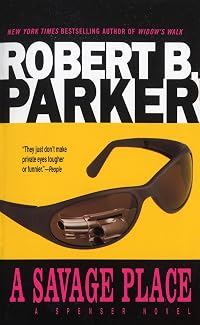
Fiction. Mystery. Thriller. HTML:TV reporter Candy Sloan has eyes the color of cornflowers and legs that stretch all the way to heaven. She also has somebody threatening to rearrange her lovely face if she keeps on snooping into charges of Hollywood racketeering.Spenser's job is to keep Candy healthy until she breaks the biggest story of her career. But her star witness has just bowed out with three bullets in his chest, two tough guys have doubled up to test Spenser's skill with his show more fists, and Candy is about to use her own sweet body as live bait in a deadly romantic game—a game that may cost Spenser his life. show less
Tags
Recommendations




Member Reviews
“For something as large as it is, death doesn’t look like much at first.”
If those in charge of Robert B. Parker’s legacy as a writer were asked to choose one book to place in a time capsule, for future generations, a story that would highlight his crisp prose, his swiftly moving and enjoyable narratives, his sterling dialog and humorous wit, his welcome references to literature and culture that made his best detective novels more than the sum of their parts, and the resonating story-lines he was capable of early in the series, A Savage Place might not be a bad choice.
A Savage Place contains all those things, and is Robert B. Parker, and Spenser, at his best. There is a minimal amount of Susan here — thank goodness — but also show more no Hawk and no Vinnie. In the later books, Susan’s absence for most of a story would become rare indeed, but even more welcome. Hawk’s and Vinnie’s absence from a later Spenser story could often be a detriment, but here in A Savage Place, at this point in the series, it works in the story’s favor.
“As I moved in the darkness I noticed there was scrub growth in parts of the oil field. When I was very close, I could see them and see how the wind made their branches move restively, like animals too long restrained. Then I heard the shots.”
There is a story here, and a plot, and it’s a good one. Parker slowly paints Candy Sloan as a real person, not just a plot device, and she’s fleshed out in her attributes and her failings in such a deft way over the course of this novel that we understand what Spenser sees in her that makes him feel about her the way that he does. When things go awry near the moving and resonating end of A Savage Place, it isn’t the violence we remember or connect with, but the emotions, the loss, and the regret. In that sense, even though this bears no resemblance in tone or form to the Lew Archer novels of Ross Macdonald, there is an echo of the better Archer novels.
Spenser is out of his normal Boston element, traveling to the fake land of Los Angeles to protect a pretty reporter named Candy Sloan, at the behest of Rachel Wallace. It gives Parker, through Spenser’s voice, a chance to make pointed observations about both the shallow culture of Los Angeles and its surrealistic vibe.
Candy Sloan was the first relatable romantic interest that Parker let get away in the series; Linda, from Valediction became the next. Eventually he would double down on Susan, and the series would alter and become something less than the promise of Early Autumn and Ceremony and A Savage Place because of it. Sometimes the series entries would be almost as good, but more as entertainment; Parker’s tools as a writer were still on display, but his heart to make the stories resonate like earlier entries either too damaged or too compromised to go there, in my opinion as a reader.
“The rain was hard now, and dense, washing down on her upturned face. The wind was warm no longer.”
Hundred-Dollar Baby, the third novel in the April Kyle trilogy, which came much later in this series, almost matches A Savage Place in its resonance, and the feeling of loss at the end. Almost. I’ve reviewed a ton of Spenser novels over the years, and returning to this earlier one in the Spenser canon is just a stark reminder of what we lost when Parker passed. Avoid all the novels written since his death; despite what you might hear, they’re dreadful, and don’t come close to capturing Parker’s voice or his characters. It is sad that in a generation, so many will have read the books written by others since his passing, that few will even remember Spenser, or Parker, as they once were.
Pick up A Savage Place to get a real sense of what this series once was, and what a great writer in this genre we all lost when he left us. show less
If those in charge of Robert B. Parker’s legacy as a writer were asked to choose one book to place in a time capsule, for future generations, a story that would highlight his crisp prose, his swiftly moving and enjoyable narratives, his sterling dialog and humorous wit, his welcome references to literature and culture that made his best detective novels more than the sum of their parts, and the resonating story-lines he was capable of early in the series, A Savage Place might not be a bad choice.
A Savage Place contains all those things, and is Robert B. Parker, and Spenser, at his best. There is a minimal amount of Susan here — thank goodness — but also show more no Hawk and no Vinnie. In the later books, Susan’s absence for most of a story would become rare indeed, but even more welcome. Hawk’s and Vinnie’s absence from a later Spenser story could often be a detriment, but here in A Savage Place, at this point in the series, it works in the story’s favor.
“As I moved in the darkness I noticed there was scrub growth in parts of the oil field. When I was very close, I could see them and see how the wind made their branches move restively, like animals too long restrained. Then I heard the shots.”
There is a story here, and a plot, and it’s a good one. Parker slowly paints Candy Sloan as a real person, not just a plot device, and she’s fleshed out in her attributes and her failings in such a deft way over the course of this novel that we understand what Spenser sees in her that makes him feel about her the way that he does. When things go awry near the moving and resonating end of A Savage Place, it isn’t the violence we remember or connect with, but the emotions, the loss, and the regret. In that sense, even though this bears no resemblance in tone or form to the Lew Archer novels of Ross Macdonald, there is an echo of the better Archer novels.
Spenser is out of his normal Boston element, traveling to the fake land of Los Angeles to protect a pretty reporter named Candy Sloan, at the behest of Rachel Wallace. It gives Parker, through Spenser’s voice, a chance to make pointed observations about both the shallow culture of Los Angeles and its surrealistic vibe.
Candy Sloan was the first relatable romantic interest that Parker let get away in the series; Linda, from Valediction became the next. Eventually he would double down on Susan, and the series would alter and become something less than the promise of Early Autumn and Ceremony and A Savage Place because of it. Sometimes the series entries would be almost as good, but more as entertainment; Parker’s tools as a writer were still on display, but his heart to make the stories resonate like earlier entries either too damaged or too compromised to go there, in my opinion as a reader.
“The rain was hard now, and dense, washing down on her upturned face. The wind was warm no longer.”
Hundred-Dollar Baby, the third novel in the April Kyle trilogy, which came much later in this series, almost matches A Savage Place in its resonance, and the feeling of loss at the end. Almost. I’ve reviewed a ton of Spenser novels over the years, and returning to this earlier one in the Spenser canon is just a stark reminder of what we lost when Parker passed. Avoid all the novels written since his death; despite what you might hear, they’re dreadful, and don’t come close to capturing Parker’s voice or his characters. It is sad that in a generation, so many will have read the books written by others since his passing, that few will even remember Spenser, or Parker, as they once were.
Pick up A Savage Place to get a real sense of what this series once was, and what a great writer in this genre we all lost when he left us. show less
For a second book in a row, Spenser did not get shot or beaten (or both). Change in the direction of the series or just a couple of books? We will see in the next ones.
Which does not make the book less violent than usual - people get beaten (and Spenser does some of the beating), people get dead and Spenser even manages to get arrested. What the book is lacking are Susan and Hawk - none of them make an appearance in the flesh or over the phone. It is strange - in previous books outside of Boston, Parker still managed to get them into the picture, including Hawk flying to Europe to help. But not here.
We do see someone we had met before - Rachel Wallace calls Spenser to tell him that he was recommended by her to a friend of hers in Los show more Angeles. Enter Candy Sloan - a reporter in LA that had stumbled upon some mafia-connected studio executives and now requires a bodyguard. So Spenser packs his suitcases and goes West. Of course things start as bad as possible for everyone involved, a man gets killed and somewhere in the whole mess, Spenser ends up in his client's bed (which is not that surprising all things considered). Then things get really complicated - more people die, more people get beaten, more connections that should not exist get uncovered. Add a police detective that wants to help (and does at the end) and the streets of LA and you have a complete cast of characters.
The story is somewhat predictable in places as most of the Spenser novels but it is peppered with the usual humor (not always PC one) and the views of a man that tries but not always succeed to be an evolved one. I had more issues with Candy - some of her reactions were one-tone - a raging feminist that does stupid things just because she wants to prove something. It may be a sign of the times (the novel was written in 1981 after all) but it did sound a bit too "in the face". She did remind me Rachel Wallace from a previous book though - even without the connection at the start.
I like the series - the humor and the food and clothing commentary (all of them delivered by Spenser - you really need to read it to appreciate the latter) make the series a lot better than it should be - considering that its overall testosterone-filled language and actions. Spenser is a strange detective but his stories are entertaining. Off to the next one. show less
Which does not make the book less violent than usual - people get beaten (and Spenser does some of the beating), people get dead and Spenser even manages to get arrested. What the book is lacking are Susan and Hawk - none of them make an appearance in the flesh or over the phone. It is strange - in previous books outside of Boston, Parker still managed to get them into the picture, including Hawk flying to Europe to help. But not here.
We do see someone we had met before - Rachel Wallace calls Spenser to tell him that he was recommended by her to a friend of hers in Los show more Angeles. Enter Candy Sloan - a reporter in LA that had stumbled upon some mafia-connected studio executives and now requires a bodyguard. So Spenser packs his suitcases and goes West. Of course things start as bad as possible for everyone involved, a man gets killed and somewhere in the whole mess, Spenser ends up in his client's bed (which is not that surprising all things considered). Then things get really complicated - more people die, more people get beaten, more connections that should not exist get uncovered. Add a police detective that wants to help (and does at the end) and the streets of LA and you have a complete cast of characters.
The story is somewhat predictable in places as most of the Spenser novels but it is peppered with the usual humor (not always PC one) and the views of a man that tries but not always succeed to be an evolved one. I had more issues with Candy - some of her reactions were one-tone - a raging feminist that does stupid things just because she wants to prove something. It may be a sign of the times (the novel was written in 1981 after all) but it did sound a bit too "in the face". She did remind me Rachel Wallace from a previous book though - even without the connection at the start.
I like the series - the humor and the food and clothing commentary (all of them delivered by Spenser - you really need to read it to appreciate the latter) make the series a lot better than it should be - considering that its overall testosterone-filled language and actions. Spenser is a strange detective but his stories are entertaining. Off to the next one. show less
I have read 13 of Robert Parker's Spenser novels, and A Savage Place is my least favorite (so far). With it goes my speculation that his earliest work is his best. Not much happens for most of the book, in terms of the action and clever dialogue Parker fans love. What's more, elements of the plot are not credible. A low level Hollywood TV reporter named Candy Sloan hires a private investigator from far-away Boston for bodyguard protection, and the studio pays his fee and expenses. "Candy" is trying to prove that she's more than a sex object, but has sex with news sources to get information. And with the brilliant and beautiful Susan waiting back home, Spenser also beds Candy (that's ok apparently -- Susan won't mind), but only once show more since more than that would be "cheating". Having violated professional ethics and stretched his personal ones, Spenser's high moral code gets pretty tattered, but that's nothing compared to what happens to his success rate out of the bedroom.
There is a saving grace to the book, in my view, and that is Parker's description of that desperate night of violence in the California oil fields. The mood and evocative description is worth the price of admission, and plenty of action happens at the end of the book. Given the strong split in rankings of this book at Amazon and here, whether the finale was worth waiting for will be a matter of opinion. show less
There is a saving grace to the book, in my view, and that is Parker's description of that desperate night of violence in the California oil fields. The mood and evocative description is worth the price of admission, and plenty of action happens at the end of the book. Given the strong split in rankings of this book at Amazon and here, whether the finale was worth waiting for will be a matter of opinion. show less
I had never read a book by this author but needed a real quick read and this fit. Well developed characters with just enough background of the series so the reader doesn't seem to be missing any information regarding Spenser the private eye. Also it didn't feel dated even though it is from the 1980's.
I'm a huge fan of the Spenser series. This novel, which is right in the middle of Parker's best run of Spenser novels, starting with Promised Land in 1976 and going through A Catskill Eagle in 1985, is very poor. Hawk is not in it. And Spenser is out of his element in Los Angeles. He also sleeps with another woman even though he's with Susan. Are you kidding me? I want to forget this one and move on. I can't believe I read this twice: once in the 1980's when I binged on Parker, and now when I'm rereading. I wish I had not ever read it! ;-)
Rachel Wallace calls Spenser to ask him to help Candy Sloan, a Los Angeles TV news reporter with a story uncovering corruption in the movies. There are discussions about feminism; but Candy, who says she wants to prove that she is more than just a pretty face, is quite willing to use her pretty face as a means to gather information.
The copy I read, while it says November 1987 on the verso of the title page, mentions that Mr. Parker died in 2010 on the inside of the back cover.
The copy I read, while it says November 1987 on the verso of the title page, mentions that Mr. Parker died in 2010 on the inside of the back cover.
The Candy Sloane novel - a common touchstone for Spenser in the later novels - so important to the development of the character if you're reading through the series. That said, it stands alone as they all do, with the usual attention to detail, nuance of observation, and build of narrative tension.
Members
- Recently Added By
Lists

Chronological 2017
30 works; 1 member
Author Information

126+ Works 72,849 Members
Robert Brown Parker is an American fiction writer of mysteries. He was born in Springfield, Massachusetts and earned his BA degree from Colby College in Waterville, Maine. He went on to earn his master's degree in English literature from Boston University. He started his career working in advertising. After some years, he went back to school to show more earn his PhD in English from Boston University in 1971. He then began his writng career while teaching at Northeastern University. He decided to become a full-time writer in 1979. His most popular works were the 40 novels written about the private detective Spenser. The ABC Television Network developed the television series "Spenser: For Hire", based on the character in the mid-1980s. Parker also wrote nine novels based on the character Jesse Stone and six novels based on the character Sunny Randall. On January 18, 2010, Robert Parker died suddenly of a heart attack at his home in Cambridge Massachusetts. (Bowker Author Biography) show less
Series

Belongs to Publisher Series
Biblioteca Negra (12)
Work Relationships
Is contained in
Common Knowledge
- Canonical title*
- Un Lugar Salvaje
- Original title
- A Savage Place
- Alternate titles*
- Spenser en zijn wraak
- Original publication date
- 1981
- People/Characters
- Spenser; Candy Sloan; Hawk; Susan Silverman
- Important places
- Boston, Massachusetts, USA; California, USA; Los Angeles, California, USA; Massachusetts, USA
- Related movies
- Spenser: A Savage Place (1995 | IMDb)
- Epigraph
- And there were gardens bright with sinuous rills
Where blossomed many an incense-bearing tree;
And here were forests ancient as the hills,
Enfolding sunny spots of greenery.
But oh! that deep romantic chasm which ... (show all)slanted
Down teh green hill athwart a cedarn cover!
A savage place! as holy and enchanged
As e'er beneath a waning moon was haunted
By woman wailing for her demon-lover!
Samuel Taylor Coleridge, "Kubla Khan" - Dedication
- For Joan, No one is as interesting, nor nearly so luminous.
- First words
- I was sitting in my office above the bank with my tie loose and my feet up, reading a book called Play of Double Senses: Spenser's Fairie Queene.
- Last words
- (Click to show. Warning: May contain spoilers.)I slept straight through to Boston and dreamed of Susan Silverman all the way home.
- Original language*
- Inglés
*Some information comes from Common Knowledge in other languages. Click "Edit" for more information.
Classifications
Statistics
- Members
- 1,016
- Popularity
- 25,701
- Reviews
- 17
- Rating
- (3.60)
- Languages
- 6 — Czech, Dutch, English, French, German, Spanish
- Media
- Paper, Audiobook, Ebook
- ISBNs
- 22
- ASINs
- 9