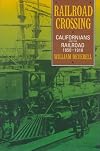
Railroad Crossing: Californians and the Railroad, 1850-1910
by William Deverell
On This Page
Description
Nothing so changed nineteenth-century America as did the railroad. Growing up together, the iron horse and the young nation developed a fast friendship. Railroad Crossing is the story of what happened to that friendship, particularly in California, and it illuminates the chaos that was industrial America from the middle of the nineteenth century through the first decade of the twentieth.Americans clamored for the progress and prosperity that railroads would surely bring, and no railroad was show more more crucial for California than the transcontinental line linking East to West. With Gold Rush prosperity fading, Californians looked to the railroad as the state's new savior. But social upheaval and economic disruption came down the tracks along with growth and opportunity.Analyzing the changes wrought by the railroad, William Deverell reveals the contradictory roles that technology and industrial capitalism played in the lives of Americans. That contrast was especially apparent in California, where the gigantic corporate "Octopus"-the Southern Pacific Railroad-held near-monopoly status. The state's largest employer and biggest corporation, the S.P. was a key provider of jobs and transportation-and wielder of tremendous political and financial clout.Deverell's lively study is peopled by a rich and disparate cast: railroad barons, newspaper editors, novelists, union activists, feminists, farmers, and the railroad workers themselves. Together, their lives reflect the many tensions-political, social, and economic-that accompanied the industrial transition of turn-of-the-century America. show lessTags
Recommendations













Member Reviews
In Railroad Crossing: Californians and the Railroad, 1850-1910, William Deverell argues, “In their interminable wrestling match with the railroad, Californians proved simply that they were – as Lord Bryce suggested – prototypically American: full of contradictions about the roles that technology and industrial capitalism would play, and be allowed to play, in their lives as they looked to the coming of the new century” (pg. 7). Describing the early role of the railroad, Deverell writes, “As an agent bearing profound physical, psychological, and social change… the railroad represented an intrusion of astounding proportion and variety into mid-nineteenth century American communities. Not only was the effect of the technology show more extraordinarily diverse, but the railroad itself was no single entity or idea” (pg. 27).
Deverell continues, “Because the railroad – and… one railroad in particular – was the prevailing symbol of corporate capitalism in the West, it was assumed that actions aimed at curbing the railroad’s influence would naturally permeate through the society and touch every commercial activity in the state” (pg. 42). Further, “Not only did potential reformers have to confront corporate power; they had to overcome a powerful assumption on the part of many that railroad antagonism equaled economic if not political revolution. One way to overcome that assumption, as exemplified by a movement that sprang up among the working class in San Francisco, was the resort to a traditional rallying cry and a staple of American political culture: the imperilment of liberty” (pg. 42).
In the second half of his monograph, Deverell revises current historical thinking. For example, in discussing the contest of the Los Angeles harbor, Deverell writes, “The free harbor fight demonstrates that the Southern Pacific Railroad was not the all-powerful entity it has been made out to be. It did at times face significant opposition. Yet scholarly inquiries must critically assess the motivations of those who battled the railroad corporation. Matching the harbor fight personnel with later Progressive-era reform movements in itself proves little. Nor does painting the pro-San Pedro activists as selfless urban populists tell us much about their actions or motivations” (pg. 121). Deverell also counters the current consensus of Frank Norris’s 1901 novel, The Octopus: A Story of California. Deverell writes, “The novel fails at what may historians have claimed it to be, a reliable depiction of the railroad corporation’s ruthlessness and an extraordinary instance of anti-railroad conflict. But that shortcoming, something Norris would himself have admitted, does not mean that the novel is useless as a tool for adding to our historical understanding” (pg. 144). He primarily cautions against viewing railroad antagonism in California as easily representative of industrial change and upheaval throughout the nation, pointing out that the nature of opposition was “breathtakingly varied” (pg. 173). Deverell’s work will interest California historians and those examining nineteenth-century industrialization and its social impact. show less
Deverell continues, “Because the railroad – and… one railroad in particular – was the prevailing symbol of corporate capitalism in the West, it was assumed that actions aimed at curbing the railroad’s influence would naturally permeate through the society and touch every commercial activity in the state” (pg. 42). Further, “Not only did potential reformers have to confront corporate power; they had to overcome a powerful assumption on the part of many that railroad antagonism equaled economic if not political revolution. One way to overcome that assumption, as exemplified by a movement that sprang up among the working class in San Francisco, was the resort to a traditional rallying cry and a staple of American political culture: the imperilment of liberty” (pg. 42).
In the second half of his monograph, Deverell revises current historical thinking. For example, in discussing the contest of the Los Angeles harbor, Deverell writes, “The free harbor fight demonstrates that the Southern Pacific Railroad was not the all-powerful entity it has been made out to be. It did at times face significant opposition. Yet scholarly inquiries must critically assess the motivations of those who battled the railroad corporation. Matching the harbor fight personnel with later Progressive-era reform movements in itself proves little. Nor does painting the pro-San Pedro activists as selfless urban populists tell us much about their actions or motivations” (pg. 121). Deverell also counters the current consensus of Frank Norris’s 1901 novel, The Octopus: A Story of California. Deverell writes, “The novel fails at what may historians have claimed it to be, a reliable depiction of the railroad corporation’s ruthlessness and an extraordinary instance of anti-railroad conflict. But that shortcoming, something Norris would himself have admitted, does not mean that the novel is useless as a tool for adding to our historical understanding” (pg. 144). He primarily cautions against viewing railroad antagonism in California as easily representative of industrial change and upheaval throughout the nation, pointing out that the nature of opposition was “breathtakingly varied” (pg. 173). Deverell’s work will interest California historians and those examining nineteenth-century industrialization and its social impact. show less
Ratings
Members
- Recently Added By
Author Information

11+ Works 163 Members
Common Knowledge
- Important places
- California, USA
- Original language
- English
Classifications
- Genres
- Nonfiction, History, General Nonfiction
- DDC/MDS
- 385.09794 — Society, government, & culture Commerce, communications & transportation regulations Railroad transportation Subdivisions History, geographic treatment, biography North America West Coast U.S. California
- LCC
- HE2771 .C2 .D48 — Social sciences Transportation and communications Transportation and communications Railroads. Rapid transit systems
- BISAC
Statistics
- Members
- 38
- Popularity
- 765,200
- Reviews
- 1
- Rating
- (3.75)
- Languages
- English
- Media
- Paper, Ebook
- ISBNs
- 4
- ASINs
- 1