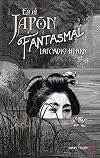
In Ghostly Japan
by Lafcadio Hearn
On This Page
Description
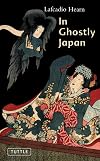
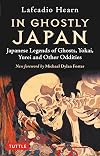
The Japanese have two kinds of ghosts in their folklore, the spirits of the dead, and the spirits of the living. Here are twelve ghostly stories from Lafcadio Hearn, deathless images of ghosts and goblins, touches of folklore and superstition, salted with traditions of the nation. While some of these stories contain nightmare imagery worthy of a midnight creature feature, others are not ghostly or ghastly at all. "Bits of Poetry" offers an engaging study on the verse, and "Japanese Buddhist show more Proverbs" explains the meaning of several aphorisms based on Japanese cultural references. show lessTags
Recommendations




























Member Reviews
Yet another intriguing work on Japanese folklore and traditions from Lafcadio Hearn. Not quite as engaging as his Kwaidan volume but still fascinating. Interspersed among the "ghost tales" are essays on the history of incense in Japan, Japanese poetry, and Buddhist proverbs. What makes him so interesting to me, however, is that Hearn was writing during the 1890s and turn of the century on ancient Japanese social practices and beliefs. As such, his commentary is sprinkled with observations from his own time in Japan as well. Thus we get a sort of twofer with his books. Not only does he bring the ancient and medieval world of Japan to English readers, but he also brings us observations of another era of Japanese culture now lost to time, show more the Meiji era in which Hearn lived and wrote. show less
Though I read a later edition, the first edition was published in 1899. In a way, this little collection reminds me of Washington Irving's Tales of the Alhambra. Both are men in foreign countries, traveling, learning about, living in, & experiencing cultures other than their own. Some of the essays or stories give you insights into the cultures, habits, & surroundings, while others recount local folktales & folklore.
This is a delightful little collection that surely must have been an enticing look at Japan through a Westerner's lens, especially when first published. A standout in the book is the chapter titled "A Passional Karma", which is Hearn's retelling of the Botan Dōrō (The Peony Lantern), a Japanese ghost story.
In another show more section (entitled "Bits of Poetry"), Hearn explains...
One last comment. In the section "Japanese Buddhist Proverbs", number 11 made me chuckle a bit:
Succinct & to the point, no?
A neat window, via 1899, looking into Japan. show less
This is a delightful little collection that surely must have been an enticing look at Japan through a Westerner's lens, especially when first published. A standout in the book is the chapter titled "A Passional Karma", which is Hearn's retelling of the Botan Dōrō (The Peony Lantern), a Japanese ghost story.
In another show more section (entitled "Bits of Poetry"), Hearn explains...
"The first curious fact is that, from very ancient times, the writing of short poems has been practiced in Japan even more as a moral duty than as a mere literary art. The old ethical teaching was somewhat like this: -- "Are you very angry? -- do not say anything unkind, but compose a poem. Is your best-beloved dead? -- do not yield to useless grief, but try to calm your mind by making a poem. Are you troubled because you are about to die, leaving so many things unfinished? -- be brave, and write a poem on death! Whatever injustice or misfortune disturbs you, put aside your resentment or your sorrow as soon as possible, and write a few lines of sober and elegant verse for a moral exercise."
One last comment. In the section "Japanese Buddhist Proverbs", number 11 made me chuckle a bit:
"The priest who preaches foul doctrine shall be reborn as a fungus."
Succinct & to the point, no?
A neat window, via 1899, looking into Japan. show less
In Ghostly Japan is Lafcadio Hearn's wonderfully-written long essay on various interesting subjects in Japan. He talks of supernatural and ghost stories, Buddhist proverbs, there's an interesting meditation on spirituality brought upon by the howling of his dog (I particularly liked this one because of its humor), the curious history and activities surrounding incense, on the science of divination, among other subjects. This is a must-read for any serious cultural understanding of Japan. Treat it as an introduction of sorts. What stands out is the writing of Hearn. It is warm and inviting. Though written more than a century ago, it is still highly readable. (Also I recommend his separate short essay 'On the Gothic' as it explains the show more reason for his fascination with subjects of this sort.) show less
The title of this book is somewhat misleading. It does have ghost stories in it, but it is much more than that. It is more like an ethnographic study of Japanese folklore and fairy tales with a good dose of daily life style and religion thrown into the mix. In-other-words, there is a little bit of everything from Meji Japan in this book. For the religious explanations alone it is well worth the reading time. However, it is also very much the product of its times. It times were the Victorian era so the reading isn't all that easy. For a person interested in Japanese history this is a must read.
Lo interesante del libro es la presentación de las historias dentro del contexto local del Japón, desde un punto de vista más antropológico que literario, sin embargo un par de ellas sí que llegan a intimidar.
Ratings
Members
- Recently Added By
Author Information

385+ Works 5,591 Members
Lafcadio Hearn (1850-1904) was a fiction writer, critic, amateur engraver, and journalist. He wrote extensively about the cultures of Louisiana and is considered the first major Western chronicler of Japanese culture Delia Labarre is an independent scholar of Lafcadio Hearn and Louisiana culture. She lives in Baton Rouge Jefferson Humphries is show more chair of French studies at Louisiana State University show less
Series
Belongs to Publisher Series
Work Relationships
Common Knowledge
- Canonical title
- In Ghostly Japan
- Important places
- Japan
Classifications
Statistics
- Members
- 401
- Popularity
- 77,328
- Reviews
- 5
- Rating
- (3.72)
- Languages
- 6 — English, French, German, Italian, Japanese, Spanish
- Media
- Paper, Audiobook, Ebook
- ISBNs
- 35
- ASINs
- 11