On This Page
Description
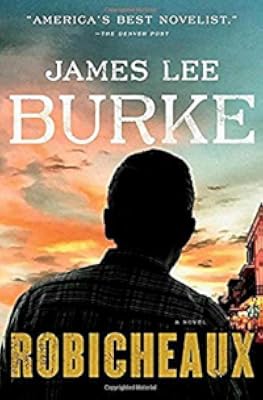
When last seen in The Glass Rainbow, the previous book in the Dave Robicheaux series, Robicheaux was recovering in a New Orleans hospital from a near-fatal bullet wound. Immobilized and heavily medicated by morphine, he was visited there by a beautiful Creole woman named Tee Jolie Melton. After she's gone, his fond, hazy remembrances of her are rekindled by one song, "Creole Belle" on the iPod that she left behind. Now obsessed by the song and thoughts of her, he goes in search of her. He show more finds instead the frozen corpse of her sister floating at sea. As he grapples with that mystery, an oil rig explodes on the Gulf threatening the cherished environs of the bayous. Robicheaux then swings into action, leading the charge against the destruction of both the land and the people he has sworn to protect. show lessTags
Recommendations
























Member Reviews
It took me much too long to get through this one, and I can't say it was really worth the time I spent. Burke's mastery of language is still very evident here, in his exquisite descriptions of landscape, wildlife, weather phenomenon, and all sorts of natural beauty. Unfortunately he is just as skillful at describing what knives, bullets and weighted saps do to the human body, and there is just too much of that kind of thing in Creole Belle. Burke has always used violence to illustrate the evil side of human nature; even his protagonists could never be described as peace-loving. But since Hurricane Katrina and more recently the oil rig blow-out in the Gulf of Mexico, Burke has given us less and less of the beauty and more of the show more ugliness. I assume he is representing what he sees happening to his beloved Louisiana lowlands, but he has lost his feel for story and humanity, although he continues to pay lip service to the latter. There is damned little actual story here---the evildoers are evil indeed, but what they are up to (beyond killing and maiming) is awfully vague. It's something to do with why that oil rig blew up and poisoned the Gulf waters, ruined the oyster beds and crippled the shrimping industry, but Burke never bothers to explain it much beyond that. I'm tired of hearing about what a "good man" Clete Purcel is. You know better than that, Mr. Burke---you can't ask us to believe it just because his best friend says so, you have to show us that it's true. After 19 books, I'm still trying to "get" Purcel. A good man can have bad impulses, but he finds the strength to resist them, at least some of the time. Clete never does. I'm tired of Burke treating his female characters as dispensable, unless it suits him to have Robicheaux rescue them from dire circumstances. I'm tired of finding no one to admire in his books. Maybe I'm getting old and cranky. Maybe I've just read too much. Or maybe Burke should have let Dave and Clete die in that mythic moment at the end of The Glass Rainbow. It's almost impossible to suspend my disbelief any more about just how much brutal insult their aging bodies can take and recover from, let alone the superhuman feats they perform with bullets in their backs. My daughter has suggested that I go back and read one of Burke's earlier novels in the series, one that I particularly enjoyed, to get the bad taste out of my mouth. That may be a good idea. But I'll have to wait a while.
April 2013 show less
April 2013 show less
If through some trick of genetic engineering you could combine the writing DNA of Hammett, Faulkner, and Tennessee Williams, James Lee Burke would be the product. His hero, Dave Robicheaux, is an updated version of Hammett’s Sam Spade, a scarred and battered warrior wearily clinging to righteousness in a world where virtue has become relative. His cast of characters are lifted straight from a Tennessee Williams play, each of them a complex composite of virtue and moral corruption – the only thing that varies is the extent to which each of them forges an uneasy balance between these essential elements of their nature. And his plots are Faulknerian in scope, gothic studies of good and evil laced with Biblical themes, set against the show more moral corruption of the American South, communicated in prose whose beauty provides a constant ironic counterpoint to plots rife with brutality and moral horror.
In this outing, Dave is recovering from wounds sustained in a nightmarish shootout with villains in the heart of a mist-shrouded bayou (an event recounted in The Glass Rainbow, the prequel to this novel) when he receives a call from a young woman in trouble - because isn’t that how most chivalric quests begin? Soon he and his partner Clete Purcell find themselves entangled with a Southern aristocrat who may or may not be a Nazi war criminal, a bigoted ex-sheriff, corrupt oil company executives, an albino with a taste for medieval cruelty, a treacherous Southern belle, and a Miami hitman (hitwoman?) in a tale that involves stolen/forged artwork, human trafficking, drugs, and oil industry malfeasance in the wake of the BP oil spill. Between alternating scenes of breathtaking beauty and equally breathtaking violence Burke explores a variety of disturbing themes, the chief of which seem to be: To what extent are evil means (war, violence) justified to accomplish virtuous ends? Is “reality” merely a personal construct? Do we ever finish paying for the mistakes we make? Are there some actions that can never be redeemed?
Much like a Hammett novel, it’s probably better if you don’t spend too much time trying to analyze the plot, because it has more twists and turns than the channels of a Louisiana bayou. (Has anyone ever figured out who killed the chauffeur in Hammett’s The Big Sleep? Does anyone care?) In fact, I get the sense that some of the plotlines are deliberately left hanging … that we’ll be seeing some of these baddies again in Robicheaux’s next outing. Better to just sit back and let Burke’s gorgeously sensual prose sweep you along for the ride. And if the last three horrific chapters of the tale don’t leave you exhausted and emotionally drained, then the Greeks were all wrong about the whole “catharsis” thing.
I find it astonishing that after 18 Robicheaux novels, James Lee Burke is still capable of such luminescent writing and wrenching storytelling. I remain convinced that if this guy were writing anything but crime fiction, universities would be teaching Burke alongside the works of Faulker, O’Connor, Walker, Welty and other great Southern novelists. show less
In this outing, Dave is recovering from wounds sustained in a nightmarish shootout with villains in the heart of a mist-shrouded bayou (an event recounted in The Glass Rainbow, the prequel to this novel) when he receives a call from a young woman in trouble - because isn’t that how most chivalric quests begin? Soon he and his partner Clete Purcell find themselves entangled with a Southern aristocrat who may or may not be a Nazi war criminal, a bigoted ex-sheriff, corrupt oil company executives, an albino with a taste for medieval cruelty, a treacherous Southern belle, and a Miami hitman (hitwoman?) in a tale that involves stolen/forged artwork, human trafficking, drugs, and oil industry malfeasance in the wake of the BP oil spill. Between alternating scenes of breathtaking beauty and equally breathtaking violence Burke explores a variety of disturbing themes, the chief of which seem to be: To what extent are evil means (war, violence) justified to accomplish virtuous ends? Is “reality” merely a personal construct? Do we ever finish paying for the mistakes we make? Are there some actions that can never be redeemed?
Much like a Hammett novel, it’s probably better if you don’t spend too much time trying to analyze the plot, because it has more twists and turns than the channels of a Louisiana bayou. (Has anyone ever figured out who killed the chauffeur in Hammett’s The Big Sleep? Does anyone care?) In fact, I get the sense that some of the plotlines are deliberately left hanging … that we’ll be seeing some of these baddies again in Robicheaux’s next outing. Better to just sit back and let Burke’s gorgeously sensual prose sweep you along for the ride. And if the last three horrific chapters of the tale don’t leave you exhausted and emotionally drained, then the Greeks were all wrong about the whole “catharsis” thing.
I find it astonishing that after 18 Robicheaux novels, James Lee Burke is still capable of such luminescent writing and wrenching storytelling. I remain convinced that if this guy were writing anything but crime fiction, universities would be teaching Burke alongside the works of Faulker, O’Connor, Walker, Welty and other great Southern novelists. show less
I keep thinking that one of the new books will be as good as those written earlier in Burke's career. This one doesn't make the grade. It is a boring re-hash of the same tired philosophico-babble that has characterized his last several books. Both Dave and Clete wallow in their depression; Alafair is headed in the same direction. The story sparks interest here and there; but between these intellectual peaks are pages of what could be kindly described as introspection and historical background.
I'm afraid to say that Mr. Burke may have jumped the shark at this point in the [[[Dave Robicheaux]]] series. The ending of the previous book, [The Glass Rainbow], left the fates of both Dave and Cletus in serious doubt. And, perhaps, that is where he might have wanted to leave things, or should have left things.
With this one, Dave is recovering from his serious wounds and has an encounter with a woman who everyone else believes is missing, or dead. No one particularly believes Dave, but that's par for the course, and Dave gets on his white horse to find her. There are the typical rich bad guys, and Clete behaving badly. But the worst turn in the book is the entrance of a long-lost daughter for Clete. This entrance essentially rewrites show more some history, as neither Clete nor Dave have ever spoken about the woman with whom Clete has an affair producing the child. They've never spoken of Clete's searches for the girl, or his feelings about the girl. And when she arrives, she's a hitter for the mob, a sort of Mickey Spillane femme fatale. Everything about their interactions and behavior, all three, is just a bridge too far. Worse still, Alafair ends up developing a bit of a sisterly, our worse, relationship with the girl.
I'm still rating the book as a middling entry in the series, because Burke's prose style is still quite lush and poetic. But this marks a concern for me with the last books in the series ahead.
3 bones!!! show less
With this one, Dave is recovering from his serious wounds and has an encounter with a woman who everyone else believes is missing, or dead. No one particularly believes Dave, but that's par for the course, and Dave gets on his white horse to find her. There are the typical rich bad guys, and Clete behaving badly. But the worst turn in the book is the entrance of a long-lost daughter for Clete. This entrance essentially rewrites show more some history, as neither Clete nor Dave have ever spoken about the woman with whom Clete has an affair producing the child. They've never spoken of Clete's searches for the girl, or his feelings about the girl. And when she arrives, she's a hitter for the mob, a sort of Mickey Spillane femme fatale. Everything about their interactions and behavior, all three, is just a bridge too far. Worse still, Alafair ends up developing a bit of a sisterly, our worse, relationship with the girl.
I'm still rating the book as a middling entry in the series, because Burke's prose style is still quite lush and poetic. But this marks a concern for me with the last books in the series ahead.
3 bones!!! show less
Another epic tale of murder and mystery and moral and spiritual torment and lush landscapes and horror and corruption in America's deep south. This one feels particularly epic for some reason, and poor ol' Clete gets put through the wringer and Dave seems to sense that one way or the other he's circling the mortal drain and his meditations on life and death and the meaning of it all and various other philosophical subjects become more stringent and morose, and increasingly bad-tempered with anyone who gets in his way or refuses to believe his accounts of missing girls visiting him in hospital and giving him an iPod with music on it no-one else can hear, but he'll still up to holding his own for the climactic shoot-out. Dave and Clete, show more without quite seeming to realise it, have produced their own potential replacements on this Earth in Alafair and Gretchen. Great stuff from the master. show less
James Lee Burke does something better than any crime fiction writer around today: he creates believable, self-contained worlds in which the outlandish things that happen to his good guys seem entirely plausible. And, boy do crazy things happen to Dave Robicheaux, Clete Purcell, and those closest to them. But in Burke's little corners of southwest Louisiana and remote Montana, it all makes a certain kind of sense.
As Creole Belle begins, Dave is still hospitalized, slowly recovering from the near-death experience he and Clete experienced at the end of the previous series novel, The Glass Rainbow. In the hospital, Dave, who is often surrounded by visitors from his past (be they long dead or not), is surprised by a visit - and the gift of show more an iPod with some special songs on it - from Tee Jolie Melton, a young woman he knows. There are just two problems: Tee Jolie disappeared several weeks earlier, not to be seen since, and no one can hear the special iPod songs but Dave.
Even when he finally leaves the hospital, Dave continues to get phone calls from Tee Jolie in the middle of the night. Sensing that something is terribly wrong, he and Clete start asking questions. When Tee Jolie's sister is found encased in a huge block of ice floating in the warmish waters of the Gulf of Mexico, it all suddenly becomes too real. Someone badly wants Dave and Clete to back off and will do anything it takes to kill their investigation - and them.
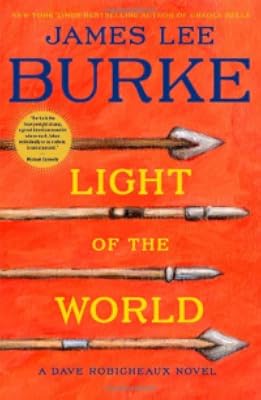
James Lee Burke, at age 76, is still very much in peak writing form. His Robicheaux novels, in particular, are as good as ever, and Burke has even added an intriguing new character to the mix here who will be one of the key characters in his soon to be released Light of the World. In Burke's view, the fight between good and evil is not a black and white one. He focuses, instead, on all the gray areas where the bad guys sometimes show a tiny sliver of a heart and the good guys are forced to use bad-guy tactics in the name of justice. Dave Robicheaux and Clete Purcell pride themselves on protecting those incapable of protecting themselves - and if the system cannot do it, they do whatever it takes to get the job done.
Bottom Line: Read this book. Read this series. Read James Lee Burke. show less
As Creole Belle begins, Dave is still hospitalized, slowly recovering from the near-death experience he and Clete experienced at the end of the previous series novel, The Glass Rainbow. In the hospital, Dave, who is often surrounded by visitors from his past (be they long dead or not), is surprised by a visit - and the gift of show more an iPod with some special songs on it - from Tee Jolie Melton, a young woman he knows. There are just two problems: Tee Jolie disappeared several weeks earlier, not to be seen since, and no one can hear the special iPod songs but Dave.
Even when he finally leaves the hospital, Dave continues to get phone calls from Tee Jolie in the middle of the night. Sensing that something is terribly wrong, he and Clete start asking questions. When Tee Jolie's sister is found encased in a huge block of ice floating in the warmish waters of the Gulf of Mexico, it all suddenly becomes too real. Someone badly wants Dave and Clete to back off and will do anything it takes to kill their investigation - and them.
James Lee Burke, at age 76, is still very much in peak writing form. His Robicheaux novels, in particular, are as good as ever, and Burke has even added an intriguing new character to the mix here who will be one of the key characters in his soon to be released Light of the World. In Burke's view, the fight between good and evil is not a black and white one. He focuses, instead, on all the gray areas where the bad guys sometimes show a tiny sliver of a heart and the good guys are forced to use bad-guy tactics in the name of justice. Dave Robicheaux and Clete Purcell pride themselves on protecting those incapable of protecting themselves - and if the system cannot do it, they do whatever it takes to get the job done.
Bottom Line: Read this book. Read this series. Read James Lee Burke. show less
If you have read any of the preceding Robicheaux novels then you know exactly what to expect with Creole Belle. James Lee Burke delivers more of the same; the heady scents and authentic sense of Louisiana in all its natural beauty and unnatural cruelty. Add to that Dave’s eternal battle with his own righteousness and his own weaknesses – in this instance, set against the back drop of the oil spill which followed Katrina in visiting yet more hardship on the people of the bayou and New Orleans.
Robicheaux is a crusader and he willingly flings himself against the mighty machinery of every oppressor he runs up against. As usual, the bad guys are rich, white, modern-day inheritors of the slave plantations who live in rambling old mansions show more shaded by live oaks, and who prey on the weak and the poor and those they can abuse or profit from. Their sleekly pampered women are beautiful and dangerous; seductive and ambiguous. Their crimes are many – but most of their activities fall well beyond the scope of a sheriff’s deputy in New Iberia parish. That’s until a dead body turns up in the swamps; a frozen dead body of a missing girl.
JLB hits every beat of the best Robicheaux investigations in this novel. The plot serves simply as a backdrop to his ongoing discussion of a series of themes about the southern States, the nature of the country, of man’s exploitation of the weak.
In this episode it’s sparked into new life by the arrival of Gretchen, a spiky young woman who may be Clete’s daughter. She may also be a mobbed-up contract killer with paper to serve on Dave’s family and friends. Gretchen enlivens the already rich cast of characters; her sharp edges and blunt manner serve as a perfect contrast to Robicheaux’s daughter who, truth be told, is always a little too good to be true.
(There's more plot and character details at
http://murdermayhemandmore.wordpress.com/2014/06/26/creole-belle-crime-writing-a... )
Creole Belle is soaked through with the authentic smells and sounds of the South, from the beignets at Café du Monde to the shrimp po’boy sandwiches and the misty paddle-steamer which may one day take Clete and Dave on their final boat ride into the electric mist. It’s also a damn fine crime thriller in its own right, racked with fights and sudden episodes of extreme violence which emphasise how thin the veneer of civilisation may be in some cases.
I relish JLB’s absolute ability to transport me to another world, and fill it with an intriguing mystery and utterly compelling characters. For as long as he goes on writing Robicheaux novels of this standard, then I’m happy to return to Iberia parish – hoping that the Bobbsey twins from homicide can beat the odds stacked against them once again.
8/10 show less
Robicheaux is a crusader and he willingly flings himself against the mighty machinery of every oppressor he runs up against. As usual, the bad guys are rich, white, modern-day inheritors of the slave plantations who live in rambling old mansions show more shaded by live oaks, and who prey on the weak and the poor and those they can abuse or profit from. Their sleekly pampered women are beautiful and dangerous; seductive and ambiguous. Their crimes are many – but most of their activities fall well beyond the scope of a sheriff’s deputy in New Iberia parish. That’s until a dead body turns up in the swamps; a frozen dead body of a missing girl.
JLB hits every beat of the best Robicheaux investigations in this novel. The plot serves simply as a backdrop to his ongoing discussion of a series of themes about the southern States, the nature of the country, of man’s exploitation of the weak.
In this episode it’s sparked into new life by the arrival of Gretchen, a spiky young woman who may be Clete’s daughter. She may also be a mobbed-up contract killer with paper to serve on Dave’s family and friends. Gretchen enlivens the already rich cast of characters; her sharp edges and blunt manner serve as a perfect contrast to Robicheaux’s daughter who, truth be told, is always a little too good to be true.
(There's more plot and character details at
http://murdermayhemandmore.wordpress.com/2014/06/26/creole-belle-crime-writing-a... )
Creole Belle is soaked through with the authentic smells and sounds of the South, from the beignets at Café du Monde to the shrimp po’boy sandwiches and the misty paddle-steamer which may one day take Clete and Dave on their final boat ride into the electric mist. It’s also a damn fine crime thriller in its own right, racked with fights and sudden episodes of extreme violence which emphasise how thin the veneer of civilisation may be in some cases.
I relish JLB’s absolute ability to transport me to another world, and fill it with an intriguing mystery and utterly compelling characters. For as long as he goes on writing Robicheaux novels of this standard, then I’m happy to return to Iberia parish – hoping that the Bobbsey twins from homicide can beat the odds stacked against them once again.
8/10 show less
Members
- Recently Added By
Lists

Noirvember: The Best Noir
113 works; 56 members
Author Information

123+ Works 38,573 Members
James Lee Burke, winner of two Edgar awards, is the author of nineteen previous novels, many of them "New York Times" bestsellers, including "Cimmaron Rose", Cadillac Jukebox", & "Sunset Limited". He & his wife divide their time between Missoula, Montana, & New Iberia, Louisiana. (Publisher Provided)
Some Editions
Awards and Honors
Series

Common Knowledge
- Canonical title
- Creole Belle
- Original publication date
- 2012
- People/Characters
- Dave Robicheaux; Tee Jolie Melton; Clete Purcel; Frankie Giancano; Bix Golightly; Dr. Money (show all 13); Alice; Pierre Dupree; Jesse Veras; Helen Soleau; Ronnie Earl; Alistair Burke; Molly Burke
- Important places
- New Orleans, Louisiana, USA; New Iberia, Louisiana, USA; Cafe du Monde
- Dedication
- In memory of Michael Pinkston, Martha Hall, and David Thompson
- First words
- For the rest of the world, the season was still fall, marked by cool nights and the gold-green remnants of summer.
- Blurbers
- Percy, Benjamin; Connelly, Michael
Classifications
Statistics
- Members
- 789
- Popularity
- 35,387
- Reviews
- 34
- Rating
- (4.03)
- Languages
- Danish, English, French
- Media
- Paper, Audiobook, Ebook
- ISBNs
- 34
- ASINs
- 10