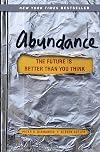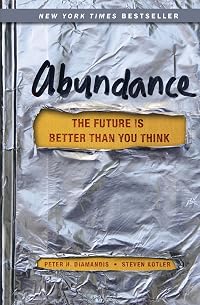
Abundance: The Future Is Better Than You Think
by Peter H. Diamandis, Steven Kotler
On This Page
Description
The authors document how four forces--exponential technologies, the DIY innovator, the Technophilanthropist, and the Rising Billion--are conspiring to solve our biggest problems. "Abundance" establishes hard targets for change and lays out a strategic roadmap for governments, industry and entrepreneurs, giving us plenty of reason for optimism.Tags
Recommendations

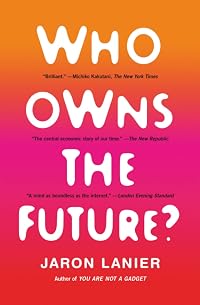
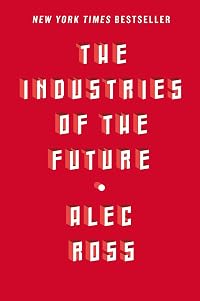
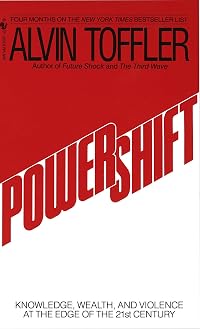
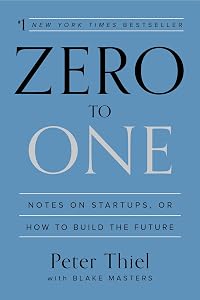








Member Recommendations

Member Reviews
Whenever you feel like the world is going to hell in the proverbial handbasket, come back to read this book. It points at all the good ways in which it's changing, and how despite all our challenges, it's not as bleak as some might be led to believe. Not a feel-good book, but after you realize how we're advancing in a number of fields, you will feel better.
Peter Diamandis reports on, and believes in, the medical, technological and societal changes that every now and then pop above the line of invisible development to disrupt and upend, in a positive way, many of the things we took for granted that would forever be this way.
Peter Diamandis reports on, and believes in, the medical, technological and societal changes that every now and then pop above the line of invisible development to disrupt and upend, in a positive way, many of the things we took for granted that would forever be this way.
It's optimism unbridled by any sort of criticism. The irony that in this same book the author warns against confirmation and availability bias is sublime. The level of delusion is explained by the author's position. He is an extremely intelligent man who routinely hangs around the smartest people on the planet and spends most of his time on pioneering projects so obviously his world view is a little skewed. He also uses the line that should be a capital offence: "this is already possible to do with off-the-shelf components". And OLPC was not a success regardless of how many times the author repeats the claim. A few other projects he mentions were also less successful than the book's description would lead you to believe. All this is show more needlessly dishonest. show less
Perhaps not a bad book, but definitely not what I was looking for.
I'm sympathetic to the book's thesis: that technological and social progress can overcome many of the seemingly insurmountable problems facing the world today, such as hunger, illiteracy, and above all resource scarcity.
But ultimately I found this to be a thin, too-breezy take on this vital question. The authors offer a relentless array of examples and anecdotes about dramatic advances that are *just around the corner* from transforming the world, but not a rigorous argument as to why the massive changes they predict will actually occur. Objections, pitfalls and side effects are ignored or waved aside in a few passing remarks and a brief appendix. Too much of the book show more seemed to be Diamandis and his techno-philantropist friends talking about all the cool things they're doing.
At the root of my distaste for the book is probably a disconnect between the authors' goal and my goal as a reader. They were trying to inculcate optimism in readers and counter pessimistic, Malthusian takes on modern society. I wanted a serious discussion of ideas: what does history show about human socioeconomic progress? To what degree can we expect those trends to continue into the future, and to what degree can we expect something different? What have been the costs of "progress" in the past and what does this teach us about what we can expect going forward? How does technology affect, and how is it affected by, culture and politics? What new breakthroughs will likely have the biggest impacts, or could have such an impact if things previously thought impossible become possible?
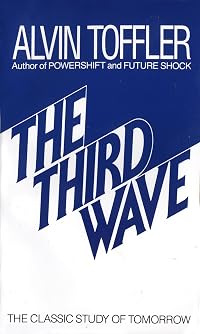
If you're not looking for a book of intellectual futurism, "Abundance" may be more to your liking than mine. As it happens, I've read a number of books that were more in line with my desires (something that probably contributed to my dislike of "Abundance" — I might have liked it more if I'd read it at the beginning of my education). Among those still very accessible books I'd recommend for readers with an interest in the subject: Alvin Toffler's [b:The Third Wave|67482|The Third Wave|Alvin Toffler|https://images.gr-assets.com/books/1387744496s/67482.jpg|65446], Steven Pinker's [b:The Better Angels of Our Nature: Why Violence Has Declined|11107244|The Better Angels of Our Nature Why Violence Has Declined|Steven Pinker|https://images.gr-assets.com/books/1311281857s/11107244.jpg|16029496], Robert Wright's [b:Nonzero: The Logic of Human Destiny|1124380|Nonzero The Logic of Human Destiny|Robert Wright|https://images.gr-assets.com/books/1320391999s/1124380.jpg|820748], Amartya Sen's [b:Development as Freedom|173961|Development as Freedom|Amartya Sen|https://images.gr-assets.com/books/1320411543s/173961.jpg|168039] and [b:The Great Stagnation: How America Ate All The Low-Hanging Fruit of Modern History, Got Sick, and Will (Eventually) Feel Better|10276354|The Great Stagnation How America Ate All The Low-Hanging Fruit of Modern History, Got Sick, and Will (Eventually) Feel Better|Tyler Cowen|https://images.gr-assets.com/books/1296495889s/10276354.jpg|15176955]. show less
I'm sympathetic to the book's thesis: that technological and social progress can overcome many of the seemingly insurmountable problems facing the world today, such as hunger, illiteracy, and above all resource scarcity.
But ultimately I found this to be a thin, too-breezy take on this vital question. The authors offer a relentless array of examples and anecdotes about dramatic advances that are *just around the corner* from transforming the world, but not a rigorous argument as to why the massive changes they predict will actually occur. Objections, pitfalls and side effects are ignored or waved aside in a few passing remarks and a brief appendix. Too much of the book show more seemed to be Diamandis and his techno-philantropist friends talking about all the cool things they're doing.
At the root of my distaste for the book is probably a disconnect between the authors' goal and my goal as a reader. They were trying to inculcate optimism in readers and counter pessimistic, Malthusian takes on modern society. I wanted a serious discussion of ideas: what does history show about human socioeconomic progress? To what degree can we expect those trends to continue into the future, and to what degree can we expect something different? What have been the costs of "progress" in the past and what does this teach us about what we can expect going forward? How does technology affect, and how is it affected by, culture and politics? What new breakthroughs will likely have the biggest impacts, or could have such an impact if things previously thought impossible become possible?
If you're not looking for a book of intellectual futurism, "Abundance" may be more to your liking than mine. As it happens, I've read a number of books that were more in line with my desires (something that probably contributed to my dislike of "Abundance" — I might have liked it more if I'd read it at the beginning of my education). Among those still very accessible books I'd recommend for readers with an interest in the subject: Alvin Toffler's [b:The Third Wave|67482|The Third Wave|Alvin Toffler|https://images.gr-assets.com/books/1387744496s/67482.jpg|65446], Steven Pinker's [b:The Better Angels of Our Nature: Why Violence Has Declined|11107244|The Better Angels of Our Nature Why Violence Has Declined|Steven Pinker|https://images.gr-assets.com/books/1311281857s/11107244.jpg|16029496], Robert Wright's [b:Nonzero: The Logic of Human Destiny|1124380|Nonzero The Logic of Human Destiny|Robert Wright|https://images.gr-assets.com/books/1320391999s/1124380.jpg|820748], Amartya Sen's [b:Development as Freedom|173961|Development as Freedom|Amartya Sen|https://images.gr-assets.com/books/1320411543s/173961.jpg|168039] and [b:The Great Stagnation: How America Ate All The Low-Hanging Fruit of Modern History, Got Sick, and Will (Eventually) Feel Better|10276354|The Great Stagnation How America Ate All The Low-Hanging Fruit of Modern History, Got Sick, and Will (Eventually) Feel Better|Tyler Cowen|https://images.gr-assets.com/books/1296495889s/10276354.jpg|15176955]. show less
I have almost been persuaded by the author that the future is promising. But it's an illusion to believe that the advances of technologies alone would be able to save humanity. You cannot save the poor people by just giving them plenty of fresh water and by selling them cheap phones. These ideas are just rich people's wishful thinking. To have a better life for those poor people, the whole structure of their society has to be changed.
Weird time to read a book that is so optimistic about the future, given the current dire state of affairs politically, where a fascist like Donald Trump may become President, and at the bookstore and cineplex, where people who don't even really know what dystopia means other than as a genre to be capitalized (I like Dystopian....) flock to the latest fiction where the world has Done Gone To Hell in record numbers. Not sure if I'm totally buying it, but then again, as a human, I'm wired to engage in any number of pessimistic and illogical misperceptions of reality, according to the book. This why people say the world is going down the tubes when it is not, the book argues. I hope the state of abundance comes true.
Well, this was a hopeful book about the triumphant potential of human technology - it has continually proven the Malthusians wrong. Some of the examples are amazing, like the device that can make pharmaceutical grade water from a dank ditch or chemical run off and a future Tricorder for medical assessment in the field. I found intriguing the proven success of prize motivations as a way to leverage public money, not surprising since the author is one of the people behind the xprize.
Humanity is facing challenges, but then it always has. And it has always overcome them. More than that, we (collectively over time) have improved the quality of human existence. We now live longer, eat better, and have more free time than ever before. This book presents a brief look at some emerging technologies that may help us past foreseeable potholes on our road to the future...robotics, computer intelligence, information networks, biotechnology, and others. All are advancing at exponential rates. They show great promise to allow us to feed, clothe, and provide energy for our growing worldwide population, and to create a higher quality of life for everyone. It's a hopeful picture.
Maybe too hopeful.
The technological advancements are show more presented as being almost certain, largely through the efforts of visionary philanthropists and entrepreneurs who can and are willing to provide funding. But challenges remain. There is no certainty that they'll be overcome. Admittedly, it seems likely, but it's far from certain. It's not really the advancement of technology that I think may be our greatest stumbling block. For example, solar energy CAN provide far more energy than we'll ever need, but will we exploit it? That's not a technological challenge. It's one of culture, politics, and economics. These fall outside the scope of this book and may be, I think WILL be, more difficult to overcome than the scientific and technological issues.
I can recommend this book to anyone interested in an overview of emerging technology and its potential. I enjoyed it. show less
Maybe too hopeful.
The technological advancements are show more presented as being almost certain, largely through the efforts of visionary philanthropists and entrepreneurs who can and are willing to provide funding. But challenges remain. There is no certainty that they'll be overcome. Admittedly, it seems likely, but it's far from certain. It's not really the advancement of technology that I think may be our greatest stumbling block. For example, solar energy CAN provide far more energy than we'll ever need, but will we exploit it? That's not a technological challenge. It's one of culture, politics, and economics. These fall outside the scope of this book and may be, I think WILL be, more difficult to overcome than the scientific and technological issues.
I can recommend this book to anyone interested in an overview of emerging technology and its potential. I enjoyed it. show less
Members
- Recently Added By
Published Reviews
ThingScore 100
In the forthcoming book Abundance: The Future Is Better Than You Think, Peter H. Diamandis (chairman and CEO of the X-Prize Foundation and cofounder and chairman of Singularity University) and award-winning science writer Steven Kotler give us an extensive tour of the latest in exponentially growing technologies and explore how four emerging forces — exponential technologies, the DIY show more innovator, the Technophilanthropist, and the Rising Billion — are conspiring to solve humanity’s biggest problems.
“This brilliant must-read book provides the key to the coming era of abundance, replacing eons of scarcity,” says Ray Kurzweil, inventor and author of The Singularity is Near.
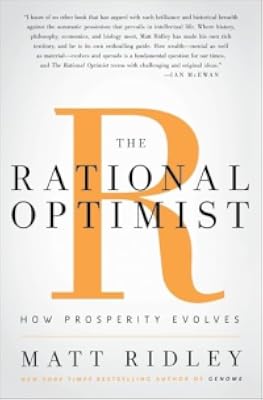
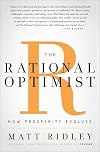
Matt Ridley, author of the Rational Optimist, agrees: “This vital book … gives us a blinding glimpse of the innovations that are coming our way. …” Stewart Brand, editor of the Whole Earth Catalog, describes the book as “comprehensively sampl[ing] … the profound innovations going on to improve the human condition.”
The authors make a compelling case for optimism. We are introduced to dozens of innovators and industry captains making tremendous strides in healthcare, agriculture, energy, and other fields: Dean Kamen’s “Slingshot,” a technology that can transform polluted water, salt water, or even raw sewage into incredibly high-quality drinking water for less than one cent a liter; the Qualcomm Tricorder X-Prize, which promises a low-cost, handheld medical device that allows anyone to diagnose themself better than a board-certified doctor; and Dickson Despommier’s “vertical farms,” which replace traditional agriculture with a system that uses 80 percent less land, 90 percent less water, and 100 percent fewer pesticides, with zero transportation costs.
As a bonus, the authors provide a detailed reference section filled with 90 graphs, charts, and graphics offering much of the source data underpinning their conclusions. show less
“This brilliant must-read book provides the key to the coming era of abundance, replacing eons of scarcity,” says Ray Kurzweil, inventor and author of The Singularity is Near.
Matt Ridley, author of the Rational Optimist, agrees: “This vital book … gives us a blinding glimpse of the innovations that are coming our way. …” Stewart Brand, editor of the Whole Earth Catalog, describes the book as “comprehensively sampl[ing] … the profound innovations going on to improve the human condition.”
The authors make a compelling case for optimism. We are introduced to dozens of innovators and industry captains making tremendous strides in healthcare, agriculture, energy, and other fields: Dean Kamen’s “Slingshot,” a technology that can transform polluted water, salt water, or even raw sewage into incredibly high-quality drinking water for less than one cent a liter; the Qualcomm Tricorder X-Prize, which promises a low-cost, handheld medical device that allows anyone to diagnose themself better than a board-certified doctor; and Dickson Despommier’s “vertical farms,” which replace traditional agriculture with a system that uses 80 percent less land, 90 percent less water, and 100 percent fewer pesticides, with zero transportation costs.
As a bonus, the authors provide a detailed reference section filled with 90 graphs, charts, and graphics offering much of the source data underpinning their conclusions. show less
added by geertwissink
Lists

Futurism Works
25 works; 6 members

The Joe Rogan Experience Library
254 works; 3 members

GraceCollection TBR/To Buy List
106 works; 1 member

Books recommended by Calgary Public Library staff
1,588 works; 4 members
Author Information

15+ Works 1,503 Members
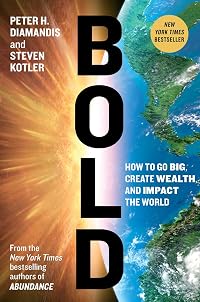
Peter H. Diamandis received degrees in molecular genetics and aerospace engineering from MIT and an MD from Harvard Medical School. He is the founder of more than 15 high-tech companies. He is the co-author of Abundance: The Future Is Better Than You Think and Bold: How to Go Big, Create Wealth and Impact the World. (Bowker Author Biography)

15 Works 2,351 Members
Steven Kotler is an author, journalist, and the co-founder and director of research for the Flow Genome Project. His books include The Rise of Superman, A Small Furry Prayer, West of Jesus, and The Angle Quickest for Flight. He is also the co-author of Abundance: The Future Is Better Than You Think and Bold: How to Go Big, Create Wealth and Impact show more the World. (Bowker Author Biography) show less
Some Editions
Awards and Honors
Distinctions
Classifications
- Genres
- Economics, Nonfiction, Technology, Business, General Nonfiction, Science & Nature
- DDC/MDS
- 303.48 — Society, government, & culture Social sciences, sociology & anthropology Social processes Social change Causes of change
- LCC
- T173.8 .D536 — Technology Technology (General) Technical education. Technical schools
- BISAC
Statistics
- Members
- 886
- Popularity
- 30,496
- Reviews
- 20
- Rating
- (3.68)
- Languages
- 6 — English, German, Italian, Portuguese, Spanish, Turkish
- Media
- Paper, Audiobook, Ebook
- ISBNs
- 20
- ASINs
- 9