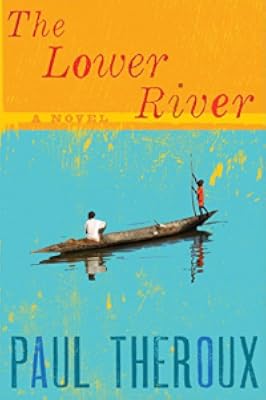
The Lower River
by Paul Theroux
On This Page
Description
Ellis Hock never believed that he would return to Africa. He runs an old-fashioned menswear store in a small town in Massachusetts but still dreams of his Eden, the four years he spent in Malawi with the Peace Corps, cut short when he had to return to take over the family business. When his wife leaves him, and he is on his own, he realizes that there is one place for him to go: back to his village in Malawi, on the remote Lower River, where he can be happy again. Arriving at the dusty show more village, he finds it transformed: the school he built is a ruin, the church and clinic are gone, and poverty and apathy have set in among the people. They remember him--the White Man with no fear of snakes--and welcome him. But is his new life, his journey back, an escape or a trap? show lessTags
Recommendations













Member Reviews
With great clarity, in The Lower River, Paul Theroux achingly depicts a region of Africa that is both dependent and resentful of the aid of NGO’s, celebrities, and former Peace Corps do-gooders like the novel’s protagonist, Ellis Hock. Unfortunately, when independence follows colonization, what remains are cynicism, corruption, and greed – all in the name of self survival. In the end, everyone is the poorer and the Africa of one’s dreams becomes a nightmare. The reader is left wondering if the best policy is to leave the indigenous cultures alone but then that would be adding insult to injury. Such is the paradox as there can be no atoning for the sins of empires.
This was terrifying. It begins with the banality of a life lived quietly in the Boston suburbs and leads to a nostalgic trip back to the Africa of the narrator's Peace Corp youth. There is first world hubris ..but it is not the entire issue here. Sentimentality also plays a big part in the downturn of events. Did I enjoy the book? No. Did it make me think? Yes. Did it make me squirm? A big yes.
This is an engrossing read, a sort of "what if" kind of speculation. The protagonist finds himself in late middle age with a failing business and a failed marriage. Rudderless, he decides to return to the one place he remembers being truly happy, the rural village in Malawi where he taught school in the 60s. What he finds seems at first comforting and then gradually reveals a sinister side. The pace picks up and the writing is descriptive but spare, with beautiful use of metaphor and allusion. So why only three stars? While the story is plausible and believable, the way it plays into Western archetypes of Africa as the dark, threatening continent of the subconscious is disturbing. On the merits of the writing, this book deserves more show more stars, but I just couldn't help but feel Theroux is devoting his formidable skills to retelling a story that has been told many times before by Conrad and others. This is a book about one person's fears and doubts, his struggle with self-image, and how rural Africa presents the last "mirror" in which he can attempt to view himself. show less
I was intruiged at the beginning, especially since our main character is an unusual 62-year-old man who is recently divorced. However, the character's (Hock's) behavior is unsettling and I had to stop reading about halfway through. This is a man who begins the book by discussing the numerous attempted emotional affairs he had. He is a man who visits a remote African village when he is 62 years old and admits to feeling lust for a girl who is at most 16 years old. That just disturbed me, that and the numerous other lustful comments the character made. He is a thoroughly unlikeable character is most aspects and that is a huge downside of ANY novel.
I tried but I have a snake phobia and there were just too many plot points involving snakes. Made it halfway through.
I felt guilty and I've restarted it....
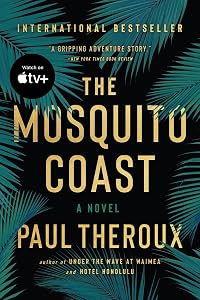
I did manage to finish it but there were chunks I had to skip past. This was a tough read and I'm not sure if I liked it or not. Ellis Hock is a hard character to figure out, he seems to have an essential kindness about him but also so much passivity. With his life turned upside down late in his life, he tried to return to where he was once happy in Malawi. He seems to know that things will have changed but the extent to which he is unprepared for what happens is hard to fathom. There was alot that reminded me of The Mosquito Coast and how terribly badly things can go. However, my show more creep out factor of the snakes mostly just drove me to finish it as fast as I could, afraid of every page. Not a pleasant experience from an author I usually like. show less
I felt guilty and I've restarted it....
I did manage to finish it but there were chunks I had to skip past. This was a tough read and I'm not sure if I liked it or not. Ellis Hock is a hard character to figure out, he seems to have an essential kindness about him but also so much passivity. With his life turned upside down late in his life, he tried to return to where he was once happy in Malawi. He seems to know that things will have changed but the extent to which he is unprepared for what happens is hard to fathom. There was alot that reminded me of The Mosquito Coast and how terribly badly things can go. However, my show more creep out factor of the snakes mostly just drove me to finish it as fast as I could, afraid of every page. Not a pleasant experience from an author I usually like. show less
Ellis Hock is a 62 year old American. His marriage is over, his business is failing...he recalls the happiest time of his life, as a young man in the Peace Corps, teaching in Malawi. He longs to return to that optimistic world of improving the life of a remote village...and returns.
But life there is very different now, The people are poor, hungry...and resentful of the white aid agences and their superficial "assistance"...even while makingh full use of what they can get.
Theroux has given a negative portrayal of such organizations in his travel books, and I'm sure he has a valid point.
When you finish this (a fair read, somewhat suspenseful as it draws to an end) you'll never weant to visit Malawi...
But life there is very different now, The people are poor, hungry...and resentful of the white aid agences and their superficial "assistance"...even while makingh full use of what they can get.
Theroux has given a negative portrayal of such organizations in his travel books, and I'm sure he has a valid point.
When you finish this (a fair read, somewhat suspenseful as it draws to an end) you'll never weant to visit Malawi...
The Lower River was Conversati-ohm’s (one of my monthly book clubs) August pick. We had a robust discussion about it even though not everyone liked it. I had mixed feelings about it myself. I didn’t care for most of the characters and that made it hard to like the book overall. Ellis is so selfish and self-righteous that I couldn’t bring myself to have any sympathy for him when his trip to Malawi didn’t go as planned. At one point, he needs a letter delivered and something extremely awful happens to the deliverer. When Ellis goes to see the person who was supposed to deliver the letter after the awful thing happens, all he can ask about is whether the awful thing happened before the letter got to its destination. That scene show more literally made me sick to my stomach.
However, Ellis’s selfishness did make me think a lot about Westerners coming to “help” people in third-world countries. What is the true motivation for helping? Is everyone helping out of the goodness of their hearts or because of the feelings of superiority one might get from helping? Are we giving them the help they need or the help WE THINK they need?
Even though I didn’t really enjoy reading this book, it did end up being a good book for discussion purposes and one that I thought about for a while after I finished it. show less
However, Ellis’s selfishness did make me think a lot about Westerners coming to “help” people in third-world countries. What is the true motivation for helping? Is everyone helping out of the goodness of their hearts or because of the feelings of superiority one might get from helping? Are we giving them the help they need or the help WE THINK they need?
Even though I didn’t really enjoy reading this book, it did end up being a good book for discussion purposes and one that I thought about for a while after I finished it. show less
Members
- Recently Added By
Lists

Top Five Books of 2013
1,562 works; 721 members

IMPAC Dublin Literary Award 2014 longlist
150 works; 3 members

Tour of Africa
54 works; 2 members
Author Information

116+ Works 32,333 Members
Paul Edward Theroux was born on April 10, 1941 in Medford, Massachusetts and is an acclaimed travel writer. After attending the University of Massachusetts Amherst he joined the Peace Corps and taught in Malawi from 1963 to 1965. He also taught in Uganda at Makerere University and in Singapore at the University of Singapore. Although Theroux has show more also written travel books in general and about various modes of transport, his name is synonymous with the literature of train travel. Theroux's 1975 best-seller, The Great Railway Bazaar, takes the reader through Asia, while his second book about train travel, The Old Patagonian Express (1979), describes his trip from Boston to the tip of South America. His third contribution to the railway travel genre, Riding the Iron Rooster: By Train Through China, won the Thomas Cook Prize for best literary travel book in 1989. His literary output also includes novels, books for children, short stories, articles, and poetry. His novels include Picture Palace (1978), which won the Whitbread Award and The Mosquito Coast (1981), which won the James Tait Black Memorial Prize. Theroux is a fellow of both the British Royal Society of Literature and the Royal Geographic Society. His title Lower River made The New York Times Best Seller List for 2012. Currently his 2015 book, Deep South , is a bestseller. (Bowker Author Biography) Paul Theroux is the distinguished author of numerous award-winning books, including "The Mosquito Coast," "Kowloon Tong," & "Half Moon Street." (Publisher Provided) show less
Some Editions
Awards and Honors
Awards
Common Knowledge
- Original publication date
- 2012-05-22
- People/Characters
- Ellis Hock
- Important places
- Malawi; Medford, Massachusetts, USA
- First words
- Ellis Hock's wife gave him a new phone for his birthday.
- Quotations
- Perhaps his desire persisted as a yearning through all those years because fulfillment had been thwarted.
He needed to remember that she had once been blameless. He grieved for that child.
Classifications
Statistics
- Members
- 390
- Popularity
- 80,005
- Reviews
- 15
- Rating
- (3.66)
- Languages
- Dutch, English, Portuguese, Spanish
- Media
- Paper, Audiobook, Ebook
- ISBNs
- 18
- ASINs
- 4