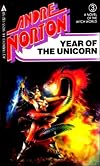
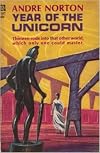
Year of the Unicorn
by Andre Norton
Witch World: High Hallack (2), Witch World: Publication Order (1965.10), Witch World (04), Hexenwelt (Book 6)
On This Page
Description
Andre Norton enthralled readers for decades with thrilling tales of people challenged to the limits of their endurance in epic battles of good against evil. None are more memorable than her Witch World novels. Far from the besieged home of Simon and Jaelithe, in peaceful Norsdale, we meet Gillan, who longs to leave her dull life in a secluded country abbey. But when her wish comes true, she finds more than a little adventure. As she ventures out, not only is her life in danger, but also the show more power that lies within her, waiting to be discovered. show lessTags
Recommendations




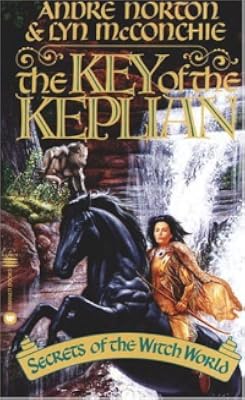
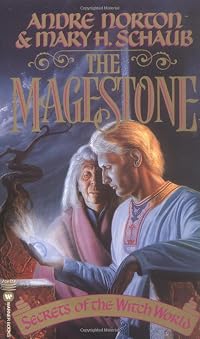







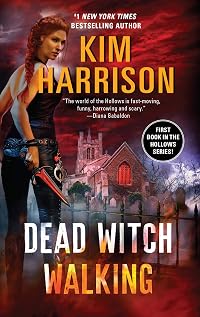

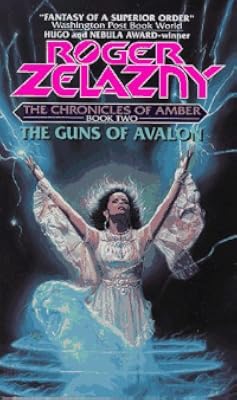


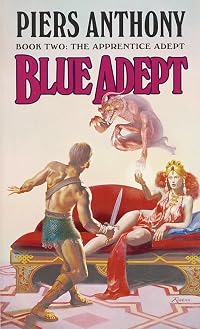


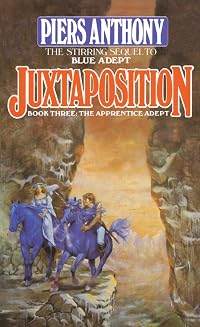
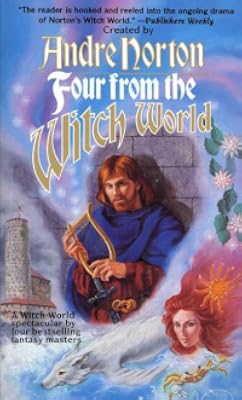

Member Recommendations

Aldrea_Alien Though not the same characters, this story expands the background of the war that brings Gillan to the Abbey and her subsequential decision to venture forth with the bridal group.
cammykitty I view Year of the Unicorn as a fantasy/romance, so here's another great fantasy/romance.
Member Reviews
Another re-read of a Witch World novel, this time the first book of those set in or originating in High Hallack, a place of dales abuting onto the Waste or moorlands. This is told from the viewpoint of a young woman called Gillan, who has been raised in the local version of a nunnery and apprenticed to the healer. Gillan is a misfit as she was rescued from a ship of the invading Hounds of Alizon (originally seen as aggressive invaders in the earlier Witch World stories set in the land of Estcarp) and any knowledge of her origins was lost when her rescuer was killed in the war against the Hounds. Although about 8 years old at the time she remembers nothing of her original life, but her physical description - dark hair whereas the High show more Hallack women are all blondes - is a clue to any reader of the earlier volumes that she most likely originated in Estcarp and therefore may have "witchy" powers. Sure enough, Gillan has always had hunches and other psychic sensations and this witch self is a strong part of her identity.
Gillan finds life in the nunnery stultifying and has no real friends, as the other girls view her as an oddity. So when opportunity offers itself to escape into the unknown on a perilous adventure, she seizes it with both hands. The folk of the dales have had to make a pact with a group of men known as the Were Riders, who are reputed to be shape shifting sorcerors but are also doughty fighters and played a major role in driving off the Hounds. As payment, the Riders requested "twelve and one" brides - young women between the ages of 18 and 20. Gillan contrives with the help of another woman - and the tacit connivance of the abbess - to change places with a girl who is hysterical at the thought of being married off to one of these odd men.
Their reputation proves to be justified when the allocation of brides - there are more Riders than 13 - is settled by ensorcelled cloaks. Only Gillan can see the reality which underlies the glamour spell cast by the Riders, but she is neverthless drawn to the cloak of a rider, Herrel, who is also a misfit, for he is of mixed heritage. This earns the enmity of one Rider in particular and so develops the threat to the pair as first Halse and then other Riders begin to gang up against them.
The story is rather proto feminist - even the independent heroine chooses escape through marriage - but the issue of choice is also paramount. Gillan instinctively avoids a physical relationship although she has never been told she is from Estcarp and that the witch women are reputed to lose their powers with their virginity (although the earlier stories would suggest this is at least in part psychological considering that Jaelle's returned after her marriage). Possibly this suggests a changed premise. The Were Riders are controlling: they ensure the placid conformity of the brides through ensorcelement and they are ruthless in their attempts to crush Gillan, unable to accept her as an equal who is able to see through their illusions.
I enjoyed the story - and wasn't put off by the rather stately and ornate prose, also found in other Witch World books and part of the charm - though I did find the ending slightly weak and for that reason I would rate this at 4 stars. show less
Gillan finds life in the nunnery stultifying and has no real friends, as the other girls view her as an oddity. So when opportunity offers itself to escape into the unknown on a perilous adventure, she seizes it with both hands. The folk of the dales have had to make a pact with a group of men known as the Were Riders, who are reputed to be shape shifting sorcerors but are also doughty fighters and played a major role in driving off the Hounds. As payment, the Riders requested "twelve and one" brides - young women between the ages of 18 and 20. Gillan contrives with the help of another woman - and the tacit connivance of the abbess - to change places with a girl who is hysterical at the thought of being married off to one of these odd men.
Their reputation proves to be justified when the allocation of brides - there are more Riders than 13 - is settled by ensorcelled cloaks. Only Gillan can see the reality which underlies the glamour spell cast by the Riders, but she is neverthless drawn to the cloak of a rider, Herrel, who is also a misfit, for he is of mixed heritage. This earns the enmity of one Rider in particular and so develops the threat to the pair as first Halse and then other Riders begin to gang up against them.
The story is rather proto feminist - even the independent heroine chooses escape through marriage - but the issue of choice is also paramount. Gillan instinctively avoids a physical relationship although she has never been told she is from Estcarp and that the witch women are reputed to lose their powers with their virginity (although the earlier stories would suggest this is at least in part psychological considering that Jaelle's returned after her marriage). Possibly this suggests a changed premise. The Were Riders are controlling: they ensure the placid conformity of the brides through ensorcelement and they are ruthless in their attempts to crush Gillan, unable to accept her as an equal who is able to see through their illusions.
I enjoyed the story - and wasn't put off by the rather stately and ornate prose, also found in other Witch World books and part of the charm - though I did find the ending slightly weak and for that reason I would rate this at 4 stars. show less
My first AN without space. A medieval-like earth with mythic creatures and peoples living amongst mankind. AN's hero's journey was that of an outcast woman who learned her powers as she experienced life in these epic lands and dream worlds. With characters that would have fit in a Greek tragedy AN sketches adventures well within Middle Earth like lands and in dream worlds cast by sorcerers. She held it together well. Once again this book could have been much longer and more fleshed out. Still, a good read.
I always remember loving this book - I love the first part, the last bit gets a little vague and wandery. Gillian taking action, Gillian pushing past being abandoned, those I like. And I like Herrel, too, though he's a bit low on self-esteem - Gillian has to point out where he's overcome the odds and the other Riders several times. So when Gillian becomes helpless, and they have to go wandering through a dreamscape, it gets annoying. The end isn't bad, though I derive more amusement from imagining the reactions of the Riders in the morning than from the actual events. And phooey on Hyron. This is my many-th reread - I have no idea how many times I've read it, though this is the first time in the last decade apparently. This was the show more first appearance (I think) of both the Dales and Arvon, which I prefer to Estcarp in this universe anyway. show less
An intriguing telling of a familiar plot: maidens are given to mercenaries as payment for services rendered in battle, but in this version the mercenaries aren't quite human, and only one of the young girls has the ability to see beyond the illusions. Enjoyable but not predictable read.
I read the Witch World series when I was 18, and I was absolutely compelled and hooked by this "modern Narnia" (the Witch World is a parallel world reached through 'portals' in other worlds - the story begins as a fugitive man from our world, facing death, finds such a portal, through which he discovers a pseudo-medieval world where witchcraft is a respected art; he falls in love with one witch, and the first 5 Witch World novels tell the story of their love, their children, and their adventures in this world, fighting such invaders as the Kolder, a cold race from another world who though technologically advanced seek to enslave other peoples.)
I then re-read the whole series years later, and was brought up short by the simply awful show more pseudo-Victorian-Arthurian-Age-of-Chivalry dialogue - how had I not noticed this the first time of reading? A sample (not actual, but you get the idea):
"Methinks my lady wrestles much with her conscience?"
"No! But, good Thoris, I have much on my mind, please leave me."
This grated horribly on me, and ruined my return to what was otherwise still a highly imaginative, exciting, often mysterious, always involving series.
This 6th book in the series breaks away from the dynasty of the first books, introducing a new character Gillan, a young woman who is seized and while drugged and unconscious, has her "double" wrenched from her. She is then abandoned, locked out of the land where the kidnappers have taken her double (married off to one of them), leaving her cold, empty, and fading.
The story of how she manages to find her way into the hidden world where her double now lives, and manages to track her down so she can attempt to regain her wholeness, is a superbly told odyssey. Phantom lands, ebbing and flowing before her eyes, as she fights against the creeping weariness that prefaces her inevitable death if she fails in her quest, results in a compelling tale you can't put down.
The dialogue is still clunky, but on this occasion, I can forgive that. show less
I then re-read the whole series years later, and was brought up short by the simply awful show more pseudo-Victorian-Arthurian-Age-of-Chivalry dialogue - how had I not noticed this the first time of reading? A sample (not actual, but you get the idea):
"Methinks my lady wrestles much with her conscience?"
"No! But, good Thoris, I have much on my mind, please leave me."
This grated horribly on me, and ruined my return to what was otherwise still a highly imaginative, exciting, often mysterious, always involving series.
This 6th book in the series breaks away from the dynasty of the first books, introducing a new character Gillan, a young woman who is seized and while drugged and unconscious, has her "double" wrenched from her. She is then abandoned, locked out of the land where the kidnappers have taken her double (married off to one of them), leaving her cold, empty, and fading.
The story of how she manages to find her way into the hidden world where her double now lives, and manages to track her down so she can attempt to regain her wholeness, is a superbly told odyssey. Phantom lands, ebbing and flowing before her eyes, as she fights against the creeping weariness that prefaces her inevitable death if she fails in her quest, results in a compelling tale you can't put down.
The dialogue is still clunky, but on this occasion, I can forgive that. show less
ORIGINALLY POSTED AT Fantasy Literature.
Year of the Unicorn, third in Andre Norton’s Witch World saga, is a departure from the first two novels. It’s the story of Gillan, a girl with no family and an unknown heritage who has grown up in an abbey in High Hallack, far from the places we visited with Simon and Jaelithe in the first two Witch World novels. Gillan feels stifled in the abbey and longs for something more. She also feels the stirrings of a strange power within her. She finds a way to escape her meaningless life by volunteering to be one of the 13 maidens that High Hallack has promised to a group of shapeshifters who helped them win a war. This leads her on a terrifying adventure in which she discovers her power and, show more possibly, love.
Year of the Unicorn has a completely different feel from the previous Witch World novels. It’s written in first person and is, therefore, much more introspective than the action-packed stories about Simon and Jaelithe. The prose, also, has a completely different tone, and is most comparable (in my experience) to Ursula Le Guin’s. This comparison seems especially notable with the audio edition because it feels a lot like the audio version of Le Guin’s Voices — even the voice of the reader (though different) is extremely similar. Kate Rudd reads Year of the Unicorn for Brilliance Audio and she does a great job.
I enjoyed learning more about Andre Norton’s universe. The world-building is extensive and Norton avoids infodumping, so we just get a tantalizing glimpse of the Witch World with each book. The first half of Year of the Unicorn flies by while we learn about High Hallack and get to know Gillan as she makes sneaky plans and moves quickly to implement them. Unfortunately, the magic system, which relies mostly on willpower, is not so intriguing. Basically, supernatural things are accomplished by thinking and willing strongly enough. This is forgivable for a fantasy novel published in 1965, but it’s still boring.
Speaking of fantasy history, according to Wikipedia, Year of the Unicorn marks “the first time in American publishing history that a young woman is the primary protagonist in a fantasy book” (no citation, retrieved on May 12, 2010). I don’t know if that’s really true, but I can say that Gillan is a likable young woman and her characterization is strong. However, this was actually both boon and bane, for Gillan, as she says herself, “speaks little… but she thinks much” and each thought she has is recorded for us. Thus, we are frequently subjected to her inner queries and then her entire cognitive process as she contemplates a catalog of potential answers. This includes frequent exclamations of “I could not... or could I… but how… how could I?” (etc.) and habitual reiterations of her terror. This caused the second half of the story to drag and to become frustrating when it seemed that Gillan had worked out a solution, acted on it, and then discovered that she was wrong and had to start over. I usually enjoy a first-person point-of-view, and I loved the first half of Year of the Unicorn, but by the end, I was quite eager to get out of Gillan’s head.
Those, especially female readers, who enjoy a strong introspective heroine, are likely to enjoy Andre Norton’s Year of the Unicorn. This can be read as a stand-alone novel. show less
Year of the Unicorn, third in Andre Norton’s Witch World saga, is a departure from the first two novels. It’s the story of Gillan, a girl with no family and an unknown heritage who has grown up in an abbey in High Hallack, far from the places we visited with Simon and Jaelithe in the first two Witch World novels. Gillan feels stifled in the abbey and longs for something more. She also feels the stirrings of a strange power within her. She finds a way to escape her meaningless life by volunteering to be one of the 13 maidens that High Hallack has promised to a group of shapeshifters who helped them win a war. This leads her on a terrifying adventure in which she discovers her power and, show more possibly, love.
Year of the Unicorn has a completely different feel from the previous Witch World novels. It’s written in first person and is, therefore, much more introspective than the action-packed stories about Simon and Jaelithe. The prose, also, has a completely different tone, and is most comparable (in my experience) to Ursula Le Guin’s. This comparison seems especially notable with the audio edition because it feels a lot like the audio version of Le Guin’s Voices — even the voice of the reader (though different) is extremely similar. Kate Rudd reads Year of the Unicorn for Brilliance Audio and she does a great job.
I enjoyed learning more about Andre Norton’s universe. The world-building is extensive and Norton avoids infodumping, so we just get a tantalizing glimpse of the Witch World with each book. The first half of Year of the Unicorn flies by while we learn about High Hallack and get to know Gillan as she makes sneaky plans and moves quickly to implement them. Unfortunately, the magic system, which relies mostly on willpower, is not so intriguing. Basically, supernatural things are accomplished by thinking and willing strongly enough. This is forgivable for a fantasy novel published in 1965, but it’s still boring.
Speaking of fantasy history, according to Wikipedia, Year of the Unicorn marks “the first time in American publishing history that a young woman is the primary protagonist in a fantasy book” (no citation, retrieved on May 12, 2010). I don’t know if that’s really true, but I can say that Gillan is a likable young woman and her characterization is strong. However, this was actually both boon and bane, for Gillan, as she says herself, “speaks little… but she thinks much” and each thought she has is recorded for us. Thus, we are frequently subjected to her inner queries and then her entire cognitive process as she contemplates a catalog of potential answers. This includes frequent exclamations of “I could not... or could I… but how… how could I?” (etc.) and habitual reiterations of her terror. This caused the second half of the story to drag and to become frustrating when it seemed that Gillan had worked out a solution, acted on it, and then discovered that she was wrong and had to start over. I usually enjoy a first-person point-of-view, and I loved the first half of Year of the Unicorn, but by the end, I was quite eager to get out of Gillan’s head.
Those, especially female readers, who enjoy a strong introspective heroine, are likely to enjoy Andre Norton’s Year of the Unicorn. This can be read as a stand-alone novel. show less
This story is almost like a fairy tale. But where the woman is taking an active role in choosing her future. To survive she must learn and grow a power that could get her killed if others discover its existence.
Members
- Recently Added By
Lists

Books Read in 2014
2,343 works; 89 members

Books Read in 2021
5,361 works; 114 members

hypatian_kat to-read
429 works; 3 members
Author Information

435+ Works 76,522 Members
Born Alice Mary Norton on February 17, 1912 in Cleveland, Ohio, she legally changed her name to Andre Alice Norton in 1934. She attended the Flora Stone Mather College of Western Reserve University (now Case Western Reserve) for a year then took evening courses in journalism and writing that were offered by Cleveland College, the adult division of show more the same university. Norton was a librarian for the Cleveland Library System then a reader at Gnome Press. After that position, she became a full-time writer. She is most noted for writing fantasy, in particular the Witch World series. Her first book The Prince of Commands was published in 1934. Other titles include Ralestone Luck, Magic in Ithkar, Voorloper, Uncharted Stars, The Gifts of Asti and All Cats are Gray. She also wrote under the pen names Andre Norton, Andrew North and Allen Weston She was the first woman to receive the Gandalf Grand Master of Fantasy and the Nebula Grand Master Award. She has also received a Phoenix Award for overall writing achievement, a Jules Verne Award, and a Science Fiction Book Club Book of the Year Award for her title The Elvenbane. In 1997 she was inducted into the Science Fiction and Fantasy Hall of Fame. She died on March 17, 2005. (Bowker Author Biography) show less
Some Editions
Series

Witch World: High Hallack
11 works (2)

Witch World: Publication Order
32 works (1965.10)

Witch World
28 works (04)

Hexenwelt
10 works (Book 6)
Belongs to Publisher Series
Work Relationships
Is contained in
Common Knowledge
- Canonical title*
- Die Braut des Tiermenschen
- Original title
- The Year of the Unicorn
- Original publication date
- 1965-10
- People/Characters
- Aldeeth; Gillan; Halse; Harl; Herrel; Hulor (show all 14); Hyron; Imgry; Kildas; Malwinna; Marimme; Solfinna; Sussia; Yulianna
- Important places
- Norstead Abbey, Norsdale, High Hallack, Witch World; the Waste, Witch World; The Gray Towers, Arvon, Witch World; Arvon, Witch World
- First words
- How does one know coming good from coming ill?
- Last words
- (Click to show. Warning: May contain spoilers.)"Which is enough," I made him answer, and so it was.
- Publisher's editor*
- Walker, Hugh
- Original language
- English
- Canonical DDC/MDS
- 813.54
*Some information comes from Common Knowledge in other languages. Click "Edit" for more information.
Classifications
Statistics
- Members
- 932
- Popularity
- 28,685
- Reviews
- 14
- Rating
- (3.82)
- Languages
- 7 — Czech, English, French, German, Italian, Polish, Russian
- Media
- Paper, Audiobook, Ebook
- ISBNs
- 21
- UPCs
- 1
- ASINs
- 28