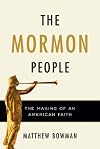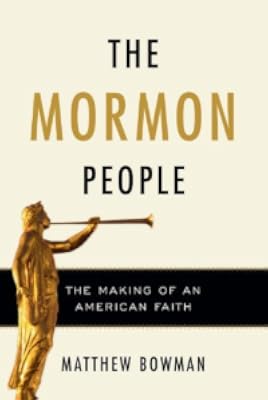
The Mormon People: The Making of an American Faith
by Matthew Bowman
On This Page
Description
With Mormonism on the verge of an unprecedented cultural and political breakthrough, an eminent scholar of American evangelicalism explores the history and reflects on the future of this native-born American faith and its connection to the life of the nation. In 1830, a young seer named Joseph Smith began organizing adherents into a new religious community that would come to be called the Church of Jesus Christ of Latter-day Saints (known informally as the Mormons). Here, religious historian show more Matthew Bowman presents more than 180 years of Mormon history and doctrine. He recounts the church's origin and development, explains how Mormonism came to be one of the fastest-growing religions in the world by the turn of the 21st century, and sets the scene for a 2012 presidential election that has the potential to mark a major turning point in the way this faith is perceived by the wider American public--and internationally.--From publisher description. show lessTags
Recommendations







Member Reviews
This book tells the 180-year history of The Church of Jesus Christ of Latter-day Saints from its founding until present time. This book focuses on the development of Latter-day Saint teachings and practices through each stage of the church's history. Each era is shown in contrast, and often in reaction to, preceding generations in the church, as well as the circumstances that shaped the movement.
As a lifelong Latter-day Saint and Mormon history hobbyist, I didn't expect to be surprised by anything in this book, since it was a broad overview of the church over a long period of time. But I had heard that this book was special, from a skilled writer and up-and-coming scholar who knew how to write for insiders and outsiders, drawing from show more all the best new research, marketed by a national publisher for the "Mormon Moment" during Romney's presidential race.
Among its strengths, the book constructs a cohesive, complete story of the institution and the culture of its people, and its influence from and on the story of America. It convincingly engages with church controversies without trivializing the whole religious movement. It doesn't shy away from hard topics. Bowman's writing is very readable, even though he focuses on the history of thought, instead of popular culture and so many individual narratives. There were many points where I thought Bowman could delve into rationalizations and explain extra background, but that wasn't his goal. He needed to cover the big story without litigating every detail and putting everyone to sleep.
I was most impressed with the chapters on the early 20th century, covering the intellectual leaders during the Progressive Era through to the 1930s and 1940s, leading to the conservative retrenchment of the 1950s and 1960s. I would guess LDS history usually focuses 80% on the first 50 years, and it was helpful to see the story in proportion. Understanding the 1920s-1960s explained SO MUCH about why the Church took its modern shape.
This is not the book to explain every detail. It does not advocate or challenge modern debates. This book explains who and why Mormons are in America. show less
As a lifelong Latter-day Saint and Mormon history hobbyist, I didn't expect to be surprised by anything in this book, since it was a broad overview of the church over a long period of time. But I had heard that this book was special, from a skilled writer and up-and-coming scholar who knew how to write for insiders and outsiders, drawing from show more all the best new research, marketed by a national publisher for the "Mormon Moment" during Romney's presidential race.
Among its strengths, the book constructs a cohesive, complete story of the institution and the culture of its people, and its influence from and on the story of America. It convincingly engages with church controversies without trivializing the whole religious movement. It doesn't shy away from hard topics. Bowman's writing is very readable, even though he focuses on the history of thought, instead of popular culture and so many individual narratives. There were many points where I thought Bowman could delve into rationalizations and explain extra background, but that wasn't his goal. He needed to cover the big story without litigating every detail and putting everyone to sleep.
I was most impressed with the chapters on the early 20th century, covering the intellectual leaders during the Progressive Era through to the 1930s and 1940s, leading to the conservative retrenchment of the 1950s and 1960s. I would guess LDS history usually focuses 80% on the first 50 years, and it was helpful to see the story in proportion. Understanding the 1920s-1960s explained SO MUCH about why the Church took its modern shape.
This is not the book to explain every detail. It does not advocate or challenge modern debates. This book explains who and why Mormons are in America. show less
I just moved to Utah from New York. I've been a Buddhist for many years and have had very little contact with Mormons... up until now! I figured I'd better get to know my neighbors a bit! This book was perfect. It's a bit on the boring side. It is just a quick march over the facts. An event like the Mountain Meadow Massacre gets maybe a page. But the context has been well set by the history up to that point, so a page lays out the basic facts reasonably well. I feel I could go read a book on that event and not be overly bewildered. The book covers the time from the lives of Joseph Smith's parents up to the early 2000s.
Typically, when popular publishers venture into Mormonism, it is to reveal salacious or scandalous Mormon secrets (e.g., Laake's Secret Ceremonies; Beck's Leaving the Saints, Davis' Sins of Brother Curtis, Naifeh's Mormon Murders, or Krakauer's Under the Banner of Heaven). This Random House title brings a scholarly, non-judgmental history of Mormonism that, if not for the possibility that Mormon Mitt Romney might win the Republican nominee, might have landed the author a spot in an academic press. Indeed, Bowman is a professor, and while some of the history has been said before (notably the work of Jan Shipps or Fawn Brodie), his unique perspective is to study how the fundamental tenets of Mormonism have been refocused, redefined, and show more reprioritized over time in the hands of specific men in response to changes in American religious, political, and cultural beliefs. As Mormon beliefs transition from polygamy to self-determination to obedience, Bowman shows how those ideas set the LDS church either in opposition to or in harmony with American society. Particular attention is given to Mormonism in the time of the Progressive Era, an often-underexamined era of LDS history. Bowman, who hails from Bountiful, Utah, and serves as associate editor for Dialogue: A Journal of Mormon Thought, has created a meticulously researched, emotionally-neutral story of the coming of age of America and its largest homegrown religion. Recommended. (42) show less
Written by a Mormon, this is a very evenhanded overview of Mormon history and culture, as well as a great depiction of the evolution of their beliefs.
A friend of mine strongly considered converting to Mormonism when I was in high school (she later converted as an adult) and I've been curiously fascinated by the faith ever since. I very much enjoyed this book and recommend it to anyone wanting to learn more about Mormon church history and beliefs.
A friend of mine strongly considered converting to Mormonism when I was in high school (she later converted as an adult) and I've been curiously fascinated by the faith ever since. I very much enjoyed this book and recommend it to anyone wanting to learn more about Mormon church history and beliefs.
A very objective history of a religion that many Americans simply don't know too much about, stereotypes, politicians, and musicals notwithstanding. Filled in a lot of gaps in my knowledge.
Crams a good deal into some 200 pages - from the early historical struggles of the church and how it gradually became more integrated into American life. Discusses its controversies (polygamy, early territorial clashes) as well as its similarities to 'main-stream' Protestant Christianity - ethics, family life, missionary work, etc.
Also has a very nice bibliography, from which I will gleefully steal further suggestions.
Crams a good deal into some 200 pages - from the early historical struggles of the church and how it gradually became more integrated into American life. Discusses its controversies (polygamy, early territorial clashes) as well as its similarities to 'main-stream' Protestant Christianity - ethics, family life, missionary work, etc.
Also has a very nice bibliography, from which I will gleefully steal further suggestions.
The history of the church from the beginning until today gives the reader a solid footing in understanding the church. Fairly easy to read for the lay reader, I found I understood the people and the faith better. Recommended for those wanting to develop a better understanding.
Interesting book about the history of the Mormon people.
Members
- Recently Added By
Published Reviews
ThingScore 79
I noticed two other general features of the book that will likely increase its appeal to non-Mormon readers and to intellectually persuaded Mormons: For one, the book is quite candid and transparent about many of the more curious, troubling, and misunderstood features in Mormon history that have so often been passed over... Bowman’s treatment of all these issues is done with great show more discretion—revealing but not in any way salacious.
A second appealing feature of the book is its occasional citation of intellectual and artistic products, whether by Mormons or non-Mormons, to illustrate or symbolize important historical developments...
All in all, this book is a pleasure to read. The prose communicates well and colorfully. It would be an excellent basic textbook for a course in Mormon studies at either the graduate or the undergraduate level. I expect it to enjoy a wide readership, partly because of the features I have discussed here, but also because it has the benefit of marketing by a well-known commercial publisher. show less
A second appealing feature of the book is its occasional citation of intellectual and artistic products, whether by Mormons or non-Mormons, to illustrate or symbolize important historical developments...
All in all, this book is a pleasure to read. The prose communicates well and colorfully. It would be an excellent basic textbook for a course in Mormon studies at either the graduate or the undergraduate level. I expect it to enjoy a wide readership, partly because of the features I have discussed here, but also because it has the benefit of marketing by a well-known commercial publisher. show less
added by richjj
In “The Mormon People,” Matthew Bowman synthesizes previous scholarship to create a church history that is neither truly secular nor wholly sacred. ...
Bowman does say his aim is to introduce readers “to the faith of presidential contender Mitt Romney and bestselling author Stephenie Meyer” as well as to show that “the story of Mormonism is not merely the story of these believers and show more their ancestors, but the story of America itself.” He does the first task exceedingly well; he engagingly roots the Mormon story in the particular history of Smith’s time and place, and he reports thoroughly on Smith’s life, his spiritual journey and the birth of a new religion. Yet Bowman never really manages to bring Smith to life. ...
In recounting Mormonism’s most recent history, Bowman paints the church beige. ... Still, for readers eager to know more about Mormon history and beliefs, Bowman’s book is well written and comprehensive. It’s organized chronologically, which helps make the case for the religion’s ongoing and organic relationship with the republic. show less
Bowman does say his aim is to introduce readers “to the faith of presidential contender Mitt Romney and bestselling author Stephenie Meyer” as well as to show that “the story of Mormonism is not merely the story of these believers and show more their ancestors, but the story of America itself.” He does the first task exceedingly well; he engagingly roots the Mormon story in the particular history of Smith’s time and place, and he reports thoroughly on Smith’s life, his spiritual journey and the birth of a new religion. Yet Bowman never really manages to bring Smith to life. ...
In recounting Mormonism’s most recent history, Bowman paints the church beige. ... Still, for readers eager to know more about Mormon history and beliefs, Bowman’s book is well written and comprehensive. It’s organized chronologically, which helps make the case for the religion’s ongoing and organic relationship with the republic. show less
added by richjj
The world needed an accessible, neutral, brief, birth-to-present history of Mormonism, and it needed it right now. Matthew Bowman has written that book. Including every relevant moment ... Bowman works a space-packing miracle... Opinion makers in the media, politics, and academia who want to join the conversation about Mormons will be well prepared by this brisk and rigorous overview, and I show more imagine many keeping a heavily Post-It-noted copy near at hand in the coming months and years.
...
For the most part, Bowman describes supernatural visitations and the like in a factual voice. ... Bowman does meticulously document counter opinions or facts. No member of the whos-who of “challenging” facts in church history is omitted from Bowman’s book: treasure-seeking, multiple accounts of the first vision, Mountain Meadows, and so on. Indeed, this is one thing that makes Bowman’s book so valuable–it is uncompromisingly frank, but not needlessly sensationalistic (I’m looking at you, Krakauer!).
...
I would be quicker (very quick) to recommend this to an academic friend, or a serious reader, or as required reading for a class, or as required reading for anyone publicly commentating upon Mormons or Mormonism, than I would to just some hypothetical neighbor who is mildly curious about the church and typically only reads popular novels. show less
...
For the most part, Bowman describes supernatural visitations and the like in a factual voice. ... Bowman does meticulously document counter opinions or facts. No member of the whos-who of “challenging” facts in church history is omitted from Bowman’s book: treasure-seeking, multiple accounts of the first vision, Mountain Meadows, and so on. Indeed, this is one thing that makes Bowman’s book so valuable–it is uncompromisingly frank, but not needlessly sensationalistic (I’m looking at you, Krakauer!).
...
I would be quicker (very quick) to recommend this to an academic friend, or a serious reader, or as required reading for a class, or as required reading for anyone publicly commentating upon Mormons or Mormonism, than I would to just some hypothetical neighbor who is mildly curious about the church and typically only reads popular novels. show less
added by richjj
Lists

Best in Mormon History
44 works; 2 members
Author Information
12+ Works 244 Members
Matthew Bowman is the Howard W. Hunter Chair of Mormon Studies and Associate Professor of History and Religion at Claremont Graduate University and the author of The Mormon People: The Making of an American Faith.
Some Editions
Common Knowledge
- Original publication date
- 2012
- Dedication
- For Richard Bushman
- First words
- On a Monday morning in November 1835 a slendar man in his middle forties, curiously dressed in a sea-green coat and pants and sporting a curling grey beard, picked his way into the muddy frontier town of Kirtland, Ohio, twent... (show all)y miles northeast of Cleveland along the Chagrin River.
- Last words
- (Click to show. Warning: May contain spoilers.)While the story of Mormonism in America is in many ways the story of the Americanization of a radical religious movement, it is also the story of the preservation of a dream and the still-beating heart of Joseph Smith's vision of Zion.
- Blurbers
- Brokaw, Tom; Beschloss, Michael; Bushman, Richard Lyman
Classifications
- Genres
- Nonfiction, Religion & Spirituality, History, General Nonfiction
- DDC/MDS
- 289.309 — Religion Christian denominations Other denominations and sects Mormonism Biography And History
- LCC
- BX8611 .B695 — Philosophy, Psychology and Religion Christian Denominations Christian Denominations Protestantism Other Protestant denominations Mormons. Church of Jesus Christ of Latter-Day Saints
- BISAC
Statistics
- Members
- 158
- Popularity
- 208,062
- Reviews
- 8
- Rating
- (3.92)
- Languages
- English
- Media
- Paper, Audiobook, Ebook
- ISBNs
- 6
- ASINs
- 1