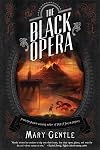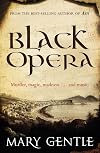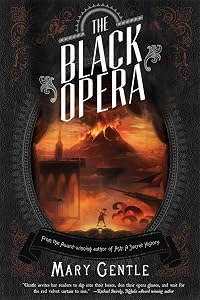
The Black Opera
by Mary Gentle
On This Page
Description
Fantasy. Fiction. Historical Fiction. HTML:Naples, the 19th Century.In the Kingdom of the Two Sicilies, holy music has power. Under the auspices of the Church, the Sung Mass can bring about actual miracles like healing the sick or raising the dead. But some believe that the musicodramma of grand opera can also work magic by channeling powerful emotions into something sublime. Now the Prince’s Men, a secret society, hope to stage their own black opera to the empower the Devil show more himself–and change Creation for the better.
Conrad Scalese is a struggling librettist whose latest opera has landed him in trouble with the Holy Office of the Inquisition. Rescued by King Ferdinand II, Conrad finds himself recruited to write and stage a counteropera that will, hopefully, cancel out the apocalyptic threat of the black opera, provided the Prince’s Men, and their spies and saboteurs, don’t get to him first.
And he only has six weeks to do it . . . . show less
Tags
Recommendations









Member Reviews
Read this for book club... well, that and because I really like Mary Gentle.
Here, in an alternate 19th-century Italy, we encounter Conrad Scalese - a professional opera librettist. Unfortunately, right now, he's being unexpectedly pursued by the Inquisition. You see, last night the hall where his latest opera was being performed was struck by lightning, burned to the ground - and the Inquisition blames his music. Because, as it's well known, religious music can often cause miracles to occur - and, sometimes, secular music can do the same, although this is an occurrence the Inquisition would like to avoid at all costs.
As an atheist, and firm believer in the natural sciences, Conrad has no truck with miracles. However, he admits that show more unexplained phenomena - such as the Returned Dead, when deceased people walk, vampire-like, and other 'miraculous' events do occur. Regardless, like most people, he'd rather not be in the hands of the Inquisition.
So when no less than the King himself offers Conrad an unusual assignment which would let him out of his arrest - of course he takes the commission. He is to write an opera - but not just any opera. A mysterious group of Satanists are embroiled in a plot to write a Black Opera which will cause volcanoes to erupt, wreak ecological devastation, and moreover, summon Lucifer and put evil in charge of the world. Conrad's job is to write an opera that will stop this from happening - a "counter-opera."
A countdown-style thriller proceeds to unfold...
The book is just full of wonderful details. Structurally, the plot of the book mirrors the plot of an opera itself, which is fun. There are tons of throwaway lines, which are just amazing (like the one about who Darwin married). The timeline plays fast and loose with history - although the background is vivid and thoroughly researched. I didn't care. It may bug some people.
It's not a perfect book. I often feel that Gentle's characterization is a bit opaque - I'd like to see more of her characters' interior lives. The whole race-against-time plot device is a little old, and the Grand Climax is a bit over-the-top.
However, the ending of the book made me up my rating from 4 stars to 5. I nearly cheered. I feel like I've read literally hundreds of stories just waiting to see this obvious solution to a common dilemma proposed. Gentle finally did it. show less
Here, in an alternate 19th-century Italy, we encounter Conrad Scalese - a professional opera librettist. Unfortunately, right now, he's being unexpectedly pursued by the Inquisition. You see, last night the hall where his latest opera was being performed was struck by lightning, burned to the ground - and the Inquisition blames his music. Because, as it's well known, religious music can often cause miracles to occur - and, sometimes, secular music can do the same, although this is an occurrence the Inquisition would like to avoid at all costs.
As an atheist, and firm believer in the natural sciences, Conrad has no truck with miracles. However, he admits that show more unexplained phenomena - such as the Returned Dead, when deceased people walk, vampire-like, and other 'miraculous' events do occur. Regardless, like most people, he'd rather not be in the hands of the Inquisition.
So when no less than the King himself offers Conrad an unusual assignment which would let him out of his arrest - of course he takes the commission. He is to write an opera - but not just any opera. A mysterious group of Satanists are embroiled in a plot to write a Black Opera which will cause volcanoes to erupt, wreak ecological devastation, and moreover, summon Lucifer and put evil in charge of the world. Conrad's job is to write an opera that will stop this from happening - a "counter-opera."
A countdown-style thriller proceeds to unfold...
The book is just full of wonderful details. Structurally, the plot of the book mirrors the plot of an opera itself, which is fun. There are tons of throwaway lines, which are just amazing (like the one about who Darwin married). The timeline plays fast and loose with history - although the background is vivid and thoroughly researched. I didn't care. It may bug some people.
It's not a perfect book. I often feel that Gentle's characterization is a bit opaque - I'd like to see more of her characters' interior lives. The whole race-against-time plot device is a little old, and the Grand Climax is a bit over-the-top.
However, the ending of the book made me up my rating from 4 stars to 5. I nearly cheered. I feel like I've read literally hundreds of stories just waiting to see this obvious solution to a common dilemma proposed. Gentle finally did it. show less
The Black Opera should have been a firecracker of a book. It's got a marvellously inventive premise: an alternate Naples in the early nineteenth century where the Returned Dead walk the streets and secret societies plot the supernatural eruption of Mount Vesuvius, where opera has the power to catalyse magical reactions and where the librettist Conrad is trying to dodge the Inquisition, his father's ghost, and the unwelcome side effects of being trapped in a love triangle.
But Mary Gentle seems to have become entangled in her own premise, and forgot the old adage of always starting as close to the end of the story as possible. I'm sure she was trying to induce the same feeling of disorientation in the reader as is felt by Conrad as show more various revelations happen, but instead the first half of the book reads like all preamble—"and then and then and then" storytelling, not helped by the fact that some characters and their motivations are frustratingly opaque throughout.
Gentle does have a way of keeping you reading towards the end, but sadly the big reveal of means and motivation, well.... doesn't reveal much. Some things remain frustrating cyphers, and the resolution of the love triangle both frustrating and farcical (Largely because Gentle keeps insisting that Leonora is amazing and that both Roberto and Conrad are rightfully obsessed by her without ever really showing us why. Quite honestly, the Roberto/Conrad relationship was much more appealing to me, and an ending in which they paired off and ditched Leonora would have been far more emotionally convincing). I shouldn't get to the end of a 700-page book and exclaim "Are you kidding me?", only with a rude word inserted between the 'you' and the 'kidding'. show less
But Mary Gentle seems to have become entangled in her own premise, and forgot the old adage of always starting as close to the end of the story as possible. I'm sure she was trying to induce the same feeling of disorientation in the reader as is felt by Conrad as show more various revelations happen, but instead the first half of the book reads like all preamble—"and then and then and then" storytelling, not helped by the fact that some characters and their motivations are frustratingly opaque throughout.
Gentle does have a way of keeping you reading towards the end, but sadly the big reveal of means and motivation, well.... doesn't reveal much. Some things remain frustrating cyphers, and the resolution of the love triangle both frustrating and farcical (Largely because Gentle keeps insisting that Leonora is amazing and that both Roberto and Conrad are rightfully obsessed by her without ever really showing us why. Quite honestly, the Roberto/Conrad relationship was much more appealing to me, and an ending in which they paired off and ditched Leonora would have been far more emotionally convincing). I shouldn't get to the end of a 700-page book and exclaim "Are you kidding me?", only with a rude word inserted between the 'you' and the 'kidding'. show less
I’ve noticed a trend with books about opera: some of the craziness and whimsy of opera plots tends to bleed into the main plot, resulting in an in-universe reality that feels slightly enhanced. Black Opera has that in spades.
Going by the sales pitch, Black Opera has all the makings of a riveting alternate-history yarn, complete with opera, 19th-century royalty, secret societies, the raised dead, the Inquisition, a volcanic eruption, a Napoleon Bonaparte prison break, and a main plot that sets an atheist against a secret religious society planning on using uncatholic magic to hack into reality and bring into being a nasty, cruel and vindictive God to sit in judgement over all. If that is not a recipe for awesomeness, I don’t know show more what is.
Ultimately, I felt that the book did not deliver on all the promises that its premise made. That is not to say I did not enjoy the book -- large stretches of it I basically speed-read because Gentle applied the Rule of Cool so expertly. And yet, for all the intrigue and awesomeness that drive the crazy plot, the pacing of the book was off sometimes: I felt the balance with slower-moving subplots and the timing of plot twists could have been handled a little better. Also, not everything was brought to a conclusion that matched the book’s tone and/or my expectations: some resolutions I thought were too rushed, others too neat.
Still, in a weird way, the opera-esque recklessness of the plot compensates for these shortcomings, and makes them feel almost appropriate. Almost.
In short, I found Black Opera to be a pretty enjoyable read, a rolicking ride that almost goes all-out, but that doesn’t end as satisfactorily as it could have. Pick it up if you’re interested, though: the good parts are more than good enough to outweigh its problems. show less
Going by the sales pitch, Black Opera has all the makings of a riveting alternate-history yarn, complete with opera, 19th-century royalty, secret societies, the raised dead, the Inquisition, a volcanic eruption, a Napoleon Bonaparte prison break, and a main plot that sets an atheist against a secret religious society planning on using uncatholic magic to hack into reality and bring into being a nasty, cruel and vindictive God to sit in judgement over all. If that is not a recipe for awesomeness, I don’t know show more what is.
Ultimately, I felt that the book did not deliver on all the promises that its premise made. That is not to say I did not enjoy the book -- large stretches of it I basically speed-read because Gentle applied the Rule of Cool so expertly. And yet, for all the intrigue and awesomeness that drive the crazy plot, the pacing of the book was off sometimes: I felt the balance with slower-moving subplots and the timing of plot twists could have been handled a little better. Also, not everything was brought to a conclusion that matched the book’s tone and/or my expectations: some resolutions I thought were too rushed, others too neat.
Still, in a weird way, the opera-esque recklessness of the plot compensates for these shortcomings, and makes them feel almost appropriate. Almost.
In short, I found Black Opera to be a pretty enjoyable read, a rolicking ride that almost goes all-out, but that doesn’t end as satisfactorily as it could have. Pick it up if you’re interested, though: the good parts are more than good enough to outweigh its problems. show less
Naples, 1822. The opening night of Conrad Scalese's latest opera is a huge success and things finally seem to be looking up for the impoverished librettist. The next morning he wakes up to discover the cast, crew, director and musicians have fled or gone into hiding, the opera house has been struck by lightning and burned to the ground and the Holy Inquisition are pounding on his door. In this version of history, music can cause miracles, including bringing the dead back, but such miracles are solely reserved for the polyphonic hymns of the Church. Miraculous operas are heretical. Conrad as an atheist is already on dangerous ground, and his future does not look good.
Only a timely intervention by the King of the Two Sicilies saves Conrad show more from the torture chamber, but his problems have only just begun. A powerful, heretical, devil-worshipping secret society have harnessed the power of opera and plan to bring about a horrifying miracle. Conrad must conceive, write, produce and direct a counter-opera to negate the dark miracle. He has six weeks, and the dangers posed by the ruthless secret society are nothing to the difficulties posed by discovering that his composer's wife is his own long-lost love.
It's a fantastically enjoyable read with an unusual story, mixing fantasy and history in a way that's nothing short of, well, operatic. The suitably epic ending stretches on a bit too long, but Gentle has about a million different elements to resolve, from the various terrifying physical dangers to assorted metaphysical questions which need to be confronted to the musical duel of competing operas and, most tangled and unfathomable and intractable of all, the classical problem of the love triangle, so it's not that it doesn't hold the interest, it's just that there's too much of it. show less
Only a timely intervention by the King of the Two Sicilies saves Conrad show more from the torture chamber, but his problems have only just begun. A powerful, heretical, devil-worshipping secret society have harnessed the power of opera and plan to bring about a horrifying miracle. Conrad must conceive, write, produce and direct a counter-opera to negate the dark miracle. He has six weeks, and the dangers posed by the ruthless secret society are nothing to the difficulties posed by discovering that his composer's wife is his own long-lost love.
It's a fantastically enjoyable read with an unusual story, mixing fantasy and history in a way that's nothing short of, well, operatic. The suitably epic ending stretches on a bit too long, but Gentle has about a million different elements to resolve, from the various terrifying physical dangers to assorted metaphysical questions which need to be confronted to the musical duel of competing operas and, most tangled and unfathomable and intractable of all, the classical problem of the love triangle, so it's not that it doesn't hold the interest, it's just that there's too much of it. show less
I abandoned this book for being a huge bait and switch. For all the book jacket promises of operatic miracles, this book is almost nothing but personal drama surrounding the difficulties of writing an opera. It might as well not contain any supernatural elements for all the difference it makes. That, and it's far too long for how little it delivers.
Set in 19th-century Italy, 'The Black Opera' is a fantasy/alternate history piece in which a lyricist is tasked with a creating an opera that will produce enough magical power to counteract the sinister spells of a cult out to spread destruction.
Told from the point of view of a person steeped in the opera world, the book is lush with musical terminology, an enjoyable story 'staging' if you will that may appeal to anyone who's passionate about music. Music's inherent ability to affect things is something that's already felt by many musicians and music lovers; seeing it taken just a bit further here and actually made magical is just the smallest step beyond what one might already feel.
The characters are diverse, likeable and show more interesting, with a complicated love triangle thrown into the mix for good measure. Furthermore, the protagonist is also an athiest, which is a difficult position to hold at that time. His arguments are explored some as the story goes along, and some revelations near the end add to the novel's interesting philisophical/spiritual angle.
The plot moves along pretty well - lots of intrigue and excitement, with an element of music-related drama that appeals to the performer in me. If I were to make any criticisms, it would be that the motivations of the 'bad guys' seems wishy-washy at best, and the resolution between the main characters comes across as a little too pat. Even so, it's a terribly fun read, particularly recommended for music lovers. show less
Told from the point of view of a person steeped in the opera world, the book is lush with musical terminology, an enjoyable story 'staging' if you will that may appeal to anyone who's passionate about music. Music's inherent ability to affect things is something that's already felt by many musicians and music lovers; seeing it taken just a bit further here and actually made magical is just the smallest step beyond what one might already feel.
The characters are diverse, likeable and show more interesting, with a complicated love triangle thrown into the mix for good measure. Furthermore, the protagonist is also an athiest, which is a difficult position to hold at that time. His arguments are explored some as the story goes along, and some revelations near the end add to the novel's interesting philisophical/spiritual angle.
The plot moves along pretty well - lots of intrigue and excitement, with an element of music-related drama that appeals to the performer in me. If I were to make any criticisms, it would be that the motivations of the 'bad guys' seems wishy-washy at best, and the resolution between the main characters comes across as a little too pat. Even so, it's a terribly fun read, particularly recommended for music lovers. show less
Conrad Scalese’s latest opera was a great success. Unfortunately the theatre in which it was performed has just been stuck by lightening. And since the composer and many of the performers have fled Naples the church decides to blame him. As the librettist his words caused God’s wrath to strike down the building.
But, as the Inquisition come calling, King Ferdinand II has other plans for him. The King of the two Sicilies has heard reports that a secret society are planning to use the miracle of the Sung Mass, but in the form of an opera, and call forth the devil. These “Prince’s Men” believe that God has abandoned the earth, but that, given the chance, Lucifer can break free and do a much better job of ridding the world of pain. show more To do so their “black opera” and blood sacrifice will destroy all Naples, all Sicily, and possibly even all of Europe.
I’ve been a fan of Mary Gentle’s work since I read Ash: a secret history many, many years ago. So when I spotted this I had to nab it. The premise sounded wonderful. And alternate world where the Sung Mass of the church can bring about miracles such as the dead returning to life sounds great. Plus, you know, devils and conspiracies. Betrayal and love. It should have been a great story.
Unfortunately from the first page it just didn’t grab me. Maybe it was too concerned with the world of opera and I don’t know enough about that. Or maybe it was because it was all about the power of music and that is hard to portray in a book. I’m not sure, but it just didn’t work for me.
I think it was actually a bit too sprawling. Maybe tighter editing would have made it a better read? For a book that deals with gender roles, raising the devil, zombies, miracles, religion, science and atheism, it just seemed like nothing all that major was happening. No tension I guess.
Don’t get me wrong, it wasn’t terrible, or bad. Just adequate. So damned with the faintest of faint praise… show less
But, as the Inquisition come calling, King Ferdinand II has other plans for him. The King of the two Sicilies has heard reports that a secret society are planning to use the miracle of the Sung Mass, but in the form of an opera, and call forth the devil. These “Prince’s Men” believe that God has abandoned the earth, but that, given the chance, Lucifer can break free and do a much better job of ridding the world of pain. show more To do so their “black opera” and blood sacrifice will destroy all Naples, all Sicily, and possibly even all of Europe.
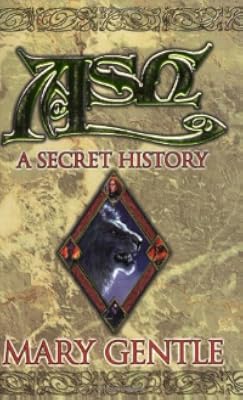
I’ve been a fan of Mary Gentle’s work since I read Ash: a secret history many, many years ago. So when I spotted this I had to nab it. The premise sounded wonderful. And alternate world where the Sung Mass of the church can bring about miracles such as the dead returning to life sounds great. Plus, you know, devils and conspiracies. Betrayal and love. It should have been a great story.
Unfortunately from the first page it just didn’t grab me. Maybe it was too concerned with the world of opera and I don’t know enough about that. Or maybe it was because it was all about the power of music and that is hard to portray in a book. I’m not sure, but it just didn’t work for me.
I think it was actually a bit too sprawling. Maybe tighter editing would have made it a better read? For a book that deals with gender roles, raising the devil, zombies, miracles, religion, science and atheism, it just seemed like nothing all that major was happening. No tension I guess.
Don’t get me wrong, it wasn’t terrible, or bad. Just adequate. So damned with the faintest of faint praise… show less
Members
- Recently Added By
Lists

Gaslamp Fantasy
87 works; 15 members

Jean's Sci Fi/Fantasy Reading list
189 works; 12 members

A Rainbow of Books: Colors in the Title
570 works; 24 members
Author Information

61+ Works 7,580 Members
Common Knowledge
- Canonical title
- The Black Opera
- Original publication date
- 2012
- Important places
- Naples, Kingdom of Naples and Sicily
- Important events
- Tambora Eruption (1815-04-10)
- Original language
- English
Classifications
Statistics
- Members
- 167
- Popularity
- 196,163
- Reviews
- 13
- Rating
- (3.68)
- Languages
- English
- Media
- Paper, Ebook
- ISBNs
- 6
- ASINs
- 1