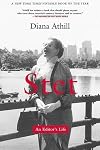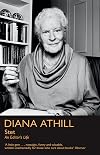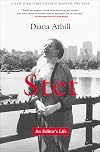
Stet
by Diana Athill
On This Page
Description
A New York Times Notable Book: This memoir of a career in book publishing "should please anyone who cares about twentieth-century literature" ( The Washington Post Book World ). For nearly five decades, Diana Athill edited (nursed, coerced, coaxed) some of the most celebrated writers in the English language, among them V.S. Naipaul, Philip Roth, John Updike, Jean Rhys, Mordecai Richler, Molly Keane, and Norman Mailer. A founding editor of the prestigious publishing house Andre Deutsch Ltd., show more Athill takes us on a guided tour through the corridors of literary London, offering a keenly observed, devilishly funny, and always compassionate insider's portrait of the glories and pitfalls of making books-spiced with candid insights about the type of people who make brilliant writers and ingenious publishers, and the idiosyncrasies of both. It is both "wryly humorous" ( The New York Times Book Review ) and "full of history, wisdom, and dirt" ( The Boston Globe ). "This is not literary life as we know it today-huge advances, showbiz and vast conglomerates-but the world of small literary houses... An enveloping blast of nostalgia: read and marvel at what we (all of us) are missing." - Marie Claire "A beautifully written, hard-headed, and generally insightful look back at the heyday of post-war London publishing by a woman who was at its center for nearly half a century." - The Washington Times "Witty and astute... The literarily curious will find [her] portraits of leading contemporary authors irresistible." - Publishers Weekly show lessTags
Recommendations
























Member Recommendations



Member Reviews
A memoir from someone who, before it's publication, had been more-or-less confined -- happily, mind you -- to publishing's back office. "Stet" is a must for readers curious about behind-the-scenes goings-on at publishing houses, if any of those should exist. Diana Athill is one to give you the straight dope on what it took to make it in the heady, slightly chaotic publishing industry as it existed after peace was declared. She seems to be the writer to do it: not only does she have a good eye for the telling detail and an obvious fondness for the characters she met while working there, she also has the good judgment to know the difference between good, clean gossip -- which she enjoys -- and mere sniping, which she avoids. She provides show more loving portraits of several of her long-term colleagues -- including John Deutsch, her longtime boss -- and comic portraits of some short-termers who, for various reasons, didn't last. I imagine that "Stet" will appeal to those readers who enjoy stories set in that becalmed slightly gray period that followed the end of the Second World War in Britain: you know, the sort of people who read Beryl Bainbridge, Muriel Spark, and Penelope Fitzgerald. All the fun ends in the eighties, of course, after the recession hits, the big money arrives, and the wave of corporate conglomeration that was affecting the rest of the corporate world begins to sweep up publishing houses, too. In the end, though, the author provides a remarkably hopeful for a diagnosis for the industry as a whole. The golden age of sorts that she participated in is long gone, but as a person who labored in publishing houses that preferred to put out "our sort of book," she's heartened that there are still plenty of people out there who care about quality writing and others who care about getting it to readers. Athill seems to have had a fun, productive life and seems to have been rather an optimist at the end of it.
Her insights into the authors she profiles -- most especially V.S. Naipaul and Jean Rhys -- are also valuable. Frankly, I had no idea that Rhys's life was so unforgivingly bleak, or her mental state so perilously unstable, although Athill provides a good analysis about exactly why she ended up the way that she did. She also seems to have been a charter member of what she calls "the Jean Committee," which took care of Rhys in her later years and to have played a not-insignificant part in midwifing Rhys's best-known work, "Wide Sargasso Sea". Naipaul was something more of a known quantity to me, but the information and analysis of his background -- which also included various visits to Trinidad -- was also very enlightening, going some way to explain him, if not to excuse his behavior. The union between Vidia and his English wife, Pam, must rank among the most hellish literary marriages of all time, and that's saying something. It seems hardly surprising that Sir V.S. was both a nearly flawless writer, even in his drafts, and hypersensitive to any perceived criticism.
In addition to all of this, "Stet" is an enjoyable read because of Athill herself. She's a brilliantly clear, engaging writer who gives the impression of knowing every molecule of the subjects she discusses here. Not unsympathetic but ruthlessly perceptive about the situations and people she describes, she seems to be the sort of person who makes "being no-nonsense" into a minor art form and takes the gold medal in what the kids today call "adulting." "Stet" is the unmistakable product of a fully developed personality. Of course, Athill is, more or less by her own admission, the product of a rather antiquated rural upper class and a somewhat insular, left-leaning bookish community, but she owns her prejudices and meditates productively on what her "caste" got right and got wrong over the years. The posh tone is hard to miss, and while it may grate on some, Athill owns it. Her satisfaction with the life she lived and the book she wrote about it couldn't be more evident. Recommended. show less
Her insights into the authors she profiles -- most especially V.S. Naipaul and Jean Rhys -- are also valuable. Frankly, I had no idea that Rhys's life was so unforgivingly bleak, or her mental state so perilously unstable, although Athill provides a good analysis about exactly why she ended up the way that she did. She also seems to have been a charter member of what she calls "the Jean Committee," which took care of Rhys in her later years and to have played a not-insignificant part in midwifing Rhys's best-known work, "Wide Sargasso Sea". Naipaul was something more of a known quantity to me, but the information and analysis of his background -- which also included various visits to Trinidad -- was also very enlightening, going some way to explain him, if not to excuse his behavior. The union between Vidia and his English wife, Pam, must rank among the most hellish literary marriages of all time, and that's saying something. It seems hardly surprising that Sir V.S. was both a nearly flawless writer, even in his drafts, and hypersensitive to any perceived criticism.
In addition to all of this, "Stet" is an enjoyable read because of Athill herself. She's a brilliantly clear, engaging writer who gives the impression of knowing every molecule of the subjects she discusses here. Not unsympathetic but ruthlessly perceptive about the situations and people she describes, she seems to be the sort of person who makes "being no-nonsense" into a minor art form and takes the gold medal in what the kids today call "adulting." "Stet" is the unmistakable product of a fully developed personality. Of course, Athill is, more or less by her own admission, the product of a rather antiquated rural upper class and a somewhat insular, left-leaning bookish community, but she owns her prejudices and meditates productively on what her "caste" got right and got wrong over the years. The posh tone is hard to miss, and while it may grate on some, Athill owns it. Her satisfaction with the life she lived and the book she wrote about it couldn't be more evident. Recommended. show less
Another of Athill's memoirs, this one from 2000, about her life in publishing and editing. She mentions the pleasures of learning a subject by editing the work of a writer who’s passionate about it.
Here she is talking about book buyers:
"People who buy books, not counting useful how-to-do-it books, are of two kinds. There are those who buy because they love books and what they can get from them, and those to whom books are one form of entertainment among several. The first group, which is by far the smaller, will go on reading, if not for ever, then for as long as one can foresee. The second group has to be courted. It is the second which makes the best-seller, impelled thereto by the buzz that a particular book is really something show more special; and it also makes publishers' head-aches, because it has become more and more resistant to courting."
After a man who bought the company sold its archive, she says:
"It was sentimentality to feel the loss of that intractable mountain of old files so keenly – we had kept copies of essential matter such as contracts, and never suffered in any practical way from the absence of the rest; but it did, all the same, give me a most uncomfortable feeling. A publishing house without its archive –there was something shoddy about it, like a bungalow without a damp course." [British for foundation insulation.]
If reading this and Instead of a Letter: A Memoir was an attempt to cull my library, it was a dismal failure because I just ordered several more of her books. In the second half of this one she's talking about writers with whom she worked, and is making me want to read all of them. One is Jean Rhys, who I’ve never read, but I have Wide Sargasso Sea around here; maybe I'll get to it. show less
Here she is talking about book buyers:
"People who buy books, not counting useful how-to-do-it books, are of two kinds. There are those who buy because they love books and what they can get from them, and those to whom books are one form of entertainment among several. The first group, which is by far the smaller, will go on reading, if not for ever, then for as long as one can foresee. The second group has to be courted. It is the second which makes the best-seller, impelled thereto by the buzz that a particular book is really something show more special; and it also makes publishers' head-aches, because it has become more and more resistant to courting."
After a man who bought the company sold its archive, she says:
"It was sentimentality to feel the loss of that intractable mountain of old files so keenly – we had kept copies of essential matter such as contracts, and never suffered in any practical way from the absence of the rest; but it did, all the same, give me a most uncomfortable feeling. A publishing house without its archive –there was something shoddy about it, like a bungalow without a damp course." [British for foundation insulation.]
If reading this and Instead of a Letter: A Memoir was an attempt to cull my library, it was a dismal failure because I just ordered several more of her books. In the second half of this one she's talking about writers with whom she worked, and is making me want to read all of them. One is Jean Rhys, who I’ve never read, but I have Wide Sargasso Sea around here; maybe I'll get to it. show less
Diana Athill's self-awareness makes this book a great read. She has such a measured approach to life that one almost feels calmed by spending time in her head. She is humble yet clearly talented. I think I enjoyed Part One more than Part Two. This is surprising because the really detailed accounts take place in Part Two, but Diana's more sweeping observations in Part One give a fuller picture of her experience in the publishing industry. I came for the publishing info., but I stayed for the great insights into other people.
"I called upon a tactic often employed in families: Aunt Emily may have infuriating mannerisms or disconcerting habits, but they are forgiven, even enjoyed, because the are so typically her. The offending person is show more put into a fictional, almost a cartoon, character, whose quirks can be laughed or marvelled at as though they existed only on a page." Page 226. show less
"I called upon a tactic often employed in families: Aunt Emily may have infuriating mannerisms or disconcerting habits, but they are forgiven, even enjoyed, because the are so typically her. The offending person is show more put into a fictional, almost a cartoon, character, whose quirks can be laughed or marvelled at as though they existed only on a page." Page 226. show less
Diana Athill (OBE) spent over 50 years in publishing, working in fractious harmony with Andre Deutsch and a seemingly constant run of demanding authors, and her professional memoir is both instructive and entertaining. Although she confines herself to her experiences as an editor for a small but successful firm, and the authors who made a personal impact along the way, Diana's own personality shines through. Despite insisting that she has always had a 'strong propensity for idleness', Miss Athill seems to have been the lynchpin of Deutsch's first company, Allan Wingate (lost to his 'directors' after five years), and his right hand woman throughout the next thirty years. Diplomatic, determined, smart, resourceful, independent and of show more course well-read, it's hard to imagine how he would have managed without her support!
Andre Deutsch sold his publishing house in the 1980s, when recession was dragging down all but the largest and strongest names in the business, but for many years, he (and Diana) worked with many famous names, including Jack Kerouac, Philip Roth, Jean Rhys, Margaret Atwood, Helene Hanff and poets such as Stevie Smith ('Not Waving But Drowning'). Some of the authors she recalls in the second part of the book are no longer household names, if indeed they ever were - Molly Keane, Alfred Chester, Brian Moore - but they obviously had a lasting effect on her life and her outlook, and reading is all about being taken beyond 'the narrow limits of experience' after all.
What I most enjoyed, apart from the salacious office gossip and her insider's view of publishing ('run by badly-paid women and a few much better-paid men'), was the insight into Jean Rhys, who was a far more complex and contrary woman that I ever imagined (and possibly the most demanding author that Diana had to 'nanny' in her role as editor), and the awareness of books that I would never have known about otherwise, namely Gitta Sereny's 'Into That Darkness', about Nazi war criminals, and Alfred Chester's 'The Exquisite Corpse', which I must now read. Not to mention Diana Athill's other biographies, and Jeremy Lewis' books on publishing. What did I expect from a former editor?
'Stet' - which means simply 'let it stand' - is informative, humorous and even surprising in places (AD, and Diana as editor, once had the option of publishing Myra Hindley's story, but Diana wisely declined after meeting with Hindley in prison). Diana has an eloquent style, no doubt honed by her years of editing and advising incredible works of fiction, and is both witty and nostalgic about the heyday of publishing ('Reading is going the same way as eating, the greatest demand being for the quick and easy', she writes), and fondly reminiscent of Andre Deutsch himself, who died in 2000. My only minor quibbles are the lack of photographs and further reading lists, but that's only after getting carried away with the personalities and books described within - I want more! show less
Andre Deutsch sold his publishing house in the 1980s, when recession was dragging down all but the largest and strongest names in the business, but for many years, he (and Diana) worked with many famous names, including Jack Kerouac, Philip Roth, Jean Rhys, Margaret Atwood, Helene Hanff and poets such as Stevie Smith ('Not Waving But Drowning'). Some of the authors she recalls in the second part of the book are no longer household names, if indeed they ever were - Molly Keane, Alfred Chester, Brian Moore - but they obviously had a lasting effect on her life and her outlook, and reading is all about being taken beyond 'the narrow limits of experience' after all.
What I most enjoyed, apart from the salacious office gossip and her insider's view of publishing ('run by badly-paid women and a few much better-paid men'), was the insight into Jean Rhys, who was a far more complex and contrary woman that I ever imagined (and possibly the most demanding author that Diana had to 'nanny' in her role as editor), and the awareness of books that I would never have known about otherwise, namely Gitta Sereny's 'Into That Darkness', about Nazi war criminals, and Alfred Chester's 'The Exquisite Corpse', which I must now read. Not to mention Diana Athill's other biographies, and Jeremy Lewis' books on publishing. What did I expect from a former editor?
'Stet' - which means simply 'let it stand' - is informative, humorous and even surprising in places (AD, and Diana as editor, once had the option of publishing Myra Hindley's story, but Diana wisely declined after meeting with Hindley in prison). Diana has an eloquent style, no doubt honed by her years of editing and advising incredible works of fiction, and is both witty and nostalgic about the heyday of publishing ('Reading is going the same way as eating, the greatest demand being for the quick and easy', she writes), and fondly reminiscent of Andre Deutsch himself, who died in 2000. My only minor quibbles are the lack of photographs and further reading lists, but that's only after getting carried away with the personalities and books described within - I want more! show less
After reading the wonderful Instead of a Letter: A Memoir, I found Stet: An Editor's Life to be a letdown. Diana Athill’s memoir of her time working for Andre Deutsch in two different publishing houses (including his eponymous venture, which lasted much longer than his first attempt) seems strangely impersonal. It also contains little of the poetic writing I so enjoyed in Instead of a Letter. Surely publishing can’t be so devoid of marvelous conversations and fabulous books, especially not in the days immediately following World War II; but if it isn’t, Athill keeps it mostly to herself. Despite the distancing effect of Athill’s choices in writing this memoir, however, the book is still worth reading for its picture of a time show more gone by, and one that may never return as self-publication and internet publishing replace an editor’s pen and a publisher’s book design.
The book is divided into two sections. The first concerns Athill’s career in publishing, which lasted more than fifty years. Athill fell into this career rather than seeking it out, and seems to have enjoyed every minute of it, despite the fact that she never made any real money as an editor. Of particular interest to me is that Athill always insisted on having a balanced life despite her commitment to her work:
"I betrayed my amateurish nature by drawing the line at working outside office hours. The working breakfast, and taking work home at weekends – two activities regarded by many as necessary evidence of commitment, both of them much indulged in by that born publisher, Andre Deutsch – were to me an abomination. Very rarely someone from my work moved over into my private life, but generally office and home were far apart, and home was much more important than office. And whereas I was ashamed of my limitations within the office, I was not ashamed of valuing my private like more highly than my work: that, to my mind, is what everyone ought to do."
Athill instinctively knew what it takes many (including me) half a century to realize. Perhaps, however, it is this distancing, this separation of private life from publishing life that makes this book seem so unemotional; Athill loved her work, but as an intellectual pursuit, a means of making money so that she could live the rest of her life. Still, it is fascinating to read, for example, about Andre Deutsch’s disastrous error in offering Philip Roth only a small advance for When She Was Good, and thereby losing him to another publishing house just before he wrote Portnoy's Complaint. Publishing seems so full of “if only” stories, much more than most business pursuits.
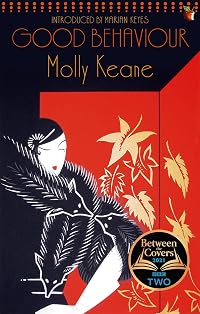
The second and more interesting part of the book concerns particular authors with whom Athill worked closely. I’ve heard of Mordecai Richler and Brian Moore, though I’ve not read their work, but Alfred Chester and Molly Keane are completely new names to me. Athill writes so well of these individuals that one wishes to seek out their work. I especially want to try Keane’s Good Behaviour, a black comedy that seems to have matched the black comedy of Keane’s life.
Athill’s chapter on Jean Rhys is the germ of what could become a fascinating biography of that writer, but I suspect Athill has no interest in it. Rhys is the author of Wide Sargasso Sea, a tale of Mrs. Rochester (of Jane Eyre fame) when she was a girl living in the West Indies, long before she was consumed by madness. The book is a masterpiece, but Rhys’s life, alas, was not. Rhys’s struggle with colonialism on Dominica, a very small Caribbean island nation mostly forgotten by the world, was only replaced by her struggle with England, which failed to meet the expectations she was raised to cherish. Her life ultimately fell into such ruin that she lived in an unheated single room in a small bungalow in Cheriton, one of a row of one-story shacks, “crouching grey, makeshift and neglected behind a hedge which almost hid them. They looked as though corrugated iron, asbestos and tarred felt were their main ingredients, and if I had been told that I must live in one of them I would have been appalled.” Yet from this squalor came Wide Sargasso Sea, the novel that probably saved her life. It’s a fascinating story.
Athill’s discussion of V.S. Naipaul is similarly full of interest. In telling his story, Athill remarks on how unfair publishing can be:
"It is natural that a writer who knows himself to be good and who is regularly confirmed in that opinion by critical comment should expect to become a best-seller, but every publisher knows that you don’t necessarily become a best-seller by writing well. Of course you don’t necessarily have to write badly to do it: it is true that some best-selling books are written astonishingly badly, and equally true that some are written very well. The quality of the writing – even the quality of the thinking – is irrelevant. It is a matter of whether or not a nerve is hit in the wider reading public as opposed to the serious one which is composed of people who are interested in writing as an art."
What better explanation for the likes of Danielle Steele and Dan Brown can there be? And yet, this truth can make life a hell for an author like Naipaul, who became always “displeased with the results of publication, which filled him always with despair, sometimes with anger as well.” It could even blind him at times, as when he insisted that Foyles, a wonderful bookstore on Charing Cross Road, didn’t have a single copy of his latest book, just published, in stock. Deutsch and Athill walked Naipaul to the store and found two piles of six copies each on the table marked “Recent Publications.” Deutsch remarked later that Naipaul seemed to be even more upset at “being done out of his grievance” than he had been originally at the thought that his book wasn’t displayed. All of this seems to make Paul Theroux’s memoir of the man, Sir Vidia’s Shadow, seem less outrageous and more likely true.
I remain eager to read Athill’s other books, especially After a Funeral and Somewhere Towards the End. I suspect that those books, dealing as they do with Athill’s personal life, will likely contain more spirit and poetry than does Stet. Athill has a writing style that carries you along as on a tidal river, flowing gently from anecdote to quip to sad story without a snag, so that even when the poetry is absent, her writing still moves you on enjoyably. Stet is worth reading, if only to form a more complete picture of the woman who has set her life down in books. show less
The book is divided into two sections. The first concerns Athill’s career in publishing, which lasted more than fifty years. Athill fell into this career rather than seeking it out, and seems to have enjoyed every minute of it, despite the fact that she never made any real money as an editor. Of particular interest to me is that Athill always insisted on having a balanced life despite her commitment to her work:
"I betrayed my amateurish nature by drawing the line at working outside office hours. The working breakfast, and taking work home at weekends – two activities regarded by many as necessary evidence of commitment, both of them much indulged in by that born publisher, Andre Deutsch – were to me an abomination. Very rarely someone from my work moved over into my private life, but generally office and home were far apart, and home was much more important than office. And whereas I was ashamed of my limitations within the office, I was not ashamed of valuing my private like more highly than my work: that, to my mind, is what everyone ought to do."
Athill instinctively knew what it takes many (including me) half a century to realize. Perhaps, however, it is this distancing, this separation of private life from publishing life that makes this book seem so unemotional; Athill loved her work, but as an intellectual pursuit, a means of making money so that she could live the rest of her life. Still, it is fascinating to read, for example, about Andre Deutsch’s disastrous error in offering Philip Roth only a small advance for When She Was Good, and thereby losing him to another publishing house just before he wrote Portnoy's Complaint. Publishing seems so full of “if only” stories, much more than most business pursuits.
The second and more interesting part of the book concerns particular authors with whom Athill worked closely. I’ve heard of Mordecai Richler and Brian Moore, though I’ve not read their work, but Alfred Chester and Molly Keane are completely new names to me. Athill writes so well of these individuals that one wishes to seek out their work. I especially want to try Keane’s Good Behaviour, a black comedy that seems to have matched the black comedy of Keane’s life.
Athill’s chapter on Jean Rhys is the germ of what could become a fascinating biography of that writer, but I suspect Athill has no interest in it. Rhys is the author of Wide Sargasso Sea, a tale of Mrs. Rochester (of Jane Eyre fame) when she was a girl living in the West Indies, long before she was consumed by madness. The book is a masterpiece, but Rhys’s life, alas, was not. Rhys’s struggle with colonialism on Dominica, a very small Caribbean island nation mostly forgotten by the world, was only replaced by her struggle with England, which failed to meet the expectations she was raised to cherish. Her life ultimately fell into such ruin that she lived in an unheated single room in a small bungalow in Cheriton, one of a row of one-story shacks, “crouching grey, makeshift and neglected behind a hedge which almost hid them. They looked as though corrugated iron, asbestos and tarred felt were their main ingredients, and if I had been told that I must live in one of them I would have been appalled.” Yet from this squalor came Wide Sargasso Sea, the novel that probably saved her life. It’s a fascinating story.
Athill’s discussion of V.S. Naipaul is similarly full of interest. In telling his story, Athill remarks on how unfair publishing can be:
"It is natural that a writer who knows himself to be good and who is regularly confirmed in that opinion by critical comment should expect to become a best-seller, but every publisher knows that you don’t necessarily become a best-seller by writing well. Of course you don’t necessarily have to write badly to do it: it is true that some best-selling books are written astonishingly badly, and equally true that some are written very well. The quality of the writing – even the quality of the thinking – is irrelevant. It is a matter of whether or not a nerve is hit in the wider reading public as opposed to the serious one which is composed of people who are interested in writing as an art."
What better explanation for the likes of Danielle Steele and Dan Brown can there be? And yet, this truth can make life a hell for an author like Naipaul, who became always “displeased with the results of publication, which filled him always with despair, sometimes with anger as well.” It could even blind him at times, as when he insisted that Foyles, a wonderful bookstore on Charing Cross Road, didn’t have a single copy of his latest book, just published, in stock. Deutsch and Athill walked Naipaul to the store and found two piles of six copies each on the table marked “Recent Publications.” Deutsch remarked later that Naipaul seemed to be even more upset at “being done out of his grievance” than he had been originally at the thought that his book wasn’t displayed. All of this seems to make Paul Theroux’s memoir of the man, Sir Vidia’s Shadow, seem less outrageous and more likely true.
I remain eager to read Athill’s other books, especially After a Funeral and Somewhere Towards the End. I suspect that those books, dealing as they do with Athill’s personal life, will likely contain more spirit and poetry than does Stet. Athill has a writing style that carries you along as on a tidal river, flowing gently from anecdote to quip to sad story without a snag, so that even when the poetry is absent, her writing still moves you on enjoyably. Stet is worth reading, if only to form a more complete picture of the woman who has set her life down in books. show less
Lovely memoir by Diana Athill who edited books for André Deutsch and was a partner in his publishing house. The first section of the book tells how she came to publishing, the second section is profiles of some of the famous or interesting writers she worked with over the years. I liked the first section better, but the choice of authors to profile is of itself interesting, even if I don't care about one person or another.
Not everyone will be interested, but if book publishing is a thing for you, then you should read this book.
Not everyone will be interested, but if book publishing is a thing for you, then you should read this book.
Charming, candid memoir of what it was like being a top editor for nearly 50 years from modest Diana Athill. Slightly bitty construction which detracts.
Members
- Recently Added By
Lists

Maybe This Year? Books to Look Forward To
410 works; 9 members
Author Information

15+ Works 2,489 Members
Diana Athill was born in England on December 21, 1917. She was educated at Oxford University. During World War II, she as a researcher with the BBC. She worked as an editor at Allan Wingate and then at André Deutsch. Athill started writing autobiography in her early 40s. Her memoir, Instead of a Letter, was published in 1962. Her other memoirs show more included After a Funeral; Make Believe; Alive, Alive Oh!; Stet; Yesterday Morning; and A Florence Diary. Somewhere Towards the End won a Costa Book Award and a National Book Critics Circle Award. Her other works included a volume of short stories entitled An Unavoidable Delay and a novel entitled Don't Look at Me Like That. She was awarded the Order of the British Empire in 2009. She died on January 23, 2019 at the age of 101. (Bowker Author Biography) show less
Some Editions
Work Relationships
Is contained in
Common Knowledge
- Canonical title
- Stet
- Original publication date
- 2000
- People/Characters
- Diana Athill; Andre Deutsch; Molly Keane; Brian Moore; V. S. Naipaul; Jean Rhys (show all 9); Mordecai Richler; Tom Rosenthal; Alfred Chester
- Dedication
- With love to
Edward Field and Neil Derrick
dear friends and encouragers - First words
- Some years ago Tom Powers, an American publisher who is also a writer and historian, kindly told me I ought to write a book about my fifty years in publishing.
- Last words
- (Click to show. Warning: May contain spoilers.)It was a job on the side of the thirty per cent.
Classifications
- Genres
- Biography & Memoir, Nonfiction, Literature Studies and Criticism
- DDC/MDS
- 809 — Literature & rhetoric Literature, rhetoric & criticism History, description, critical appraisal of more than two literatures
- LCC
- PN149.9 .A88 .A3 — Language and Literature Literature (General) Literature (General) Authorship
- BISAC
Statistics
- Members
- 504
- Popularity
- 59,671
- Reviews
- 20
- Rating
- (3.86)
- Languages
- English, Spanish
- Media
- Paper, Audiobook, Ebook
- ISBNs
- 10
- ASINs
- 5