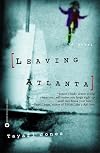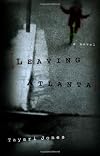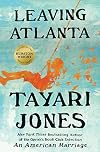
Leaving Atlanta
by Tayari Jones 
On This Page
Description
Award-winning novelist Tayari Jones delivers a story based on the 1979-1980 Atlanta child murders. Told from the perspective of three fifth-grade classmates, Leaving Atlanta is a vividly disturbing, but hopeful novel. The convincing characters, voiced by a full cast of narrators, make this a haunting and effective work.Tags
Recommendations
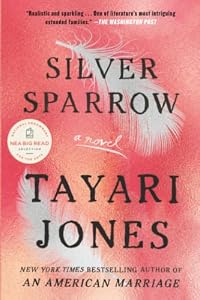

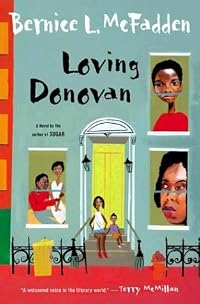
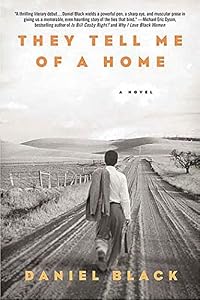

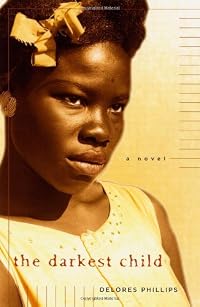









Member Reviews
How did I miss this? This is a novelization of the Atlanta child murders of the early 1980s and the impact on a group of neighborhood children and their petrified parents. The POV is all from the kids: LaTasha, stymied by Mean Girl syndrome in her class, befriends Jashante; Roger, also shunned at school, goes missing after befriending Sweet Pea, a girl called "Watusi" by her cruel classmates due to her dark color. Really, it's much more about how routine home life can get upended by lurking terror. Beautifully written, and worthy of a film in the skilled hands of Ava Duvernay or someone of her stature and class, and her gender and ethnicity. I would categorize it as a must read for all lovers of literary fiction, and especially for show more white people, who can read and learn. show less
It’s funny the things one thinks about in the early morning. After a 2 am feeding, I lay in bed trying to find my way back into dreamland (it’s usually difficult, as once I’m up, I’m up). And I was thinking about the last book I finished, Leaving Atlanta by Tayari Jones, and how it’s taken me quite a while to sit down and write about it. Because it deserves to be written about. I eventually drifted off to sleep (only to be woken by the wee reader’s grunts around 630 as he stirred but didn’t quite wake until an hour later), but felt that today ought to be the day that I write about this book. And so, here it is.
The stories of three fifth-graders who attend Oglethorpe Elementary are tied to the nightmare of 1979 in Atlanta, show more when African-American children began vanishing and turning up dead. Tasha is desperately trying to fit in with her classmates (one day she’s buds, the next day, she’s not invited to their sleepover… kids!). Rodney just doesn’t seem to be able to fit in anywhere – at home or at school, but he begins to be friendly with Octavia, the final narrator. The kids tease Octavia for being poor and for the colour of her skin (they call her “Watusi”) but she’s a tough kid and like Rodney, a loner.
Jones has crafted some wonderful characters. The stories of these three children – though schoolmates, they are from different walks of life – weave together issues of class, race, and of trying to fit in at school, as the cloud of fear hangs over the neighbourhood. It is not so much about a plot as it is a delving into their lives, their perceptions of the disappearances, their relationships with their parents and siblings and their classmates. Their fears and troubles are all too real, and I’m not just talking about the possibility of being abducted and murdered. But of those awkward years trying to fit in at school, which Jones so convincingly portrays, and which everyone can easily relate to. I didn’t expect this book to move me the way it did, I didn’t expect that three stories from the perspectives of three children could tell me so much about the way life works. Don’t you just love it when a book overthrows all your expectations? show less
The stories of three fifth-graders who attend Oglethorpe Elementary are tied to the nightmare of 1979 in Atlanta, show more when African-American children began vanishing and turning up dead. Tasha is desperately trying to fit in with her classmates (one day she’s buds, the next day, she’s not invited to their sleepover… kids!). Rodney just doesn’t seem to be able to fit in anywhere – at home or at school, but he begins to be friendly with Octavia, the final narrator. The kids tease Octavia for being poor and for the colour of her skin (they call her “Watusi”) but she’s a tough kid and like Rodney, a loner.
Jones has crafted some wonderful characters. The stories of these three children – though schoolmates, they are from different walks of life – weave together issues of class, race, and of trying to fit in at school, as the cloud of fear hangs over the neighbourhood. It is not so much about a plot as it is a delving into their lives, their perceptions of the disappearances, their relationships with their parents and siblings and their classmates. Their fears and troubles are all too real, and I’m not just talking about the possibility of being abducted and murdered. But of those awkward years trying to fit in at school, which Jones so convincingly portrays, and which everyone can easily relate to. I didn’t expect this book to move me the way it did, I didn’t expect that three stories from the perspectives of three children could tell me so much about the way life works. Don’t you just love it when a book overthrows all your expectations? show less
Leaving Atlanta tells the story of classmates Tasha Baxter, Rodney Green and Octavia Harrison during their fifth-grade year at Oglethorpe Elementary in Atlanta.
Might nothing. Think about it. You ain’t never heard of nobody black going around killing people for no reason. That’s white people’s shit.
Tasha is eager to return to school to show off her jump rope skills after practicing all summer to perfect her moves. If she can perfect her foot work then she may gain a spot in the clique of Monica and Forsythia. However, those dreams come to a halt when she finds out that jumping rope in fifth-grade is “baby stuff” according to Monica. As the girls graduate from jumping rope to playing jacks, Tasha shows off her skills and puts a show more whipping on Monica. That doesn’t help her chances of gaining access to the in-crowd but it does cause her to question the state of her family.
You now know, as undeniably as if you had read it in the World Book Encyclopedia, that Officer Brown has nothing useful to share. As a matter of fact, you are more fearful than ever to know that this man is all that stands between your generation and an early death.
Rodney is a loner who has little to say but his thoughts are priceless. He spends his days trying to make himself invisible as he comes to grips with the fact that he’ll never please his father. If only “an epidemic of disappearing black fathers” hit his home like so many of his friends everything would be okay. Instead his dad appears at the school after Rodney falls asleep at recess and misses lunch. After being humiliated in front of his peers he is convinced that any place is better than home.
Kodak commercials say that a picture is worth a thousand words, but the one they showed of ____ ain’t worth more than three or four. ____. Black. Dead.
Octavia, another outcast, is affectionately called “Sweet Pea” by her single mom but is ostracized for her dark skin and is teasingly called “Watusi” by her classmates. Unlike her “almost friend” Rodney who tries to make himself invisible, Octavia has a good aim and will fight back with words and rocks. But when two people she knows goes missing she is forced to deal with the consequences.
Leaving Atlanta is one of the few stories that make you start your sentence with, “Girl let me tell you about this book…” when asked how you like it.
This novel is a fictional story set in Atlanta during one of Atlanta’s America’s darkest hours, Atlanta’s Child Murders. During the years of 1979-1982, twenty-nine children went missing and some were found dead.
Born in 1978, I’m too young to remember these events but author Tayari Jones delivers a first hand account from the third person narrative of Tasha, the second person narrative of Rodney and a first person account by Octavia. Each of the fifth-graders tell the story from their own unbiased point-of-view.
As I read the book I felt like I was in Atlanta during these events. The feelings that resonated from the characters were feelings I could remember having as a child. I found myself thinking on many occasions, “Tayari had to have really dug deep in her past to nail these childlike characteristics.”
I also wondered if writing this book had affected her mental state since two of her classmates were among the twenty-nine missing.
I’m not sure I could have told this story but Tayari did and it was done with a style that is to be envied. Her descriptive words and language never failed to paint a picture or conjure feelings of my childhood.
What I loved most about this book was that it didn’t talk so much about the Atlanta Child Murders but focused more on how the community reacted to it, especially the children. I couldn’t imagine having to walk home from school with a serial killer on the loose.
This novel is broken into three parts with a three, two, one punch that hits you hard below the belt. Initially you would think that the three different perspectives would be ill-fitting but they all meshed together to tell a wonderful story about an unfortunate time in our history. show less
Might nothing. Think about it. You ain’t never heard of nobody black going around killing people for no reason. That’s white people’s shit.
Tasha is eager to return to school to show off her jump rope skills after practicing all summer to perfect her moves. If she can perfect her foot work then she may gain a spot in the clique of Monica and Forsythia. However, those dreams come to a halt when she finds out that jumping rope in fifth-grade is “baby stuff” according to Monica. As the girls graduate from jumping rope to playing jacks, Tasha shows off her skills and puts a show more whipping on Monica. That doesn’t help her chances of gaining access to the in-crowd but it does cause her to question the state of her family.
You now know, as undeniably as if you had read it in the World Book Encyclopedia, that Officer Brown has nothing useful to share. As a matter of fact, you are more fearful than ever to know that this man is all that stands between your generation and an early death.
Rodney is a loner who has little to say but his thoughts are priceless. He spends his days trying to make himself invisible as he comes to grips with the fact that he’ll never please his father. If only “an epidemic of disappearing black fathers” hit his home like so many of his friends everything would be okay. Instead his dad appears at the school after Rodney falls asleep at recess and misses lunch. After being humiliated in front of his peers he is convinced that any place is better than home.
Kodak commercials say that a picture is worth a thousand words, but the one they showed of ____ ain’t worth more than three or four. ____. Black. Dead.
Octavia, another outcast, is affectionately called “Sweet Pea” by her single mom but is ostracized for her dark skin and is teasingly called “Watusi” by her classmates. Unlike her “almost friend” Rodney who tries to make himself invisible, Octavia has a good aim and will fight back with words and rocks. But when two people she knows goes missing she is forced to deal with the consequences.
Leaving Atlanta is one of the few stories that make you start your sentence with, “Girl let me tell you about this book…” when asked how you like it.
This novel is a fictional story set in Atlanta during one of Atlanta’s America’s darkest hours, Atlanta’s Child Murders. During the years of 1979-1982, twenty-nine children went missing and some were found dead.
Born in 1978, I’m too young to remember these events but author Tayari Jones delivers a first hand account from the third person narrative of Tasha, the second person narrative of Rodney and a first person account by Octavia. Each of the fifth-graders tell the story from their own unbiased point-of-view.
As I read the book I felt like I was in Atlanta during these events. The feelings that resonated from the characters were feelings I could remember having as a child. I found myself thinking on many occasions, “Tayari had to have really dug deep in her past to nail these childlike characteristics.”
I also wondered if writing this book had affected her mental state since two of her classmates were among the twenty-nine missing.
I’m not sure I could have told this story but Tayari did and it was done with a style that is to be envied. Her descriptive words and language never failed to paint a picture or conjure feelings of my childhood.
What I loved most about this book was that it didn’t talk so much about the Atlanta Child Murders but focused more on how the community reacted to it, especially the children. I couldn’t imagine having to walk home from school with a serial killer on the loose.
This novel is broken into three parts with a three, two, one punch that hits you hard below the belt. Initially you would think that the three different perspectives would be ill-fitting but they all meshed together to tell a wonderful story about an unfortunate time in our history. show less
What a great book! My only regret is that I have only discovered Tayari Jones recently (thanks to Anne Bogel), and now plan to read all her novels.
This book, set in Atlanta during the child murders,(1979- 1981) explores the effects of these tragic events on the children who lived in the area where the abductions were taking place. I remember the news coverage was horrific and can only imagine how the parents of young children must have feared for their children. Tayari Jones gives voice to the children...so often voiceless but in this novel given authentic feelings and fears.
Tayari Jones puts herself in the novel as a peripheral character, hovering on the outskirts of the story, but mentioned quite a few times... ("someone ought to show more watch that girl!") in the background, watching the action and obviously taking note.
Each part of the story is narrated by a different child, and each has a heartache that is made more heightened by the surrounding fear and grief.
As one of the students (Octavia) says, " I cried because it seemed like everything good in the world was locked in a box, like a backward Pandora."(p. 253). The box was the coffin of one of the murdered children. show less
This book, set in Atlanta during the child murders,(1979- 1981) explores the effects of these tragic events on the children who lived in the area where the abductions were taking place. I remember the news coverage was horrific and can only imagine how the parents of young children must have feared for their children. Tayari Jones gives voice to the children...so often voiceless but in this novel given authentic feelings and fears.
Tayari Jones puts herself in the novel as a peripheral character, hovering on the outskirts of the story, but mentioned quite a few times... ("someone ought to show more watch that girl!") in the background, watching the action and obviously taking note.
Each part of the story is narrated by a different child, and each has a heartache that is made more heightened by the surrounding fear and grief.
As one of the students (Octavia) says, " I cried because it seemed like everything good in the world was locked in a box, like a backward Pandora."(p. 253). The box was the coffin of one of the murdered children. show less
The backstory: Leaving Atlanta is the first novel by Tayari Jones. After adoring her most recent novel, Silver Sparrow, I finally got around to reading this one ("finally getting around to reading" was the theme of much of my holiday break binge-reading!)
The basics: Told in three parts from the perspective of three black middle school students in southwest Atlanta, Leaving Atlanta takes place at the time of the notorious Atlanta Child Murders.
My thoughts: I spent almost half my life in Atlanta (although I'm getting farther away from that every year!) Regardless, I've lived more years in Atlanta than in any other city, and I've been fascinated by the Atlanta Child Murders since I first heard of them. Jones introduces the reader to this show more time through three different child narrators. Each of the three takes one section, although the sections frequently reference the other narrators. I have mixed reactions to this storytelling approach. Typically, I love different narrators, but these narrators didn't alternate. When narration first switched, it took me a few pages to re-orient myself. The transition to the third narrator was much smoother, and I was excited to see which student was taking over the story. In one sense, I think Jones captured the atmosphere of what it was like to be a child in southwest Atlanta at that time. That one of the classmates, but not one of the three narrators, is named Tayari Jones, certainly gives credance to this theory. Obviously these children are scared, but as is often the case with child narrators, they don't really understand what's going on. (To be fair, I don't think anyone really understood what was happening at this time.)
As I read, and after I finished the novel, I've been wrestling with what pieces didn't quite work for me, and I still struggle to articulate them. In many ways, Jones was incredibly successful, which makes me wonder if my perception of the novel's shortcomings are about my own expectations of this subject rather than her execution. Ultimately, I failed to emotionally connect with any of the three narrators, which left me wanting if not something more, something slightly different. It's a very good novel, but I wanted it to be a great one.
Favorite passage: "How can I say that I can’t stand to talk about it? And how can you say that you can’t stand to hear it when other people are living it?”
The verdict: There is much to ponder, savor, and enjoy in Leaving Atlanta. Emotionally, however, it fell a bit short for me. Yet as I read, I found myself wanting more, whether it was the perspective of more narrators or more terror, as someone who already knew so much about this frightful time, I simply yearned for more. show less
The basics: Told in three parts from the perspective of three black middle school students in southwest Atlanta, Leaving Atlanta takes place at the time of the notorious Atlanta Child Murders.
My thoughts: I spent almost half my life in Atlanta (although I'm getting farther away from that every year!) Regardless, I've lived more years in Atlanta than in any other city, and I've been fascinated by the Atlanta Child Murders since I first heard of them. Jones introduces the reader to this show more time through three different child narrators. Each of the three takes one section, although the sections frequently reference the other narrators. I have mixed reactions to this storytelling approach. Typically, I love different narrators, but these narrators didn't alternate. When narration first switched, it took me a few pages to re-orient myself. The transition to the third narrator was much smoother, and I was excited to see which student was taking over the story. In one sense, I think Jones captured the atmosphere of what it was like to be a child in southwest Atlanta at that time. That one of the classmates, but not one of the three narrators, is named Tayari Jones, certainly gives credance to this theory. Obviously these children are scared, but as is often the case with child narrators, they don't really understand what's going on. (To be fair, I don't think anyone really understood what was happening at this time.)
As I read, and after I finished the novel, I've been wrestling with what pieces didn't quite work for me, and I still struggle to articulate them. In many ways, Jones was incredibly successful, which makes me wonder if my perception of the novel's shortcomings are about my own expectations of this subject rather than her execution. Ultimately, I failed to emotionally connect with any of the three narrators, which left me wanting if not something more, something slightly different. It's a very good novel, but I wanted it to be a great one.
Favorite passage: "How can I say that I can’t stand to talk about it? And how can you say that you can’t stand to hear it when other people are living it?”
The verdict: There is much to ponder, savor, and enjoy in Leaving Atlanta. Emotionally, however, it fell a bit short for me. Yet as I read, I found myself wanting more, whether it was the perspective of more narrators or more terror, as someone who already knew so much about this frightful time, I simply yearned for more. show less
Leaving Atlanta by Tayari Jones is a 2002 publication.
This is a story centered three children who were living in Atlanta during the time a killer of young black people was terrorizing the city. The effect those years had on the children living in seventies and early eighties is seen through the eyes of LaTasha Baxter, Rodney Green, and Octavia Harrison.
While the children still think of life through the innocent lens of their age, they must grow up a little faster, now. They must put on a protective shield, be hyperaware of their surroundings and the people in their orbit. They are not immune to their parent’s fear, anger and frustration or the way the murders has divided the city.
Each child has a segment of the book devoted to show more their personal story- told via different forms of narrative writing- third, second and first. The three signets are not necessarily created equally, and I struggled a bit with Rodney’s story for various reasons and felt Octavia’s story lost some of the story’s momentum- until near the end when the atmosphere suddenly grew very tense, indeed.
For anyone reading the premise and drawing the conclusion that the book might delve into the murder investigations, the arrest of a suspect, or a trial- you will be in for a surprise. This book was focused completely on the three children, showing that while the city was gripped in fear, the children living during that atmosphere were resilient and ultimately the power of the human spirit shines through.
I think, based on the author’s introduction explaining why she felt compelled to write this story, that I understood the message she was trying to convey. The story is well-written and while it does explore the various tensions and emotions that were at a fevered pitch, it was also a story that touched on family, friendship, and hope, which is what I think the author would want us to take away from this novel.
This is Tayri Jones’ first novel, and she did a wonderful job with it. I’ve read a few of her later releases which is how she popped up on my radar. I was curious about her other work but was slow to get around to reading anything in her backlist, but I’m glad I found the time to slip this one into my reading schedule.
3.5 rounded up show less
This is a story centered three children who were living in Atlanta during the time a killer of young black people was terrorizing the city. The effect those years had on the children living in seventies and early eighties is seen through the eyes of LaTasha Baxter, Rodney Green, and Octavia Harrison.
While the children still think of life through the innocent lens of their age, they must grow up a little faster, now. They must put on a protective shield, be hyperaware of their surroundings and the people in their orbit. They are not immune to their parent’s fear, anger and frustration or the way the murders has divided the city.
Each child has a segment of the book devoted to show more their personal story- told via different forms of narrative writing- third, second and first. The three signets are not necessarily created equally, and I struggled a bit with Rodney’s story for various reasons and felt Octavia’s story lost some of the story’s momentum- until near the end when the atmosphere suddenly grew very tense, indeed.
For anyone reading the premise and drawing the conclusion that the book might delve into the murder investigations, the arrest of a suspect, or a trial- you will be in for a surprise. This book was focused completely on the three children, showing that while the city was gripped in fear, the children living during that atmosphere were resilient and ultimately the power of the human spirit shines through.
I think, based on the author’s introduction explaining why she felt compelled to write this story, that I understood the message she was trying to convey. The story is well-written and while it does explore the various tensions and emotions that were at a fevered pitch, it was also a story that touched on family, friendship, and hope, which is what I think the author would want us to take away from this novel.
This is Tayri Jones’ first novel, and she did a wonderful job with it. I’ve read a few of her later releases which is how she popped up on my radar. I was curious about her other work but was slow to get around to reading anything in her backlist, but I’m glad I found the time to slip this one into my reading schedule.
3.5 rounded up show less
'Leaving Atlanta' is an exceptional historical fiction novel that chronicles the murders of over twenty black children in Atlanta in the late 1970s and early 1980s. Told from the perspectives of three young elementary school students, Tayari Jones weaves a tale of fear, mystery and coming of age in a world so terrifying and uneasy for so many children.
I thoroughly enjoyed this novel and would definitely recommend it to those who enjoy more modern historical fiction, true crime novels (though this one is only fiction based on a true event), and authors like Toni Morrison and Maya Angelou. My only real complaint is that the author has inserted herself into the novel as a minor character. I'm guessing it was to make it feel more authentic show more since she is real and the child murders were real. However, it is jarring every time she mentions herself by name and is quite strange seeing how this is only a fiction novel. Outside of that, I have no complaints or critiques. It's dark, it's deep, it's fast paced and it will utterly engulf you. Four stars. show less
I thoroughly enjoyed this novel and would definitely recommend it to those who enjoy more modern historical fiction, true crime novels (though this one is only fiction based on a true event), and authors like Toni Morrison and Maya Angelou. My only real complaint is that the author has inserted herself into the novel as a minor character. I'm guessing it was to make it feel more authentic show more since she is real and the child murders were real. However, it is jarring every time she mentions herself by name and is quite strange seeing how this is only a fiction novel. Outside of that, I have no complaints or critiques. It's dark, it's deep, it's fast paced and it will utterly engulf you. Four stars. show less
Members
- Recently Added By
Author Information

12+ Works 7,711 Members
Tayari Jones was born on November 30, 1970 in Atlanta Georgia. She attended Spelman College, University of Iowa, and the University of Georgia. She later attended Arizonia State University to earn her MFA. She went on to teach creative writing at the University of Illinois and George Washington University. Her first novel, Leaving Atlanta, was show more written in 2002 while she was a graduate student at Arizonia State University. It was about the Atlanta Child Murders of 1979-1981.Her other title's include: The Untelling, Silver Sparrow, and An American Marriage. She has been awarded the Hurston/Wright Award for College Writers, the Hurston/Wright Legacy Award for Debut Fiction, the Lillian Smith Book Award, and the Radcliffe Institute Fellowship. (Bowker Author Biography) show less
Tayari Jones is a LibraryThing Author, an author who lists their personal library on LibraryThing.
Awards and Honors
Awards
Common Knowledge
- Canonical title
- Leaving Atlanta
- Original publication date
- 2005
- Important places
- Atlanta, Georgia, USA
Classifications
Statistics
- Members
- 459
- Popularity
- 66,190
- Reviews
- 15
- Rating
- (3.91)
- Languages
- English, German, Spanish
- Media
- Paper, Audiobook, Ebook
- ISBNs
- 12
- ASINs
- 5