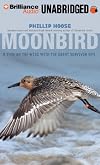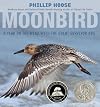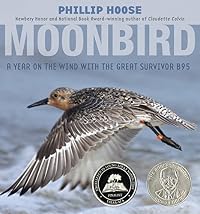
Moonbird: A Year on the Wind with the Great Survivor B95
by Phillip Hoose
On This Page
Description
Documents the survival tale of an intrepid shorebird who has endured annual migrations between Argentina and the Canadian Arctic throughout the course of a long lifetime while his species continues to decline.Tags
Recommendations













Member Reviews
Phillip Hoose is a mighty fine writer. I have almost zero interest in birds and migratory patterns (I get bored just typing "migratory patterns"), but his excellent storytelling pulled me into this book! Hoose charts the annual journey all rufa red knots take, and it's really astounding. Most go all the way from Tierra del Fuego (the very bottom of South America) all the way to the Canadian Arctic. At the same time, the story is made more interesting by Hoose's focus on one particular red knot: B95 AKA the Moonbird. B95 is the oldest red knot known to scientists and has flown the equivalent of the distance to the moon and back. Crazy!
The other characters populating this book are the humans involved in the red knot story. Mostly they're show more scientists and bird enthusiasts, but Hoose also profiles a fisherman whose job is made more difficult by conservationists' efforts in Delaware.
Lots of maps and photographs help make this a really appealing non-fiction pick for readers, especially those in 5th to 8th grade. There's a section in the back about how kids can get involved in the effort to help rebuild the struggling red knot population.
And, finally, when Hoose thanks his wife as the end of the book, he writes, "It is a joy to migrate through life with her." :) show less
The other characters populating this book are the humans involved in the red knot story. Mostly they're show more scientists and bird enthusiasts, but Hoose also profiles a fisherman whose job is made more difficult by conservationists' efforts in Delaware.
Lots of maps and photographs help make this a really appealing non-fiction pick for readers, especially those in 5th to 8th grade. There's a section in the back about how kids can get involved in the effort to help rebuild the struggling red knot population.
And, finally, when Hoose thanks his wife as the end of the book, he writes, "It is a joy to migrate through life with her." :) show less
The Moonbird, a rufa red knot, has survived twenty years and thousands of miles of migration between Tierra del Fuego and the Arctic. Despite declining populations, threatened habitats, and dwindling food, he continues to make the amazing journey.
Hoose follows the bird, also called B95 after one of his bands, through the migratory cycle. Along the way, the reader learns about how these birds change their body composition in order to survive flying nonstop for days. We meet the scientists and activities who work with shorebirds and follow along in their discoveries over the years.
The story includes profiles of and interviews with scientists and activities, an appendix with ways youth can get involved from simple science projects to large show more organizations, extensive source notes, bibliography, acknowledgements, and index. There are stunning pictures of the rufas and other shorebirds, maps, and aerial pictures of the hidden places the rufas use on their migration.
I found Hoose's profiles of the various scientists involved really interesting, as he details their varied backgrounds. Some were previously teachers or secretaries; others talk about their childhood and how they became fascinated by shorebirds. Hoose's text is dense but not overwhelming. He writes simply but with undeniable enthusiasm. The reader becomes drawn in by the powerful story of this one amazing bird; I was fascinated to discover that he's been sighted again, just a few months ago. Still going strong at over twenty years old!
I was intrigued by an earlier title about arctic migration that came out this year, North by Nick Dowson, and it was interesting to read a more detailed account of one of the animals that undertakes this amazing journey. I fell into the pace of the story and it's certainly well-written and researched. But will kids read it? Middle grade nonfiction is often a hard sell. Younger kids love to read about strange animals, weather, disasters, castles, weapons, you name it. Older kids are pickier. They're busy, the books often look too much like picture books, there's too much text, the vocabulary is too challenging. Many schools relentlessly focus on fiction, to the extent that by middle grade most kids don't consider nonfiction really "reading" (nor do their parents, an argument I'm frankly a little sick of having with patrons. If they're not refusing to let their kids read anything that looks like a picture book "those are for babies, my child needs chapter books" they're telling the kids they can't read anything above their lexile level, which pretty much rules out most nonfiction - Moonbird is an 1150, so way out of reach of most kids who read by lexile). The story of Moonbird is fascinating, but it reads at a slower pace than kids used to the rapid plots of popular fiction and movies will like. The outdoor explorations that many of the scientists credit for their interest in shorebirds rarely happen for kids anymore, not even the kids in my small, quasi-rural town, unless you count the ones hanging around the gas station in the evenings and they're not looking for birds.
Are you depressed yet? I am. However, we soldier on. There will be kids with a scientific bent, interested in animals, who will pick this up. The story of Moonbird has a good hook for booktalking - a bird that has flown thousands of miles around the globe and continues to defy expectations and survive under increasingly difficult circumstances. There are parents who encourage their kids to read what they're interested in and don't care about lexiles (at least in the summer). I'm currently focusing on updating our history section and animal books for younger children, but I don't regret purchasing this title as part of my ongoing, uphill battle to get kids to explore the world and go outside!
ISBN: 9780374304683; published July 2012 by Farrar Straus Giroux; Borrowed from the library; Purchased for the library show less
Hoose follows the bird, also called B95 after one of his bands, through the migratory cycle. Along the way, the reader learns about how these birds change their body composition in order to survive flying nonstop for days. We meet the scientists and activities who work with shorebirds and follow along in their discoveries over the years.
The story includes profiles of and interviews with scientists and activities, an appendix with ways youth can get involved from simple science projects to large show more organizations, extensive source notes, bibliography, acknowledgements, and index. There are stunning pictures of the rufas and other shorebirds, maps, and aerial pictures of the hidden places the rufas use on their migration.
I found Hoose's profiles of the various scientists involved really interesting, as he details their varied backgrounds. Some were previously teachers or secretaries; others talk about their childhood and how they became fascinated by shorebirds. Hoose's text is dense but not overwhelming. He writes simply but with undeniable enthusiasm. The reader becomes drawn in by the powerful story of this one amazing bird; I was fascinated to discover that he's been sighted again, just a few months ago. Still going strong at over twenty years old!
I was intrigued by an earlier title about arctic migration that came out this year, North by Nick Dowson, and it was interesting to read a more detailed account of one of the animals that undertakes this amazing journey. I fell into the pace of the story and it's certainly well-written and researched. But will kids read it? Middle grade nonfiction is often a hard sell. Younger kids love to read about strange animals, weather, disasters, castles, weapons, you name it. Older kids are pickier. They're busy, the books often look too much like picture books, there's too much text, the vocabulary is too challenging. Many schools relentlessly focus on fiction, to the extent that by middle grade most kids don't consider nonfiction really "reading" (nor do their parents, an argument I'm frankly a little sick of having with patrons. If they're not refusing to let their kids read anything that looks like a picture book "those are for babies, my child needs chapter books" they're telling the kids they can't read anything above their lexile level, which pretty much rules out most nonfiction - Moonbird is an 1150, so way out of reach of most kids who read by lexile). The story of Moonbird is fascinating, but it reads at a slower pace than kids used to the rapid plots of popular fiction and movies will like. The outdoor explorations that many of the scientists credit for their interest in shorebirds rarely happen for kids anymore, not even the kids in my small, quasi-rural town, unless you count the ones hanging around the gas station in the evenings and they're not looking for birds.
Are you depressed yet? I am. However, we soldier on. There will be kids with a scientific bent, interested in animals, who will pick this up. The story of Moonbird has a good hook for booktalking - a bird that has flown thousands of miles around the globe and continues to defy expectations and survive under increasingly difficult circumstances. There are parents who encourage their kids to read what they're interested in and don't care about lexiles (at least in the summer). I'm currently focusing on updating our history section and animal books for younger children, but I don't regret purchasing this title as part of my ongoing, uphill battle to get kids to explore the world and go outside!
ISBN: 9780374304683; published July 2012 by Farrar Straus Giroux; Borrowed from the library; Purchased for the library show less
Hoose, P. (2012). Moonbird: A year on the wind with the great survivor B95. New York: Farrar Straus Giroux. 148 pp. ISBN: 978-0-374-30468-3. (Hardcover); $21.99.
Phillip Hoose won a Newbery honor for his biography of Claudette Colvin. He also wrote an informational book about the pileated woodpecker (The Race to Save the Lord God Bird). Any author that can get me to read, EAGERLY, more than 200 pages about a woodpecker commands respect for anything he chooses to write.
This time Hoose follows a four-ounce bird, rufa red knot, given the name, Moonbird, B95 to be specific, on his 9,000 mile journey from the tip of South America to South Hampton Island and the polar regions in Canada (and then back again, another 9,000 mile journey). While show more this book describes these shorebirds that are about the size of a robin, it is the story of this one specific bird that transforms this informational text into the transcendent realm of award winning nonfiction. This is a book to give to folks who claim not to enjoy nonfiction. Scientists estimate that B95 has flown approximately 325,000 miles in its lifetime, which would get Moonbird to the moon and halfway back. B95’s yearly journey requires exact timing, abundant food, a coordinated group defense against predators, and a whole lot of luck (among other compelling needs). The amazing fact of B95, who was first banded in 1995 at an estimated age of three, is that this same bird was spotted again in November 2011! This species of bird depends upon an abundant supply of high- energy food at each of the four different spots. B95 is able to eat fourteen times its own weight, “To do that, a human weighing 110 pounds wound need to eat 2,300 hamburgers at two thirds of a pound per hamburger, with chees and tomato.” (p. 31). B95 has a body that is capable of other mysteries that Hoose describes in his characteristic awe-inducing words. Of special note is the manner in which readers are supplied with species information and the habitat needs of the rufa red knot at each of their stopping spots. The precise timing of the flights combined with the physical changes of the bird, including how heavy it needs to be before it can safely fly are as engaging as any adventure text one can read. Along the way readers learn about banding, including B95’s distinctive bands of orange and black. The habitat and food supply of this species has caused a dramatic drop in the numbers of these birds to the point that scientists are taking steps to protect the rest stops; the food supply of the birds, including the humble horseshoe crabs; as well as getting the species on the endangered species list, which scientists describe as an agonizingly slow process. Unlike the very bleak story of the pileated woodpecker, the rufa red knot, as championed by B95, have a chance, as described in the chapter, “Extinction Is Forever” and the appendix, which is given a subtitle, “What You Can Do.” While the quality of writing in the appendix is didactic, Hoose has earned this right by making readers care desperately for this bird, especially B95 whom we meet on four separate captures and several other sightings and pictures. Perhaps the most hopeful note of all is the fact that less than one year ago, a picture positively identifying a very healthy B95 was taken, giving readers hope that B95 will fly those remaining miles from the moon before it dies. Filled with biographies of the scientists involved, insets with information about birds and biology, maps with mileage of the migratory route, plenty of clear photographs, detailed source notes, an abundant bibliography, and an excellent list of resources that include multimedia and online sources insure that this book will be included in the nonfiction award winners announced this January! Buy this book for all elementary, middle school, and high school libraries. show less
Phillip Hoose won a Newbery honor for his biography of Claudette Colvin. He also wrote an informational book about the pileated woodpecker (The Race to Save the Lord God Bird). Any author that can get me to read, EAGERLY, more than 200 pages about a woodpecker commands respect for anything he chooses to write.
This time Hoose follows a four-ounce bird, rufa red knot, given the name, Moonbird, B95 to be specific, on his 9,000 mile journey from the tip of South America to South Hampton Island and the polar regions in Canada (and then back again, another 9,000 mile journey). While show more this book describes these shorebirds that are about the size of a robin, it is the story of this one specific bird that transforms this informational text into the transcendent realm of award winning nonfiction. This is a book to give to folks who claim not to enjoy nonfiction. Scientists estimate that B95 has flown approximately 325,000 miles in its lifetime, which would get Moonbird to the moon and halfway back. B95’s yearly journey requires exact timing, abundant food, a coordinated group defense against predators, and a whole lot of luck (among other compelling needs). The amazing fact of B95, who was first banded in 1995 at an estimated age of three, is that this same bird was spotted again in November 2011! This species of bird depends upon an abundant supply of high- energy food at each of the four different spots. B95 is able to eat fourteen times its own weight, “To do that, a human weighing 110 pounds wound need to eat 2,300 hamburgers at two thirds of a pound per hamburger, with chees and tomato.” (p. 31). B95 has a body that is capable of other mysteries that Hoose describes in his characteristic awe-inducing words. Of special note is the manner in which readers are supplied with species information and the habitat needs of the rufa red knot at each of their stopping spots. The precise timing of the flights combined with the physical changes of the bird, including how heavy it needs to be before it can safely fly are as engaging as any adventure text one can read. Along the way readers learn about banding, including B95’s distinctive bands of orange and black. The habitat and food supply of this species has caused a dramatic drop in the numbers of these birds to the point that scientists are taking steps to protect the rest stops; the food supply of the birds, including the humble horseshoe crabs; as well as getting the species on the endangered species list, which scientists describe as an agonizingly slow process. Unlike the very bleak story of the pileated woodpecker, the rufa red knot, as championed by B95, have a chance, as described in the chapter, “Extinction Is Forever” and the appendix, which is given a subtitle, “What You Can Do.” While the quality of writing in the appendix is didactic, Hoose has earned this right by making readers care desperately for this bird, especially B95 whom we meet on four separate captures and several other sightings and pictures. Perhaps the most hopeful note of all is the fact that less than one year ago, a picture positively identifying a very healthy B95 was taken, giving readers hope that B95 will fly those remaining miles from the moon before it dies. Filled with biographies of the scientists involved, insets with information about birds and biology, maps with mileage of the migratory route, plenty of clear photographs, detailed source notes, an abundant bibliography, and an excellent list of resources that include multimedia and online sources insure that this book will be included in the nonfiction award winners announced this January! Buy this book for all elementary, middle school, and high school libraries. show less
5Q 4P (my codes)
Salty sea air, screaming gulls, and the grit of sand beneath your feet--you're in the world of the Moonbird. With poetic text, stunning images, and an undercurrent of urgency for ongoing conservation efforts, this book grips readers from the opening words. Each chapter is packed with engaging text, photos, maps, and sidebars. The text reads smoothly and provides important vocabulary for the material, and sensory details are included to bring the story to life. This is a seamless blend of adventure, biography, science, geography, and heartwarming storytelling that is sure to delight young nature lovers!
Salty sea air, screaming gulls, and the grit of sand beneath your feet--you're in the world of the Moonbird. With poetic text, stunning images, and an undercurrent of urgency for ongoing conservation efforts, this book grips readers from the opening words. Each chapter is packed with engaging text, photos, maps, and sidebars. The text reads smoothly and provides important vocabulary for the material, and sensory details are included to bring the story to life. This is a seamless blend of adventure, biography, science, geography, and heartwarming storytelling that is sure to delight young nature lovers!
A beautiful book with an amazing story of the survival of a magnificent little shore bird called the Moonbird. The book details the endangered rufa red knot shorebird and its journey for survival. It is called the Moonbird because it travels the distance from the Earth to the moon and back every year. This is a great introduction to what ornithologists do and how scientists worldwide communicate and work together for the survival of a species. Details are given in this book about specific migratory bird biologists and how birds are banded and measured. A great book to use for the study of classification of organisms, conservation of species, interaction of habitats and organisms, predator and prey relationships and much more in a middle show more school life science class or a high school biology class. show less
Who knew that a bird could be a central character in a suspenseful environmental narrative? Phillip Hoose pulls you into B95's amazing saga as well as the larger story of red knots and shorebirds, their stamina and incredible migrations, plus their value to nature's chain of life. Perfect for budding environmentalists, young birders, and fans of non-fiction.
Phillip Hoose’s book Moonbird, A Year on the Wind with the Great Survivor B95 tells the story of a rufa red knot and its impressive migratory route from the southern tip of South America to Southampton Island in the artic. The narrative follows a specific red knot that was tagged B95 and nicknamed Moonbird as he makes what is believed to be his 18th trip from South America to the artic. Although the story focuses on B95’s incredible story and journey, the book provides details about the lives of red knots in general. The book provides information not only on their migratory route, but also on the feeding, mating, and breeding habits. Hoose tells the story of B95 as if he is observing the bird as he grows and develops and makes the show more long journey to the artic. Since it isn’t actually possible to observe B95 throughout his lifetime and as he flies 18,000 miles, Hoose uses research about the red knots and their natural behavior throughout the life spans to describe and predict B95’s journey.
The book also provides insight into the actual scientific process of tagging, tracking, and studying different species. Hoose, who has worked as a conservationist for the Nature Conservancy since 1977, has actually participated in the trapping and tagging process and describes his personal experience in May of 2010, as he worked with the Delaware Bay Shorebird Project to collect data about rufa red knots along with other shorebirds. Hoose’s personal account of the project provides an exciting and interesting perspective rather than just a dry scientific description of the process. Between each chapter of B95’s journey, the author also introduces a scientist or team of scientists who study rufa red knots, which provides a bit more background detailing the science behind studying birds and their migratory routes. The book also takes a conservationist approach and discusses what needs to be done to protect the rufa red knot species from extinction. show less
The book also provides insight into the actual scientific process of tagging, tracking, and studying different species. Hoose, who has worked as a conservationist for the Nature Conservancy since 1977, has actually participated in the trapping and tagging process and describes his personal experience in May of 2010, as he worked with the Delaware Bay Shorebird Project to collect data about rufa red knots along with other shorebirds. Hoose’s personal account of the project provides an exciting and interesting perspective rather than just a dry scientific description of the process. Between each chapter of B95’s journey, the author also introduces a scientist or team of scientists who study rufa red knots, which provides a bit more background detailing the science behind studying birds and their migratory routes. The book also takes a conservationist approach and discusses what needs to be done to protect the rufa red knot species from extinction. show less
Members
- Recently Added By
Lists

Red Dot 2014-2015 - Older Readers - Longlist
37 works; 4 members

Children's Books About Science and Math
461 works; 12 members

Favorite Animal Non-Fiction
293 works; 144 members

Robert F. Sibert Informational Book Medal
102 works; 1 member
Author Information

16+ Works 6,122 Members
Phillip M. Hoose is the widely acclaimed author of books, essays, stories, songs, and articles, including the National Book Award-winning book, Claudette Colvin. TwiceToward Justice. He is also the author of the multi-award-winning title, The Race to Save the Lord God Bird, the National Book Award Finalist We Were There Too!: Young People in U.S. show more History, and the Christopher Award-winning manual for youth activism. It's Our World Too! show less
Awards and Honors
Awards
Distinctions
Notable Lists
Common Knowledge
- Canonical title
- Moonbird: A Year on the Wind with the Great Survivor B95
- Important places
- Rio Grande, Tierra del Fuego, Argentina; Delaware Bay, USA; Mingan Archipelago, Quebec, Canada
- Dedication
- For Sandi
- First words
- Meet B95, one of the world's premier athletes.
- Last words
- (Click to show. Warning: May contain spoilers.)If we work hard, and if he continues the steady habits that have made him the most successful of all known living shorebirds, maybe B95 will still be with us when his sacred places are secure, inspiring us in his own way by simply enduring as the eldest of his tribe, the ultimate citizen of the wind.
Classifications
Statistics
- Members
- 282
- Popularity
- 113,318
- Reviews
- 22
- Rating
- (4.21)
- Languages
- English
- Media
- Paper, Audiobook, Ebook
- ISBNs
- 12
- ASINs
- 2