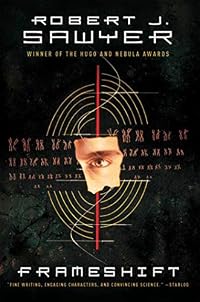
Frameshift
by Robert J. Sawyer
On This Page
Description
A scientist in California discovers that a series of murders is the work of an insurance company. After collecting information on the genes of policy holders, the company analyzed them to see which ones were a bad risk and proceeded to kill them. By the author of The Terminal Experiment.Tags
Recommendations










Member Reviews
Brian Aldiss once said that science fiction is fiction written for scientists about as much as ghost stories are stories written for ghosts. Well, Robert Sawyer's Frameshift tests that statement fairly hard.
We are in the "present day" (the novel was written in 1997). A researcher survives a street mugging which begins to look a lot like a targeted attack. We see his story up to then in flashback; understand that he suffers from Huntington's disease; and also know that he is a geneticist. Slowly, he and his telepathic girlfriend pick at various strands to uncover the conspiracy, unmask villains, and understand both his Huntington's and her telepathy.
The telepathy came as a surprise. This hasn't been a topic of science fiction for show more possibly thirty years or more; indeed, I'm hard-put to think of the last novel that I read where telepathy was a key part of the plot. Here, Sawyer tries to put a genetic explanation forward - the 'frameshift' of the title - but it remains a piece of hand-waving. The explanation is concealed inside a LOT of exposition about genetics and genetic engineering (as it stood in the 1990s). Science fiction has mainly outgrown this sort of thing - "Tell, me, professor, what makes your spaceship go so fast?" - but since sf fans are assumed not to be conversant in the intricacies of gene manipulation, Sawyer feels the need to give us big expository lumps explaining the science. That it is mostly real science is neither here nor there; this is a throwback to the sort of sf written in the 1930s and the reason for it is spurious. Most readers won't know whether the science is real or not, and knowing exactly how his protagonist sequenced their own genome doesn't move the story forward any better.
And this isn't the only problem. The cyberpunk writers of the 1980s peppered their narrative with cool brand names; but Sawyer never seems to encounter any object in his story that can't have a brand name attached to it. At one point, he even has laboratory waste deposited in a Rubbermaid bucket. When a character uses the Internet, we get full details of the application and browser, as if this is relevant. And seeing as the action mainly takes place in San Francisco, what was the need to tell us specifically that the protagonist and his girlfriend are driving to San Francisco International Airport to meet family flying in? I found this constant namechecking irritating.
Having said all this, there are good things in the book. Sawyer made his protagonist Canadian, in his own image; and he conveys a good sense of what it is to be Canadian in America. (At least, in the 1990s.) Other characterization is competently done, though a war crimes investigator comes over as particularly spiky, even when the protagonist is doing him favours. And the novel turns around in the last fifty pages or so; firstly, there is an action-heavy denouement, where unmaskings take place, and then there is an epilogue set some thirteen years later, showing the favourable outcome of what our protagonist did. It is quite effective and touching. But it cannot make up for everything that has gone before. This is a pity, because the themes - genetic engineering, the evils of private healthcare, the morality of hunting down war criminals and the role of the biological sciences in society, are worthwhile. But I cannot recommend this book. show less
We are in the "present day" (the novel was written in 1997). A researcher survives a street mugging which begins to look a lot like a targeted attack. We see his story up to then in flashback; understand that he suffers from Huntington's disease; and also know that he is a geneticist. Slowly, he and his telepathic girlfriend pick at various strands to uncover the conspiracy, unmask villains, and understand both his Huntington's and her telepathy.
The telepathy came as a surprise. This hasn't been a topic of science fiction for show more possibly thirty years or more; indeed, I'm hard-put to think of the last novel that I read where telepathy was a key part of the plot. Here, Sawyer tries to put a genetic explanation forward - the 'frameshift' of the title - but it remains a piece of hand-waving. The explanation is concealed inside a LOT of exposition about genetics and genetic engineering (as it stood in the 1990s). Science fiction has mainly outgrown this sort of thing - "Tell, me, professor, what makes your spaceship go so fast?" - but since sf fans are assumed not to be conversant in the intricacies of gene manipulation, Sawyer feels the need to give us big expository lumps explaining the science. That it is mostly real science is neither here nor there; this is a throwback to the sort of sf written in the 1930s and the reason for it is spurious. Most readers won't know whether the science is real or not, and knowing exactly how his protagonist sequenced their own genome doesn't move the story forward any better.
And this isn't the only problem. The cyberpunk writers of the 1980s peppered their narrative with cool brand names; but Sawyer never seems to encounter any object in his story that can't have a brand name attached to it. At one point, he even has laboratory waste deposited in a Rubbermaid bucket. When a character uses the Internet, we get full details of the application and browser, as if this is relevant. And seeing as the action mainly takes place in San Francisco, what was the need to tell us specifically that the protagonist and his girlfriend are driving to San Francisco International Airport to meet family flying in? I found this constant namechecking irritating.
Having said all this, there are good things in the book. Sawyer made his protagonist Canadian, in his own image; and he conveys a good sense of what it is to be Canadian in America. (At least, in the 1990s.) Other characterization is competently done, though a war crimes investigator comes over as particularly spiky, even when the protagonist is doing him favours. And the novel turns around in the last fifty pages or so; firstly, there is an action-heavy denouement, where unmaskings take place, and then there is an epilogue set some thirteen years later, showing the favourable outcome of what our protagonist did. It is quite effective and touching. But it cannot make up for everything that has gone before. This is a pity, because the themes - genetic engineering, the evils of private healthcare, the morality of hunting down war criminals and the role of the biological sciences in society, are worthwhile. But I cannot recommend this book. show less
I often peruse other reviews before I post my own - not to change my mind, but to make sure I'm not forgetting anything I thought was important. When I did that for this book I was surprised to find a bunch of pretty strongly critical reviews. That wasn't my reaction at all. To me this is the best book I've read so far this year, and more than deserving of it's Hugo nomination.
After reflection, I think I see where the critics are coming from.
This book jumps right in with some all-out action, and sets up plot elements like Neo Nazis and telepaths. Quickly though, it seemly abandons all that. It switches to posing tough moral quandaries, against a backdrop of sedate modern day living and everyday people.
I think it's frustration with show more this bait-and-switch that turned off many readers.
It worked well for me because I could really identify with some of the characters, and it held my interest firm even when the story didn't go where I thought it should. Some of the later turns and twists I found delightful, not contrived or disappointing, and I was literally tearing up in spots at the end.
Obviously my experience wasn't everyone's, but I suggest if you go into this novel with your eyes open and "go with the flow", you'll be rewarded with a sci-fi tale that'll make you start questioning your own world, and your own values. show less
After reflection, I think I see where the critics are coming from.
This book jumps right in with some all-out action, and sets up plot elements like Neo Nazis and telepaths. Quickly though, it seemly abandons all that. It switches to posing tough moral quandaries, against a backdrop of sedate modern day living and everyday people.
I think it's frustration with show more this bait-and-switch that turned off many readers.
It worked well for me because I could really identify with some of the characters, and it held my interest firm even when the story didn't go where I thought it should. Some of the later turns and twists I found delightful, not contrived or disappointing, and I was literally tearing up in spots at the end.
Obviously my experience wasn't everyone's, but I suggest if you go into this novel with your eyes open and "go with the flow", you'll be rewarded with a sci-fi tale that'll make you start questioning your own world, and your own values. show less
Sadly poor although interesting, it hasn't aged well in terms of biology or genetics, and the interleaved story strands don't work together well, having little in common. It also features one of least favourite tropes that of a plucky amateur who can claim whatever assistance he needs from a network of spurious friends and contacts.
Pierre is a canadian geneticist working in a Berkeley lab as an associate professor. He discovers he has inherited the genetic disorder known as Huntington's disease. Before this becomes too severe he becomes dedicated on attaining (or at least discovering sufficient novelty) a Nobel prize. His target is that oft favourite of genetic novels, the introns in the human genome. Stretches of DNA that are not show more known to code for any particular protein. These days much as suggested (although from a different mechanism) they are thought to be involved with regulation of protein expression. Meanwhile in the same part of the world the Intelligence service is hunting for Ivan the terrible a guard at a concentration camp where genetic experimentation was conducted amidst the slaughter and torture. I've no idea why this sub plot was included it is highly improbable any camp guard would have any working knowledge or inclination towards genetics as a science. Also co-incidentally geographically contingent an insurance company is extending it's genetic profiling in ways designed to maximise it's profits. Pierre's boss a full professor is conducting research into human origins with the aim of proving racial superiority. And Pierre's wife has trouble conceiving their desired child, which seems to be unrelated to her own unique genetic profile and abilities.
It's all too much, too close together and would have nothing to do with Pierre. None of the strands is really strong enough to be a story in it's own right but because their integration isn't sufficiently inventive it doesn't work just cramming them together. The biggest failing is of course not really the author's fault in that he failed to predict the CAS-9/Crisper revolution in genetics that occurred a few years after publication. Whilst it doesn't eliminate some of the questions he poorly poses, it is a significant answer to many of them.
It is a pleasure to read heros who aren't all just perfect in every way, and the characterisations were really quite good, apart from the antagonists who made little sense. Some of the lab interactions especially with regards to the phD students ring very true to life. However none of this overrode the lack of consistency in the plotting. show less
Pierre is a canadian geneticist working in a Berkeley lab as an associate professor. He discovers he has inherited the genetic disorder known as Huntington's disease. Before this becomes too severe he becomes dedicated on attaining (or at least discovering sufficient novelty) a Nobel prize. His target is that oft favourite of genetic novels, the introns in the human genome. Stretches of DNA that are not show more known to code for any particular protein. These days much as suggested (although from a different mechanism) they are thought to be involved with regulation of protein expression. Meanwhile in the same part of the world the Intelligence service is hunting for Ivan the terrible a guard at a concentration camp where genetic experimentation was conducted amidst the slaughter and torture. I've no idea why this sub plot was included it is highly improbable any camp guard would have any working knowledge or inclination towards genetics as a science. Also co-incidentally geographically contingent an insurance company is extending it's genetic profiling in ways designed to maximise it's profits. Pierre's boss a full professor is conducting research into human origins with the aim of proving racial superiority. And Pierre's wife has trouble conceiving their desired child, which seems to be unrelated to her own unique genetic profile and abilities.
It's all too much, too close together and would have nothing to do with Pierre. None of the strands is really strong enough to be a story in it's own right but because their integration isn't sufficiently inventive it doesn't work just cramming them together. The biggest failing is of course not really the author's fault in that he failed to predict the CAS-9/Crisper revolution in genetics that occurred a few years after publication. Whilst it doesn't eliminate some of the questions he poorly poses, it is a significant answer to many of them.
It is a pleasure to read heros who aren't all just perfect in every way, and the characterisations were really quite good, apart from the antagonists who made little sense. Some of the lab interactions especially with regards to the phD students ring very true to life. However none of this overrode the lack of consistency in the plotting. show less
A great read. Sawyer weaves some real genetic moral and ethical issues into a thriller which gains momentum right to the end. Touching personal characters.
I was pleasantly surprised with this novel. It's got a little bit of a science fiction element to it, but it's set in, presumably, the modern day. It spoke to my inner science nerd, which I loved. There were a lot of biological elements because Pierre worked on the Human Genome Project.
At first I wasn't sure how they were going to intertwine all the stories they started with, but it really worked out in the end. There's really not much I can say without giving away the story though.
The character development was excellent. You hated the characters you were meant to, and likewise fell in love with those you'd be expected to. You even learned a little French! Who knew, right?
Anyway, for fear of giving away too much, I'll just say that I show more highly recommend this book to my science-y people out there. It's not QUITE science fiction, but it's definitely got a bit of that genre mixed in. show less
At first I wasn't sure how they were going to intertwine all the stories they started with, but it really worked out in the end. There's really not much I can say without giving away the story though.
The character development was excellent. You hated the characters you were meant to, and likewise fell in love with those you'd be expected to. You even learned a little French! Who knew, right?
Anyway, for fear of giving away too much, I'll just say that I show more highly recommend this book to my science-y people out there. It's not QUITE science fiction, but it's definitely got a bit of that genre mixed in. show less
Became interested in this book after reading that the author used the real life saga of John Demjanjuk, an Ohio auto worker accused of being Ivan the Terrible, as one of his inspirations.
An interesting tale that interweaves genetics, the insurance industry, and Nazi war crimes in WWII. At times the genetic information becomes tedious, even to this biology major, which is why I only gave it three stars.
An interesting tale that interweaves genetics, the insurance industry, and Nazi war crimes in WWII. At times the genetic information becomes tedious, even to this biology major, which is why I only gave it three stars.
Frameshift is one of the poorer books I've read from Sawyer (and I've read a fair number of his books). The story follows a French Canadian geneticist who becomes entangled in Nazi war criminal, a telepath, and other crazy occurrences.
Frameshift was weak in that the story required a lot of random coincidences and events for the story to flow (another review here likened it to The DaVinci Code and I'd have to agree). Furthermore, some items are just bizarre. The biggest one is that a main character can read other people's minds (this is revealed right at the start). Wow! However, it is hardly treated as anything bizarre at all. In fact, about half way through the book, her husband (the lead character) mentions that he wants to study her show more ability but hadn't pursued this earlier as he didn't want to prey. Um... SHE CAN READ MINDS!
Furthermore, there are really two primary stories that are only loosely intertwined throughout the book. It was almost as though Sawyer had two story ideas, both based in genetics, and then just intermingled them into a single story to get a full length novel.
As with all of Sawyer's books, the Canadiana is over the top in several places, although, not nearly as bad as his latest books that spend more time on Canadian soil (this book takes place primarily in California). There is also his token paragraph or two discussing whether or not there is a god.
I'm on a quest to read all of Sawyer's books because I've enjoyed several of them, met him in person, and I like to support a Canadian author. Since every author has to have a "worst" book, I'm so far electing this book to fill that spot. It would be the last Sawyer book (that I've read) that I would recommend to anybody else. show less
Frameshift was weak in that the story required a lot of random coincidences and events for the story to flow (another review here likened it to The DaVinci Code and I'd have to agree). Furthermore, some items are just bizarre. The biggest one is that a main character can read other people's minds (this is revealed right at the start). Wow! However, it is hardly treated as anything bizarre at all. In fact, about half way through the book, her husband (the lead character) mentions that he wants to study her show more ability but hadn't pursued this earlier as he didn't want to prey. Um... SHE CAN READ MINDS!
Furthermore, there are really two primary stories that are only loosely intertwined throughout the book. It was almost as though Sawyer had two story ideas, both based in genetics, and then just intermingled them into a single story to get a full length novel.
As with all of Sawyer's books, the Canadiana is over the top in several places, although, not nearly as bad as his latest books that spend more time on Canadian soil (this book takes place primarily in California). There is also his token paragraph or two discussing whether or not there is a god.
I'm on a quest to read all of Sawyer's books because I've enjoyed several of them, met him in person, and I like to support a Canadian author. Since every author has to have a "worst" book, I'm so far electing this book to fill that spot. It would be the last Sawyer book (that I've read) that I would recommend to anybody else. show less
Members
- Recently Added By
Talk Discussions
Past Discussions
Sci fi: computer guy develops lie detector (called SCIP?) / cloning Neanderthals in Name that Book (July 2015)
Author Information

107+ Works 20,015 Members
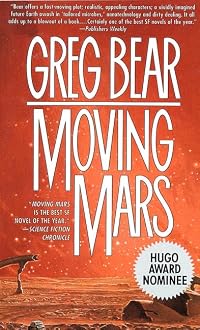
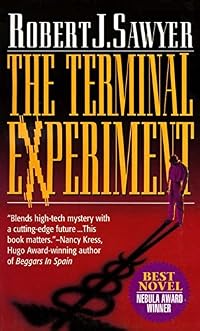
Robert J. Sawyer was born in Ottawa on April 29, 1960, but raised in Toronto. In 1980, while still in high school, Sawyer submitted a short story to the the Rochester Museum and Science Center, which was running a contest for light show ideas. Sawyer didn't win, but the Museum purchased his story Motive anyway and it ran for 192 performances. show more Sawyer went on to attend Toronto's Ryerson Polytechnical Institute, majoring in Radio and Television Arts. In September 1979, he had his first piece of fiction published at the end of his first year, in Ryerson's literary annual, White Wall Review. Sawyer graduated from Ryerson in 1982. Sawyer was hired back the following semester to teach television studio production techniques to second- and third-year students. In the four months interim, he worked for minimum wage at the local SF bookstore, spending all his earnings on books. From 1984 to 1992, while teaching, Sawyer also coordinated a social group of Toronto-area science-fiction writers founded by SF editor Judith Merril. He established a Canadian region of the Science Fiction and Fantasy Writers of America; and in 1998, served as that organization's president. Sawyer also retained freelance nonfiction writing contracts, writing articles for newspapers and magazines, press releases and brochures for corporations, newsletters for government departments. He churned out vast amounts of promotional materials and over 200 articles for computing and personal-finance magazines in a span of five years. But in that time, his only really significant publication was the novelette Golden Fleece, which appeared as the cover story in the September 1988 edition of Amazing Stories. The novel-length Golden Fleece was sold to Warner Books a year later in 1989. The sales of his first five books were uninspiring and Sawyer faced being dropped by his publisher. Sawyer decided to take the time to write a book, without a contract, take as long as necessary, and produce a blockbuster. He also wanted to tackle a controversial issue and deal with it head on. With that in mind, Sawyer wrote The Terminal Experiment, about abortion and the soul. His publisher rejected it on grounds of controversy. HarperPrism then bought the book and serialization rights were sold to Analog, the number-one best-selling English-language SF magazine. The Terminal Experiment went on to win the Science Fiction and Fantasy Writers of America's Nebula Award for Best Novel of 1995. His novel Frameshift was his first book published in hardcover, and was nominated for the Hugo Award, and won Japan's Seiun Award for best foreign novel of the year. (Bowker Author Biography) show less
Some Editions
Awards and Honors
Awards
Work Relationships
Is contained in
Common Knowledge
- Original title
- Frameshift
- Original publication date
- 1997
- People/Characters
- Pierre Tardivel
- Dedication
- For Terence M. Green and Merle Casci, with thanks and friendship
- First words
- It seemed an unlikely place to die.
- Last words
- (Click to show. Warning: May contain spoilers.)And a beautiful smile it was, too.
- Original language
- English
Classifications
Statistics
- Members
- 619
- Popularity
- 46,816
- Reviews
- 16
- Rating
- (3.55)
- Languages
- English, French, Italian, Spanish
- Media
- Paper, Audiobook, Ebook
- ISBNs
- 15
- ASINs
- 6