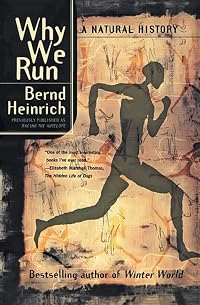
Why We Run: A Natural History
by Bernd Heinrich
On This Page
Description
When Bernd Heinrich decided to write a memoir of his ultramarathon running experience, he realized that the preparation for the race was as important, if not more so, than the race itself. Considering the physiology and motivation of running from a scientific point of view, he wondered what he could learn from other animals. In Why We Run, Heinrich considers the flight endurance of birds, the antelope's running prowess and limitations, and the ultra-endurance of camels to understand how show more human physiology can or cannot replicate these adaptations. With his characteristic blend of scientific inquiry and philosophical musings, Heinrich offers an original and provocative work combining the rigors of science with the passion of running. show lessTags
Recommendations



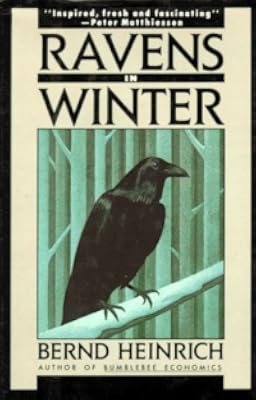

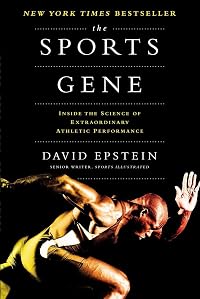
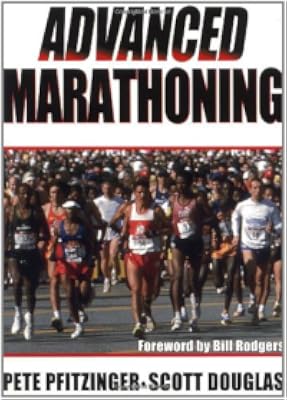
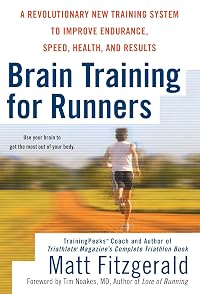

Member Recommendations
Member Reviews
This is a book that was enjoyable to read- half science lesson, half memoir, it covers Bernd Heinrich's path into long distance running and studying animal speed/endurance. He uses what he discovers (and that of his colleagues) to guide him in his preparation into training for his first ultra-marathon.
Heinrich has a way with words - he is ultimately a scientist, but understands the underlying joy at going all out, pushing yourself to the limit. He also makes a case for why people run, and run to the edge of human capability- the human brain is able to push past the pain and tiredness, or able to pace the speed to allow for long distances.
As for the biology, he discusses deer, migrating birds, bees, camels, even rabbits and kangaroos - show more different tactics for different situations. The book was published in 2002 - and while I don't think the science has changed too much, there are a few things that is new, specifically to hunting roles of men and women - new evidence shows that women hunt just as much as men, except different prey. I suspect his ultimate argument still stands - that men hunt big things to impress women, but to say men hunt, woman gather/garden is no longer clear cut.
The last few chapters are devoted to his training for his first 100 kilometer marathon. From how he went about a training regime, to the actual race itself, than the joyous elation of not only finishing it, but finishing it in first place (for his age group) and with a record time.
Its a very enjoyable read, and one that shows explains why humans run, and than why they became so very good at it. show less
Heinrich has a way with words - he is ultimately a scientist, but understands the underlying joy at going all out, pushing yourself to the limit. He also makes a case for why people run, and run to the edge of human capability- the human brain is able to push past the pain and tiredness, or able to pace the speed to allow for long distances.
As for the biology, he discusses deer, migrating birds, bees, camels, even rabbits and kangaroos - show more different tactics for different situations. The book was published in 2002 - and while I don't think the science has changed too much, there are a few things that is new, specifically to hunting roles of men and women - new evidence shows that women hunt just as much as men, except different prey. I suspect his ultimate argument still stands - that men hunt big things to impress women, but to say men hunt, woman gather/garden is no longer clear cut.
The last few chapters are devoted to his training for his first 100 kilometer marathon. From how he went about a training regime, to the actual race itself, than the joyous elation of not only finishing it, but finishing it in first place (for his age group) and with a record time.
Its a very enjoyable read, and one that shows explains why humans run, and than why they became so very good at it. show less
I found this a fascinating book. While the main part is a memoir of the author's life journey from a child running for fun to a middle-aged man training for an ultra-marathon, along the way we are treated to excellent lessons on the physiology of insects, birds, reptiles and mammals as pertaining to endurance running (or flying). Very well written, in my opinion, and never let my interest flag.
Really odd, but really interesting. The exercise physiologist in me found it fascinating. The runner in me found it enlightening. The kid in me who grew up with a bit of an oddball science dad who ran long distances well before it was fashionable found it familiar.
When I picked up this book I was expecting a anthropological and biological look at running. What I got was several chapters of the author's history, which was interesting, but not what I was in the mood for at the time. Finally in the seventh or eighth chapter the book took a turn more to my liking. I found parts of this book extremely interesting. Especially the biological adaptations contrasted in the pronghorn antelope and the camel. Also the theory of why we came to run, namely "persistence scavenging" (my term) and "persistence hunting." The book made me laugh a couple times as well. It ends with a description of his training for an ultramarathon and experience of the subsequent race. Both descriptions left me with respect for the show more author and an insight into the grit it takes to be a runner. show less
This book was very different than I expected. I though it would be a history of running, perhaps about the Tarahumara.
The first third was biography. Just as I reconciled myself to reading a biography, it switched to the metabolism details of specific insects. Then running metabolism of large mammals.
When we got to the last third of the book it was about his running training as an adult. At least twice he ignored medical advice and pressed on. In his case, he survived without permanent injury. He also told of some training that was misguided & he learned from those mistakes-steps.
Through the course of reading this book I went from disappointment, to learning something, to being interested in the outcome of his training.
He said that ultra show more distance runners have 1%-6% body fat. Really? I thought 4% was the lowest viable BF% for men.
Research: https://www.trainingpeaks.com/blog/ideal-body-fat-percentage-for-runners/ Says about 8% for elite runners (not ultra). So, perhaps ultra runners do get that low. I didn’t find any numbers for ultra runners in the time that I had available to do research. show less
The first third was biography. Just as I reconciled myself to reading a biography, it switched to the metabolism details of specific insects. Then running metabolism of large mammals.
When we got to the last third of the book it was about his running training as an adult. At least twice he ignored medical advice and pressed on. In his case, he survived without permanent injury. He also told of some training that was misguided & he learned from those mistakes-steps.
Through the course of reading this book I went from disappointment, to learning something, to being interested in the outcome of his training.
He said that ultra show more distance runners have 1%-6% body fat. Really? I thought 4% was the lowest viable BF% for men.
Research: https://www.trainingpeaks.com/blog/ideal-body-fat-percentage-for-runners/ Says about 8% for elite runners (not ultra). So, perhaps ultra runners do get that low. I didn’t find any numbers for ultra runners in the time that I had available to do research. show less
If you like long-distance running. Or, if you're obsessed by it. This is the book to read.
"I decided to enter the race, and, if possible, win it." It still sends shivers down my spine.
"I decided to enter the race, and, if possible, win it." It still sends shivers down my spine.
Ratings
Members
- Recently Added By
Author Information

24+ Works 6,337 Members
Bernd Heinrich is an acclaimed scientist and the author of numerous books, including the best-selling Winter World, Mind of the Raven, and Why We Run. He writes for numerous periodicals, including the New York Times, the Los Angeles Times, Scientific American, Outside, and Audubon. Among Heinrich's many honors is the 2013 PEN New England Award for show more nonfiction, for Life Everlasting. show less
Series
Belongs to Publisher Series
List Taschenbuch (60564)
Common Knowledge
- Original title
- Racing the Antelope: What Animals Can Teach Us About Running and Life
- Alternate titles
- Why We Run: A Natural History
- Original publication date
- 2001
- People/Characters
- Bernd Heinrich
- Dedication
- To Erica, Stuart, Eliot, and Lena,
and to their enduring mothers. - First words
- The human experience is populated with dreams and aspirations.
- Last words
- (Click to show. Warning: May contain spoilers.)That's what I've tried to do here.
Classifications
- Genres
- Science & Nature, Sports and Leisure, Nonfiction, Anthropology, General Nonfiction, Biography & Memoir
- DDC/MDS
- 612.044 — Applied science & technology Medicine & health Human Body Systems Physiology Physiology in activity Sport Physiology
- LCC
- QP310 .R85 .H45 — Science Physiology Physiology General
- BISAC
Statistics
- Members
- 421
- Popularity
- 73,580
- Reviews
- 6
- Rating
- (3.70)
- Languages
- English, French, German
- Media
- Paper, Ebook
- ISBNs
- 7
- ASINs
- 1