On This Page
Description
"Sixteen-year-old Ruby breaks out of a government-run 'rehabilitation camp' for teens who acquired dangerous powers after surviving a virus that wiped out most American children"--Tags
Recommendations
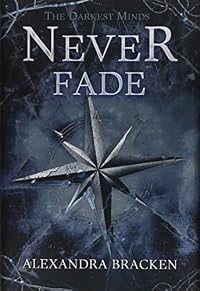
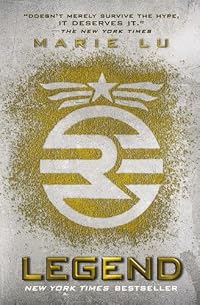
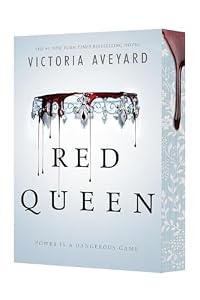
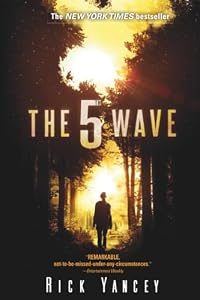
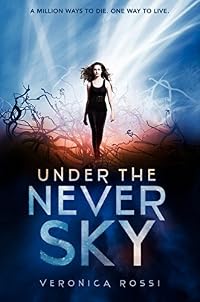
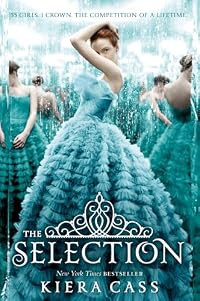

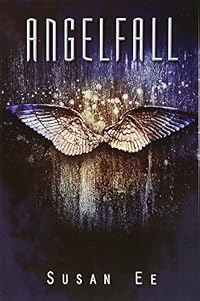
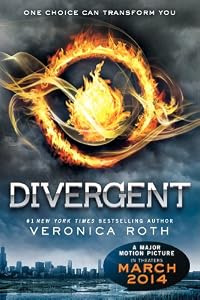
Member Recommendations
aeleone Similar set up with children abandoned by their parents sent to a camp. The Unwind series does not have supernatural powers, but it does have a very messed up world in which children are not valued.
Member Reviews
This was a fast-paced novel following Ruby’s experiences in an America where a disease has triggered manifested abilities in a small number of kids and killed many more. Ruby herself is an “orange,” while there are also pyrokinetics (reds), electrokinetics (yellows), telekinetics (blues), and exceptionally intelligent kids (greens). They are kept in camps, ostensibly to reform them, but ostensibly to protect wider society.
I enjoyed the journey of Ruby and the other characters we met - Liam, Chubs, and Zu. The focus on bonds of friendship, with a gentle overlay of romance, worked well. For a long book in this genre, I felt drawn through and eager to see what would happen next. The novel explores how people with power behave and the show more difficult choices that arise, reflecting, to some extent, contemporary political challenges - choosing the least worst alliance when none are fully right.
What held me back from a higher rating were a few issues. There were some untidy edits that jarred - repeated descriptions and a mis-typed “5pm” instead of “5am” - which pulled me out of the story. The book also leans heavily on heteronormativity and features sloppy characterisation of minor male characters, who are often depicted leering at Ruby; she is sometimes shown allowing it despite her dislike, which undermines positive role modelling.
My bigger frustration was the logical consistency of the wider world. For example, telekinetics and “greens” are lumped together, yet it’s unclear why kids with photographic memories would need to be imprisoned - they seem present mainly for plot convenience. The depiction of the US economy also felt staged rather than coherent: abandoned trailer parks, repurposed hotels, partially fuelled cars, operating restaurants alongside ransacked supermarkets. While Ruby might not understand all the interconnections, the lack of consistent reasoning became increasingly noticeable and undermined a concept that otherwise had a lot of potential.
I am curious to see where the story goes next, but I’m also hesitant given the trajectory toward unending conflict and teenagers taking up arms. I won’t rush to buy the next book, but I may read it eventually. show less
I enjoyed the journey of Ruby and the other characters we met - Liam, Chubs, and Zu. The focus on bonds of friendship, with a gentle overlay of romance, worked well. For a long book in this genre, I felt drawn through and eager to see what would happen next. The novel explores how people with power behave and the show more difficult choices that arise, reflecting, to some extent, contemporary political challenges - choosing the least worst alliance when none are fully right.
What held me back from a higher rating were a few issues. There were some untidy edits that jarred - repeated descriptions and a mis-typed “5pm” instead of “5am” - which pulled me out of the story. The book also leans heavily on heteronormativity and features sloppy characterisation of minor male characters, who are often depicted leering at Ruby; she is sometimes shown allowing it despite her dislike, which undermines positive role modelling.
My bigger frustration was the logical consistency of the wider world. For example, telekinetics and “greens” are lumped together, yet it’s unclear why kids with photographic memories would need to be imprisoned - they seem present mainly for plot convenience. The depiction of the US economy also felt staged rather than coherent: abandoned trailer parks, repurposed hotels, partially fuelled cars, operating restaurants alongside ransacked supermarkets. While Ruby might not understand all the interconnections, the lack of consistent reasoning became increasingly noticeable and undermined a concept that otherwise had a lot of potential.
I am curious to see where the story goes next, but I’m also hesitant given the trajectory toward unending conflict and teenagers taking up arms. I won’t rush to buy the next book, but I may read it eventually. show less
Much of this book is made up of a directionless, mostly danger-free, boring, plodding, apocalyptic road trip. The characters meander around Virginia waiting for a plot to find them. The main character is a whiny, self-hating wimp who spends nearly all of her internal monologue whining about how much she hates herself and that everyone else should, too. And given the conditions she's been forced to live for the previous six years - a cruel internment camp where she suffered abuse every single day - her attitude is expected. But Ruby doesn't want your pity. So when she finds others who were in different camps and learns that the conditions at her own camp were much more horrible than any other place, she withdraws further and hides the show more truth about herself and her life - as if she were ashamed on behalf of her captors - all because she doesn't want pity. Girl, if you don't want pity - be upfront about the truth and don't accept pity. I wonder what the purpose of Ruby's attitude means - are we, the readers, supposed to think she is brave and strong? Because she comes across as a coward and a wimp.
The plot should have been interesting - as it dealt with telekinetic children and the government's extermination of them - but it flailed. Very little powers were ever used. There were threats to the protagonist, yet there was no real antagonist. I never really knew what the characters wanted - likely because they didn't either. Also, the world-building contradicted itself many times. I'm supposed to believe the world is in shambles (but why? how? because the children were taken away? And that results in ... what, exactly?) Yet we still have hotels and restaurants that are operation and neighborhoods are intact. We are told there are abandoned cars everywhere (and again - why?), yet all roads were navigable (or, when one was closed, a simple detour was found - with road signs and everything!) Everyone under the age of 20 or so is either dead or in a camp, but these teenagers don't seem to fear being sighted and don't take much care to hide themselves. But it's okay, only the "bad guys" are looking for them - and they are always quickly defeated or avoided without much fuss.
The writing was clear enough, but suffered when the writer tried to either be funny or poetic. Neither works for this narrator, who is cold and dead inside from suffering six years of abuse. Anytime the writer injected a phrase to spruce up the writing, it felt jarringly out of place. Also, syntax errors were everywhere. I also have a suspicion that this writer is a Joss Whedon fan (either that, or I'm obsessed and am making more connections than I should) because there were little things that I felt were lifted directly from Whedon's creations (namely "Firefly" and "Buffy"). And this wasn't done in a hat-tip way, but in a "I hope no one notices I didn't come up with this myself!" way. Well, I see you and I know what you're (probably) doing.
Mechanics of writing aside, I never felt any sort of urgency to the story (and since this group has no fewer than three threatening entities after them, that's pretty bad) and I felt no connection to any of the characters - which is bad, I suppose, because I think I was supposed to care about the things that happened with each of the members of the group at the end, but I really, really, didn't. Those are the things that needed to happen to make for a compelling story. And it seems that the writer knew this, and made those things happen, but neglected to give any reason for me to care about it.
I hate giving books one star and poor reviews. But some books earn them, and in my opinion, this one did. I simply don't have time for crappy books like this. I will be passing on the rest of the series as well as taking my copy of this book to the library to place on the "free" shelf in hopes that it finds a more appreciative audience. show less
The plot should have been interesting - as it dealt with telekinetic children and the government's extermination of them - but it flailed. Very little powers were ever used. There were threats to the protagonist, yet there was no real antagonist. I never really knew what the characters wanted - likely because they didn't either. Also, the world-building contradicted itself many times. I'm supposed to believe the world is in shambles (but why? how? because the children were taken away? And that results in ... what, exactly?) Yet we still have hotels and restaurants that are operation and neighborhoods are intact. We are told there are abandoned cars everywhere (and again - why?), yet all roads were navigable (or, when one was closed, a simple detour was found - with road signs and everything!) Everyone under the age of 20 or so is either dead or in a camp, but these teenagers don't seem to fear being sighted and don't take much care to hide themselves. But it's okay, only the "bad guys" are looking for them - and they are always quickly defeated or avoided without much fuss.
The writing was clear enough, but suffered when the writer tried to either be funny or poetic. Neither works for this narrator, who is cold and dead inside from suffering six years of abuse. Anytime the writer injected a phrase to spruce up the writing, it felt jarringly out of place. Also, syntax errors were everywhere. I also have a suspicion that this writer is a Joss Whedon fan (either that, or I'm obsessed and am making more connections than I should) because there were little things that I felt were lifted directly from Whedon's creations (namely "Firefly" and "Buffy"). And this wasn't done in a hat-tip way, but in a "I hope no one notices I didn't come up with this myself!" way. Well, I see you and I know what you're (probably) doing.
Mechanics of writing aside, I never felt any sort of urgency to the story (and since this group has no fewer than three threatening entities after them, that's pretty bad) and I felt no connection to any of the characters - which is bad, I suppose, because I think I was supposed to care about the things that happened with each of the members of the group at the end, but I really, really, didn't. Those are the things that needed to happen to make for a compelling story. And it seems that the writer knew this, and made those things happen, but neglected to give any reason for me to care about it.
I hate giving books one star and poor reviews. But some books earn them, and in my opinion, this one did. I simply don't have time for crappy books like this. I will be passing on the rest of the series as well as taking my copy of this book to the library to place on the "free" shelf in hopes that it finds a more appreciative audience. show less
Actual rating: 3.5 stars
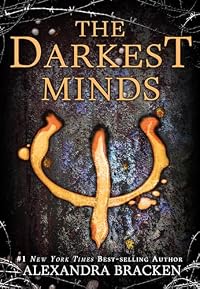
Cover Story: Mysterious insignia is mysterious.
YA book covers. It‰Ãªs either a freakish close-up of a blandly pretty face, a wispy girl in an inappropriate dress, or a cryptic abstract symbol. If I had to pick one, IÂêd pick the latter, because at least it doesnÂêt turn me off like a big face does. (A big face screams, ÂÃÃI canÂêt read this in public!ÂÃÂ) This one has stand-out colors and repeated mentions of the symbol in the text, so IÂêm OK with it.
First Line: ÂÃÃWhen the White Noise went off, we were in the Garden, pulling weeds.ÂÃÂ
The Deal: Ruby grows up in a world where turning ten years old is not a cause for celebration, show more but despair. More than half of her class has died, and it isnÂêt just a local phenomenon: the plague has struck the entire US. Instead of dying, Ruby is one of the few who develop special powers. The government has helpfully come up with a classification system (as they do) and assigned the survivors colors based on their powers. They also helpfully round up all the super-charged preteens and put them into ÂÃÃrehabilitationÂàcamps, but it turns out that putting all the super-charged preteens together isnÂêt a crackerjack idea, so the government disappears all of the kids with the most dangerous powers. Ruby has been in Thurmond, the most notorious camp of all, for six years, having convinced everyone that sheÂês a harmless Green (extra smart code-breakers). With the help of a mysterious group called the ChildrenÂês League, she breaks out of Thurmond, but their plans for her arenÂêt any more innocent. She ends up with a small group of teens searching for a promised safe haven, but the closer she grows to them, the more she worries theyÂêll discover her big secret: sheÂês actually an Orange (mind control) who fears her powers ever since she accidentally erased herself from her best friendÂês memory.
Awesome Things: Color-coded superpowers. Use of the word ÂÃÃpsiÂê. Government conspiracies. Anti-government conspiracies. Memory altering (ÂÃÃWhen do I get my own flashy-thing memory-messer-upper?ÂÃÂ). Terrible things happening to parents. (Seriously, the scene where Ruby remembers what happened to her parents? Gut wrenching). Watership Down. Road trips. Black Betty. Living in an abandoned warehouse store and raiding it for pink girly clothes. Idyllic safe havens that come with a sneaky Price. The name Clancy.
Style & Substance: This is so, so different from BrackenÂês first novel, a high fantasy named Brightly Woven (aside from the insistence that magic be color-coded, as it is in both books). While I enjoyed this one, and I think her writing is stronger and more sure, I have to admit that I still like Brightly Woven more ÂÃà maybe because at the time high fantasy/romance didnÂêt feel as overdone as dystopia/romance does these days, and maybe because I am a sucker for the unreliable, wily, tragic hero, and maybe because I think the weaving-based magic system is still more inventive than mysterious plague powers. Maybe it is just a haze of romantic nostalgia, since I read Brightly Woven so long ago.
My favorite parts of this book involved the little family Ruby, Liam, Chubs, and Zu (and Black Betty) make up while theyÂêre on the road. I love that it develops organically ÂÃà that they all have to learn to trust each other and that itÂês not easy. I love the little character details, like ZuÂês love of girly things, and ChubsÂês clandestine reading (and his interest in sewing), and LiamÂês protective gentlemanliness. I love the moments of friction in the group, such as the moments when Chubs gets fed up with being the butt of LiamÂês teasing. Their relationships ground the more intense, exciting parts of the story, and Bracken does an excellent job foreshadowingthe ominous truth at the heart of the safe haven by describing how the characters pull away from each other through ClanceyÂês subtle manipulation.
Bracken also gets kudos for making the (many) flashback scenes just as compelling as the present-day part of the story. A lot of the set up has to do with the charactersÂê secrets ÂÃà what happened to their families, what happened when their powers got out of control, what they suffered through in the camps and after their escapes. The scenes about RubyÂês parents and the rest of the groupÂês first escape from their rehabilitation camp are particularly gripping.
Like many firsts in a series, there is a LOT of set up in this book. ThereÂês the plague, which is as yet unexplained and somehow weirdly only in the US. ThereÂês the search for the hidden safe haven. ThereÂês ChildrenÂês League agents after Ruby. ThereÂês the skiptracers (government-hired bounty hunters) after them all. ThereÂês letters to parents they have to deliver on behalf of fallen friends. ThereÂês the mysterious disappearance of the Reds and Oranges, who might be experiments or might be a secret army or might be dead.ThereÂês ChubsÂês parents and their anti-government work. ThereÂês Clancy Gray and his father, the president, and some twisty, Graceling-Leck-inspired memory games. ThereÂês a sweet and an icky side to a love triangle. It all ties together by the end (well, except for undefined world-building issues that remind me of what I disliked in Wither, which IÂêm reserving judgment on) and thereÂês a lot of momentum going in to the second book.
Not-Awesome Things:Clancy, Clancy, Clancy. Did anyone not see that coming? I actually think Bracken played it as well and subtly as she could, but still. He did not have much dimension as a villain. Also, the ending. Hate the ending. Hate the memory wipe. Hate the way Ruby justifies it. ItÂês one of my least favorite plots: the ÂÃÃI must do this terrible thing to do against your wishes because I want to protect you and I am a presumptuous ass who knows better and IÂêm sure this is going to do the trick and not going to come back and bite me on the assÂàplot. ItÂês the most obvious route for the story to go and it undercuts all of the fabulous character development Ruby does up until that point, where she actually seems to understand when Liam explains to her earlier why he would always rather have the bad memories. He did say that, right, IÂêm not imagining it? As a sacrifice, itÂês not noble; itÂês selfishness disguised as noble; itÂês self-serving.
Maybe thatÂês the point, though. The things I hate about this particular trope may be something that others love. ItÂês dramatic and tragic but, for me, too easy, a dues ex machina. (For the record, I also hate body-swap stories and stories of mistaken identity. I just find them so frustrating I can barely stand it.) Bracken gets kudos for making me angry, at least, since that means IÂêm invested in the characters, but it also means that I might rage quit the series depending on how the second one goes. Will she take this all the way and force Ruby and Liam to start over as strangers for the rest of the series, or will it be more like Sophie JordanÂês Vanish, where the mind-wipe slips away when itÂês most convenient?
You Should Read This: If you liked X-Men: First Class because it focused more on the mutants as young adults. If youÂêre looking for another solid teen dystopia. If youÂêre willing to buy sudden, unexplainable plagues targeted at highly specific age groups. If youÂêve ever color-coded anything. If you like thinking about whether it would be better to hang on to bad memories or erase them.
Also Read: Other teen dystopias involving diseases, such as Legend, Wither, Delirium, The Eleventh Plague. Other teen dystopias involving dangerous paranormal powers, like Shatter Me (if you can stand it). BrackenÂês other book, Brightly Woven, to marvel over how different it is.
Also Watch: X-Men: First Class. Eternal Sunshine of the Spotless Mind. Push. Chronicle. (OK, I havenÂêt seen those last two, but you have to admit they fit, right?)
I reserve the right to add to this when I think of more stuff. Thanks to Netgalley for the opportunity to read this eARC. show less
Cover Story: Mysterious insignia is mysterious.
YA book covers. It‰Ãªs either a freakish close-up of a blandly pretty face, a wispy girl in an inappropriate dress, or a cryptic abstract symbol. If I had to pick one, IÂêd pick the latter, because at least it doesnÂêt turn me off like a big face does. (A big face screams, ÂÃÃI canÂêt read this in public!ÂÃÂ) This one has stand-out colors and repeated mentions of the symbol in the text, so IÂêm OK with it.
First Line: ÂÃÃWhen the White Noise went off, we were in the Garden, pulling weeds.ÂÃÂ
The Deal: Ruby grows up in a world where turning ten years old is not a cause for celebration, show more but despair. More than half of her class has died, and it isnÂêt just a local phenomenon: the plague has struck the entire US. Instead of dying, Ruby is one of the few who develop special powers. The government has helpfully come up with a classification system (as they do) and assigned the survivors colors based on their powers. They also helpfully round up all the super-charged preteens and put them into ÂÃÃrehabilitationÂàcamps, but it turns out that putting all the super-charged preteens together isnÂêt a crackerjack idea, so the government disappears all of the kids with the most dangerous powers. Ruby has been in Thurmond, the most notorious camp of all, for six years, having convinced everyone that sheÂês a harmless Green (extra smart code-breakers). With the help of a mysterious group called the ChildrenÂês League, she breaks out of Thurmond, but their plans for her arenÂêt any more innocent. She ends up with a small group of teens searching for a promised safe haven, but the closer she grows to them, the more she worries theyÂêll discover her big secret: sheÂês actually an Orange (mind control) who fears her powers ever since she accidentally erased herself from her best friendÂês memory.
Awesome Things: Color-coded superpowers. Use of the word ÂÃÃpsiÂê. Government conspiracies. Anti-government conspiracies. Memory altering (ÂÃÃWhen do I get my own flashy-thing memory-messer-upper?ÂÃÂ). Terrible things happening to parents. (Seriously, the scene where Ruby remembers what happened to her parents? Gut wrenching). Watership Down. Road trips. Black Betty. Living in an abandoned warehouse store and raiding it for pink girly clothes. Idyllic safe havens that come with a sneaky Price. The name Clancy.
Style & Substance: This is so, so different from BrackenÂês first novel, a high fantasy named Brightly Woven (aside from the insistence that magic be color-coded, as it is in both books). While I enjoyed this one, and I think her writing is stronger and more sure, I have to admit that I still like Brightly Woven more ÂÃà maybe because at the time high fantasy/romance didnÂêt feel as overdone as dystopia/romance does these days, and maybe because I am a sucker for the unreliable, wily, tragic hero, and maybe because I think the weaving-based magic system is still more inventive than mysterious plague powers. Maybe it is just a haze of romantic nostalgia, since I read Brightly Woven so long ago.
My favorite parts of this book involved the little family Ruby, Liam, Chubs, and Zu (and Black Betty) make up while theyÂêre on the road. I love that it develops organically ÂÃà that they all have to learn to trust each other and that itÂês not easy. I love the little character details, like ZuÂês love of girly things, and ChubsÂês clandestine reading (and his interest in sewing), and LiamÂês protective gentlemanliness. I love the moments of friction in the group, such as the moments when Chubs gets fed up with being the butt of LiamÂês teasing. Their relationships ground the more intense, exciting parts of the story, and Bracken does an excellent job foreshadowing
Bracken also gets kudos for making the (many) flashback scenes just as compelling as the present-day part of the story. A lot of the set up has to do with the charactersÂê secrets ÂÃà what happened to their families, what happened when their powers got out of control, what they suffered through in the camps and after their escapes. The scenes about RubyÂês parents and the rest of the groupÂês first escape from their rehabilitation camp are particularly gripping.
Like many firsts in a series, there is a LOT of set up in this book. ThereÂês the plague, which is as yet unexplained and somehow weirdly only in the US. ThereÂês the search for the hidden safe haven. ThereÂês ChildrenÂês League agents after Ruby. ThereÂês the skiptracers (government-hired bounty hunters) after them all. ThereÂês letters to parents they have to deliver on behalf of fallen friends. ThereÂês the mysterious disappearance of the Reds and Oranges, who might be experiments or might be a secret army or might be dead.
Not-Awesome Things:
Maybe thatÂês the point, though. The things I hate about this particular trope may be something that others love. ItÂês dramatic and tragic but, for me, too easy, a dues ex machina. (For the record, I also hate body-swap stories and stories of mistaken identity. I just find them so frustrating I can barely stand it.) Bracken gets kudos for making me angry, at least, since that means IÂêm invested in the characters, but it also means that I might rage quit the series depending on how the second one goes. Will she take this all the way and force Ruby and Liam to start over as strangers for the rest of the series, or will it be more like Sophie JordanÂês Vanish, where the mind-wipe slips away when itÂês most convenient?
You Should Read This: If you liked X-Men: First Class because it focused more on the mutants as young adults. If youÂêre looking for another solid teen dystopia. If youÂêre willing to buy sudden, unexplainable plagues targeted at highly specific age groups. If youÂêve ever color-coded anything. If you like thinking about whether it would be better to hang on to bad memories or erase them.
Also Read: Other teen dystopias involving diseases, such as Legend, Wither, Delirium, The Eleventh Plague. Other teen dystopias involving dangerous paranormal powers, like Shatter Me (if you can stand it). BrackenÂês other book, Brightly Woven, to marvel over how different it is.
Also Watch: X-Men: First Class. Eternal Sunshine of the Spotless Mind. Push. Chronicle. (OK, I havenÂêt seen those last two, but you have to admit they fit, right?)
I reserve the right to add to this when I think of more stuff. Thanks to Netgalley for the opportunity to read this eARC. show less
This book has been on my TBR list forever – the way my hardcopy reading is going, I would have never gotten to it. Thank goodness for the audiobook! Although I think I really would have liked it better without the narrator….
I’ve bounced back and forth on whether I liked the characters or not in this book, and ultimately, it really came down to the character. For a protagonist, Ruby’s not bad. She definitely grows and evolves, and I love the fact she isn’t awesome at everything. It’s immensely frustrating when a protagonist excels at everything. The lead boy, Liam, is not my favorite, but I thought Chubs was pretty well developed. Zu was adorable. Clancy was the worst. Overall I have to say that Braken did a pretty good job show more with character development.
The Darkest Minds takes place in a crumbling world, but not a post-apocalyptic one. Especially at the beginning of the book, you get a sense of the chaos that has ensued in the ten years Ruby’s been in camp. Empty houses and city blocks, looted stores, a partially exploded school – all these are nuances breaking apart what used to be a normal life. I had some issues with the calm highway miles and the complete lack of people who weren’t bounty hunters, but neither of these things are enough to break the illusion of the world.
I kept trying to predict this book, and I kept failing. I kept waiting for things to blow up in Ruby’s face, and for the most part, they didn’t. I kept waiting for the worst YA cliches to bounce in and although they started to trickle from time to time… they didn’t fully evolve. Thank you. The book ended differently than I expected, too. When it comes to YA, it’s so important to me that I not be able to predict the book. Predictable books are boring.
Overall, Braken is telling a story of a generation that has developed mutant powers (five varieties only). The older generation, terrified of their children (mostly), have abandoned them to the government. The morality of this has split the country, and meanwhile, the children are tortured, tested on like lab animals, and generally neglected. It’s not a great situation. It’s not the most original idea, but Braken does manage to tell it in an original way.
Also, I kept waiting for a love triangle. I was sure it would happen. It didn’t. Some bits with one of the characters near the end got pretty sappy… but it never actually became a triangle!
The biggest reason for the loss of a heart in this category is the narrator. Amy McFadden was not the worst narrator I’ve heard, but several of her voices (Liam’s!) really bugged me. Ruby always sounded like she had such an attitude as well, which didn’t come across in the writing at all. It just irritated me.
Braken made some interesting writing choice for a YA novel, including what is implied to be a rape scene. Very little of this is described as the main character is being mentally manipulated, but it may not be what some parents want their ‘tweens reading. The scene that bothered me the most? Within an hour of waking after the attack, the protagonist very nearly starts making out with someone else. Not quite, but almost. I was enraged. If Braken allowed it to go from rape to teen makeout session, I was done. It didn’t, but it felt really, really close.
Overall, I really did like this book. There were a couple things that made me mad, but the story as a whole was well-done and interesting, with characters that I became invested in. The book ended with several questions that I want answered – such as Did that character live? Did that other one reach his/her destination? WTF is Ruby’s plan? and so forth. I’ll be picking up the sequel at some point for sure.
.
Originally posted on The Literary Phoenix. show less
I’ve bounced back and forth on whether I liked the characters or not in this book, and ultimately, it really came down to the character. For a protagonist, Ruby’s not bad. She definitely grows and evolves, and I love the fact she isn’t awesome at everything. It’s immensely frustrating when a protagonist excels at everything. The lead boy, Liam, is not my favorite, but I thought Chubs was pretty well developed. Zu was adorable. Clancy was the worst. Overall I have to say that Braken did a pretty good job show more with character development.
The Darkest Minds takes place in a crumbling world, but not a post-apocalyptic one. Especially at the beginning of the book, you get a sense of the chaos that has ensued in the ten years Ruby’s been in camp. Empty houses and city blocks, looted stores, a partially exploded school – all these are nuances breaking apart what used to be a normal life. I had some issues with the calm highway miles and the complete lack of people who weren’t bounty hunters, but neither of these things are enough to break the illusion of the world.
I kept trying to predict this book, and I kept failing. I kept waiting for things to blow up in Ruby’s face, and for the most part, they didn’t. I kept waiting for the worst YA cliches to bounce in and although they started to trickle from time to time… they didn’t fully evolve. Thank you. The book ended differently than I expected, too. When it comes to YA, it’s so important to me that I not be able to predict the book. Predictable books are boring.
Overall, Braken is telling a story of a generation that has developed mutant powers (five varieties only). The older generation, terrified of their children (mostly), have abandoned them to the government. The morality of this has split the country, and meanwhile, the children are tortured, tested on like lab animals, and generally neglected. It’s not a great situation. It’s not the most original idea, but Braken does manage to tell it in an original way.
Also, I kept waiting for a love triangle. I was sure it would happen. It didn’t. Some bits with one of the characters near the end got pretty sappy… but it never actually became a triangle!
The biggest reason for the loss of a heart in this category is the narrator. Amy McFadden was not the worst narrator I’ve heard, but several of her voices (Liam’s!) really bugged me. Ruby always sounded like she had such an attitude as well, which didn’t come across in the writing at all. It just irritated me.
Braken made some interesting writing choice for a YA novel, including what is implied to be a rape scene. Very little of this is described as the main character is being mentally manipulated, but it may not be what some parents want their ‘tweens reading. The scene that bothered me the most? Within an hour of waking after the attack, the protagonist very nearly starts making out with someone else. Not quite, but almost. I was enraged. If Braken allowed it to go from rape to teen makeout session, I was done. It didn’t, but it felt really, really close.
Overall, I really did like this book. There were a couple things that made me mad, but the story as a whole was well-done and interesting, with characters that I became invested in. The book ended with several questions that I want answered – such as Did that character live? Did that other one reach his/her destination? WTF is Ruby’s plan? and so forth. I’ll be picking up the sequel at some point for sure.
.
Originally posted on The Literary Phoenix. show less
In the future United States, kids get sick and die right around the time they turn 10. Ruby is one of the last living kids on her block, but after an incident where her parents lock her in the garage, she's taken to a camp for kids like her. They each have different abilities, and are controlled by agents dressed in black who clearly fear them: the Reds, Oranges and Yellows most of all. Convincing a worker she is actually a Green, Ruby slides by until she is threatened with exposure and must choose to either trust a doctor to help her escape or be killed.
This is the sort of book where you have a completely different perspective at the end than you do at the beginning, so my description is a little vague. Part of the fun of reading this show more book was seeing Ruby's world slowly unfold over the course of the story, piecing it together until you have the full picture. Ruby is a great character, and because she's narrating, we see her confusion and moral struggles as she comes to terms with who she is and what her powers are. It's always tough to keep information away from the reader in a believable way with first-person narrating, but Alexandra Bracken does an excellent job of revealing things naturally and in a way that keeps the reader guessing. The end simultaneously wraps up the first story in the series while leaving enough loose ends that I am dying to read the next book. show less
This is the sort of book where you have a completely different perspective at the end than you do at the beginning, so my description is a little vague. Part of the fun of reading this show more book was seeing Ruby's world slowly unfold over the course of the story, piecing it together until you have the full picture. Ruby is a great character, and because she's narrating, we see her confusion and moral struggles as she comes to terms with who she is and what her powers are. It's always tough to keep information away from the reader in a believable way with first-person narrating, but Alexandra Bracken does an excellent job of revealing things naturally and in a way that keeps the reader guessing. The end simultaneously wraps up the first story in the series while leaving enough loose ends that I am dying to read the next book. show less
They call it IAAN: Idiopathic Adolescent Acute Neurodegeneration. The disease is devastating, attacking all children from 8-14 years old, with a high mortality rate. Worse than dying, though, is surviving. Survivors are the dangerous ones, the ones that end up with powers they can't control. It is on the morning of Ruby's tenth birthday when her parents lock her in the garage and call the police. She is sent to Thurmond, one of the government's "rehabilitation camps" for children. Six years later, Ruby is one of the dangerous ones, one of the survivors. After she's is found out, Ruby finds herself on the run. There is only one safe haven left for people like her, if it even exists. East River and the protection of the Slip Kid. There, show more it is said, children are protected and allowed to learn how to use their new powers in peace. If only that were true.
The Darkest Minds by Alexandra Bracken is the first in a trilogy of the same name. We are introduced to a dystopian America. Children across the country all come down with this mysterious illness and, if they recover, develop psychic powers. Instead of treating this as a blessing, society sees it as a danger and the children are taken from their homes to be imprisoned in "rehabilitation" camps. This being a YA dystopia novel, they are in fact concentration camps where the children are locked up, abused and sometimes killed. Thurmond is one of many camps and the one where the story's main protagonist ends up. Ruby manages to survive for six years, hiding her powers in an attempt to seem less threatening, when she is discovered by an outside group that "rescues" her for their own purposes. Ruby's escape from both her oppressors and rescuers ensues.
The story is told entirely from Ruby's first person perspective. Ruby is scared, hesitant, naive, confused and has low self esteem, all believable given the horrible circumstances she's been put in. She makes for an odd protagonist. The thoughts in her head contrast greatly with how the other characters see her. While constantly doubting herself, fearful of making a mistake and seeing herself as a monster, the other characters view Ruby as a strong person. I think it's a deliberate contrast being used to show Ruby's potential. Quite naturally Ruby meets up with a small group of kids. Liam is the ultra good guy and love interest. Chubs is the smart, nerdy yet fiercely loyal friend. Zu is the most adorable young girl I've read about in a while who wants nothing more than for the world to go back to normal. I kept wishing I could give her a hug.
The book starts off with a really strong premise and a hook that sucks you right in. Then the characters end up on a long and winding road trip which the plot reflects as the story starts to meander. Many different factions are mentioned but not really fleshed out so it's hard to tell if they're important or not. I also wish that Bracken had gone more into the virus that is the trigger. Why does it only affect kids of a certain age? Why has it not spread globally? This is a modern day story and our society is so global that it would be virtually impossible to contain an outbreak of this magnitude, yet it seems that the rest of the world is barely affected. It also doesn't make sense that when the majority of the children have died to round up and imprison or kill of the rest since no children means no future society. Perhaps these questions will be addressed later on. There is also a fairly predictable villain and an instant love side story. This is YA after all.
Once the road trip finally reaches it's destination, the story build to an explosive and exciting conclusion that left me wanting to know what happens next. Even with it's flaws, the book was an enjoyable read. show less
The Darkest Minds by Alexandra Bracken is the first in a trilogy of the same name. We are introduced to a dystopian America. Children across the country all come down with this mysterious illness and, if they recover, develop psychic powers. Instead of treating this as a blessing, society sees it as a danger and the children are taken from their homes to be imprisoned in "rehabilitation" camps. This being a YA dystopia novel, they are in fact concentration camps where the children are locked up, abused and sometimes killed. Thurmond is one of many camps and the one where the story's main protagonist ends up. Ruby manages to survive for six years, hiding her powers in an attempt to seem less threatening, when she is discovered by an outside group that "rescues" her for their own purposes. Ruby's escape from both her oppressors and rescuers ensues.
The story is told entirely from Ruby's first person perspective. Ruby is scared, hesitant, naive, confused and has low self esteem, all believable given the horrible circumstances she's been put in. She makes for an odd protagonist. The thoughts in her head contrast greatly with how the other characters see her. While constantly doubting herself, fearful of making a mistake and seeing herself as a monster, the other characters view Ruby as a strong person. I think it's a deliberate contrast being used to show Ruby's potential. Quite naturally Ruby meets up with a small group of kids. Liam is the ultra good guy and love interest. Chubs is the smart, nerdy yet fiercely loyal friend. Zu is the most adorable young girl I've read about in a while who wants nothing more than for the world to go back to normal. I kept wishing I could give her a hug.
The book starts off with a really strong premise and a hook that sucks you right in. Then the characters end up on a long and winding road trip which the plot reflects as the story starts to meander. Many different factions are mentioned but not really fleshed out so it's hard to tell if they're important or not. I also wish that Bracken had gone more into the virus that is the trigger. Why does it only affect kids of a certain age? Why has it not spread globally? This is a modern day story and our society is so global that it would be virtually impossible to contain an outbreak of this magnitude, yet it seems that the rest of the world is barely affected. It also doesn't make sense that when the majority of the children have died to round up and imprison or kill of the rest since no children means no future society. Perhaps these questions will be addressed later on. There is also a fairly predictable villain and an instant love side story. This is YA after all.
Once the road trip finally reaches it's destination, the story build to an explosive and exciting conclusion that left me wanting to know what happens next. Even with it's flaws, the book was an enjoyable read. show less
This book should really be getting 4.5 stars.
First things first: major props to the characters for not losing their shit and acting incredibly stupid every single time that something went bad for them/those around them. And trust me, these guys had a ton of bad things go wrong for them.
Second: I actually cried when we found out that Cole died. I'll be honest, though I love Liam, I was really hoping that if one of the brothers had to die it would have been him. I really wanted Cole to see that being a Red didn't make him a monster and for him to finally get to step back and relax while others took care of things for once, but instead he ended up dying a horrific death. I certainly don't begrudge Liam surviving though.
Third: The humor in show more this book was great! I absolutely LOVE Chubs and Vida, the two of them together were hilarious. I was cheering Chubs on whole-heartedly when he spoke up about the government's shitty plans for the psi kids at the end.
Fourth: Vida. Mother fucking Vida, man. She was my favorite character. She was so hilarious in all her interactions with people. I also liked getting to see that she wasn't a total hard-case when she freaked out about Cate and Jude, and eventually started getting close to Zu.
Fifth: The government's plan for the psi kids. What the shit was up with that? (good writing, but the plan was infuriating on a human level). They really thought that they could get away with that? Good on Chubs for speaking up and Senator Cruz for supporting him, although not in an outspoken way.
Sixth: That ending. That ending was sweet and had me feeling happy for the characters. I thought they were going to end up in a black van though to end up going full circle with Black Betty, but no dice! haha.
Seventh: The "cure" & cause for the psi abilities. What the hell? After everything the children have gone through, they should ALL be able to choose if they want to receive the operation, no one should be able to make that choice for them (with the exceptions of the ones so mentally damaged that they couldn't be trusted not to harm/kill others). However, I believe that Ruby made the right choice concerning Clancy.
Eighth: I still think Clancy was right about one thing, that their abilities should be considered gifts and exercised, but his methods for use were waaay out of line. show less
First things first: major props to the characters for not losing their shit and acting incredibly stupid every single time that something went bad for them/those around them. And trust me, these guys had a ton of bad things go wrong for them.
Second: I actually cried when we found out that Cole died. I'll be honest, though I love Liam, I was really hoping that if one of the brothers had to die it would have been him. I really wanted Cole to see that being a Red didn't make him a monster and for him to finally get to step back and relax while others took care of things for once, but instead he ended up dying a horrific death. I certainly don't begrudge Liam surviving though.
Third: The humor in show more this book was great! I absolutely LOVE Chubs and Vida, the two of them together were hilarious. I was cheering Chubs on whole-heartedly when he spoke up about the government's shitty plans for the psi kids at the end.
Fourth: Vida. Mother fucking Vida, man. She was my favorite character. She was so hilarious in all her interactions with people. I also liked getting to see that she wasn't a total hard-case when she freaked out about Cate and Jude, and eventually started getting close to Zu.
Fifth: The government's plan for the psi kids. What the shit was up with that? (good writing, but the plan was infuriating on a human level). They really thought that they could get away with that? Good on Chubs for speaking up and Senator Cruz for supporting him, although not in an outspoken way.
Sixth: That ending. That ending was sweet and had me feeling happy for the characters. I thought they were going to end up in a black van though to end up going full circle with Black Betty, but no dice! haha.
Seventh: The "cure" & cause for the psi abilities. What the hell? After everything the children have gone through, they should ALL be able to choose if they want to receive the operation, no one should be able to make that choice for them (with the exceptions of the ones so mentally damaged that they couldn't be trusted not to harm/kill others). However, I believe that Ruby made the right choice concerning Clancy.
Eighth: I still think Clancy was right about one thing, that their abilities should be considered gifts and exercised, but his methods for use were waaay out of line. show less
Members
- Recently Added By
Lists

Young Adult - Books come to Life on the Big Screen!
20 works; 1 member

Books Read in 2016
4,666 works; 199 members

Children's and YA Dystopias
123 works; 11 members

Florida
366 works; 3 members

Elaina's
183 works; 1 member
Talk Discussions
Past Discussions
Found: Modern apocalyptic kids survival in Name that Book (January 2023)
Author Information

30+ Works 20,696 Members
Alexandra Bracken was born in Phoenix, Arizona, on February 27th, 1987. She graduated from The College of William & Mary in Virginia in May 2009, with a degree in History and English. She began her first published novel, Brightly Woven, as a birthday present to a close friend in college. She is also the author of The Darkest Minds Series. Her show more title from that series, In the Afterlight, made The Young New Adult Titles List. In 2017 she made The New York Times Best Seller List with her title, Passenger. (Bowker Author Biography) show less
Some Editions
Awards and Honors
Series

Work Relationships
Is contained in
Has the adaptation
Common Knowledge
- Canonical title
- The Darkest Minds
- Original title
- The Darkest Minds
- Original publication date
- 2012-11-28
- People/Characters
- Ruby Elizabeth Daly; Suzume; Charles Carrington Meriwether IV; Liam Michael Stewart; Martin; Hina (show all 9); Kylie; Clancy James Beaumont Gray; Samantha Dahl
- Related movies
- The Darkest Minds (2018 | IMDb)
- Dedication
- For Stephanie and Daniel, who were in every minivan with me
- First words
- PROLOGUE: When the white noise went off, we were in the garden, pulling weeds.
Grace Somerfield was the first to die. - Last words
- (Click to show. Warning: May contain spoilers.)I turned from the window, and I didn't look back.
- Blurbers
- Marr, Melissa
- Canonical DDC/MDS
- 813.6
- Canonical LCC
- PZ7.B6988
Classifications
Statistics
- Members
- 4,641
- Popularity
- 3,098
- Reviews
- 158
- Rating
- (3.97)
- Languages
- 10 — Danish, Dutch, English, French, German, Italian, Polish, Spanish, Turkish, Portuguese (Portugal)
- Media
- Paper, Audiobook, Ebook
- ISBNs
- 62
- ASINs
- 19