On This Page
Description
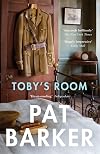
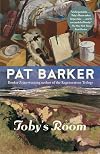
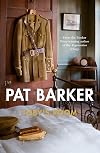
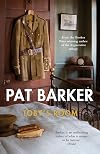
A portrait of an upper-class family torn by World War I centers on an anguished sister whose beloved brother goes missing in action, in an epic tale that explores the experiences of the family members and the working-class people who support them.Tags
Recommendations

































Member Reviews
This is the second in a series, but it is perfectly readable as a stand alone. Set in two phases, the first part, in 1912, focuses on Elinor & Toby and their family. Toby is at medical school in London. Elinor at the Slade, and starting to wonder what to do thereafter. The family appears to have everything under control but the tensions are simmering beneath the surface. Then there happens an event that has the ability to tear the family apart, should it ever come to light. But the siblings suppress the event and carry on, although there remains a tension between them that can't be put aside.
At the Slade, Elinor joins a course in dissection in order to better understand the human form and improve her drawing. In this phase we also meet show more Kit Neville and Paul Tarrant, both of whom are very different men and each of which has a part to play later.
Phase 2 of the novel takes place in 1917, when Toby is notified as missing, presumed killed. Paul is back in London with a wounded leg, Kit returns with severe facial injuries. Elinor is determined to know more about what happened to Toby, and this enhanced by a letter she finds addressed to her in his belongings when they are shipped back.
It deals with the feelings of those left at home, as well as those returning from the front, the battles themselves actually play only a small part in the narrative. The interplay between the two very different men is really well done. At times Elinor feels a bit hard and angular, she is struggling to work out her place in the world and the world as it has been turned on its head, both on the world scale and the personal - the reaction to grief is especially interesting. It is a hugely personal thing, with each person's grief being unique, Elinor's takes its shape through art. In the aftermath of Toby's death., the family can no longer play their roles and each of them have to renegotiate their relationships with each other, and that causes the separation between Toby & Elinor's parents to become fact, rather than disguised fiction. This is not the book I thought it would be, the event in phase 1 of the book sets up tensions that echo through the reminder of the story, but neither is it all tied up neatly at the end. The relationships remain unresolved, the future is unclear. There is one, and that's a start. It is really beautifully written, somewhat understated, yet somehow was a page turner, I had to get to the end. Really very good. show less
At the Slade, Elinor joins a course in dissection in order to better understand the human form and improve her drawing. In this phase we also meet show more Kit Neville and Paul Tarrant, both of whom are very different men and each of which has a part to play later.
Phase 2 of the novel takes place in 1917, when Toby is notified as missing, presumed killed. Paul is back in London with a wounded leg, Kit returns with severe facial injuries. Elinor is determined to know more about what happened to Toby, and this enhanced by a letter she finds addressed to her in his belongings when they are shipped back.
It deals with the feelings of those left at home, as well as those returning from the front, the battles themselves actually play only a small part in the narrative. The interplay between the two very different men is really well done. At times Elinor feels a bit hard and angular, she is struggling to work out her place in the world and the world as it has been turned on its head, both on the world scale and the personal - the reaction to grief is especially interesting. It is a hugely personal thing, with each person's grief being unique, Elinor's takes its shape through art. In the aftermath of Toby's death., the family can no longer play their roles and each of them have to renegotiate their relationships with each other, and that causes the separation between Toby & Elinor's parents to become fact, rather than disguised fiction. This is not the book I thought it would be, the event in phase 1 of the book sets up tensions that echo through the reminder of the story, but neither is it all tied up neatly at the end. The relationships remain unresolved, the future is unclear. There is one, and that's a start. It is really beautifully written, somewhat understated, yet somehow was a page turner, I had to get to the end. Really very good. show less
This immaculately constructed novel is a testament to Pat Barker's skill and power as a novelist. With her usual felicitous writing style, she carries the reader along effortlessly. One doesn't immediately notice how complex this book is. But the structure sprawls over months and years, with stops and starts, gaps, changes of points of view, and flashbacks.
The story is often raw and shocking. We are confronted with horror. The actual battles of World War I are not the main horror in this volume. The characters Paul and Kit must cope with their memories of World War I, and its disfiguring effects. Their friend Elinor has to deal with problems of becoming an artist, but also with difficult relationships with friends and family. Most show more troubling is her relationship with her brother Toby, whose mysterious death in the war brings Elinor into contact again with Paul and Kit.
"Toby's Room" is not just the title, but also the novel's central conceit, the place that haunts Elinor and the book, as the war haunts Paul and Kit. The novel holds out uncertain hope that the characters might leave behind their trauma and start anew. As one would close a door for the last time and move somewhere new. show less
The story is often raw and shocking. We are confronted with horror. The actual battles of World War I are not the main horror in this volume. The characters Paul and Kit must cope with their memories of World War I, and its disfiguring effects. Their friend Elinor has to deal with problems of becoming an artist, but also with difficult relationships with friends and family. Most show more troubling is her relationship with her brother Toby, whose mysterious death in the war brings Elinor into contact again with Paul and Kit.
"Toby's Room" is not just the title, but also the novel's central conceit, the place that haunts Elinor and the book, as the war haunts Paul and Kit. The novel holds out uncertain hope that the characters might leave behind their trauma and start anew. As one would close a door for the last time and move somewhere new. show less
Toby’s Room is a companion novel to Life Class, I had thought it was a sequel – but it is not really, the novel would stand alone. However I am glad I read the novels in this order. In Life Class we met Elinor Brooke, Paul Tarrant and Kit Neville and these characters are central to Toby’s Room as well. When I was reading Life Class I found Elinor a cold and elusive character and after reading Toby’s Room I find she remains just a little out of reach –I am sure this is deliberate.
Toby’s Room opens two years before the events in Life Class – Elinor and her brother Toby have had a special close relationship since they were small, they even look alike – especially once Elinor has cut off her hair. Elinor is an art student show more at the Slade, studying under surgeon/artist Henry Tonks – a difficult and exacting tutor – who later in the war spends his time drawing portraits of horribly disfigured men. Henry Tonks is a character taken from life – his drawings of wounded men can still be seen today. Toby is a medical student. In the suffocating atmosphere of their family home, their parents leading separate lives, their traditionally married sister rather smug and critical, Elinor and Toby’s relationship is complex, and as the lines between them blur their relationship changes forever.
“Somehow or other they had to get back to the ways things were. What had happened was not something that could be talked about, or explained, or analysed, or in any other way resolved. It could only be forgotten.”
Five years later, and the war has taken its toll on Elinor and her Slade friends. Paul back from France with a permanent limp and in constant pain is more fortunate than some. Toby – who had spent his time serving as a doctor on the front line, patching up the injured – even leaving the relative safety of his post to bring back injured men from the mud of the trenches, constantly putting himself in harm’s way – is “missing presumed dead.” Kit Neville had been part of Toby’s unit – but is now lying in a facial injuries hospital – the hospital where his old tutor Tonks draws the faces of disfigured men.
With Toby missing presumed dead, Elinor has something missing in herself, her grief is raw and terrible. Coldly refusing to have anything to do with the war, the war has finally come to her, with Toby’s death and Paul and Kit’s injuries. Still strongly committed to her art she has produced many landscape paintings of the countryside around their childhood home – in every one there is a shadow, a presence of the brother that is gone. Back in the family home – which is in the process of being broken up – is Toby’s Room, which remains a powerful reminder for Elinor.
“Lying between the sheets, she felt different; her body had turned into bread dough, dough that's been kneaded and pounded till it's grey, lumpen, no yeast in it, no lightness, no prospect of rising. Her arms lay stiff by her sides. When, finally, she drifted off to sleep, she dreamt she was on her knees in a corner of the room, trying to vomit without attracting the attention of the person who was asleep on the bed. Her eyes wide open in the darkness, she tried to cast off the dream, but it stayed with her till morning.”
In fact Toby is a constant haunting presence throughout the novel, although he is mainly seen through the memories of Elinor’s artist friends – especially the morphine induced hallucinations of Kit Neville.
When Paul visits Elinor and seeing the paintings she has finished, he is concerned by her apparent obsession to find out exactly what happened to Toby. Having had his belongings returned to the house, Elinor discovers part of an unfinished letter in the lining of Toby’s jacket – which puzzles her. When she writes to Kit Neville – who had served with her brother – she receives no reply. When Kit is returned to England with horrible facial injuries – Elinor insists on going to see him, despite Tonks having warned Paul to leave him alone. At the facial injuries hospital Elinor finds work to do alongside her former tutor – work that bring her into contact with Kit. There is a mystery surrounding Toby’s death, Elinor is convinced of that, and she enlists Paul’s help in finding out what that is.
Toby’s Room is a blistering account of the ravages of war on people, their relationships and - in a departure from other WW1 novels – their art. I love Pat Barker’s writing – and although Life Class and Toby’s Room are not quite as powerful as the utterly brilliant Regeneration trilogy – there are still many beautifully written passages infused with Barkers brilliant understatement, which leave the reader with a host of remarkable images to ponder on. show less
Toby’s Room opens two years before the events in Life Class – Elinor and her brother Toby have had a special close relationship since they were small, they even look alike – especially once Elinor has cut off her hair. Elinor is an art student show more at the Slade, studying under surgeon/artist Henry Tonks – a difficult and exacting tutor – who later in the war spends his time drawing portraits of horribly disfigured men. Henry Tonks is a character taken from life – his drawings of wounded men can still be seen today. Toby is a medical student. In the suffocating atmosphere of their family home, their parents leading separate lives, their traditionally married sister rather smug and critical, Elinor and Toby’s relationship is complex, and as the lines between them blur their relationship changes forever.
“Somehow or other they had to get back to the ways things were. What had happened was not something that could be talked about, or explained, or analysed, or in any other way resolved. It could only be forgotten.”
Five years later, and the war has taken its toll on Elinor and her Slade friends. Paul back from France with a permanent limp and in constant pain is more fortunate than some. Toby – who had spent his time serving as a doctor on the front line, patching up the injured – even leaving the relative safety of his post to bring back injured men from the mud of the trenches, constantly putting himself in harm’s way – is “missing presumed dead.” Kit Neville had been part of Toby’s unit – but is now lying in a facial injuries hospital – the hospital where his old tutor Tonks draws the faces of disfigured men.
With Toby missing presumed dead, Elinor has something missing in herself, her grief is raw and terrible. Coldly refusing to have anything to do with the war, the war has finally come to her, with Toby’s death and Paul and Kit’s injuries. Still strongly committed to her art she has produced many landscape paintings of the countryside around their childhood home – in every one there is a shadow, a presence of the brother that is gone. Back in the family home – which is in the process of being broken up – is Toby’s Room, which remains a powerful reminder for Elinor.
“Lying between the sheets, she felt different; her body had turned into bread dough, dough that's been kneaded and pounded till it's grey, lumpen, no yeast in it, no lightness, no prospect of rising. Her arms lay stiff by her sides. When, finally, she drifted off to sleep, she dreamt she was on her knees in a corner of the room, trying to vomit without attracting the attention of the person who was asleep on the bed. Her eyes wide open in the darkness, she tried to cast off the dream, but it stayed with her till morning.”
In fact Toby is a constant haunting presence throughout the novel, although he is mainly seen through the memories of Elinor’s artist friends – especially the morphine induced hallucinations of Kit Neville.
When Paul visits Elinor and seeing the paintings she has finished, he is concerned by her apparent obsession to find out exactly what happened to Toby. Having had his belongings returned to the house, Elinor discovers part of an unfinished letter in the lining of Toby’s jacket – which puzzles her. When she writes to Kit Neville – who had served with her brother – she receives no reply. When Kit is returned to England with horrible facial injuries – Elinor insists on going to see him, despite Tonks having warned Paul to leave him alone. At the facial injuries hospital Elinor finds work to do alongside her former tutor – work that bring her into contact with Kit. There is a mystery surrounding Toby’s death, Elinor is convinced of that, and she enlists Paul’s help in finding out what that is.
Toby’s Room is a blistering account of the ravages of war on people, their relationships and - in a departure from other WW1 novels – their art. I love Pat Barker’s writing – and although Life Class and Toby’s Room are not quite as powerful as the utterly brilliant Regeneration trilogy – there are still many beautifully written passages infused with Barkers brilliant understatement, which leave the reader with a host of remarkable images to ponder on. show less
There can never be enough books about WWI experience. Not for me, at least. I will never know enough. But with each, well-written story I learn more. And Toby's Room is exceptionally well-written with crisp simplicity that cuts to the bone. This was my first experience with Ms. Parker's (a Booker Prize winner) writing and it left me in awe of how the lack of flowery, ornate writing opens the door to clarity.This clarity is essential to make the human tragedy that continued long after the war was over, real to the contemporary reader (we all know it was real, but knowing and actually feeling are two different experiences).
Even though Toby's Room is a sequel to Life Class, it's also a stand-alone novel. I read it without having a clue it show more was a sequel and had no issues with being confused about characters or previous story-lines that you sometimes get dropped right in the middle of when starting with book two in a series. I was however quite shocked with the strong beginning, wondering whether I really was reading what I thought I was. I loved how Pat Barker so unassumingly led me from a straight path on to a hurl down a sharp hill in the beginning chapters and then ended the story in the same, unexpected manner - one of the final scenes, the story of Neville's about what happened with Toby truly took my breath away and I found myself wiping tears off my cheeks in disbelief. My strong emotions however were not due to some shocking, suspend-your-disbelief-now event (it was something rather quite believable) but to the author's mastery of writing. It felt like she set a trap for me with her calming, down to earth, simple story-telling just to deliver a heartbreaking blow.
The whole book is sad, of course. I mean, how can it not be? It's about the worst coming-of-age experience possible. You enter your late adolescence full of dreams, ideas, crazy fooling around and then it all just stops, it's taken away because your guy friends, fiancees, boyfriends have to go and fight and die, or come home terribly disfigured, most likely with wounds to their bodies, souls and spirits that will never heal. And then you start to think those horrible but inevitable thoughts that maybe dying on the war front would have been better. That's what Toby's Room is and it's beautiful in the sorrow of the bright, talented people who were denied a chance. Life would never, could never, be back to what it was supposed to be. Life was now this:
It seemed, looking back, that he's grown around the loss, that it [grief] had become part of him, as trees will sometimes incorporate an obstruction, so they end up living, but deformed. (loc.1888-90, Kindle ed.)*
But then, the most surprising thing was to find out that despite the tragedy, the talent prevailed and was used in one of the most amazing ways and also, again, heartbreaking ways: to help the doctors with reconstructive surgeries performed on the surviving soldiers, painting those wounded before and after surgeries. If you're interested (and you should be), please see some of those paintings by Henry Tonks (who was also featured in Toby's Room) at Gillies Archives (http://www.gilliesarchives.org.uk/Tonks%20pastels/index.html). show less
Even though Toby's Room is a sequel to Life Class, it's also a stand-alone novel. I read it without having a clue it show more was a sequel and had no issues with being confused about characters or previous story-lines that you sometimes get dropped right in the middle of when starting with book two in a series. I was however quite shocked with the strong beginning, wondering whether I really was reading what I thought I was. I loved how Pat Barker so unassumingly led me from a straight path on to a hurl down a sharp hill in the beginning chapters and then ended the story in the same, unexpected manner - one of the final scenes, the story of Neville's about what happened with Toby truly took my breath away and I found myself wiping tears off my cheeks in disbelief. My strong emotions however were not due to some shocking, suspend-your-disbelief-now event (it was something rather quite believable) but to the author's mastery of writing. It felt like she set a trap for me with her calming, down to earth, simple story-telling just to deliver a heartbreaking blow.
The whole book is sad, of course. I mean, how can it not be? It's about the worst coming-of-age experience possible. You enter your late adolescence full of dreams, ideas, crazy fooling around and then it all just stops, it's taken away because your guy friends, fiancees, boyfriends have to go and fight and die, or come home terribly disfigured, most likely with wounds to their bodies, souls and spirits that will never heal. And then you start to think those horrible but inevitable thoughts that maybe dying on the war front would have been better. That's what Toby's Room is and it's beautiful in the sorrow of the bright, talented people who were denied a chance. Life would never, could never, be back to what it was supposed to be. Life was now this:
It seemed, looking back, that he's grown around the loss, that it [grief] had become part of him, as trees will sometimes incorporate an obstruction, so they end up living, but deformed. (loc.1888-90, Kindle ed.)*
But then, the most surprising thing was to find out that despite the tragedy, the talent prevailed and was used in one of the most amazing ways and also, again, heartbreaking ways: to help the doctors with reconstructive surgeries performed on the surviving soldiers, painting those wounded before and after surgeries. If you're interested (and you should be), please see some of those paintings by Henry Tonks (who was also featured in Toby's Room) at Gillies Archives (http://www.gilliesarchives.org.uk/Tonks%20pastels/index.html). show less
TOBY'S ROOM is the second book of Pat Barker's second trilogy of the WWI era. I read the first book, LIFE CLASS, a dozen or more years ago. Liked it so much that I then read the entire REGENERATION trilogy, which was simply superb. And while TOBY'S ROOM is very good, it doesn't quite live up to the other books, seeming a bit disjointed and incomplete to me. But it kept me interested enough to finish it, with its twisted themes of forbidden love and incest, and a storyline that shifts between the frontline trenches and the home front of England. I may have to find a copy of the last book in the set, as Pat Barker's fiction can be habit forming. "So many books ..."
- Tim Bazzett, author of the memoir, BOOKLOVER
- Tim Bazzett, author of the memoir, BOOKLOVER
As a fan of Barker's brilliant Regeneration series, I had high hopes for Toby's Room, but I confess to being somewhat underwhelmed. Art student Elinor Brooke, familiar to readers of Life Class, returns at the heart of the story. World War I is peering over the horizon but has not yet crossed the English shores, and Elinor's greatest concerns are her art classes at the Slade, her parents' dissolving marriage, and her close relationship with her older brother Toby. But something disturbing happens, causing a rupture that brother and sister can never quite repair. Still, Elinor persists with her classes and Toby finished his medical degree. And then the war takes over.
Fast forward a few years. Toby has signed up as a medic and is serving show more in France, and Elinor is getting a bit bored with the Slade, uncertain of what she will do when her studies are completed. News comes that Toby has gone missing in action and is presumed dead. Shortly after, a package with his belongings arrives, and Elinor finds a brief note among them, addressed to her. In it, Toby mysteriously reveals that he won't be coming back. Convinced that he must still be alive, Elinor sets out to solve the mystery. She enlists the help of Paul Tarrant, a fellow Slade student and former lover who has just returned from the war with a severe leg injury, and the two of them focus on another former student, Kit Neville, who served with Toby as a stretcher bearer. Kit is among the patients of Dr. Harold Gillies (a factual person, the 'father' of modern plastic surgery) at Queen Mary Hospital, all of whom have suffered traumatic facial injuries.
Fortunately for Elinor, she is offered a job by Henry Tonks (another real person), her former professor, drawing the faces of the injured. The purpose of the drawings is educational: to assist Dr. Gillies in facial reconstruction and to create an archive of his efforts for other surgeons. In this capacity, she is able to visit Kit, but he is either unable or unwilling to tell her anything about Toby's apparent demise. Paul strikes up an uneasy friendship with Kit, partly out of sympathy for a fellow artist and wounded warrior, but partly in hopes of aiding Elinor.
The truth is finally revealed in the last pages of the book. Don't worry--no spoilers here. But I am rather puzzled at just how Toby got from Point A to Point C. Barker seems to imply a cause-and-effect between two events that just doesn't make sense to me. Putting that aside, however, there are many things to commend in Toby's Room. The characters are well drawn and, as always, Barker gives us a portrait of war and its effects on human lives that is both brutal and poignant. While I can't recommend this novel as highly as Regeneration, it is certainly worth reading, especially for Barker fans or for those interested in the impact of the war on those at home and the extraordinary efforts to mend the wounded. show less
Fast forward a few years. Toby has signed up as a medic and is serving show more in France, and Elinor is getting a bit bored with the Slade, uncertain of what she will do when her studies are completed. News comes that Toby has gone missing in action and is presumed dead. Shortly after, a package with his belongings arrives, and Elinor finds a brief note among them, addressed to her. In it, Toby mysteriously reveals that he won't be coming back. Convinced that he must still be alive, Elinor sets out to solve the mystery. She enlists the help of Paul Tarrant, a fellow Slade student and former lover who has just returned from the war with a severe leg injury, and the two of them focus on another former student, Kit Neville, who served with Toby as a stretcher bearer. Kit is among the patients of Dr. Harold Gillies (a factual person, the 'father' of modern plastic surgery) at Queen Mary Hospital, all of whom have suffered traumatic facial injuries.
Fortunately for Elinor, she is offered a job by Henry Tonks (another real person), her former professor, drawing the faces of the injured. The purpose of the drawings is educational: to assist Dr. Gillies in facial reconstruction and to create an archive of his efforts for other surgeons. In this capacity, she is able to visit Kit, but he is either unable or unwilling to tell her anything about Toby's apparent demise. Paul strikes up an uneasy friendship with Kit, partly out of sympathy for a fellow artist and wounded warrior, but partly in hopes of aiding Elinor.
The truth is finally revealed in the last pages of the book. Don't worry--no spoilers here. But I am rather puzzled at just how Toby got from Point A to Point C. Barker seems to imply a cause-and-effect between two events that just doesn't make sense to me. Putting that aside, however, there are many things to commend in Toby's Room. The characters are well drawn and, as always, Barker gives us a portrait of war and its effects on human lives that is both brutal and poignant. While I can't recommend this novel as highly as Regeneration, it is certainly worth reading, especially for Barker fans or for those interested in the impact of the war on those at home and the extraordinary efforts to mend the wounded. show less
I approach a Pat Barker book with a sense of trepidation. I know that what I read will be fiction, but I also know that it will be the truth and that that truth will be both uncomfortable and immensely sad. Perhaps that it in inevitable once the First World War becomes part of the background to the story. The more we know about that conflict, the deeper the sadness at the loss of much of a generation and the greater the anger at those who caused the war and those who were in charge of its execution.
As always Pat Barker writes relatively simply but often beautifully drawing us into the lives of characters both imagined and real. Her creations are almost never wholly sympathetic; it almost seems as if they are holding back part of show more themselves to stop us getting too close.
There is no doubt that she is a great writer, one who deserves to be read by all of us who like our literary entertainment leavened by deep compassion for our race. show less
As always Pat Barker writes relatively simply but often beautifully drawing us into the lives of characters both imagined and real. Her creations are almost never wholly sympathetic; it almost seems as if they are holding back part of show more themselves to stop us getting too close.
There is no doubt that she is a great writer, one who deserves to be read by all of us who like our literary entertainment leavened by deep compassion for our race. show less
Members
- Recently Added By
Lists

Women in War
148 works; 30 members

Academia in Fiction
158 works; 23 members

IMPAC Dublin Literary Award 2014 longlist
150 works; 3 members

Walter Scott Prize Winners and Shortlist
66 works; 6 members

THE WAR ROOM
813 works; 24 members
Author Information

31+ Works 21,416 Members
Pat Barker's most recent novel is Another World (FSG, 1999). She is also the author of the highly acclaimed Regeneration trilogy: Regeneration; The Eye in the Door, winner of the 1993 Guardian Fiction Prize; and The Ghost Road, winner of the 1996 Booker Prize. She lives in England. (Bowker Author Biography)
Some Editions
Awards and Honors
Series

Work Relationships
Is contained in
Is a (non-series) sequel to
Common Knowledge
- Canonical title*
- Tobys Zimmer
- Original title
- Toby's Room
- Original publication date
- 2012
- People/Characters
- Toby Brooke; Elinor Brooke
- Important places
- England, UK
- Important events
- World War I
- Dedication
- For David, always
- First words
- Elinor arrived home at four o'clock on Friday and went straight to her room. She hung the red dress on the wardrobe door, glancing at it from time to time as she brushed her hair. The neckline seemed to be getting lower by ... (show all)the minute. In the end her nerve failed her.
- Last words
- (Click to show. Warning: May contain spoilers.)She waited for his knock, and then, briefly aware that she was leaving Toby's room for the last time, ran downstairs to let him in.
*Some information comes from Common Knowledge in other languages. Click "Edit" for more information.
Classifications
Statistics
- Members
- 634
- Popularity
- 45,868
- Reviews
- 26
- Rating
- (3.99)
- Languages
- English, German, Turkish
- Media
- Paper, Audiobook, Ebook
- ISBNs
- 15
- UPCs
- 1
- ASINs
- 11